
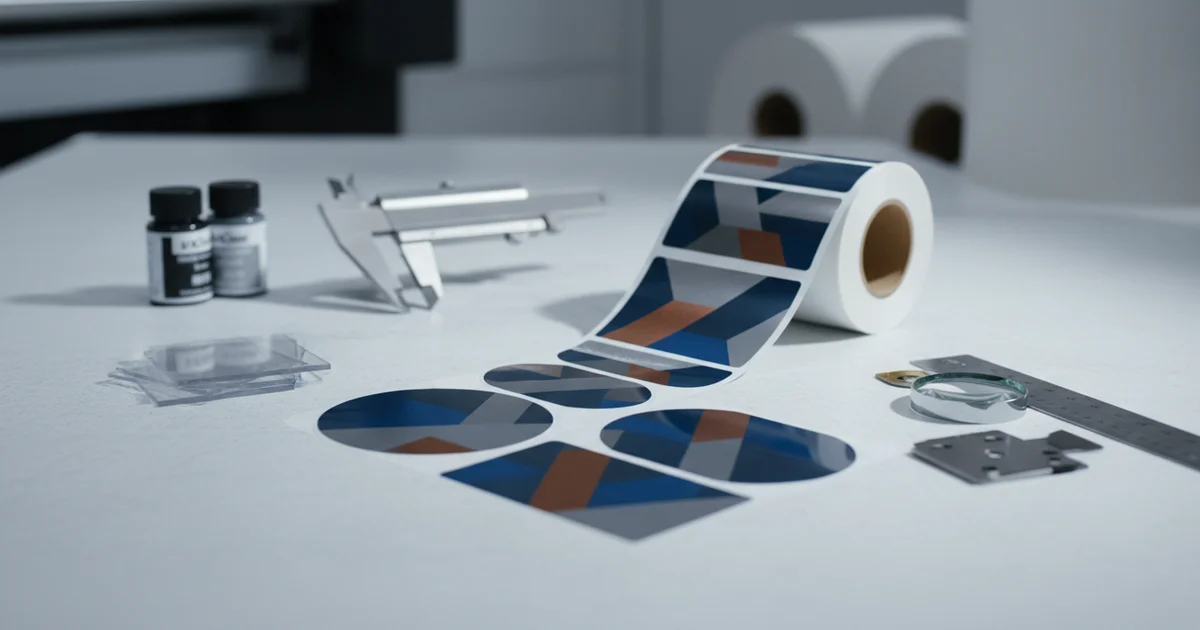
Choose printed plastic labels by matching substrate (100-micron PET for cards, 60-micron BOPP for fast turnaround) to print method. Always include setup costs in total cost analysis.
What Are Printed Plastic Labels?
Choosing the wrong printed plastic labels is costly — a label that peels or fades can damage your brand and waste thousands in replacements. Printed plastic labels are durable identification tags made from polymer films such as PET, BOPP, or PVC. They resist moisture, chemicals, and tearing far better than paper alternatives. Industries from retail to electronics rely on them for long-lasting product branding and compliance marking. As of 2026, the global print label market is projected to reach USD 9.33 billion in the U.S. alone, so getting your specs right matters more than ever.
For buyers, the key variables are substrate thickness (measured in microns or gsm — typical PET label substrates range from 50–200 gsm depending on film density), print method, adhesive type, and finishing options like lamination or embossing. Each decision shifts cost, durability, and turnaround time. A 100-micron PET label, for example, survives daily handling on a loyalty card, while a 60-micron BOPP label is better suited for short-run promotions where speed matters. Getting these choices right starts with a clear checklist. The sections below walk through substrate selection, print-method math, turnaround trade-offs, total-cost analysis, and common pitfalls.
Our production team validates each substrate batch for gauge consistency (within ±2 microns) and surface energy to ensure proper ink adhesion. This matters because a film with inconsistent surface energy can cause mottling or poor ink holdout — a problem that shows up as color variation in the final label. Meeting ISO 9001:2015 quality management standards, we maintain full traceability from raw film to finished roll.
Buyer's Checklist for Substrate and Adhesive
A comprehensive checklist for printed plastic labels starts with matching the substrate to the end-use environment. PET, BOPP, and PVC are the three main options — each offers a different balance of rigidity, flexibility, and chemical resistance. The first decision is thickness: for cards, use 100-micron PET because it resists bending and tearing under daily handling.
For fast turnaround labels, use 60-micron BOPP. It is flexible and runs well on digital presses like the HP Indigo. This substrate is ideal for short-run promotions where speed matters. BOPP also accepts solvent-based adhesives well, making it a versatile choice for retail product labels. A common mistake is picking a substrate that is too thin for the job — a 50-micron film on a card will curl and fail.
Adhesive Selection and Testing
The adhesive is as important as the film. Permanent acrylic adhesives work best on smooth surfaces like glass or metal. Removable adhesives suit temporary promotions or reusable containers. For cold-temperature application (below 10 °C), specify a low-tack freezer-grade adhesive. Our team recommends testing a small batch first — 500 to 1,000 labels — to verify adhesion before full production. This step alone can prevent field failures that would cost 10–50 times the label price in rework.
Surface Energy and Ink Adhesion
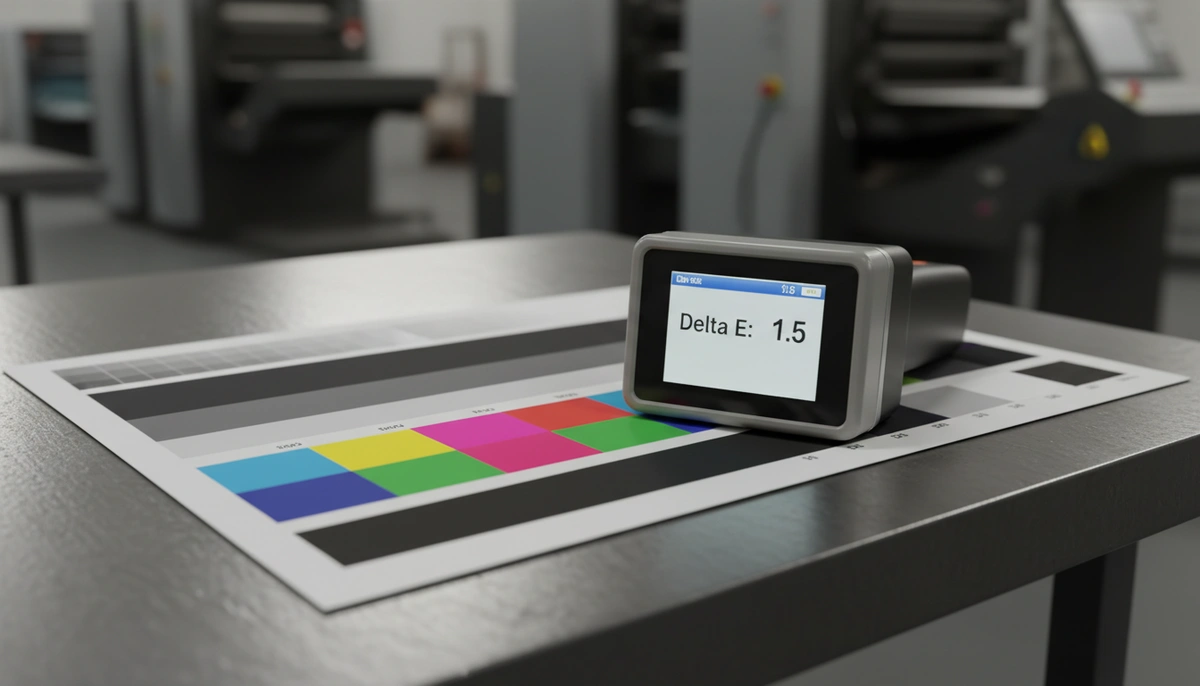
Surface energy, measured in dynes/cm, determines how well inks wet the substrate. For solvent-based or UV inks, the film should have a surface energy at least 8–10 dynes/cm above the ink's surface tension. Our production team validates this for every batch using dyne test pens. This ensures that your CMYK print files — set up in Pantone-matched color spaces — reproduce accurately with Delta E under 2.0 for brand consistency.
Match Print Method to Run Length with Breakeven Math
Digital print is cost-effective under 2,632 units — above that, offset printing delivers a lower per-unit cost. The breakeven point of 2,632 units comes from averaging setup fees, plate costs, and run speeds across standard job shops. This number is the most important figure in your buying decision because it determines which print method minimizes total cost for your specific volume.
For custom print production solutions, digital print works best for short runs under 2,632 labels. There are no plate costs. Setup is fast. Turnaround can be as quick as 72 hours. HP Indigo digital presses deliver 1200 dpi resolution with Pantone color matching, keeping Delta E under 2.0 for brand consistency. On the other hand, digital print is not ideal for runs above 10,000 units — the per-unit cost stays flat while offset drops.
For long runs above 2,632 units, offset printing offers a lower cost per label. The plate cost is spread across more units. Heidelberg offset presses handle thick PET films with registration accuracy of ±0.1 mm and can print CMYK plus two Pantone spot colors in a single pass. Flexographic printing is another option for high-volume work on flexible films, especially when coating or lamination is required. The trade-off is speed versus volume — use the breakeven as your decision anchor.
| Print Method | Best Run Length | Setup Cost | Per-Unit Cost at 5,000 |
|---|---|---|---|
| Digital (HP Indigo) | Under 2,632 | Low | Higher |
| Offset (Heidelberg) | Over 2,632 | High | Lower |
| Flexo | Over 5,000 | High | Lowest |
Turnaround and Finishing Trade-Offs
Fast 72-hour turnaround requires three things: digital print, 60-micron BOPP stock, and no lamination. Each extra finishing step adds time — lamination adds 2–3 days, die-cutting complex shapes adds another 1–2 days, and foil stamping can add up to 5 days. For promotional & diy goods solutions, these finishing choices directly impact your time-to-shelf.
Die-cutting shapes the label. Our automatic self-adhesive label die-cutting machine handles complex contours. Discuss your shape with our team before finalizing art — complex shapes increase waste and cost, while standard rectangles or ovals are most economical. For critical runs, we also offer 100 % verification against your approved proof using our fully automatic label optical inspection machine, which checks for misregistration, voids, or color shift at line speeds up to 200 feet per minute.
A drawback of adding lamination is the increased cost and turnaround time. Consider instead a two-phased approach: order uncoated labels for a pilot test, then add lamination only if field testing shows wear. For indoor labels with a short shelf life, skip lamination entirely. For outdoor or chemical-exposed labels, a matte or gloss UV laminate is required to protect the ink surface from UV degradation and abrasion.
Total Cost Analysis: Beyond Unit Price
Unit price is only part of the story — a total cost analysis adds setup fees, plate costs, shipping weight, and inventory holding. The full equation is: (setup + plates + material + print + finishing + shipping) ÷ total units. A low unit price on a short run can hide high setup costs. The breakeven point of 2,632 units is the most important number in your decision because it tells you where digital stops being cheaper than offset.
For specialty materials solutions, the material cost varies. PET is more expensive than BOPP, but for cards, PET is the only choice. Skimping on material leads to field failures that cost far more than the label itself. A drawback of focusing only on unit price is missing the breakeven: at 2,000 units digital is cheaper, at 3,000 units offset wins. Calculate both scenarios before placing your order.
Hidden Costs and Inventory Planning
Shipping weight matters — plastic labels are heavier than paper, increasing freight cost. Also consider inventory holding: offset plate costs are sunk, so ordering extra units during the same run can lower your effective per-label cost. Our production team can prepare a total-cost comparison for your specific order quantity and substrate choice, factoring in your delivery timeline and warehouse capacity.
Limitations and Alternatives
Printed plastic labels are not ideal for every application. For runs under 250 units, paper labels or direct-screen printing may be more economical. For sustainability-minded brands, paper offers better recyclability. Always compare total lifecycle cost including disposal or recycling fees. Compared to paper labels, plastic labels cost 20–40% more but last 3–5 times longer in harsh conditions.
The main drawback of offset printing is the plate cost. At 1,000 units, the plate adds roughly $0.15 per label. That may not be worth it for a test run. Consider instead a phased rollout: start with digital for a pilot, then move to offset when volume exceeds 2,632 units. This avoids waste and lets you validate the label design before committing to a long run.
Another limitation: for labels exposed to continuous outdoor UV, a laminated PET label may still fail after 12–18 months. On the other hand, ceramic or metal nameplates could be a longer-lasting alternative in extreme conditions. Paper labels are more suitable for dry indoor use and sustainability-focused brands. Competitors offer advantages with FSC-certified paper labels that are fully recyclable — if your brand prioritizes circular packaging, paper deserves strong consideration.
Alternatively, for extreme-temperature environments (below -20 °C or above 80 °C), synthetic paper or polyimide labels may outperform standard plastic films. Our team can match your specific condition to the right material through our retail & e-commerce solutions material selection guide.
Common Mistakes and How to Avoid Them
The biggest mistake is ignoring the breakeven point of 2,632 units — ordering 3,000 labels on digital presses costs 15–20% more than offset. Another common error is mismatching adhesive to surface: permanent adhesive on removable surfaces leaves residue, while removable adhesive fails on permanent surfaces. Test before ordering full production.
Our team recommends ordering 500–1,000 digital labels first. Check adhesion, color, and durability. Then scale up. For consumer goods & fmcg solutions, color consistency is critical. Our press uses spectrophotometry to keep Delta E under 2.0, ensuring your brand color matches from run to run — whether you order 500 or 50,000 labels. We also recommend specifying CMYK plus Pantone spot colors for critical brand elements like logos or trademarks, as this reduces the risk of color shift across different print substrates.
Another mistake buyers make is skipping the substrate validation step. A film with inconsistent surface energy can cause ink adhesion failure — what looks like fine print on a proof becomes a smudged, illegible label in production. ISO 9001:2015 procedures require surface-energy testing for every incoming substrate lot. If your supplier doesn't offer this, ask why. The 2–5% savings from a cheaper supplier can vanish in a single reprint order.
Ready to Order Your Printed Plastic Labels?
Our team will help you pick the right substrate and print method for your volume. We handle PET, BOPP, and PVC with digital or offset printing.
Request a Free QuoteConclusion and Next Steps
Ready to improve your printed plastic labels buying process? Use this checklist to avoid common mistakes and ensure you get the right product for your application. The market for printed plastic labels is projected to grow steadily through 2026–2030, with digital print adoption expected to increase by 12–15% annually as more brands seek short-run, customized packaging.
- Pick the right substrate: 100-micron PET for cards, 60-micron BOPP for fast turnaround
- Match the print method to your volume: digital under 2,632 units, offset above
- For 72-hour turnaround, use digital on BOPP without lamination
- Calculate total cost including setup, plates, shipping, and inventory holding
- Test a small batch (500–1,000 labels) before full production
- Verify adhesive compatibility with your surface environment
For buyers who need additional guidance, consider consulting our ISO 9001 quality management resources or reviewing the HP Indigo digital presses specifications for color accuracy benchmarks. Contact us today to request a quote and get started. Our team will walk you through the material and method choices for your specific run. As of the latest 2026 guidelines, we recommend at least 4–6 weeks lead time for offset orders to account for plate making and lamination schedules — plan ahead to stay on schedule.
Frequently Asked Questions
When should I choose PET over BOPP for printed plastic labels?
Choose 100-micron PET for rigid applications like loyalty cards where bending resistance is critical. PET is thicker and more durable, making it ideal for long-term use. BOPP (60-micron) is better for fast-turnaround promotions because it runs well on digital presses and is more flexible.
What is the breakeven point between digital and offset printing for plastic labels?
The breakeven point is approximately 2,632 units. Below that, digital printing (e.g., HP Indigo) has lower total cost due to no plate fees. Above 2,632 units, offset printing (e.g., Heidelberg) becomes cheaper per label as setup costs are spread over more units.
How can I achieve a 72-hour turnaround for printed plastic labels?
To get 72-hour turnaround, use digital printing on 60-micron BOPP stock without lamination. Each finishing step adds time: lamination adds 2–3 days, complex die-cutting adds 1–2 days. For fastest delivery, stick to standard shapes and skip coatings.
What adhesive should I use for cold-temperature applications?
For applications below 10 °C, specify a low-tack freezer-grade adhesive. Permanent acrylic adhesives work best on smooth surfaces at room temperature. Always test a small batch (500–1,000 labels) to verify adhesion before full production to avoid field failures.