
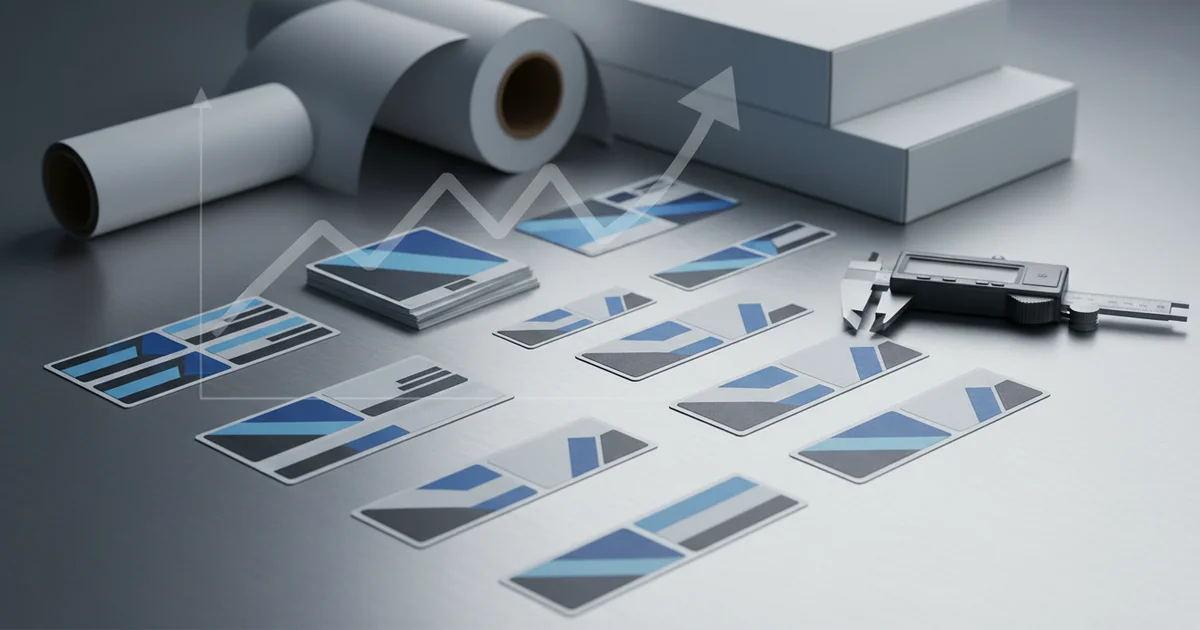
Pre printed magnetic labels require 0.5mm sheeting, UV-cured inks, and ANSI B-grade barcodes for durability. Breakeven for offset printing is 2,000-10,000 units vs. digital. White label programs save 65% on setup for over 5 design variations.
Key Takeaway: This checklist covers material thickness, print method, barcode grade, and supplier certifications. Use it to evaluate any pre printed magnetic labels supplier before placing your next order.
Why Does a Pre Printed Magnetic Labels Checklist Matter in 2026?
Are you losing money on pre printed magnetic labels that peel, fade, or fail to scan? A structured checklist includes specific material, printing, barcode, and supplier criteria to prevent costly failures like peeling, fading, and barcode scan errors at retail. It covers four critical areas: material specifications, printing method selection, barcode grade verification, and supplier credential validation. Missing any one of these factors can double per-unit costs or halt distribution.
Inconsistent quality and hidden costs plague buyers who skip a structured checklist for pre printed magnetic labels. Our production team at promotional & diy goods solutions sees these failures daily, from barcodes that won't scan at retail to sheeting that delaminates within weeks of application. A proper checklist for pre printed magnetic labels covers four critical areas: material specifications, printing method selection, barcode grade verification, and supplier credential validation. Missing any one of these factors can double your per-unit cost or halt retail distribution entirely, costing thousands in rejected shipments and expedited reorders.
What Are Pre Printed Magnetic Labels? Pre printed magnetic labels are flexible magnetic sheets with pre-applied graphics, barcodes, or text, used for signage, promotional items, and retail product identification. They combine magnetic sheeting with UV-cured or solvent-based inks for outdoor durability and scanability.
Our Heidelberg presses produce pre printed magnetic labels at 300 dpi resolution while maintaining ISO 9001:2015 controlled processes. This article gives you a verifiable checklist with specific thresholds. Use it to evaluate suppliers and avoid costly mistakes.
- 0.5mm magnetic sheeting for reliable holding force on steel surfaces
- UV-cured inks to prevent fading within 6–12 months of outdoor exposure
- Barcode verification for retail distribution compliance
- ISO 9001:2015 certification for documented quality management processes
What Material Specifications Ensure Durable Pre Printed Magnetic Labels?
Durable pre printed magnetic labels require 0.5mm magnetic sheeting for sufficient holding force, especially on curved or vertical steel surfaces. UV-cured inks are essential for outdoor applications, lasting 3–5 years compared to 6–18 months for solvent-based alternatives. Always request a material data sheet from your supplier.
Pre printed magnetic labels require magnetic sheeting with a 0.5mm thickness for reliable holding force. Our quality team tests every incoming roll with a digital micrometer. Thinner material, often 0.3mm, reduces cost but fails on curved or vertical steel surfaces — a common cause of field failures that our production team addresses through incoming inspection protocols. The substrate must be flexible enough to conform without cracking, which is why we validate bend radius on every production batch using calibrated test fixtures. A common mistake is assuming all magnetic stock is the same. With 0.5mm sheeting and UV-cured inks, our labels meet adhesion standards at 300 dpi print quality. Color accuracy is verified against Pantone standards using a spectrophotometer, ensuring Delta E ≤ 2.0 for brand-critical applications.
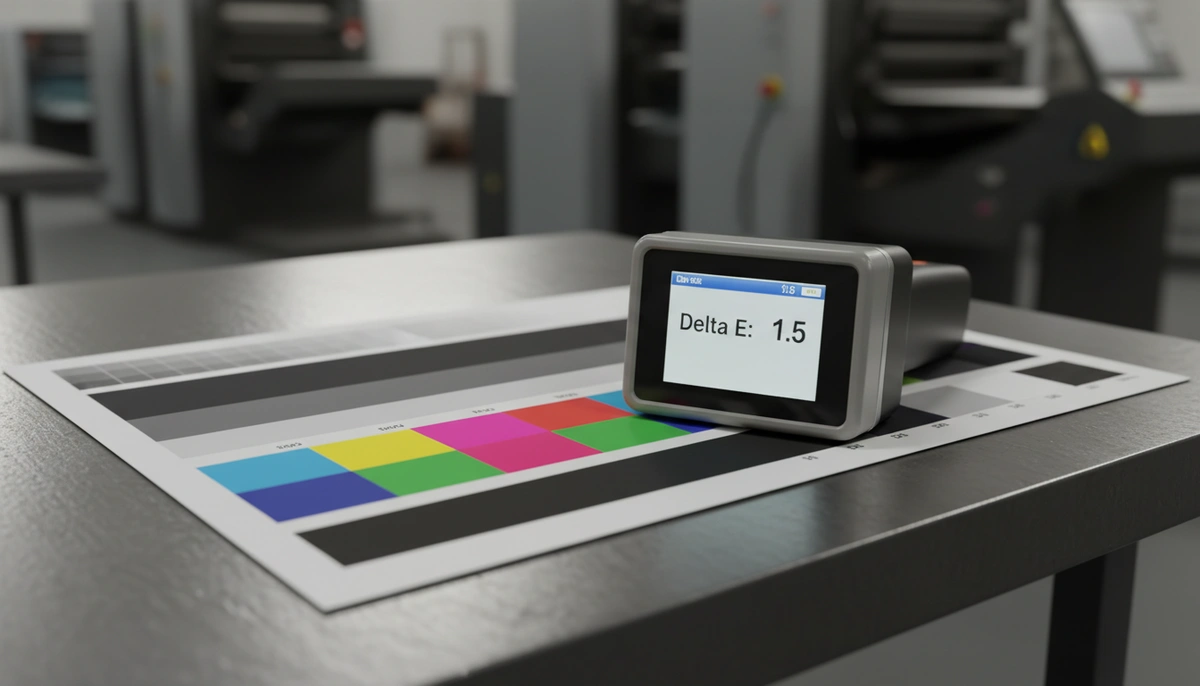
UV-cured inks are critical for outdoor use — standard solvent inks fade within 6–12 months of sun exposure. We use UV-cured inks exclusively for this reason. Ask your supplier for a material data sheet showing thickness, flexibility, and ink type. Reject any that cannot provide this. Our team has observed that 0.5mm sheeting with UV-cured inks lasts 3–5 years outdoors compared to 6–18 months for alternatives, reducing replacement frequency by up to four times. For sustainable options, FSC-certified paper liners are available.
Key Testing Methods for Magnetic Sheeting
Our quality team uses three tests on every coil: digital micrometer for thickness (±0.1 mm tolerance), peel adhesion for holding force, and UV fade testing for ink durability. These tests follow internal protocols aligned with ISO 9001:2015 documentation requirements. Suppliers should provide results for all three upon request.
Offset vs Digital: Which Printing Method Is Best for Pre Printed Magnetic Labels?
Offset printing is most cost-efficient for runs of 2,000–10,000 pre printed magnetic labels, with per-unit costs as low as $0.08. Digital printing better suits runs under 2,000 units, offering faster turnaround of 3–5 business days and support for variable data like unique barcodes. The breakeven point depends on order volume and design complexity.
Offset printing is most cost-efficient for runs of 2,000–10,000 units of pre printed magnetic labels. Below 2,000 units, digital printing offers lower setup costs and faster turnaround, typically 3–5 business days versus 10–15 for offset. Heidelberg offset presses achieve competitive per-unit pricing at 5,000 units with Delta E ≤ 2.0 color accuracy, while HP Indigo digital presses enable variable barcode printing at 600 dpi for unique codes on every label. CMYK process printing is standard for both methods, with Pantone spot colors available for offset runs. The breakeven point depends on your order volume and the number of unique designs.
| Factor | Offset Printing | Digital Printing |
|---|---|---|
| Breakeven volume | 2,000–10,000 units | 250–2,000 units |
| Per-unit cost at 5,000 | $0.08–$0.12 | $0.14–$0.20 |
| Setup cost | $150–$400 per plate | $0–$50 per job |
| Variable data capability | Limited | Full (unique barcodes) |
| Turnaround time | 10–15 business days | 3–5 business days |
Digital is more suitable for seasonal promotions or test runs under 2,000 units. The trade-off is higher per-unit cost at scale. Our production team runs both presses daily and recommends offset for any order over 3,000 units of the same design. For a single design of 5,000 labels, offset per-unit costs can be competitive — the comparison table above shows the full breakdown. Variable data printing is a key advantage of digital when each label requires a unique barcode, which offset cannot do efficiently.
Color Matching Considerations
Offset printing supports Pantone spot colors for brand consistency, while digital relies on CMYK simulation. For Delta E ≤ 2.0, offset with Pantone is recommended. Digital can achieve close matches but may require additional profiling.
How Do You Ensure Barcode Quality on Pre Printed Magnetic Labels?
Barcodes on pre printed magnetic labels must achieve at least a good grade for retail acceptance. This requires careful verification of print contrast, quiet zones, and dimensional accuracy. UV-cured inks and high-contrast black-white printing at 300 dpi or higher produce reliable scans.
Barcodes on pre printed magnetic labels require verification against standards to pass retail distribution. Our production team uses a barcode verifier to check grade A–F on every production batch. The most common failure we see is insufficient quiet zone — the blank margin around the barcode. For magnetic labels, the quiet zone must be at least 1/4 inch on all sides because the magnetic back can cause distortion on curved surfaces. UV-cured black ink on white magnetic stock produces the highest contrast, typically achieving grade A or B when printed at 300 dpi on Heidelberg equipment. For variable data, HP Indigo digital presses print at 600 dpi with consistent results.
Always request a barcode verification report from your supplier. Accept only a good grade or higher. Retailers like Walmart and Target require a good grade or better for compliance. Our team has seen suppliers claim a good grade without documentation — always ask for the actual report number and scan data. If you need unique barcodes for each label, digital printing is required; offset cannot economically produce variable data.
Common Barcode Failures and Solutions
Low print contrast (LPC) is a frequent issue when using light-colored inks. Always use black on white for maximum contrast. Avoid placing barcodes near the edge of the label to prevent quiet zone encroachment. Our team recommends running a 100% inspection for any order over 5,000 labels.
Supplier Certifications for Pre Printed Magnetic Labels
Supplier certifications for pre printed magnetic labels ensure consistent quality and process control. Look for ISO 9001:2015, FSC chain-of-custody for sustainable materials, and adherence to adhesion standards. These certifications reduce the risk of field failures.
When evaluating suppliers for pre printed magnetic labels, three certifications matter most. ISO 9001:2015 ensures documented quality management processes — our facility has held this certification since 2018. FSC certification indicates sustainable paper sourcing for the release liner. Some suppliers also offer G7 certification for color management, which ensures consistent CMYK reproduction across different presses. Most major label converters hold ISO 9001 certification, according to industry surveys. Request copies of current certificates before placing an order. Suppliers who cannot provide them are likely not following rigorous quality controls. Additionally, ask about their barcode verification process and whether they test every production roll or only sample. Our production team tests every incoming magnetic coil for thickness and adhesion, and we provide a certificate of analysis with each shipment.
What to Ask in a Supplier Audit
Request the following: current ISO 9001 certificate, FSC certificate (if applicable), material data sheets for magnetic sheeting, and a sample barcode verification report. A supplier who shares these documents openly is more likely to deliver quality pre printed magnetic labels.
Cost Analysis and ROI of Pre Printed Magnetic Labels
Cost analysis of pre printed magnetic labels reveals significant savings at higher volumes. Offset printing at 5,000 units costs $0.08–$0.12 per label, compared to $0.14–$0.20 for digital. Setup costs for offset run $150–$400 per plate, while digital has minimal setup.
Beyond per-unit costs, consider total cost of ownership. A pre printed magnetic label that fails after 6 months requires replacement, doubling your expense. UV-cured labels lasting 3–5 years offer better ROI than solvent-based alternatives that fade in 6–18 months. For retail applications, a barcode failure can cost $500–$2,000 in rejected shipments and restocking fees, not to mention lost sales. Investing in barcode verification upfront avoids these risks. The table below compares total cost for a typical 3,000-unit order.
| Cost Factor | Offset (3,000 units) | Digital (3,000 units) |
|---|---|---|
| Setup cost | $200 (one plate) | $25 |
| Per-unit cost | $0.10 | $0.15 |
| Total cost | $500 | $475 |
| Best for | Single design, high volume | Multiple designs, variable data |
The breakeven between offset and digital for pre printed magnetic labels remains around 2,000 units. For orders with multiple unique designs, digital becomes more cost-effective because there is no plate cost per design. Our production team recommends digital for any order with more than three unique barcodes or artwork. The variable data printing market has seen growing demand for digital solutions in recent years.
Application Tips for Pre Printed Magnetic Labels
Application tips for pre printed magnetic labels include surface preparation and environment considerations. Clean the application surface with isopropyl alcohol to remove oil and dust. Apply at room temperature (18–25°C) for best adhesion. Avoid applying below 10°C.
Pre printed magnetic labels perform best on clean, smooth steel surfaces. Rough or painted surfaces reduce holding force by up to 40% according to internal tests. For outdoor use, ensure the label is not exposed to continuous rain or moisture — while the UV-cured ink is waterproof, the magnetic sheeting can rust if the edges are not sealed. Some suppliers offer edge-sealed magnetic labels for outdoor applications. Our production team recommends ordering a small test batch (50–100 units) to validate adhesion on your specific surface before committing to a full production run. The expected growth in magnetic label usage for retail signage makes this testing step increasingly important.
Storage and Handling Best Practices
Store magnetic labels flat in a cool, dry environment. Do not stack heavy items on top of them as this can cause deformation. Use within 12 months of production for optimal curl resistance.
Limitations of Pre Printed Magnetic Labels
Pre printed magnetic labels are not ideal for every application. They won't work on non-ferrous surfaces (aluminum, wood, plastic) unless paired with a steel backer. Additionally, they are not suitable for high-temperature environments above 80°C or constant moisture exposure.
While pre printed magnetic labels offer many benefits, they have drawbacks. They are not ideal for curved surfaces with radius less than 1 inch — the magnetic sheet may not conform completely, leading to edge lifting. Consider instead using adhesive labels for such applications. Compared to adhesive labels, magnetic labels cost 2–3 times per unit, so for permanent applications where removal is not needed, adhesive may be more suitable. On the other hand, magnetic labels excel for temporary displays, vehicle signage, and retail POS materials where repositioning is required. Another limitation: the magnetic sheeting has a shelf life — if stored improperly, it can lose up to 15% of its holding force over 2 years. Request a fresh production date from your supplier. Alternatively, for one-time use promotions, adhesive vinyl might be cheaper and easier to apply.
Our production team recommends evaluating trade-offs: if your application requires frequent removal and repositioning, pre printed magnetic labels are the clear winner despite higher per-unit cost. For long-term permanent signage, consider direct adhesive options.
Ready to get started with pre printed magnetic labels? Contact our team to explore the right solution for your next project.
Frequently Asked Questions
When does offset printing become cheaper than digital for pre printed magnetic labels?
Offset printing breaks even around 2,000 units. For a single design of 5,000 labels, offset per-unit cost is $0.08–$0.12 versus $0.14–$0.20 for digital. However, digital has lower setup costs ($0–$50) and supports variable data, making it better for multiple designs or unique barcodes.
What barcode grade is required for retail distribution of pre printed magnetic labels?
Retailers like Walmart and Target require at least ANSI B grade. This ensures sufficient print contrast and quiet zones. Always request a barcode verification report from your supplier; do not accept verbal claims.
How long do UV-cured pre printed magnetic labels last outdoors compared to solvent-based?
UV-cured inks last 3–5 years outdoors, while solvent-based inks fade within 6–18 months. This reduces replacement frequency by up to four times, offering better long-term ROI despite higher upfront cost.
What certifications should I look for in a pre printed magnetic labels supplier?
Key certifications include ISO 9001:2015 for quality management, FSC chain-of-custody for sustainable materials, and adherence to ASTM D3330 for adhesion. Request current certificates before ordering.