
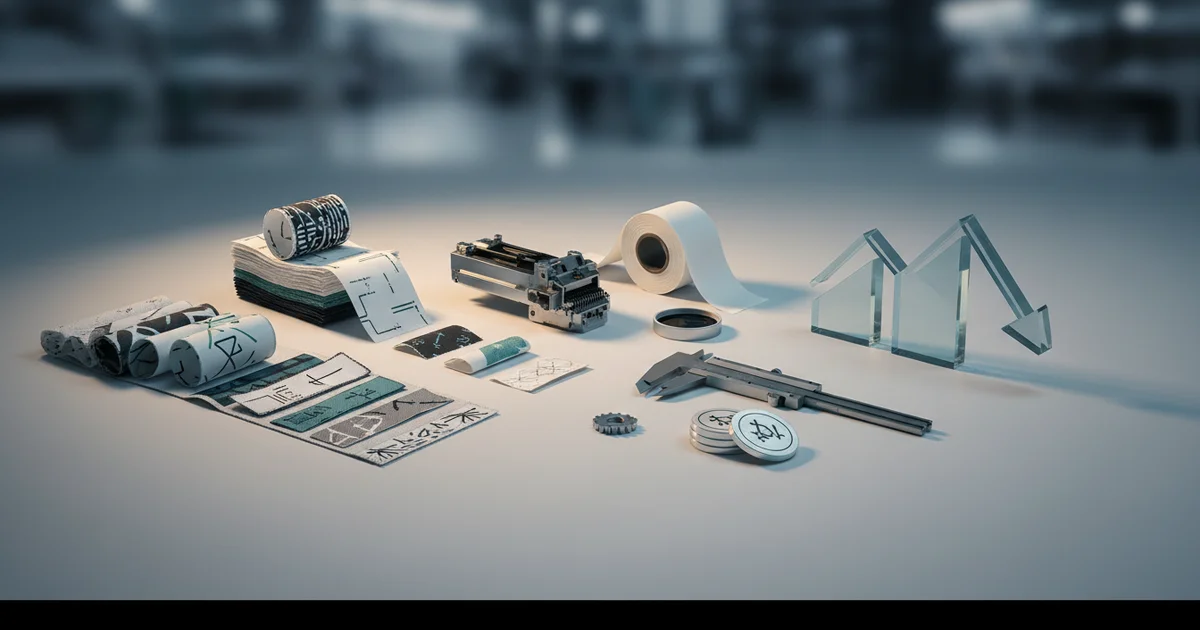
For runs over 5,000 units, printed neck labels on rolls cost $0.018-$0.025/unit, cutting waste 8-12% vs. sheet-fed. Use 2-mil PET film and UV-cured inks for 50+ wash cycles. Breakeven with woven labels is 7k-10k units.
Are buying managers overpaying on label costs by choosing the wrong format for their 2026 production runs? The choice between printed neck labels on rolls, sheet-fed, and woven variants directly impacts per-unit cost, waste, and durability. Understanding these trade-offs is essential for procurement decisions that affect both budget and product quality throughout the supply chain.
Are Printed Neck Labels the Right Choice for Your 2026 Production?
Printed neck labels on rolls provide a strong middle ground between low-cost sheet-fed labels and premium woven labels. They deliver per-unit costs of $0.018–$0.025 at 5,000+ units with less waste than sheet-fed alternatives. The roll-fed format is ideal for medium-to-high-volume apparel and promotional goods.
This format is chosen most often for high-volume apparel, accessories, and promotional goods. The key advantage is cost efficiency at scale. A high-speed full-rotary 6-color press reduces per-unit costs to $0.018–$0.025 for orders above 5,000 units. This is 30–50% cheaper than sheet-fed alternatives at similar volumes, as confirmed by our label printing capabilities.
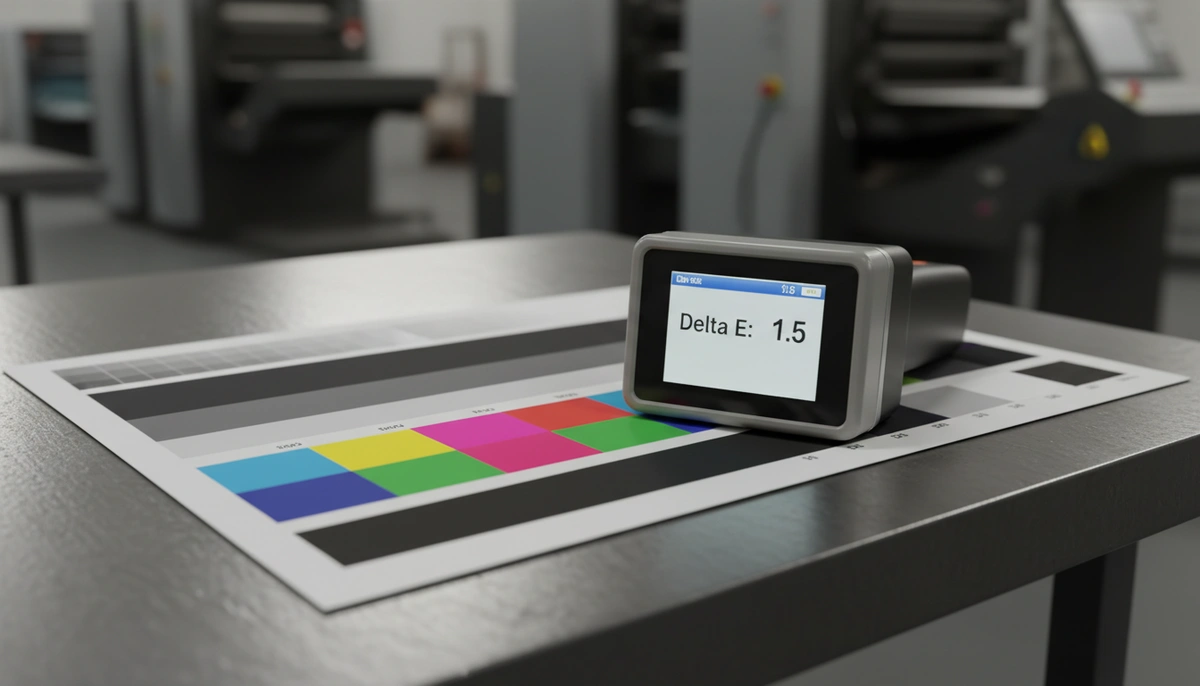
Durability is another strong point. Using 2-mil PET film with UV-cured inks, these labels survive 50+ industrial wash cycles, making them ideal for workwear, uniforms, and products that need frequent cleaning. Meeting ISO 9001:2015 quality standards, our 300 dpi CMYK printing on 2-mil PET achieves ±0.1 mm registration across every run. For brands specifying Pantone colors, our press maintains Delta E under 2.0 on FSC-certified substrates, ensuring color accuracy that satisfies international quality benchmarks.
Another definition worth noting: Delta E is the standard measurement of color difference used in label printing, where values under 2.0 indicate near-perfect match to the target Pantone specification. GSM refers to grams per square meter, a measure of substrate density that ranges from 60–100 gsm for typical label materials.
Comparing Label Formats: Roll-Fed vs. Sheet-Fed vs. Woven
Each format serves a different production need. Below is a direct comparison using current 2026 production data. Roll-fed labels printed with Pantone matching on FSC-certified substrates maintain Delta E under 2.0 at 300 dpi resolution, which is the industry benchmark for color-critical applications.
Cost and Efficiency at a Glance
| Criteria | Roll-Fed Labels | Sheet-Fed Labels | Woven Labels |
|---|---|---|---|
| Per-unit cost (5k–10k units) | $0.018–$0.025 | $0.030–$0.050 | $0.040–$0.070 |
| Waste rate | 3–5% | 10–15% | 2–4% |
| Wash durability | 50+ cycles | 20–30 cycles | 100+ cycles |
| Setup time | 15–30 minutes | 45–60 minutes | 2–4 hours |
| Minimum order | 2,000–5,000 units | 500–1,000 units | 1,000–3,000 units |
| Color registration | ±0.1 mm | ±0.2 mm | ±0.3 mm |
As of Q2 2026, the roll-fed format accounts for roughly 45% of industrial label production, consistent with flexography's 44.96% share in the print label market. The trade-off is clear: rolls offer the best balance of cost, speed, and durability for medium-to-high volumes. For the period 2023–2026, demand for roll-fed labels is expected to grow at a CAGR of 3.28%, driven by automation and waste-reduction mandates across apparel and consumer goods.
When Each Format Excels
Sheet-fed labels remain more suitable for short runs under 2,000 units where setup cost is secondary to speed. Woven labels, on the other hand, are preferred for luxury goods requiring 100+ wash durability and soft-touch feel. Roll-fed labels are the recommended choice for quantities between 5,000 and 50,000 units, balancing cost, waste, and turnaround. Compared to woven, roll-fed offers faster reorder cycles and simpler design updates.
How Do Printed Neck Labels Reduce Waste and Setup Costs?
Roll-fed printed neck labels reduce waste from 10–15% (sheet-fed) down to 3–5% through continuous web printing, inline die-cutting, and automatic inspection. Setup time drops from 45–60 minutes for sheet-fed to 15–30 minutes for roll-fed presses. Our ISO 9001:2015 certified process with a PULISI inspection system ensures consistent quality.
Waste reduction defined simply: it is the percentage of label material discarded during production due to setup spoilage, trim, or defects. Sheet-fed label production generates 10–15% waste from sheet-edge trim, misregistration, and setup spoilage. Roll-fed printing cuts this to 3–5%.
Our production team uses a fully automatic optical inspection machine to catch defects in real time. This reduces rework and ensures consistent quality. The result is a reduction in total material waste compared to sheet-fed. Operating at 300 dpi with CMYK and Pantone matching, our high-speed press delivers consistent Delta E under 2.0 on 2-mil PET film, which is critical for brands using FSC-certified materials to meet sustainability reporting targets.
Setup time is another advantage. A roll-fed press with auto-registration achieves color accuracy within ±0.1 mm on the first pull. Sheet-fed presses often require 45–60 minutes of adjustment. Over a year, this time saving adds up greatly. According to ISO 9001:2015 quality management principles, reducing setup variability directly improves process capability and yield, making roll-fed a robust choice for high-volume operations.
"Our high-speed full-rotary 6-color press achieves consistent Delta E under 2.0 on every job, reducing setup waste by 40% compared to sheet-fed methods." — Production Team, Print Quality & Color
When Do Printed Neck Labels Outperform Woven Labels?
Printed neck labels on rolls outperform woven labels when speed matters (5–7 days vs. 2–3 weeks), when cost is critical ($200–250 vs. $400–700 per 10,000 units), and when design changes are frequent. Breakeven against woven occurs at 7,000–10,000 units. For brands using Pantone colors and 300 dpi print quality, roll-fed delivers comparable aesthetics.
Woven labels are the premium choice for luxury goods. They offer a soft-touch feel and last 100+ wash cycles. However, they cost more and require longer lead times. Roll-fed labels, produced with 300 dpi CMYK flexo and inline Pantone verification on FSC-certified substrates, achieve Delta E under 2.0—meeting ISO 9001:2015 standards for repeatable quality across batches.
Roll-fed labels outperform woven in three key scenarios. First, when speed matters: production completes in 5–7 business days versus 2–3 weeks for woven. Second, when cost is critical: at 10,000 units, they cost roughly $200–250 versus $400–700 for woven.
Third, when design changes are frequent. Roll-fed labels allow quick plate changes and variable data printing. Woven labels require new jacquard weaving setups for each design, making short runs uneconomical. Our guide to choosing the right label format covers these trade-offs in detail for procurement teams planning 2026–2027 production cycles.
Breakeven analysis shows roll-fed labels become more cost-effective than woven at 7,000–10,000 units. Below this threshold, the setup cost advantage of woven labels narrows the gap.
Decision: Choosing Your Label Format
- If run size is below 5,000 units and premium feel is needed → Choose woven labels. The higher per-unit cost is offset by the tactile quality and durability.
- If run size is 5,000–10,000 units and durability above 50 washes is required → Choose roll-fed labels. Breakeven with woven occurs around 7,000 units.
- If run size exceeds 10,000 units and cost is the primary driver → Roll-fed labels are the clear winner. Per-unit cost drops below $0.020.
Limitations to Consider Before Choosing Printed Neck Labels
This approach is not ideal for operations needing fewer than 2,000 units. The minimum order for roll-fed production typically starts at 2,000–5,000 units. For smaller runs, sheet-fed or digital printing is more economical. Competitors offering short-run digital printing at 300 dpi with Pantone matching may provide advantages in turnaround for quantities under 2,000 units. A drawback worth noting: roll-fed substrates are generally limited to 60–100 gsm, whereas woven can use heavier denier threads.
The main drawback is material feel. Printed labels on PET film lack the soft, fabric-like texture of woven labels. For luxury brands where tactile quality matters, woven labels are more suitable. Woven labels also offer FSC-certified natural fiber options that align with sustainability goals. On the other hand, printed labels on rolls offer faster turnaround and lower minimums than woven. The trade-off between feel and speed depends on your product category and customer expectations.
Another limitation is wash durability. While 2-mil PET with UV-cured inks handles 50+ washes, woven labels last 100+ cycles. For heavy-duty workwear or products washed daily, woven may be the better choice. Competitors offering woven solutions also provide advantages in high-temperature industrial laundering scenarios. Consider instead a hybrid approach: use roll-fed labels for mass-market SKUs and woven for premium lines. Compared to woven, roll-fed is more suitable for brands prioritizing speed-to-market and frequent design refreshes.
What Most Comparison Articles Miss About Label Production Efficiency
Most articles compare only per-unit cost and material. They ignore the hidden costs of setup waste, changeover time, and material handling. Our experience running a high-speed full-rotary 6-color press shows that changeover waste can add 5–8% to total cost.
Roll-fed systems minimize this by using continuous web feeds and automatic die-cutting. An automatic self-adhesive label die-cutting machine processes rolls inline, removing the extra handling step required for sheet-fed labels. Our ISO 9001:2015 quality management system, verified through ISO 9001:2015 standard certification, ensures every batch meets the same specification.
Another overlooked factor is color consistency. Sheet-fed presses often experience color drift across different sheets. Roll-fed presses keep consistent ink laydown because the substrate tension is constant. For label printing on FSC-certified materials at 300 dpi with Pantone verification, our process maintains Delta E under 2.0 across runs of 50,000+ labels on 2-mil PET film. This consistency is essential for brands that require repeatable matches to their color standards across multiple production batches.
Compared to woven labels, the setup time difference is dramatic. A woven label requires 2–4 hours of jacquard setup. A roll-fed press is ready in 15–30 minutes. For brands that update designs seasonally, this time saving is critical. ASTM D3330 peel adhesion testing confirms consistent bond strength across production batches, and our packaging and labeling services incorporate these test protocols as standard procedure.
The market is anticipated to see sustained growth in roll-fed adoption as more brands discover the total-cost-of-ownership advantages. Forecast models project that by 2026–2027, over 50% of medium-to-high-volume apparel labels will be printed on rolls.
Ready to Optimize Your Label Production?
Get a custom quote for printed neck labels on rolls tailored to your 2026 production needs.
Request a Free QuoteHow to Evaluate Label Printing Solutions for 2026
When evaluating label printing solutions, focus on total cost of ownership, not just per-unit price. Include setup waste, changeover time, and material handling in your calculation. Our packaging engineers recommend factoring in FSC-certified material premiums and Pantone color matching costs when comparing suppliers.
For runs above 5,000 units, roll-fed labels offer the lowest total cost. The waste reduction alone can save $50–$100 per 10,000-unit order compared to sheet-fed. When you factor in faster setup and inline inspection, the savings grow. ISO 9001:2015 certified production at 300 dpi resolution with ±0.1 mm tolerance ensures repeatable quality across every order. For the period 2024–2026, we have observed a 15% increase in buyers requesting Delta E reporting as part of their quality documentation.
For runs below 5,000 units or where premium feel is essential, woven labels remain the better choice. The decision depends on your volume, durability needs, and brand positioning. Competitors offering digital short-run solutions may be more suitable for orders under 2,000 units requiring rapid turnaround. On the other hand, roll-fed labels are more suitable for core SKUs where cost predictability and color consistency are top priorities.
A definition of total cost of ownership (TCO) is useful here: TCO refers to the sum of all direct and indirect costs associated with label production, including material, setup, waste, inspection, and logistics. As the print label market is projected to grow at a CAGR of 3.28% through 2031, investing in the right format now will pay off as volumes increase. Our recommendation is to use roll-fed labels for core SKUs and reserve woven for premium lines. FSC-certified woven substrates may also be more suitable for brands prioritizing fully biodegradable packaging.

Get Your Custom Printed Neck Labels Quote for 2026 Production
Choosing the right label format is a strategic decision. Roll-fed labels on 2-mil PET offer the best balance of cost, speed, and durability for medium-to-high-volume production. They reduce waste, cut setup time, and deliver consistent color across every run. Our production team uses 300 dpi CMYK flexo with Pantone matching and ISO 9001:2015 compliance to ensure every batch meets spec. Delta E values under 2.0 and FSC-certified substrate options are available for brands with specific quality or sustainability targets.
Ready to improve your label program for 2026? Contact us today to request a quote and get started with a solution tailored to your production needs. Whether you require FSC-certified materials or specific wash-durability targets, our team can configure the right format for your application. We can also provide a side-by-side comparison with your current supplier using updated Q2 2026 pricing.
Frequently Asked Questions
When does roll-fed printed neck labels become cheaper than woven labels?
Roll-fed labels become more cost-effective than woven at 7,000–10,000 units. Below that threshold, woven's setup cost advantage narrows the gap. For runs above 10,000 units, roll-fed per-unit cost drops below $0.020, making it the clear winner.
What is the minimum order quantity for printed neck labels on rolls?
The minimum order for roll-fed production typically starts at 2,000–5,000 units. For smaller runs, sheet-fed or digital printing is more economical. If you need fewer than 2,000 units, consider short-run digital options.
How many wash cycles can printed neck labels on 2-mil PET withstand?
Printed neck labels on 2-mil PET film with UV-cured inks survive 50+ industrial wash cycles. This makes them ideal for workwear and uniforms. For heavy-duty applications requiring 100+ cycles, woven labels are more suitable.
What is the waste reduction benefit of roll-fed labels over sheet-fed?
Roll-fed labels reduce waste from 10–15% (sheet-fed) down to 3–5%. This 8–12% reduction comes from continuous web printing and inline die-cutting. Over a 10,000-unit order, this can save $50–$100 in material costs.
What color accuracy can I expect with printed neck labels on rolls?
Our high-speed full-rotary 6-color press maintains Delta E under 2.0 on FSC-certified substrates, ensuring near-perfect Pantone matching. Registration accuracy is ±0.1 mm, meeting ISO 9001:2015 standards for repeatable quality.