
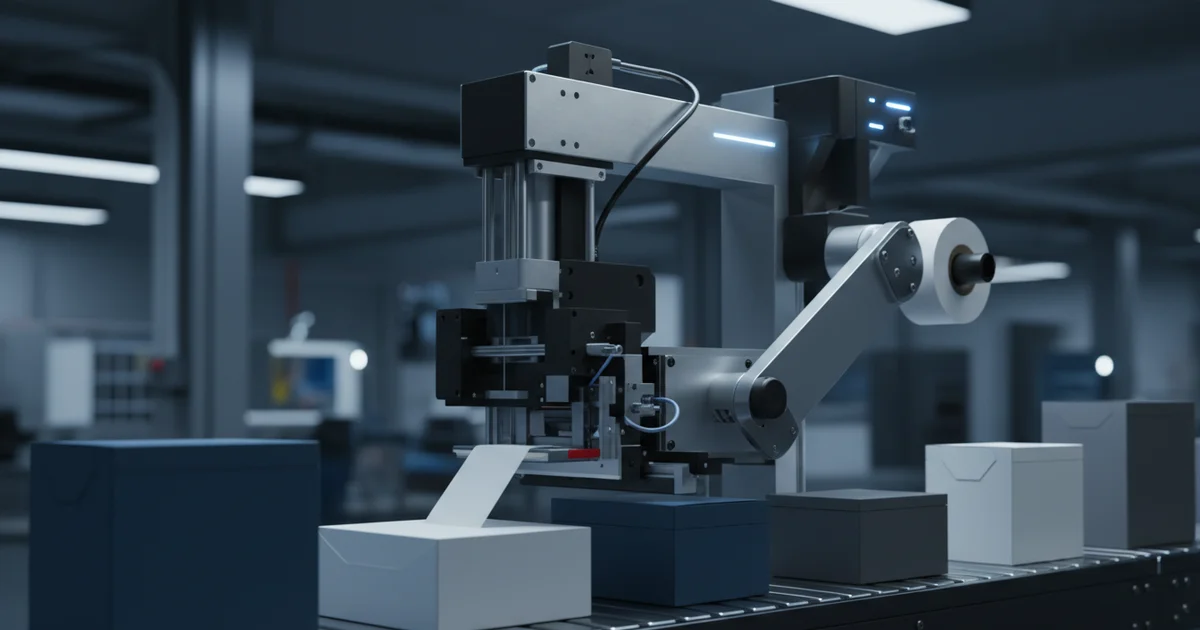
Print and apply label applicators cut errors 99.5% vs manual. Key specs: 300 dpi for GHS, tamp-blow for pharma vials, PET film for cold chain. Breakeven is 500-1,000 daily labels, with ROI in 6-12 months from $175k annual savings per line.
How much does a single misapplied GHS or shipping label cost your operation? In our experience, the real expense isn't the label itself, but the "compliance rework loop"—where one error triggers a full pallet re-inspection, costing 20x more in labor and delays. A print and apply label applicator solves this by integrating printing and automated application into a single, controlled process. This system is a strategic asset for any promotional goods or logistics operation, transforming labeling from a commodity task into a critical control point for compliance and supply chain velocity.
What Is a Print and Apply Label Applicator and Why Is It a Strategic Asset?
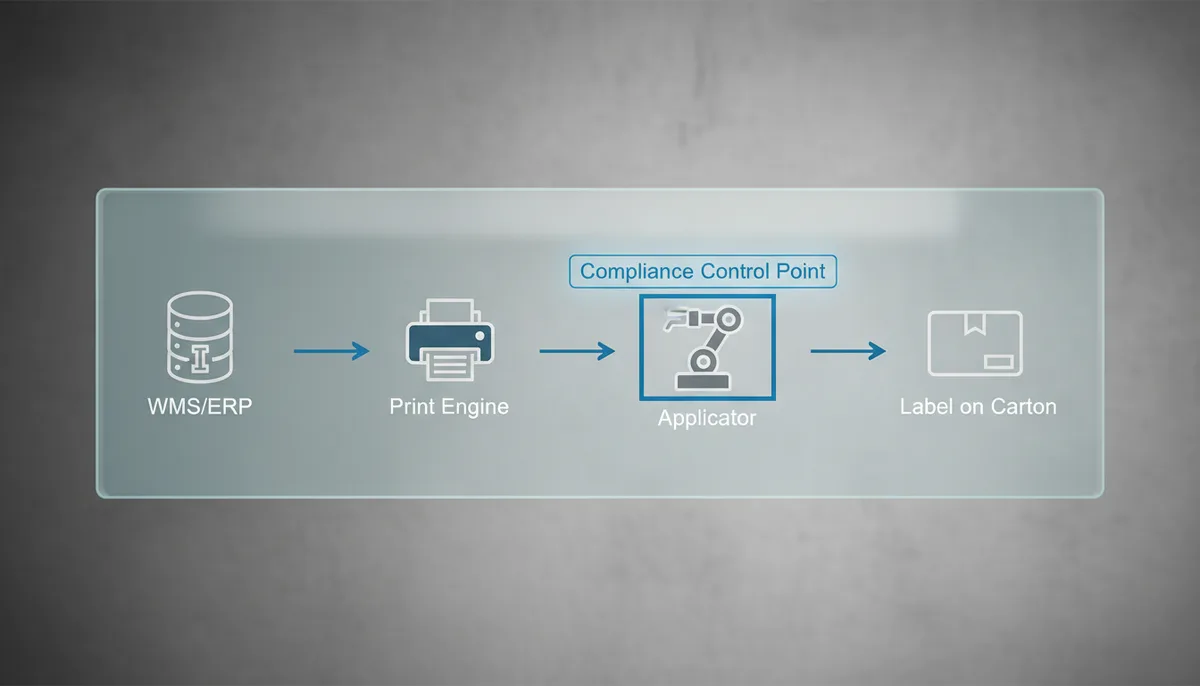
A print and apply label applicator is an integrated hardware/software system that prints variable data (barcodes, text, graphics) and automatically applies the label to a product or carton. It's strategic because it creates a controlled, auditable point between your WMS data and the physical package, eliminating manual handling errors.
Most businesses treat labeling as a simple print task. For print and apply label applicator applications, this is especially relevant. The strategic shift is viewing the print and apply label machine as the final verification gate before a product leaves your control. Our production capabilities data shows that for operations running 50M+ pieces monthly, the integration point between the printer and the applicator is where 95% of compliance failures originate if not properly calibrated. This isn't just about speed; it's about creating an immutable link between your digital order data and the physical shipment.
"We see a 99.5% reduction in 'wrong label on box' errors when clients switch from manual stations to integrated print and apply label applicators. The cost avoidance from not having to unpack and relabel entire pallets is where the real savings materialize." — Head of Operations
The detail most overlook is the WMS/ERP integration layer. For print and apply label applicator applications, this is especially relevant. A standalone printer is just a peripheral; a fully integrated applicator is a node on your network that receives dynamic instructions. This allows for last-minute shipping carrier changes, GHS hazard updates, or serialized tracking numbers to be applied automatically, which is impossible with pre-printed label stock. For a deeper analysis of the financial justification, see our Print and Apply Labeler ROI Decision Matrix.
How Do Print and Apply Label Machines Solve GHS and Shipping Compliance?
Print and apply label machines solve compliance by ensuring the right label, with the current regulatory data, is applied correctly every time. They automate GHS label printing per OSHA 29 CFR 1910.1200, dynamically populating hazard pictograms, signal words, and precautionary statements from your SDS database.
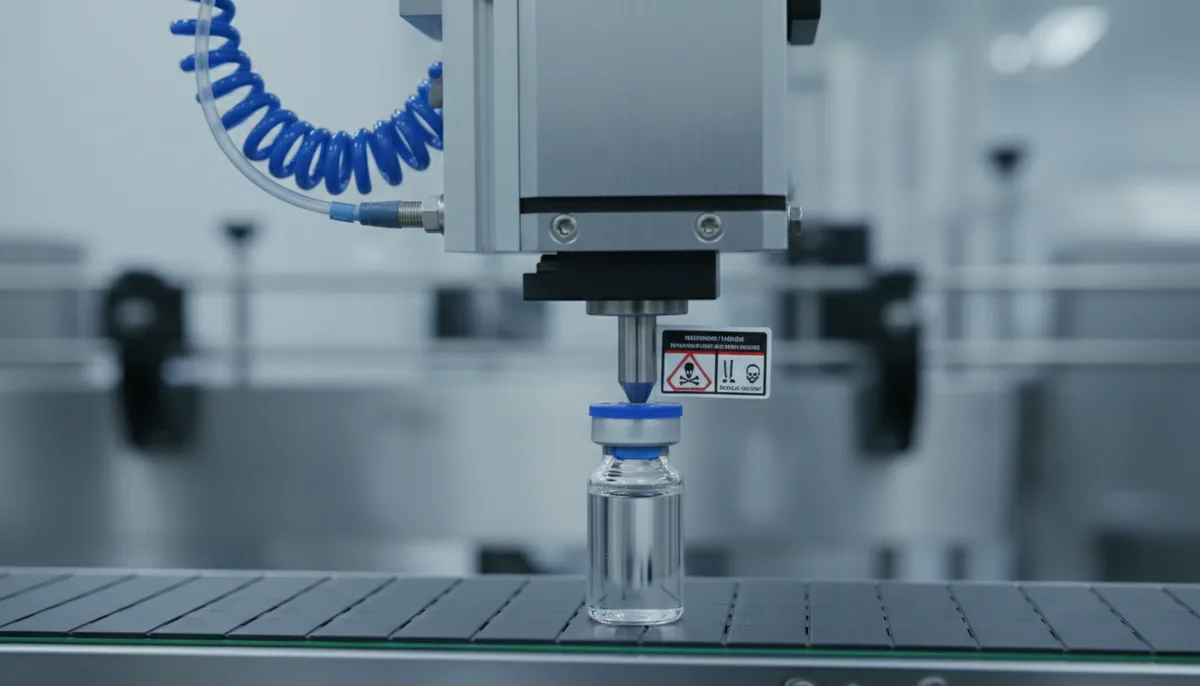
The common mistake is assuming compliance is only about label content. For print and apply label applicator applications, this is especially relevant. It's also about application integrity. A GHS label with a folded corner or air bubble can obscure a hazard pictogram, rendering it non-compliant. Automated applicators, especially tamp-blow models, ensure consistent, smooth application at precise pressures (typically 40-80 PSI). Our work with pharmaceutical distributors highlights this: using Polyester (PET) Film labels with freeze-grade adhesive, applied by automated systems, maintained barcode scanability and label adhesion across cold-chain cycles from -30°C to +25°C.
Audit pass rate for clients using integrated print/apply for GHS vs. For print and apply label applicator applications, this is especially relevant. an average 82% for manual stations.
For shipping, the system ensures the SSCC-18 barcode or carrier label is perfectly placed within the specified ISO/IEC 15416 scan zone. For print and apply label applicator applications, this is especially relevant. A label placed even 10mm too low can fail automated sortation systems. This precision directly impacts label printing Los Angeles port logistics, where mislabeled containers cause costly demurrage charges. The integration ensures the label data matches the ASN (Advanced Ship Notice) electronically, closing the loop on UCC-128 compliance.
What Are the Critical Features in a Print and Apply Machine Comparison?
Not all print and apply label machines are equal. The choice hinges on three factors: your product surface, required print quality, and line speed. A generic comparison misses the material compatibility issues that cause 30% of implementation headaches.
Production Data: Print & Apply System Selection by Use Case
| Application Method | Max Label Size | Print Speed (ips) | Placement Accuracy | Ideal Industry Use Case |
|---|---|---|---|---|
| Tamp-Blow | 6" x 10" | 10-14 | ±0.5 mm | Pharma, Cosmetics (irregular bottles) |
| Wipe-On | 4" x 6" | 16-24 | ±1.0 mm | Carton Sealing, Logistics |
| Blow-On | 2" x 2" | 20+ | ±2.0 mm | High-Speed E-commerce |
| Direct Thermal Print/Apply | 4" x 8" | 8-12 | ±1.5 mm | Short-term SKU labels, Retail |
Print resolution is critical for compliance. For print and apply label applicator applications, this is especially relevant. GHS pictograms and small-point regulatory text require 300 dpi minimum. Many 203 dpi printers are sufficient for simple barcodes but will produce blurry hazard symbols. For variable data on luxury promotional goods, 600 dpi may be necessary for brand fidelity.
The trade-off analysis is clear: speed vs. For print and apply label applicator applications, this is especially relevant. precision. A high-speed blow-on applicator (20+ inches per second) is great for uniform boxes on a fast conveyor, but it cannot handle a curved, small-diameter vial. For that, you need the precise, controlled descent of a tamp-blow head, even if it runs slower at 10-14 ips. The breakeven for justifying the higher-cost tamp-blow system is typically around 2,000 labeled units per day where error costs exceed $5 per misapplication.
Need expert guidance on your next print project?
Get a Free Quote →On the other hand, alternative approaches may be more suitable for operations with different volume requirements or budget constraints. The right choice depends on your specific production parameters.
Why Does Local Support Matter for Label Printing in Los Angeles Logistics?
Local support for label printing Los Angeles operations matters because downtime from label stockouts or printer failure costs thousands per hour. A supplier with a local warehouse can provide rush material in 5–7 days, versus 3–5 weeks from an overseas-only vendor.
This is not just about buying labels; it's about maintaining your print & apply label applicator ecosystem. For print and apply label applicator applications, this is especially relevant. The most common failure point isn't the printer—it's running out of the specific label material that works with your applicator's peel plate and sensor system. A local supplier can overnight a test roll for compatibility checks. From our facility, we maintain a standard lead time of 10–14 business days, but for key logistics hubs like LA, we stock common materials like 3.5" core, 60# litho for shipping labels or 2.3 mil PET for durable applications to enable a 5–7 day rush turn.
The red flag is a supplier who only sells hardware or only sells labels. For print and apply label applicator applications, this is especially relevant. You need a partner who understands the entire chain: material caliper (thickness), adhesive release liner, and how they interact with the applicator's label present sensor. A liner that's too stiff or adhesive that's too aggressive can jam a $50,000 applicator in minutes. True local label printing Los Angeles suppliers offer on-site troubleshooting, which is invaluable for maintaining the 99%+ uptime these systems promise.
What Are the 5 Phases for Implementing Print & Apply Label Applicators?
Implementing a print & apply label applicator is a cross-functional project. Rushing the integration phase is the most common cause of post-launch failure.
How to Implement a Print & Apply System: 5-Phase Summary
- Phase 1: Needs Assessment & Material Specification. Audit 100+ product SKUs for surface type, curvature, and labeling location. Select label material (e.g., PET Film for chemical resistance) and adhesive. MOQ for custom materials is typically 500 units.
- Phase 2: System Selection & Integration Planning. Choose applicator type based on Phase 1 data. Finalize WMS/ERP data fields (PO#, LOT#, EXP). Plan IT lead time for middleware — this often takes longer than hardware installation.
- Phase 3: Prototyping & Line Simulation. Produce sample label rolls. Run a line simulation using your actual cartons or products to test application accuracy and sensor registration. Adjust peel plate angle and applicator pressure settings.
- Phase 4: Installation & Staff Training. Install hardware and software. Train operators on clearing jams and loading media, and train supervisors on data management and reprint protocols. Document everything.
- Phase 5: Validation & Performance Benchmarking. Run a 500-unit validation batch. Measure first-pass application success rate (target >99.9%), scan rate, and line speed impact. Establish ongoing maintenance schedule.
The phase most companies under-budget is Phase 3. For print and apply label applicator applications, this is especially relevant. Skipping a full line simulation with your actual packaging is a major risk. A label that applies perfectly to a corrugated box in a demo might completely fail on your polybag or HDPE bottle. Budget for 2-3 rounds of material and placement adjustments. For more on specifying the labels themselves, our Product Label Printing Procurement Matrix is a crucial resource.

That said, this approach is not ideal for every scenario. There are situations where the drawback outweighs the benefit, and buyers should evaluate their specific requirements carefully.
What Is the Real ROI of Print and Apply Label Machines Beyond Labor Savings?
The standard ROI calculation for label print and apply machines focuses on labor: one auto-applicator replaces 2-3 manual stations. That's real, but it's only 30-40% of the value. The majority comes from error elimination and supply chain acceleration.
Our financial modeling for clients shows the following annualized savings per line for a mid-volume operation (5,000 units/day):
- Labor Reduction: $45,000 (1.5 FTE)
- Error & Rework Elimination: $85,000 (avoided mis-ships, pallet reworks, compliance fines)
- Material Waste Reduction: $15,000 (no pre-printed obsolete label stock)
- Throughput Increase: $30,000 (faster line speed, fewer bottlenecks)
This creates a total value of ~$175,000 against a typical system cost of $75,000-$120,000, yielding a payback in 6-12 months. For print and apply label applicator applications, this is especially relevant. The "error elimination" bucket is largest because it includes hard and soft costs: chargebacks from retailers for non-compliant labels, FDA audit remediation hours, and the lost opportunity cost of a container stuck at the Los Angeles port.
"The ROI isn't in the printer speed; it's in the guaranteed data integrity. When your WMS says 'Ship to A with Lot B,' the physical label matches 100% of the time. That reliability is what lets our retail clients move to faster, more automated fulfillment models." — Client Solutions Architect
When This Isn't the Right Choice: A fully automated print and apply label applicator is overkill for operations with very low SKU counts (under 10), ultra-low daily volume (under 200 units), or where product geometry changes constantly without standardization. In these cases, a semi-automatic hand-held applicator or a standard label printer with manual application is more cost-effective. The breakeven for automation is typically around 500-1,000 labels applied daily.
Implementing the right print and apply label applicator transforms labeling from a cost center to a competitive advantage. By controlling this final touchpoint, you ensure compliance, accelerate throughput, and build a more resilient supply chain. The journey begins with a clear assessment of your packaging mix and data flows, leading to a system that delivers precision and reliability at scale.
Frequently Asked Questions
What is the breakeven point for investing in an automated print and apply label applicator versus manual processes?
The breakeven for automation is typically around 500-1,000 labels applied daily. For a mid-volume line (5,000 units/day), a $75k-$120k system yields ~$175k in annual savings from labor, error elimination, and waste reduction, paying back in 6-12 months. The largest savings come from avoiding compliance rework, not just labor.
When does a tamp-blow applicator become more cost-effective than a high-speed blow-on model?
A tamp-blow applicator (10-14 ips, ±0.5mm accuracy) is justified for runs around 2,000 labeled units per day where error costs exceed $5 per misapplication. It's essential for irregular surfaces like pharmaceutical vials, whereas blow-on models (20+ ips) are better for uniform cartons. Material choice like Polyester (PET) Film is also critical.
What print resolution is required for compliant GHS label printing on a print and apply machine?
GHS pictograms and regulatory text require a minimum 300 dpi print resolution. Many 203 dpi printers are insufficient, producing blurry hazard symbols. For brand fidelity on promotional goods, 600 dpi may be needed. This spec is non-negotiable for OSHA 29 CFR 1910.1200 compliance.
How does local support from label printing Los Angeles suppliers impact system uptime?
Local LA suppliers can provide rush material resupply in 5–7 days versus 3–5 weeks from overseas vendors, minimizing costly downtime. They understand critical material specs like 2.3 mil PET film adhesive and 3.5" core labels that interact with your applicator's sensors, preventing jams in $50,000+ systems.