
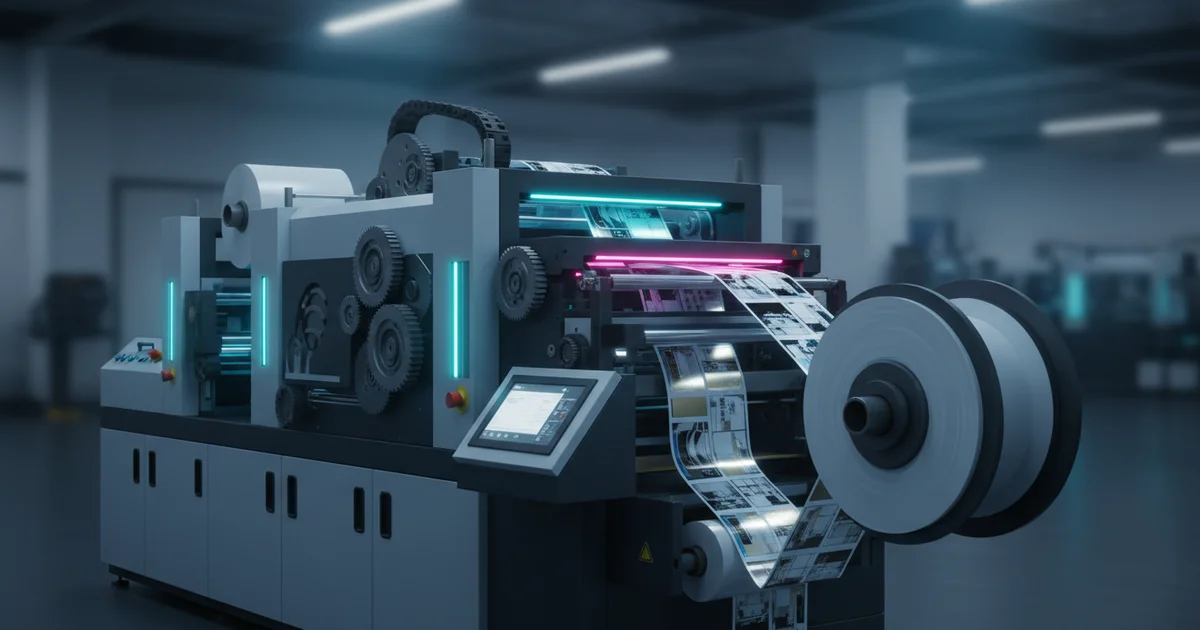
Bottle label printing guide: Digital vs flexo breakeven at 5k-10k units. Compare material costs: 60# C1S paper ($0.028), 2-mil BOPP ($0.045), clear PET film ($0.055). Includes FDA compliance pathways and a 5-step spec sheet for glass, water, and juice bottles.
What’s the single most common mistake that inflates costs and delays a product launch? It’s specifying bottle label printing requirements without understanding the cost and time implications of each material, finish, and print technology choice. This guide provides the decision frameworks and proprietary data you need to specify effectively in 2026 and beyond.
Ready to translate your brand vision into a production-ready specification? Our team provides a free, line-item cost analysis.
Get a Free Quote →The Strategic Importance of Bottle Label Printing for Branded Goods
Your label is your last-mile salesperson. It must withstand its environment, comply with regulations, and convert a browser into a buyer, all while fitting within a target cost-per-unit that protects your margin.
In our experience working with enterprise clients, the label is often the last component to be finalized, yet it carries the greatest burden of communication and compliance. A common mistake we see is treating bottle label printing as a simple graphic transfer, rather than a multi-variable engineering challenge. The substrate must bond to the container surface (often cold, wet, or curved), the inks must not migrate, and the entire assembly must survive distribution. For a deeper dive into luxury packaging challenges, see our analysis on wine label printing procurement.
"We analyze every job for the 'cost of failure.' A 2-cent savings on adhesive that leads to 5% label fall-off in a chilled display costs far more in recalls and brand damage." — Head of Quality Assurance
Material Selection: Balancing Durability, Compliance, and Cost
Your material choice dictates durability, print quality, and compliance pathway. The detail that makes the difference is the adhesive formulation, not just the face stock.
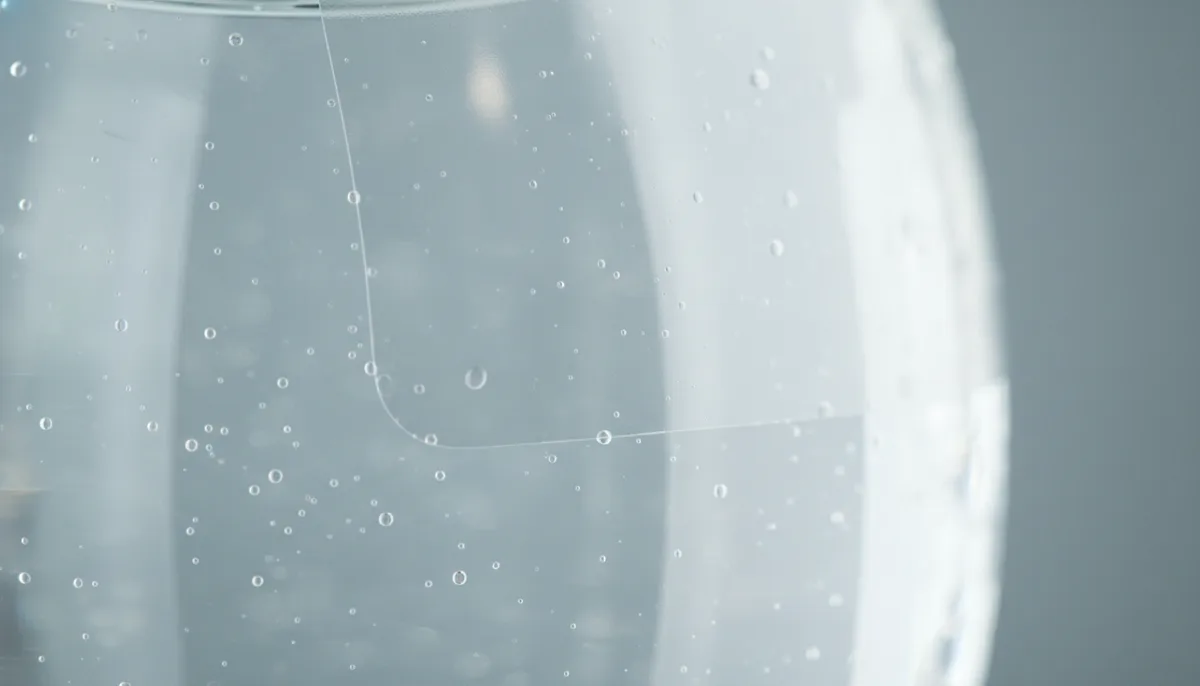
For glass bottle label printing, a permanent acrylic adhesive is standard. However, for juice bottle label printing where condensation is constant, you need a wet-strength adhesive with higher initial tack. A common specification mistake is ordering a "water-resistant" material when the use case demands "waterproof." A 60# C1S paper label might be water-resistant, but a 2-mil BOPP film with a synthetic adhesive is waterproof.
Production Data: Material Performance & Cost (10k Unit Run)
| Material | Typical Use Case | Avg. Unit Cost | Key Limitation |
|---|---|---|---|
| 60# C1S Paper (Gloss) | Wine, Spirits (Dry) | $0.028 - $0.035 | Poor wet strength |
| 2-mil BOPP (Semi-Gloss) | Water, Juice, Sauces | $0.045 - $0.065 | Higher material cost |
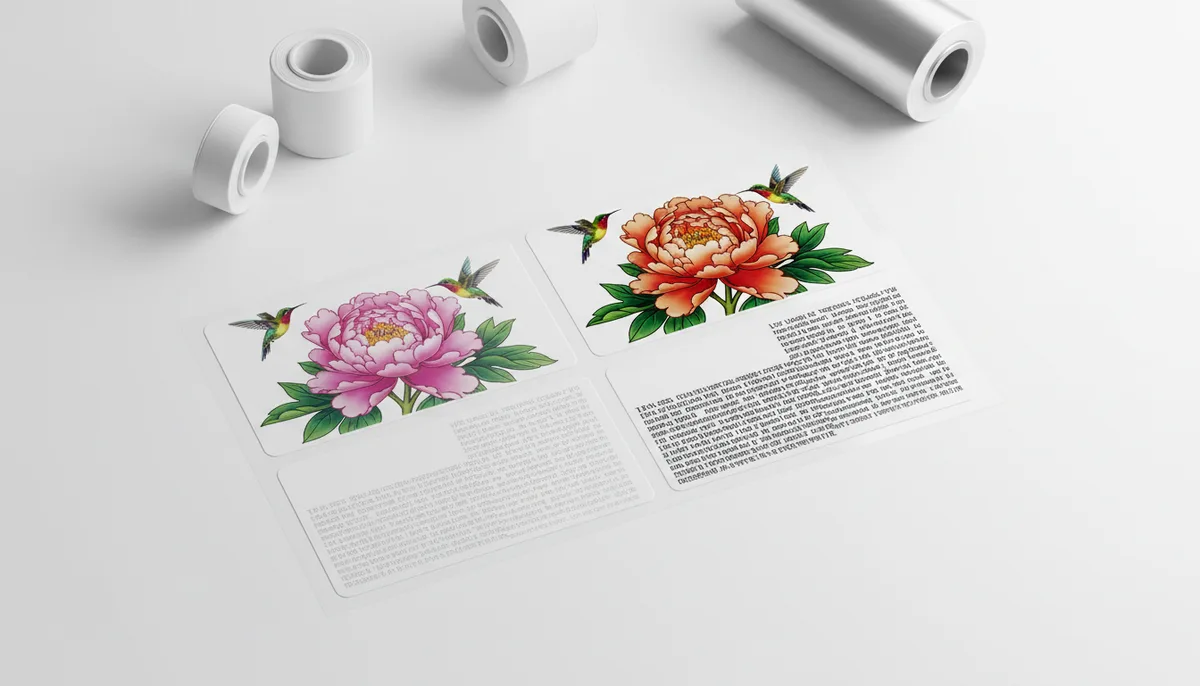
| 2-mil Clear PET Film | Premium "No-Label" Look | $0.055 - $0.075 | Scratches easily |
| Metallic Foil Board | Luxury Gift Lines | $0.12 - $0.18 | Not recyclable |
When you evaluate a company that makes labels, ask for adhesive peel-test data for your specific container material (PET, HDPE, glass) at the temperatures your product will experience.
What is the Cost Difference Between Digital and Flexographic Bottle Label Printing?
The breakeven point between digital and flexographic printing typically falls between 5,000 and 10,000 labels, with digital offering $0 setup and flexo offering 40-60% lower unit costs at high volumes.
This is the core trade-off analysis for bottle label printing. Digital printing (like HP Indigo) uses electrostatic ink and has near-zero setup cost and time. It's perfect for short runs, versioning, and rapid prototyping. Flexographic printing requires engraved cylinders (tooling costs $500-$1500 per color), making setup expensive, but the per-unit cost plummets at scale.
Average flexographic plate/tooling cost for a 4-color job, amortized over the run.
For water bottle label printing where you might run 250,000+ units of a single SKU, flexo is unequivocally more cost-effective. For a craft brand looking to print wine bottle labels for 8 different varietals at 1,500 bottles each, digital is the only logical choice. This decision framework mirrors the analysis in our guide to custom printed sleeve labels.
Navigating Regulatory Requirements for Food and Beverage Labels
How do I ensure my juice bottle labels meet FDA requirements? You must specify FDA-compliant substrates and inks, and provide a signed statement of compliance from your converter.
This is non-negotiable. For direct food contact (like a label on a squeezable pouch), you need compliance with FDA 21 CFR 175.300 for adhesives and 21 CFR 176.170 for paper components. For indirect contact (like a juice bottle label printing on the outside of a HDPE bottle), the requirements are less stringent but still mandate non-migration of inks and adhesives. A reputable company that makes labels will have a compliance dossier for their standard materials.
Decision: U.S. Food Label Compliance Pathway
- If your product is refrigerated/frozen → Specify freeze-grade adhesives and wet-strength face stock (e.g., BOPP).
- If your product is acidic (juice, vinegar) → Require acid-resistant inks and varnishes to prevent fading.
- If you sell in California or the EU → Add Proposition 65 and EU 1935/2004 compliance to your spec sheet.
Never assume compliance. It must be a line item in your purchase order. For more on automated compliance workflows, explore our resource on print and apply label applicator strategies.
Developing Your Specification Sheet: A Step-by-Step Guide
A vague brief guarantees cost overruns and delays. Your spec sheet is the blueprint for production.
How to Build a Production-Ready Label Spec: 5-Step Summary
- Step 1: Define Physical Parameters: Exact finished dimensions (e.g., 3.5" x 5") with tolerance (±0.5mm). Include bottle curvature radius if applicable.
- Step 2: Specify Material & Adhesive: Use industry terms (e.g., "2-mil White BOPP, Semi-Gloss, Permanent Acrylic Adhesive").
- Step 3: Detail Print & Color: Specify CMYK, PMS spot colors, and require a G7-calibrated hard proof for color-critical work.
- Step 4: List Finishing Requirements: Lamination (gloss/matte), die-cutting (butt-cut, rounded corners), and application method (pressure-sensitive, glue-applied).
- Step 5: Attach Compliance Certifications: Reference required standards (FDA, BS5609 for marine-grade) explicitly.
In our facility, we provide clients with a templated spec sheet that forces these decisions. The most common omission is Step 4—forgetting to specify the overlaminate, which is crucial for water bottle label printing durability.
Evaluating a Company That Makes Labels: Key Vendor Criteria
Look beyond the quote. The right partner manages risk proactively.
When you contact a company that makes labels, their first questions should be about your container, fill product, and supply chain environment. Red flags include immediate quoting without these questions, or vague promises about capabilities. You need a converter with specific experience in your niche—glass bottle label printing has different challenges than flexible pouch labeling.
"Our audit of 20 converters found only 6 had in-house plate-making for flexo. The rest outsourced it, adding 3-5 days to lead time and a 25% markup." — Client Solutions Architect, Emily Zhao
Ask for: 1) Proof of compliance testing for your material stack, 2) Samples on your actual container, not just flat stock, and 3) References from clients with similar run sizes. A true partner in bottle label printing will offer a pilot run of 500-1000 units to test application speed and adhesion before your full production.
Real-World Scenario: Launching a New Private Label Beverage Line
Let’s apply this framework. A retailer wants to launch a line of 12 organic sparkling juices in 500ml glass bottles. They need 10,000 labels per SKU (120,000 total) with a premium, sustainable feel.
Material & Print Decision: At 10k per SKU, they are at the digital/flexo breakeven. However, with 12 SKUs, the $1,200+ plate cost per SKU for flexo is prohibitive upfront. The strategic choice is digital printing on a recycled, FSC-certified paper with a matte aqueous coating for a natural feel. This allows them to print wine bottle labels (and juice labels) with all 12 designs in a single cost-effective run, with zero tooling. If a single SKU sells 50,000+ units in Year 2, they can then re-tool for flexographic printing on that SKU alone for cost savings.
Compliance: They must specify FDA-compliant inks and adhesives for indirect food contact. The spec sheet must explicitly state this. The chosen company that makes labels must provide a Certificate of Compliance.
In practice, your label is a critical component, not a commodity. By applying this strategic framework to your next bottle label printing project, you convert specification from a source of risk into a lever for brand value and supply chain reliability. For a comprehensive view of our end-to-end production capabilities, visit our promotional & DIY goods solutions hub.
Frequently Asked Questions
What is the exact breakeven point for digital vs flexographic printing for a 4-color water bottle label run?
The breakeven is typically 5,000-10,000 units. For a 4-color job, digital has $0 setup, while flexo requires ~$1,200 in plates. For runs under 5k, digital is cheaper. For runs over 25k, flexo offers 40-60% lower unit costs, making it ideal for high-volume water bottle label printing.
How does adhesive choice specifically affect the durability of a juice bottle label in a refrigerated environment?
Standard acrylic adhesives fail with condensation. For refrigerated juice bottles, you need a wet-strength adhesive on a 2-mil BOPP film face stock. This combination prevents label fall-off, which can cost 5%+ in recalls. Always request peel-test data for your specific container at 40°F.
What three specific data points should I provide when requesting a quote for glass bottle label printing?
1) Exact finished dimensions and bottle curvature radius. 2) Material spec (e.g., '60# C1S Gloss Paper, Permanent Acrylic Adhesive'). 3) Required compliance standards (e.g., FDA 21 CFR 175.300). Providing this reduces quote variance by up to 30% and prevents delays.
When does a 2-mil Clear PET film label become more cost-effective than a paper label for a premium product?
Clear PET film ($0.055-$0.075/unit) is justified for premium lines where a 'no-label' look boosts perceived value, despite a 100%+ cost premium over 60# C1S paper ($0.028-$0.035). It's best for small-batch luxury goods under 10,000 units where brand impact outweighs unit cost.