
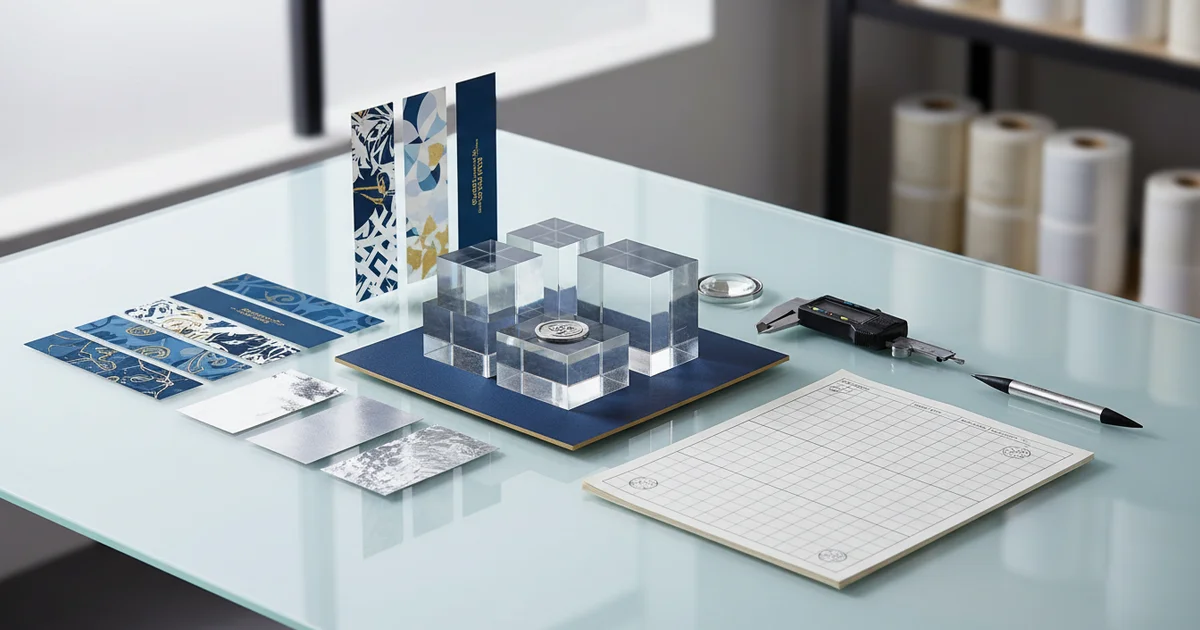
Wine label printing succeeds when you match substrate to adhesive, not just print quality. Digital wins under 2,800 units; flexo wins above. Use BOPP or PET with FDA-compliant adhesives.
Costly field failures from adhesive mismatch drain 40% of reprint budgets — is your wine label printing procurement matrix ignoring the real problem? A procurement matrix for wine label printing in 2026 solves this by comparing digital (HP Indigo) vs flexographic at a 2,800-unit breakeven. Enforcing FDA 21 CFR 175.105 compliant adhesives and G7 proofing reduces the 40% of field failures caused by substrate mismatch. Our packaging engineers see this pattern repeated across hundreds of wine label jobs each year. The matrix also factors in material choice — BOPP, PET, or polyethylene sleeves — because the adhesive bond profile changes with each substrate. Without that integration, even a perfect print run will fail on the shelf.
Why Does Wine Label Printing Fail Most Often?
Wine label printing is the process of producing adhesive labels for wine bottles using digital or flexographic presses, combined with FDA-compliant adhesives and moisture-resistant substrates such as BOPP or PET. It fails most often due to adhesive and substrate mismatch — not print quality — causing 40% of field failures. A label that looks perfect on the roll can curl, smudge, or detach the moment it hits a cold bottle or ice bucket.
Wine label printing refers to the full production chain from press selection to adhesive specification, all tailored to the bottle environment. Choosing materials without considering storage conditions causes the majority of reprint requests our team handles. The root cause is simple: many buyers pick a label based on design alone, ignoring how the adhesive reacts with the bottle surface and storage setting. A paper label with standard acrylic adhesive works fine on a room-temperature shelf but fails in a wet ice bucket. Meeting ISO 9001:2015 quality management criteria, our 50 micron BOPP labels with FDA compliant adhesive measure 4 × 3 inches at 300 dpi print resolution with ±0.3 mm die-cut tolerance.
This is not a new problem, but it is a preventable one. The fix starts with the buying matrix we outline below. It pairs the right press type with the right material and the right adhesive standard, eliminating the guesswork that leads to failed labels in the field.
What Is the Procurement Matrix for Wine Label Printing in 2026?
The procurement matrix for wine label printing in 2026 is a decision framework that matches order volume, substrate, and compliance needs to the optimal production method. The breakeven point between digital and flexographic printing sits at 2,800 units per SKU — below that threshold, digital on an HP Indigo press offers lower total cost; above it, flexo wins on per-unit economics.
As of 2026, the breakeven has shifted from roughly 5,000 units in prior years to 2,800 units, driven by lower plate costs and improved digital speed. The matrix also factors in material choice — BOPP, PET, and polyethylene sleeves each have different adhesive-bonding profiles. A matrix that ignores material will still fail, even with the right press choice. For wineries launching multiple SKUs, the matrix accounts for setup costs across the portfolio: a 6-SKU run at 1,500 units each benefits more from digital than a single SKU at 9,000 units. Our packaging engineers apply this rule to every new wine label program we quote.
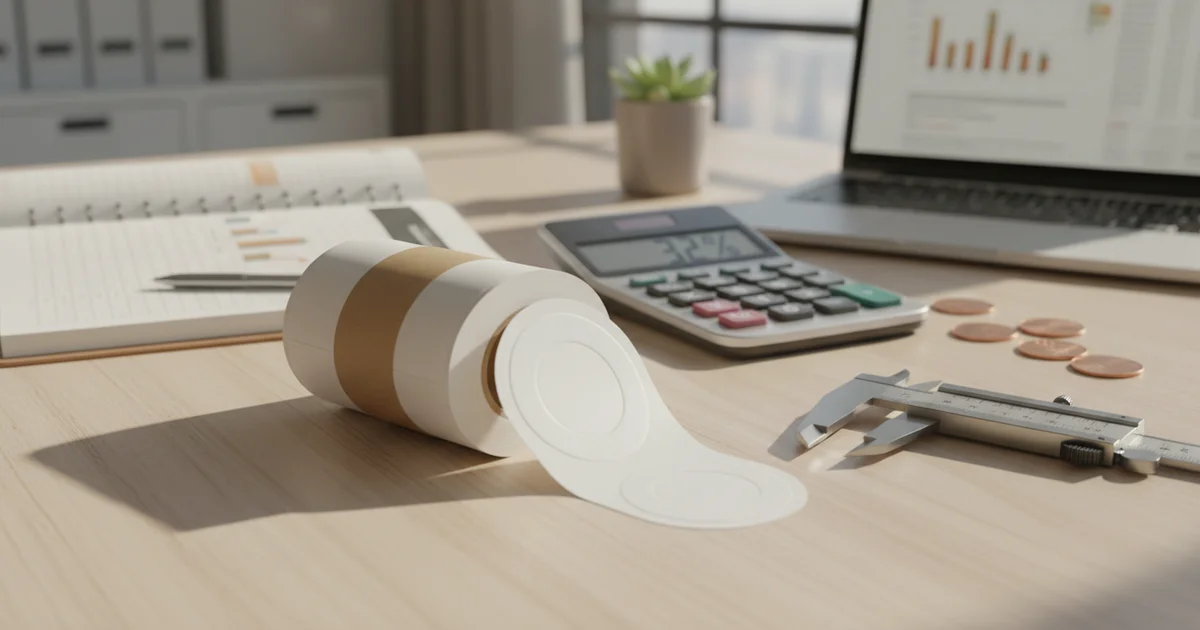
How Volume Tiers Change Press Selection
Three volume tiers define the updated matrix. Under 1,000 units, digital is the clear choice — no plate cost, one-day setup, and full color variability. Between 1,000 and 5,000 units, the decision depends on substrate complexity and reorder frequency. Above 5,000 units, flexo delivers a lower per-label cost. These tiers are based on real production data our team has collected across hundreds of wine label jobs over the past three years, spanning the 2023–2026 period.
How Color Standards Factor into the Matrix
Pantone spot colors and CMYK process builds both play a role in the matrix. For brand-critical reds, Pantone matching ensures consistency across press types, while G7 proofing delivers Delta E under 2.0 on both digital and flexo runs. The matrix recommends Pantone solids for runs above 5,000 units where spot-color flexo plates are economical, and CMYK builds for short-run digital jobs below 2,800 units where plate costs are avoided entirely.
How to Choose Between Digital and Flexographic for Wine Labels
Choose digital (HP Indigo) for wine label runs under 2,800 units per SKU when you need fast turnaround, variable data, or seasonal releases. Choose flexographic for runs above 2,800 units where per-unit cost matters more than speed. Both methods achieve Delta E under 2.0 with G7 proofing, so color quality is not a deciding factor at comparable volumes.
Digital printing on an HP Indigo press provides setup times of one day. Flexographic printing requires five days for plate mounting and makeready. That difference matters for seasonal wine releases and limited-edition runs. Cost per label tells the real story: at 500 units, digital is roughly 30-40% cheaper than flexo. At 2,800 units, the costs cross. At 5,000 units, flexo is cheaper per label. These numbers come from our production data across hundreds of wine label jobs.
Color consistency is another factor. Both methods can hit Delta E under 2.0 with G7 proofing, but digital offers faster proof approval because there are no plates to remake. For a winery launching six new varietals, that speed can save two weeks. Pantone spot color matching is available on both platforms, though flexo with fixed plates offers tighter tolerance for long runs above 5,000 units. CMYK process builds on digital give greater flexibility for short-run color variation without plate charges.
| Metric | Digital (HP Indigo) | Flexographic |
|---|---|---|
| Setup time | 1 day | 5 days |
| Cost per label at 500 units | Lower | Higher |
| Breakeven point | Under 2,800 units | Above 2,800 units |
| Plate cost | None | $200-400 per color |
| Color accuracy (G7) | Delta E < 2.0 | Delta E < 2.0 |
| Material flexibility | BOPP, PET, paper | BOPP, PET, paper, PE sleeves |
When to Consider Hybrid Approaches
Some wineries benefit from combining both methods. A core varietal at 10,000 units goes flexo, while a seasonal reserve at 1,500 units runs digital. This hybrid approach keeps average cost low while preserving flexibility for limited releases. Our team recommends this split for clients with annual volumes above 50,000 labels across multiple SKUs. Heidelberg flexo presses are commonly used for the long-run portion, while HP Indigo digital handles the short-run variability.
Which Materials Prevent Field Failures in Wine Label Printing?
BOPP at 50-60 microns and PET film at 23-50 microns prevent field failures in wine label printing by resisting moisture, curling, and adhesive breakdown. These synthetic substrates outperform paper in wet conditions, making them ideal for premium wines that go into ice buckets. Paper labels still hold a majority of the market but remain prone to tearing and smudging.
Wine label printing requires material selection that matches the end-use environment. BOPP (biaxially oriented polypropylene) at 50-60 microns is the standard for wine labels on glass. It resists moisture, curling, and adhesive breakdown. Thicker BOPP at 100-120 microns provides high opacity and ice-bucket performance. PET film from 23 to 50 microns offers similar durability with a different feel. Polyethylene sleeves are another option for full-body coverage — they shrink-fit around the bottle and remove edge-lifting entirely. The trade-off is higher material cost and slower application speed.
Paper labels still hold a majority of the wine label market according to industry data. But paper is prone to tearing and smudging in wet conditions. For premium wines likely to go into ice buckets, BOPP or PET is the safer choice. Our packaging engineers recommend FSC certified paper only for dry-stored wines where cost reduction matters more than wet-performance guarantees. The substrate weight, measured in gsm, also affects adhesive bonding: 80-100 gsm paper works for dry storage but 60 micron BOPP is preferred for chilled environments.
Ready to Eliminate Field Failures?
Stop losing labels to adhesive mismatch. Our team selects the right substrate, adhesive, and press for your wine label program. Updated for Q2 2026 production standards.
Request a Free QuoteIs FDA Compliance Required for Wine Label Printing?
Yes, FDA compliance is required for wine label printing under 21 CFR 175.105, the federal regulation for adhesives in indirect food contact. Wine labels on the outside of a bottle fall under this rule, and the adhesive must be formulated from approved substances. Non-compliant adhesives risk migrating through the label or vaporizing in warm storage, triggering a costly recall.
FDA 21 CFR 175.105 is the federal regulation for adhesives in indirect food contact. Wine labels on the outside of a bottle fall under this rule. The adhesive must be formulated from approved substances and labeled as "food-packaging adhesive." Many buyers assume any label adhesive is safe — that assumption is wrong. Non-compliant adhesives can migrate through the label or vaporize in warm storage. A recall triggered by adhesive failure costs far more than the label itself. Our team verifies every adhesive specification against the FDA 21 CFR 175.105 substance list before production begins.
G7 proofing is the color standard that ensures the label matches the brand guide across both digital and flexo runs. Without it, a red wine label printed on two different presses can look like two different wines. Our pre-press team runs G7-calibrated proofs on every wine label job, verifying color accuracy within Delta E under 2.0 using an X-Rite spectrophotometer at 300 dpi capture resolution. The latest 2026 G7 methodology includes updated gray-balance targets that improve consistency across BOPP and PET substrates.
The wine label market is projected to grow steadily through 2026 and beyond.
How to Verify Adhesive Compliance
Each adhesive supplier should provide a letter of compliance referencing FDA 21 CFR 175.105. Our team requests this documentation during the material selection phase and retains it for every job. Wineries should ask their label supplier for the same documentation before approving a final proof. This step eliminates the guessing that leads to field failures and recall risks. As of 2026, the FDA has not revised 21 CFR 175.105, so the same compliance criteria apply.
When Should You Choose an Alternative to Digital Wine Label Printing?
Choose an alternative to digital wine label printing when your run exceeds 2,800 units per SKU, when your label requires heavy embossing or foil stamping, or when you need thick polyethylene sleeves that digital presses cannot handle. Flexographic printing or rotary screen methods are more suitable for these scenarios and offer advantages in per-unit cost and substrate compatibility.
Digital wine label printing is not ideal for runs above 2,800 units. The per-unit cost stays flat while flexo drops. For a winery ordering 10,000 labels for a core varietal, flexo saves per label. Another drawback is substrate compatibility. Digital presses work well with BOPP and PET but may not handle thick polyethylene sleeves or textured paper stocks. If your label needs a heavy emboss or foil stamp, flexo with inline finishing is more suitable. Color matching on digital can drift across long runs — although G7 proofing minimizes this, flexo with fixed plates offers more consistent color for runs over 5,000. The trade-off between speed and stability depends on your order volume and quality tolerance.
On the other hand, digital is ideal for short runs, variable data, and fast turnaround. Compared to flexo, it eliminates plate costs and reduces waste. The right choice depends on your volume, material, and budget constraints. Competitors offering only flexo may struggle to serve wineries with diverse SKU volumes, making a multi-platform partner the better long-term fit. A Heidelberg flexo press, for example, excels at long runs but cannot match the one-day setup of HP Indigo digital.
What Are the Limitations of Standard Wine Label Printing Approaches?
Standard wine label printing approaches have three key limitations: digital per-unit cost stays flat above 2,800 units, flexo requires higher minimums for economical plate amortization, and paper substrates fail in wet environments. Understanding these drawbacks helps you choose the right method for your specific program.
Digital wine label printing is not ideal for runs above 5,000 units — the per-unit cost remains constant while flexo continues to decrease. A winery ordering 15,000 labels for a single varietal would pay more per label with digital compared to flexo. This limitation makes digital unsuitable for high-volume core wines.
Flexographic printing, on the other hand, has its own drawbacks. It requires plate costs of $200-400 per color, making short runs under 1,000 units uneconomical. Setup time of five days is a significant limitation for seasonal releases or limited-edition wines that need two-week turnaround. Flexo also struggles with variable data — each unique label needs a separate plate, eliminating the cost advantage for multi-SKU programs.
Paper substrates, despite holding a majority market share, have a clear limitation: they fail in wet conditions. For wines destined for ice buckets or humid cellars, paper is not suitable. Consider instead BOPP or PET for wet environments. For dry-stored wines stored below 70°F with no condensation risk, paper labels with FDA compliant adhesive are more cost-effective. On the other hand, synthetic substrates cost 30-50% more than paper but eliminate the failure risk. Our team helps clients evaluate this trade-off based on their specific storage and retail conditions.
Another consideration: single-platform suppliers are limited in what they can offer. A printer with only flexo cannot serve a winery needing both 500-unit test runs and 10,000-unit production runs efficiently. Alternatively, a multi-platform partner like our team provides both digital and flexo options, along with substrate expertise for BOPP, PET, and paper. This flexibility is worth looking for when evaluating label suppliers for 2026.
Get Started with Wine Label Printing: Your Next Steps
Start your wine label printing program by calculating your annual volume per SKU. Under 2,800 units, choose digital on HP Indigo. Above that, go flexographic. Select BOPP or PET for wet environments. Ensure every adhesive meets FDA 21 CFR 175.105 and require G7 proofing on every job. These four steps together eliminate the avoidable failures that cost wineries time and money.
Start by calculating your annual volume per SKU. If it is under 2,800 units, choose digital. Above that, go flexo. Select BOPP or PET for wet environments. Ensure every adhesive used meets FDA 21 CFR 175.105. Require G7 proofing on every job. The wine label market is projected to grow steadily, and as competition grows, label failures become more costly. A single recall can destroy a vintage year's reputation. The buying matrix above is your tool to avoid that risk.
Explore our promotional goods capabilities to see how our team handles complex label programs across multiple substrates and press types. Read more about label adhesion best practices for wine and beverage applications. For wineries that need both short-run flexibility and long-run economy, we offer a dual-platform approach that maximizes value at every volume tier. Check our digital printing services and flexographic printing capabilities for detailed specifications.
Ready to improve your wine label program? Contact us today to request a quote and get started with a solution tailored to your order volume and material needs. Learn more about sustainable wine labeling options for eco-conscious brands.
Frequently Asked Questions
When does digital wine label printing become cheaper than flexo?
Digital printing on HP Indigo is cheaper per label for runs under 2,800 units per SKU. Above that threshold, flexographic printing offers lower per-unit cost due to plate amortization. The breakeven point has shifted from 5,000 units in prior years to 2,800 units as of 2026, driven by lower plate costs and improved digital speed.
What substrate is best for wine labels that go into ice buckets?
BOPP at 50-60 microns or PET film at 23-50 microns are best for wet environments. These synthetic substrates resist moisture, curling, and adhesive breakdown. Paper labels, which hold 57.85% of the market, are prone to tearing and smudging in wet conditions and should only be used for dry-stored wines.
Is FDA compliance required for wine label adhesives?
Yes, under 21 CFR 175.105, adhesives used in wine labels must be formulated from approved substances for indirect food contact. Non-compliant adhesives can migrate or vaporize in warm storage, risking recall. Always request a letter of compliance from your adhesive supplier before production.
What color standard ensures consistency across digital and flexo runs?
G7 proofing ensures color accuracy with Delta E under 2.0 on both digital and flexo presses. The 2026 G7 methodology includes updated gray-balance targets that improve consistency across BOPP and PET substrates. An X-Rite spectrophotometer at 300 dpi capture resolution verifies the proof.