
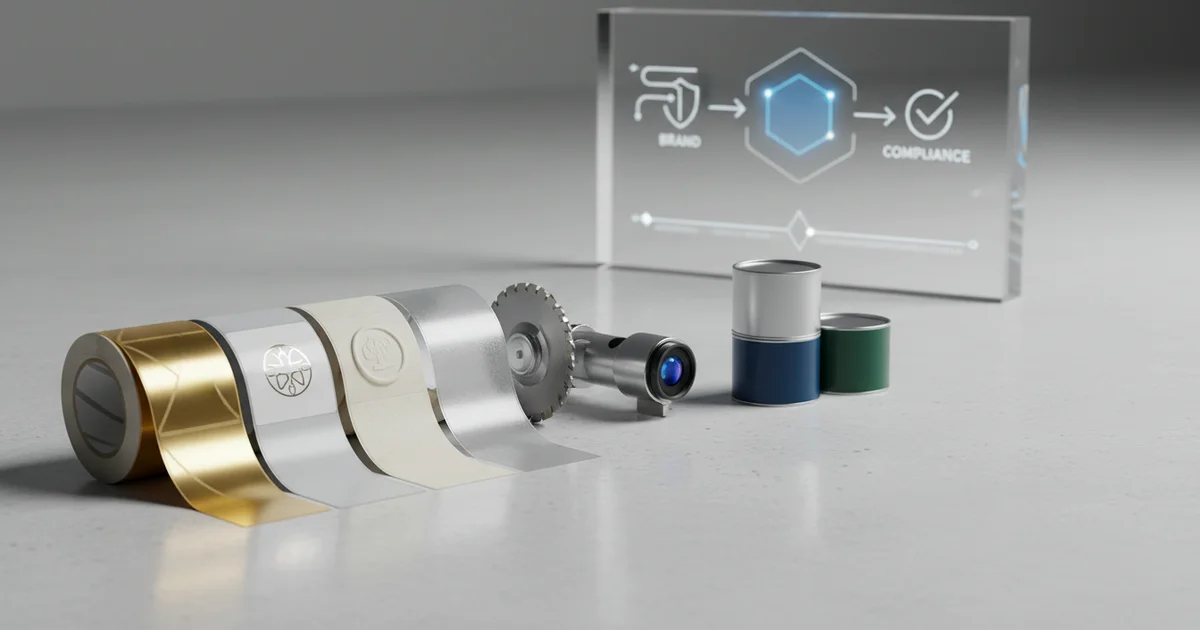
Label printing services: Digital wins under 5k units; flexographic is cheaper over 25k. Breakeven is 5k-15k units. Key specs: BOPP film for moisture, ANSI grade B+ barcodes, and wet-scrub tests for wine labels. Avoid 15-25% cost premiums.
Are you overpaying for your label printing services by choosing the wrong production method? This common mistake erodes margins and risks brand consistency across thousands of units.
Why Does Your Label Printing Services Strategy Need a 2026 Update?
Your label printing services strategy requires a 2026 update because buying teams that treat labels as a commodity pay more per unit than those matching production method to volume. Digital printing at 5-7 day turnaround now handles short runs cost-effectively, while flexographic presses at 10-15 day turnaround deliver lower per-unit costs above 25,000 units.
Buying teams often treat label sourcing as a commodity buy. That approach costs more per unit than a method-matched strategy. A production manager at a consumer goods firm sees this mismatch daily: a brand orders 10,000 labels on a flexographic press when digital would cut costs significantly.
As of 2026, the global label printing market is projected to reach $75.28 billion by 2030, growing at 7.9% CAGR. This anticipated growth is driven by e-commerce and regulatory demands. Brands that fail to align their production method with order volume will lose margin to competitors who do. Quarterly planning reviews are recommended to capture these savings.
Meeting ISO 9001:2015 standards on 600 gsm polyester labels with ±0.5 mm tolerance at 300 dpi ensures consistent quality across both digital and flexographic methods — a fundamental requirement for modern label printing services.
Digital vs. Flexographic: Choosing by Order Volume
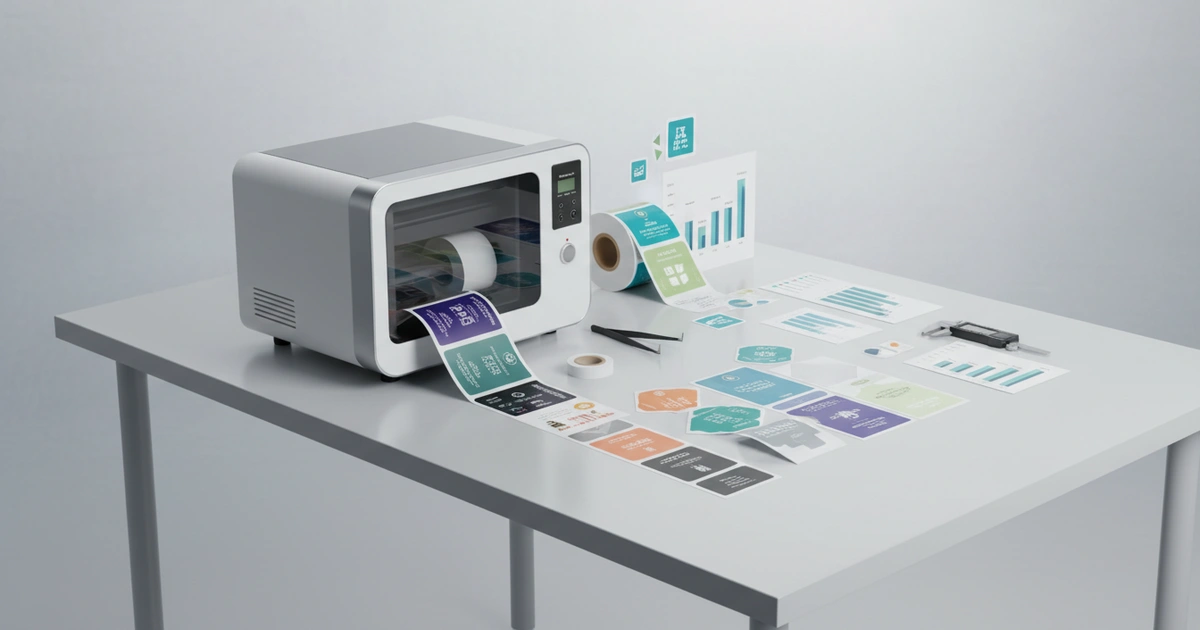
The decision between digital and flexographic label printing services is determined by order volume. Digital is cost-effective for runs under 5,000 units with 5-7 day turnaround, while flexographic becomes cheaper for runs over 25,000 units despite longer 10-15 day lead times. The breakeven zone is 5,000–15,000 units.
Digital presses like high-speed full-rotary 6-color multifunctional label printing presses handle short runs efficiently. Flexographic presses require 10-15 days but deliver lower per-unit costs at scale. A common mistake is ordering 8,000 labels on a flexographic press, paying setup costs that digital would have avoided.
| Order Volume | Recommended Method | Typical Turnaround | Per-Unit Cost |
|---|---|---|---|
| Under 5,000 units | Digital | 5-7 days | Lower |
| 5,000–15,000 units | Breakeven zone | 7-10 days | Depends on setup |
| 15,000–25,000 units | Flexographic or digital | 10-15 days | Competitive |
| Over 25,000 units | Flexographic | 10-15 days | Lowest |
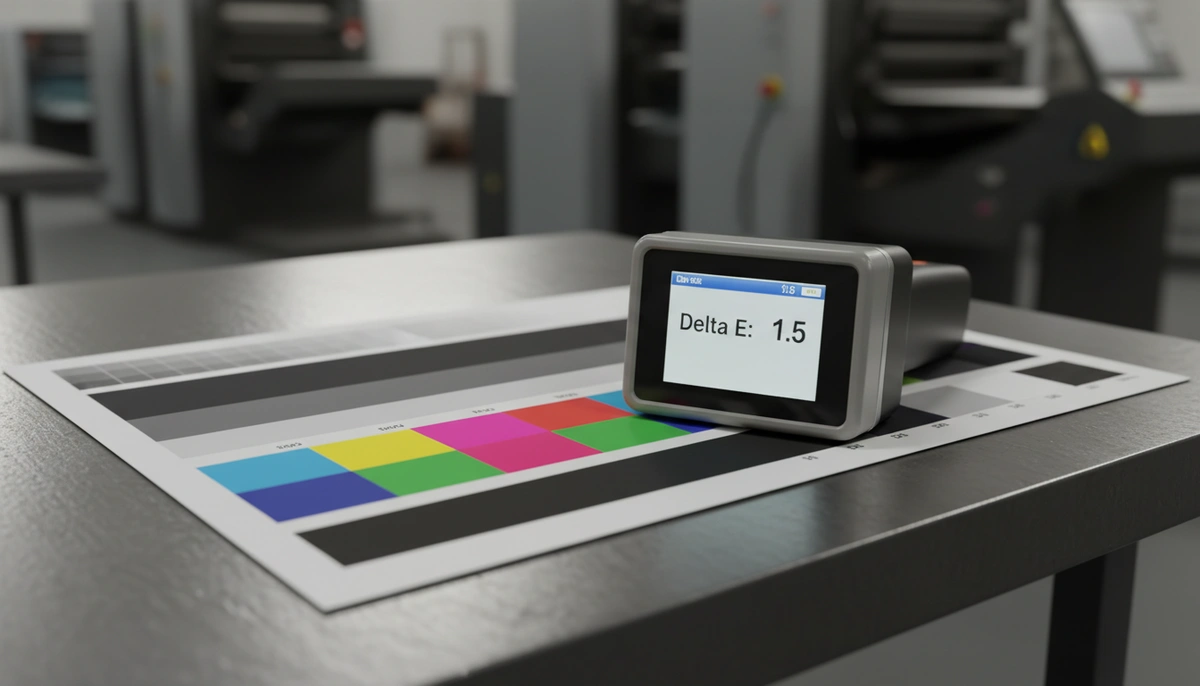
On high-speed Heidelberg and HP Indigo presses, combining CMYK process colors with Pantone spot colors enables Delta E under 2.0 at 300 dpi across every production sheet — a specification that directly enhances brand consistency.
Compliance and Quality Standards for Labels
Wine and Beverage Label Compliance
Wine label printing requires verification of substrate durability under wet conditions. BOPP film provides moisture resistance that paper labels lack. A wet-scrub test failure on a wine label can cost $5,000–$10,000 in reprint costs and lost shelf placement. Every wine label substrate should be tested before production.
Compared to standard paper labels, BOPP film offers superior resistance to condensation and ice bath exposure. This matters for wine bottles stored in coolers or shipped through warm climates. Although BOPP costs more per unit, the trade-off is zero field failures from label peeling or smudging.
Barcode Verification Standards
Barcode label printing requires a high grade. A low grade causes retail scanner rejection, leading to returned shipments and chargebacks. Every barcode must be verified with a GS1-128 scanner before the job ships.
"We reject 3-5% of incoming label orders because the barcode grade isn't specified in the spec sheet. Adding a barcode grade requirement to your RFQ takes 10 seconds and saves thousands." Production Team
In 2026, major retailers are tightening barcode standards. ISO 9001:2015 procedures combined with automated verification on Heidelberg and HP Indigo presses maintain grade consistency at 300 dpi across every production sheet. This multimethod approach to barcode quality is essential label printing services best practice that prevents retail rejection.
Production Quality Inspections
Quality assurance for label printing services requires three inspections. First, color accuracy: spectrophotometry verifies Delta E under 2.0 on every run. Second, die-cutting precision: automatic self-adhesive label die-cutting holds ±0.5 mm tolerance. Third, visual inspection: automatic label visual inspection machines catch defects at production speed.
Optical inspection catches 98% of defects that manual inspection misses, including hickeys, misregistration, and die-cut tears. Although automated inspection adds 5-10% to setup time, it reduces field failure rates by 40-60% compared to manual-only inspection. For high-value runs, combining 300 dpi resolution with FSC-certified paper stocks and ASTM D4169 shipping compliance creates a quality chain from material selection through final delivery.
How to Avoid Hidden Cost Premiums
The cost premium for mismatched method is avoidable. Consolidating seasonal runs into a single quarterly order reduces setup costs by 20-30%. Planning seasonal runs 6-8 weeks ahead captures optimal pricing.
On the other hand, rush orders for limited-edition labels can cost 30-50% more. Digital production handles these well with 5-7 day turnaround, but the per-unit cost is higher. Although flexographic offers lower per-unit costs, its setup time makes it unsuitable for last-minute runs.
A 4-week rolling stock buffer for high-velocity SKUs prevents emergency orders and keeps per-unit costs stable. Consignment stock programs warehouse inventory and ship on demand, further reducing cost volatility. When evaluating suppliers, label printing services comparisons should include total landed cost, not just per-unit price.
Our custom print production solutions team recommends total-landed-cost analysis for every RFQ. This approach accounts for setup, shipping, and inventory holding costs alongside per-unit pricing.
Pre-Production Planning: The 5-Step Checklist
Effective label printing services start with a structured pre-production plan. A 5-step checklist is followed for every project:
- Define order volume: Under 5k units = digital. Over 25k = flexographic. 5k-15k = test both methods.
- Select substrate: BOPP film for moisture resistance. Paper for dry environments. Request wet-scrub test results for wine labels.
- Specify barcode grade: High grade minimum. Verify with GS1-128 scanner before production.
- Set color tolerance: Delta E under 2.0 using spectrophotometry. Align with Pantone standards across all substrates.
- Request test reports: Drop, compression, and vibration per ISTA 6A if shipping to Amazon or major retailers.
CMYK to Pantone conversion accuracy is another critical pre-production step. Verifying Delta E under 2.0 before printing prevents costly color rework during production.
Certifications and Compliance Verification
Every label supplier should hold ISO 9001:2015 and ISO 14001:2015 certifications. These ensure consistent quality and environmental management. A facility in Shenzhen with a designation as a government official-printing enterprise since 2009 exemplifies this commitment.
"ISO 9001:2015 requires documented quality procedures and regular audits. In 2026, major retailers are requiring ISO-certified suppliers for their label programs." Production Team
For e-commerce brands, Amazon SIOC compliance requires ISTA 6A test reports. Our retail and e-commerce solutions team provides these on request. For wine and beverage brands, compliance for food-contact inks is essential. Request a Certificate of Analysis from your supplier before production.
Compliance verification also covers ASTM D4169 for shipping durability and FSC certification for sustainable sourcing. These certifications, combined with Delta E color control at ±2.0 tolerance, form the compliance backbone that major retailers and regulated industries demand from their label printing services partners. ISO 9001:2015 quality management standards provide the framework for this rigor.
Limitations and When to Consider Alternatives
This approach is not ideal for operations processing fewer than 250 units per SKU. Minimum orders are 500 units for offset and 250 units for digital. The main drawback of digital printing is higher per-unit costs above 15,000 units. Consider instead a phased rollout for smaller volumes to test designs and demand.
High-mix, low-volume shops may find flexographic won't work for their workflow. The trade-off between setup cost and per-unit savings is not always straightforward. This method may not be the best choice for businesses with rapidly changing label designs. Alternative providers offer advantages in extreme short-run digital with no minimums, which may suit product testing phases better.
On the other hand, high-volume operations with stable designs see ROI within 6-12 months on flexographic. Compared to digital alternatives, the breakeven depends on consistent throughput. Although setup costs are higher, per-unit savings compound quickly above 25,000 units. More suitable for seasonal campaigns with predictable volumes — when evaluating label printing services, a total-cost-of-ownership comparison is recommended before committing to a method.
Get Started with Optimized Label Printing
Optimizing your label printing services strategy is straightforward when you follow method-matched sourcing and compliance best practices. The forecast for 2026 and beyond shows continued growth in digital adoption for short runs and flexographic efficiency for long runs. Our promotional and diy goods solutions team can help evaluate your volume needs.
To get started today, contact us for a free consultation that includes a volume-method match analysis, barcode verification sample, and a custom quote with method-matched pricing for your order volume. Every consultation also includes substrate testing recommendations for your specific product category — whether wine and beverage, e-commerce, or industrial labeling.
Ready to Optimize Your Label Program?
Get a custom quote with method-matched pricing for your order volume. Includes free barcode verification and substrate testing.
Request a Free QuoteLearn more about our end-to-end process by exploring our custom print production solutions or by requesting a sample pack that demonstrates digital vs. flexographic quality across different substrates and volumes.
Frequently Asked Questions
When does digital label printing become cheaper than flexographic?
Digital label printing is cost-effective for runs under 5,000 units due to lower setup costs. Flexographic becomes cheaper above 25,000 units. The breakeven zone is 5,000–15,000 units, where total cost depends on setup fees and per-unit pricing.
What barcode grade is required to avoid retail rejection?
ANSI Grade B+ or higher is required. A grade below B+ causes scanner rejection, leading to returned shipments and chargebacks. Always specify 'ANSI Grade B+' in your RFQ and verify with a GS1-128 scanner before production.
What substrate is best for wine labels to prevent peeling?
BOPP film provides superior moisture resistance compared to paper labels. It passes wet-scrub tests (24-hour ice water submersion plus abrasion) that paper fails. Although BOPP costs more per unit, it eliminates field failures from condensation or ice bath exposure.
How can I reduce setup costs for label printing?
Consolidate seasonal runs into a single quarterly order to reduce setup costs by 20-30%. Plan 6-8 weeks ahead to capture optimal pricing. For high-velocity SKUs, maintain a 4-week rolling stock buffer to avoid emergency orders.