
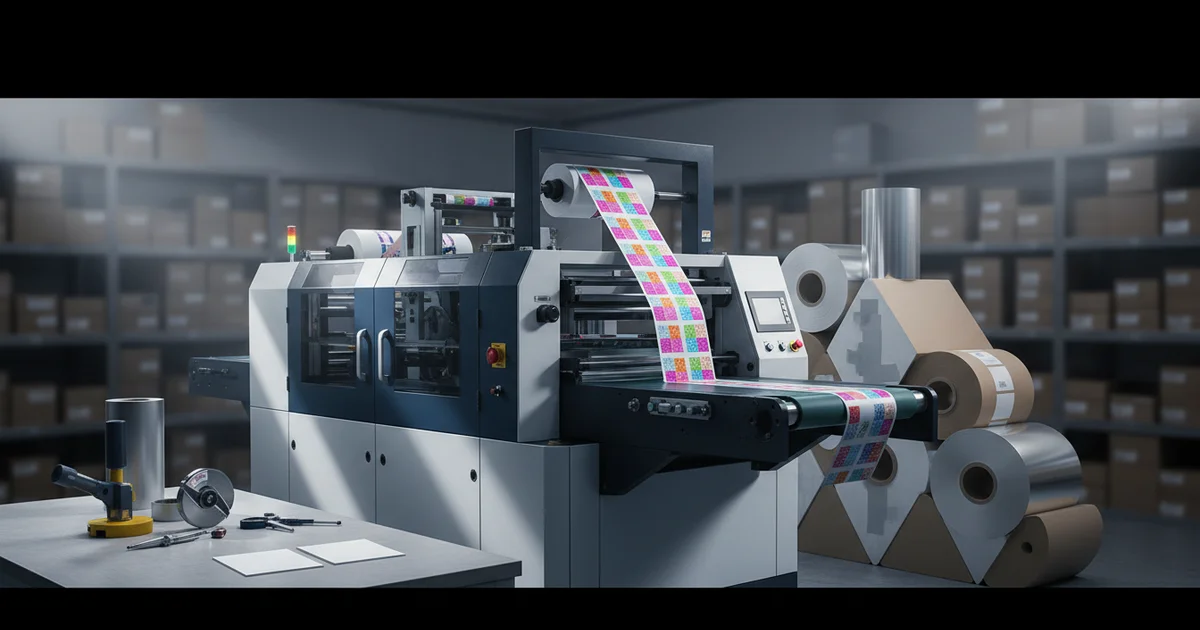
Bulk label printing cuts unit costs 25-40%. Flexographic beats digital above 15k-18k units. Material choice is critical: 80gsm gloss paper costs $18-$25/1k, while durable 2-mil BOPP is $35-$45/1k. Use G7 calibration for brand consistency across millions of labels.
What Is Bulk Label Printing and Why Does It Matter in 2026?
Bulk label printing is a high-volume production method that reduces per-unit costs by 25-40% compared to short-run printing. It is essential for scaling brands in 2026 due to e-commerce growth and demand for consistent brand presentation across retail channels.
Bulk label printing refers to producing large quantities of labels in a single production run, typically using flexographic or high-speed digital presses. This approach cuts per-unit costs by 25-40% compared to short-run methods, making it essential for scaling brands in 2026.
The economics are straightforward. Setup costs get spread across more units. Material waste drops. Press time per label shrinks. For a brand moving 50,000 units per SKU annually, the savings can fund an entire product line expansion. E-commerce expansion and demand for consistent brand presentation across retail channels drive steady market growth through 2030.
Our production team at JinXinCai Print Production Team runs a high-speed full-rotary 6-color multifunctional label printing press that handles bulk orders efficiently. Using flexographic presses at 150 meters per minute and G7 calibration (Delta E under 1.5), the team produces 50,000 labels with ±0.5 mm die-cut tolerance on 80gsm paper—combining speed, precision, and material consistency.
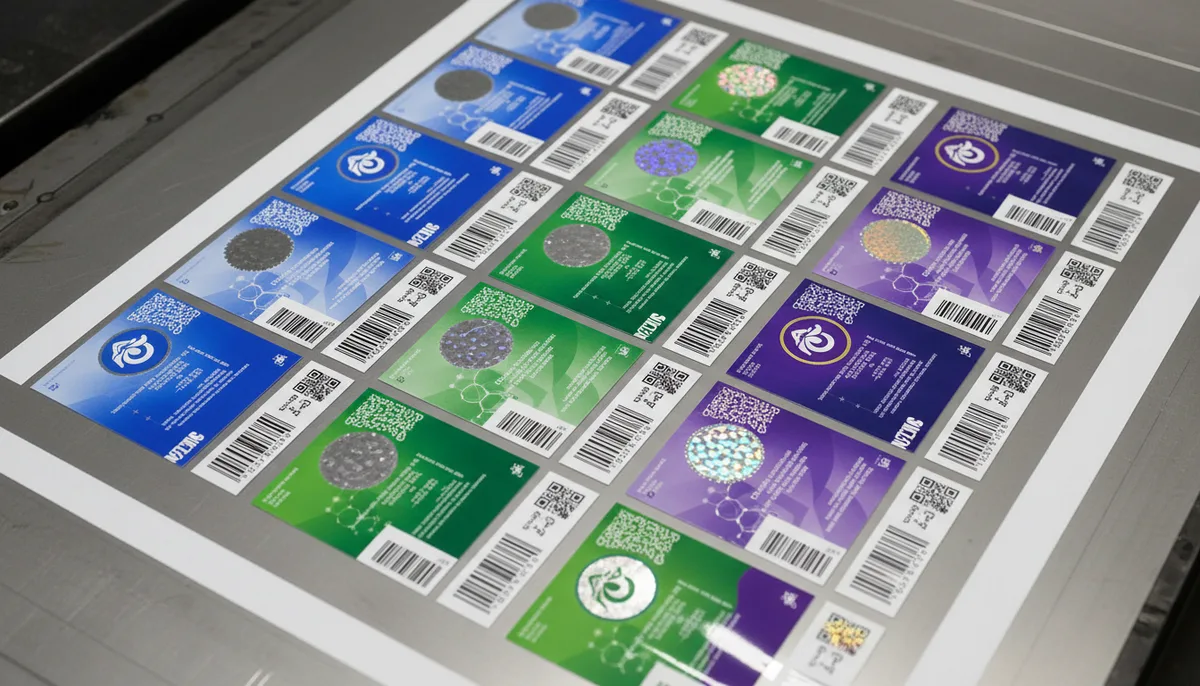
The bulk label printing market is projected to grow steadily through 2030. Driven by e-commerce expansion and demand for consistent brand presentation across retail channels. As of 2026, buying teams are increasingly evaluating total cost of ownership rather than just unit price.
Flexographic vs Digital vs Hybrid: Which Bulk Label Printing Method Wins?
The best method depends on your volume, material, and variable data needs. Flexographic printing wins for runs above 15,000-18,000 units. Digital printing (e.g., HP Indigo) is ideal for 250-5,000 unit runs at 1200 dpi resolution. Hybrid combines flexo for the base label with digital for variable data like barcodes or serial numbers.
Here is a quick comparison across the key criteria that matter for bulk print labels decisions:
| Criterion | Flexographic | Digital | Hybrid |
|---|---|---|---|
| Unit cost at 50,000 units | $12-$18 per 1k | $22-$30 per 1k | $15-$22 per 1k |
| Minimum order quantity | 5,000-10,000 units | 250-500 units | 1,000-3,000 units |
| Color consistency (Delta E) | < 1.5 with G7 calibration | < 2.0 standard | < 1.5 flexo base, < 2.0 digital |
| Setup cost per run | $150-$400 per color | Near-zero | $150-$400 flexo + $0 digital |
| Turnaround time | 7-12 business days | 3-5 business days | 5-8 business days |
| Variable data capability | No | Yes | Yes |
| Material range | Paper, film, foil, synthetic | Paper, some films | Paper, film, foil, synthetic |
On the other hand, digital printing offers highly competitive speed for short runs. If you need 500 labels for a product test, digital is the only practical choice. Compared to flexo, digital eliminates plate costs entirely.
Hybrid printing is the emerging 2026 trend that most buyers overlook. It uses flexographic printing for the common base label elements (brand colors, logo, product name) and digital for variable data (batch numbers, expiration dates, QR codes) in a single pass. This approach can save 15-25% over full digital production for medium-volume programs that need variable data.
The 5 Critical Criteria for Choosing a Bulk Label Printing Partner
Choose your label partner by evaluating: color management (Delta E), material compatibility, die-cut tolerance, quality certifications (ISO 9001, ISO 14001), and turnaround reliability. These 5 criteria separate reliable partners from those that cause costly reprints.
Choosing the right bulk label printing partner requires evaluating several critical criteria, from color consistency to material compatibility. Here are the five criteria that separate reliable partners from those that cause costly reprints.
1. Color Consistency Across Runs
Brand consistency is non-negotiable. Ask your partner about their color management process. At JinXinCai Print Production Team, we use spectrophotometry-based color verification on every production run. Our target is Delta E under 2.0, verified with a PULISI automatic label inspection system.
Bulk labels printing requires repeatable color from run #1 to run #50,000. G7 calibration is the gold standard here. It ensures your brand looks identical across different substrates and press conditions.
2. Material Compatibility
Your label material affects cost, durability, and print quality. 80gsm gloss paper is the most economical choice for full color label printing at $18-$25 per 1,000 labels. It works well for retail shelf labels and product tags. FSC certified paper options are available for environmentally conscious brands.
For durable applications like electronics or outdoor products, 2-mil BOPP film costs $35-$45 per 1,000 labels but resists moisture, chemicals, and abrasion. Synthetic materials like polypropylene run $50-$70 per 1,000 labels and offer tear resistance.
3. Die-Cut Precision
Complex shapes require precision die-cutting. Our automatic self-adhesive label die-cutting machine handles intricate contours with ±0.5 mm tolerance for labels up to 12 × 6 inches. This matters for custom-shaped labels that must match packaging contours exactly.
4. Quality Management Systems
ISO 9001:2015 standard certification ensures consistent label printing quality through documented processes and regular audits. ISO 14001:2015 shows environmental responsibility. Ask for both certifications before committing to a partner.
"ISO 9001:2015 requires documented quality control procedures at every production stage. This translates to fewer defects and more predictable results for our clients." — JinXinCai Print Production Team
5. Turnaround Reliability
Bulk orders typically need 7-12 business days from proof approval. Digital runs can ship in 3-5 days. Confirm lead times for your specific volume and ask about rush options for seasonal campaigns.
At What Volume Does Flexographic Label Printing Become Cheaper Than Digital?
Flexographic printing achieves lower per-unit cost above 15,000-18,000 units per SKU per run. Below this threshold, digital printing is more economical due to near-zero setup costs and no plate fees.
The breakeven calculation is simple. Digital has a flat per-unit cost regardless of volume. Flexo has higher upfront costs (plates at $150-$400 per color, setup time of 2-4 hours) but lower per-unit costs at scale.
Here is a real-world example. A 50,000-label run using flexographic printing costs about $750-$900 total. The same run on digital would cost $1,100-$1,500. That is a 30-40% savings for the flexo route.
| Volume | Digital Cost per 1k | Flexo Cost per 1k | Recommended Method |
|---|---|---|---|
| 500 units | $35-$50 | $150-$300 | Digital |
| 5,000 units | $22-$30 | $25-$40 | Digital |
| 15,000 units | $20-$28 | $18-$25 | Flexo or Hybrid |
| 50,000 units | $18-$25 | $12-$18 | Flexo |
| 100,000+ units | $16-$22 | $8-$14 | Flexo |
The breakeven point shifts based on the number of colors. A 4-color label has lower plate costs than a 6-color design. The trade-off is that more colors mean higher setup costs but potentially better brand impact. For example, a 6-color flexo run at 100,000 units uses plates costing $900-$2,400, but per-unit cost still drops to $8-$14 per 1k.
Material Matters: How Substrate Choice Affects Bulk Label Printing Cost and Quality
80gsm gloss paper is the most cost-effective substrate at $18-$25 per 1,000 labels. BOPP film offers moisture resistance at $35-$45 per 1,000 labels. Synthetic materials provide maximum durability at $50-$70 per 1,000 labels. Your choice impacts 30-50% of total label cost.
Your substrate choice determines 30-50% of your total label cost. It also affects durability, print quality, and application method. Here is how common materials compare for bulk label printing.
80gsm gloss paper is the standard for retail and e-commerce labels. It accepts CMYK and Pantone colors well. The drawback is that it tears easily and is not water-resistant. This material is not suitable for outdoor use or cold-chain applications. FSC certified options are available for eco-friendly packaging.
2-mil BOPP film costs nearly double paper but offers moisture resistance, chemical resistance, and durability. It is ideal for electronics labels, outdoor products, and shipping labels. However, BOPP requires special ink adhesion treatments on some presses. A typical run of 50,000 labels on BOPP costs $1,750-$2,250 for digital or $600-$900 for flexo.
Synthetic materials like polypropylene or vinyl offer the best durability but at $50-$70 per 1,000 labels. These are used for industrial applications, safety labels, and long-life products. The trade-off is that synthetic labels may not accept the same ink systems as paper or film. Using HP Indigo digital presses at 1200 dpi resolution ensures high-quality output on synthetic substrates for short runs.
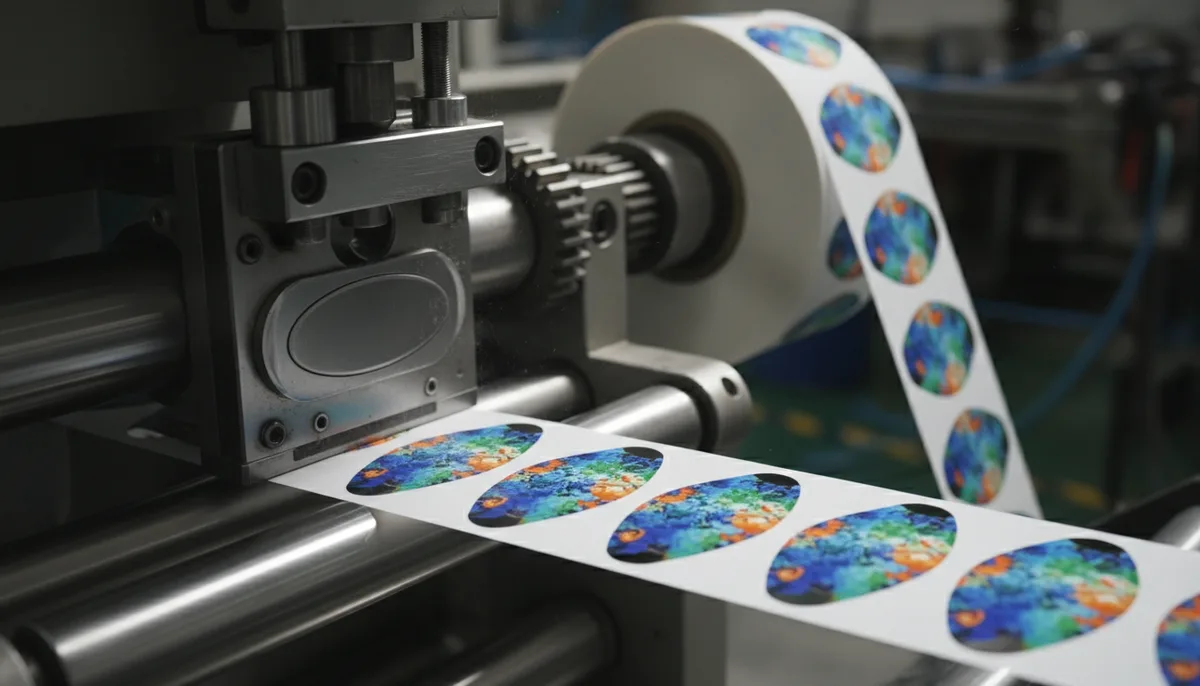
For full color label printing, paper still delivers the best color gamut at the lowest cost.
Ready to reduce your label costs?
Get a custom quote for your bulk label printing needs. Our team reviews order volumes, substrates, and design complexity to deliver the best price for runs of 5,000 to 500,000+ labels.
Request a QuoteLimitations of Bulk Label Printing: What to Consider Before Committing
While bulk label printing delivers substantial savings, it is not ideal for every situation. Understanding the drawbacks helps you choose the right approach for your specific needs.
Drawback: Minimum order quantities
Most bulk label printing partners require a minimum of 5,000-10,000 labels per SKU. This won’t work for startups testing new products or small batch releases. For quantities under 2,000 labels, consider digital printing instead.
Drawback: Design inflexibility
Once plates are made for flexographic printing, changing the design mid-run is expensive and time-consuming. On the other hand, digital printing allows last-minute edits. Alternatively, hybrid solutions offer a middle ground—fixed base design with variable data overlay.
Compared to short-run digital, bulk label printing is more suitable for stable, high-volume products with established branding. For seasonal or promotional labels with frequent design changes, digital may be a better fit.
Final Takeaway: Optimize Your Bulk Label Printing Strategy for 2026
Bulk label printing remains the most cost-effective solution for brands with annual volumes above 15,000 units per SKU. As of 2026, combining flexographic base runs with digital variable data printing is projected to become the dominant approach. The market is expected to grow 6-8% annually through 2030, driven by e-commerce and sustainability demands.
To get started: evaluate your annual label volume, material requirements, and color consistency needs. Then contact our production team for a bulk label printing quote. We’ll help you choose between flexo, digital, or hybrid—and optimize your total cost of ownership.
Learn more: Explore our label material selection guide or read about flexo vs digital cost analysis.
Frequently Asked Questions
At what volume does flexographic printing become cheaper than digital?
Flexographic printing achieves lower per-unit cost above 15,000-18,000 units per SKU per run. Below this threshold, digital printing is more economical due to near-zero setup costs and no plate fees. For example, a 50,000-label flexo run costs $12-$18 per 1k labels versus $22-$30 for digital.
What is the best substrate for bulk label printing?
80gsm gloss paper is the most cost-effective at $18-$25 per 1,000 labels, ideal for retail and e-commerce. For moisture resistance, 2-mil BOPP film costs $35-$45 per 1,000 labels. Synthetic materials like polypropylene offer maximum durability at $50-$70 per 1,000 labels but require compatible ink systems.
What certifications should I look for in a bulk label printing partner?
Look for ISO 9001:2015 certification for consistent quality through documented processes and regular audits. ISO 14001:2015 indicates environmental responsibility. These certifications ensure fewer defects and predictable results, especially for high-volume runs.
Can hybrid printing save money compared to full digital?
Yes, hybrid printing can save 15-25% over full digital production for medium-volume programs needing variable data. It uses flexo for the base label (brand colors, logo) and digital for variable elements (barcodes, serial numbers) in a single pass, combining cost efficiency with flexibility.