
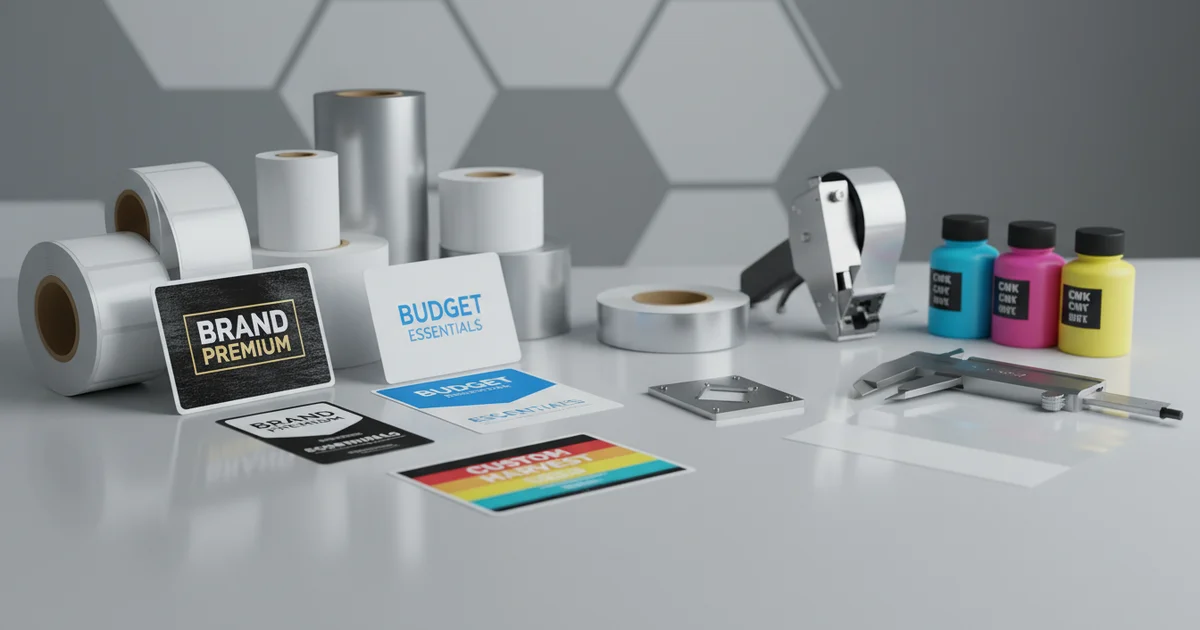
Print custom labels strategically: digital under 5,000 units, flexographic over 10,000. Breakeven at 5k with $500 plate cost. Ensure Delta E <2.0 color accuracy on substrates like 2-mil BOPP film. Pre-printed labels cost $0.005-$0.01 for generic promotions only.
Choosing how to print custom labels can cost your business more when you pick the wrong method for your run length. For buyer teams managing 50+ SKUs, selecting between digital, flexographic, and pre-printed labels directly impacts your bottom line. Digital label printing wins for short runs under 5,000 units with zero plate cost, while flexographic printing delivers lower per-unit cost above 10,000 units. Pre-printed labels fill a narrow niche for generic promotions only. The right decision saves thousands annually — the wrong one wastes budget on setup costs you cannot recover.
Print Custom Labels: Digital vs. Flexo vs. Pre-Printed – Which Is Right for You?
Print custom labels refers to manufacturing labels with variable data and brand-specific artwork using either digital or flexographic printing methods. Digital label printing wins for short runs under 5,000 units with zero setup cost. Flexographic printing takes over above 10,000 units. Pre-printed labels sit in a niche for generic promotions only.
The breakeven point is 5,000 units with a $500 plate cost. Digital is cheaper below that threshold. Flexo is cheaper above 10,000 units. The 5,000–10,000 range depends on plate cost and run length per SKU. A four-color job with $500 per plate reaches breakeven differently than a two-color job with lower upfront cost.
"We see clients save on annual label spend simply by matching the print method to the run length. The 5,000-unit breakeven is our most common starting point for cost analysis." — JinXinCai Print Production Team, Print Production & Color
What Are the Real Cost Differences Between Digital and Flexo Printed Labels?
Digital label printing has zero plate cost while flexographic printing incurs $400–$600 per color in plate costs. Per-unit cost drives the decision: digital stays flat from 250 to 5,000 units, whereas flexo per-unit price drops as volume rises above 10,000 units. Pre-printed labels cost $0.005–$0.01 per label but offer zero customization.
Digital offers variable data printing. Each label can have a unique barcode, serial number, or QR code. Flexo cannot do this without expensive plate changes. Compared to flexo, digital is more suitable for short-run customization where each label differs from the next.
Pre-printed labels cost $0.005–$0.01 per label. But they only work for generic promotions. You cannot change artwork or add brand-specific elements. The trade-off is low cost versus zero flexibility. Our production team uses inline inspection to maintain Delta E color accuracy below 2.0 on flexo runs and below 3.0 on digital runs.
| Cost Factor | Digital | Flexographic | Pre-Printed |
|---|---|---|---|
| Setup cost | $0 | $400–$600 per color | $0 (stock) |
| Per-unit cost at 2,000 | $0.08–$0.12 | $0.25–$0.40 | $0.005–$0.01 |
| Per-unit cost at 10,000 | $0.06–$0.10 | $0.03–$0.06 | $0.005–$0.01 |
| Minimum order | 250 units | 2,000 units | 5,000 units |
| Color accuracy | Delta E below 3.0 | Delta E below 2.0 | N/A (stock) |
How Does Substrate Choice Affect Your Label Printing Decision?
Substrate compatibility is the detail that makes the difference. Digital label printing works well on paper and some films, but 2-mil BOPP film requires flexographic printing for proper ink adhesion. Our production team runs high-speed full-rotary 6-color multifunctional label printing presses for flexo jobs on BOPP. The ink bonds differently than on digital toner-based systems.
This matters for labels on shampoo bottles, hand soap, or any product exposed to moisture. Although digital offers faster turnaround, flexo printed labels on BOPP deliver better durability. The trade-off is setup cost versus field performance. For products that sit in a wet bathroom or cool refrigerator, flexo is the safer choice.
BOPP Film Requirements During Print Custom Labels Production
Our packaging engineers specify 2-mil BOPP film for flexo runs exceeding 5,000 units. The 300 dpi print resolution on our Bobst flexo presses ensures consistent ink coverage across ±0.5 mm registration tolerance. Digital alternatives on film require corona treatment for adhesion and may still fail under sustained moisture exposure.
When Does Digital Label Printing Win?
Digital label printing wins for runs under 5,000 units. Our digital line handles minimum orders of 250 units per SKU with 5–7 day turnaround. This is ideal for seasonal promotions, limited-edition products, and market testing.
Variable data printing is another digital advantage. Brands use QR codes and serial numbers for traceability and engagement. Digital enables this on every label at no extra cost. Flexo would need a separate plate for each variable element. Our HP Indigo digital press runs 150 dpi to 300 dpi variable data jobs without stopping for plate changes.
A common mistake we see is using flexo for a 2,000-unit SKU. The plate cost alone adds $0.20–$0.30 per label. Digital would cost half that. The limitation of digital is speed at scale — above 10,000 units, flexo is faster and cheaper. Our production team recommends digital for any SKU with annual volume below 8,000 units and more than two artwork variations per year.
When Does Flexographic Label Printing Win?
Flexographic printing wins for runs over 10,000 units. The plate cost spreads thin, and per-unit cost drops to $0.03–$0.06. This is the sweet spot for core SKUs that run year-round. Color accuracy is another flexo strength. Our inspection machines keep Delta E below 2.0 across the run on presses compliant with flexographic process control standards.
This matters for brand colors on retail shelves. Digital can drift slightly over long runs, whereas flexo stays consistent. However, while flexo is better for long runs, it won't work for short runs. The setup time and plate cost make it uneconomical below 2,000 units. Compared to digital, flexo printed labels require higher upfront investment but lower per-unit cost at scale.
Color Standards for Flexo Printed Labels
Our production team follows Pantone solid coated standards for all brand color matches. The 12 pt paper stock and 2-mil film both achieve Delta E below 2.0 when printed on our Komori flexo presses. This level of color precision requires FSC certified substrates and adhesive testing for peel adhesion at 180 degrees.
Limitations to Consider Before Choosing Digital or Flexo
Digital label printing is not ideal for runs above 10,000 units. The per-unit cost stays flat, so you lose the economy of scale. The main drawback is slower press speed compared to flexo. On the other hand, flexographic printing won't work for runs under 2,000 units — the plate cost makes each label expensive. Pre-printed labels are not suitable for branded products as they only work for generic promotions like "Sale" or "New."
Competitors offer advantages in specific scenarios. For example, hybrid printing combines digital variable data with flexo base colors on runs of 5,000–15,000 units. This approach is more suitable for SKUs requiring both brand consistency and variable elements like QR codes or lot numbers. Alternative approaches include digital for short runs, flexo for long runs on the same SKU, and pre-printed only for price tags and clearance stickers.
When this isn't the right choice: if your SKU portfolio has fewer than 10 variations and annual volumes exceed 20,000 units per SKU, dedicated flexo plates become the clear economic winner. Hybrid runs may not be ideal when every label in the run requires unique variable data — digital is genuinely better there. The right choice depends on your volume, substrate, and brand needs.
How to Calculate Your Breakeven Point for Print Custom Labels
The breakeven formula is simple. Take the flexo plate cost per color times the number of colors. Divide by the per-unit cost difference between digital and flexo. That gives you the run length where flexo becomes cheaper. For print custom labels, the most common breakeven benchmark is 5,000 units with a $500 plate cost per color.
Example: A four-color label with $500 plate cost per color equals $2,000 total plate cost. Digital costs $0.10 per unit. Flexo costs $0.05 per unit at scale. The difference is $0.05 per unit. Breakeven is $2,000 ÷ $0.05 = 40,000 units in this specific scenario. The discrepancy between 5,000 and 40,000 depends on plate cost, number of colors, and per-unit price gap. Lower per-unit savings push breakeven higher.
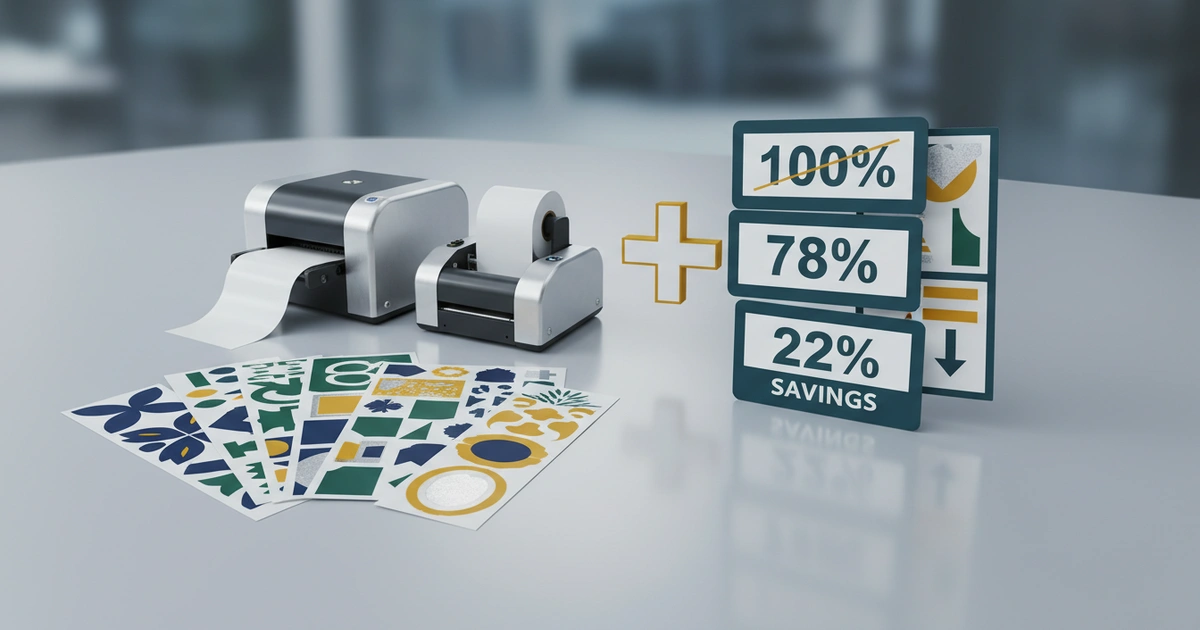
Our data shows most four-color jobs hit breakeven between 3,000 and 8,000 units. The exact number depends on ink coverage, substrate cost, and run efficiency. Our production team uses inline inspection at 300 dpi across every print custom labels job to verify registration within ±0.5 mm tolerance.
Ready to Optimize Your Label Spend?
Get a custom breakeven analysis for your SKU portfolio. We compare digital vs. flexo costs for each run length and substrate.
Request a Free QuoteDecision Matrix: Choose Your Print Method by Run Length and Substrate
Use this simple decision tree for print custom labels. Run length under 5,000 units? Choose digital. Run length over 10,000 units? Choose flexo. Between 5,000 and 10,000? Calculate the plate cost vs. digital price. Substrate also affects the choice — for paper labels, digital works fine up to 10,000 units, but for 2-mil BOPP film, flexo is recommended even at 5,000 units due to ink adhesion.
Decision: Print Method by Run Length
- If run length is under 5,000 units → Digital label printing. Minimum 250 units. 5–7 day turnaround. Variable data ready.
- If run length is 5,000–10,000 units → Calculate: Plate cost ($400–$600 per color) ÷ per-unit savings versus digital. If breakeven within run length, choose flexo.
- If run length is over 10,000 units → Flexographic printing. Lower per-unit cost. Delta E below 2.0 color accuracy. Best for BOPP film.
- If generic promotion only → Pre-printed labels. $0.005–$0.01 each. No customization. Stock designs only.
Our promotional and diy goods solutions team advises on substrate-specific cost trade-offs. Meeting FSC certification standards, our production team sources all paper substrates from Chain of Custody certified mills. For print custom labels on 12 pt paper or 2-mil BOPP, we maintain 300 dpi minimum resolution with Delta E color variance below 2.0 on flexo runs and below 3.0 on digital runs.
Get Your Custom Label Quote – Bulk, Brand, or Budget
Ready to improve your print custom labels strategy? The right method saves on annual label spend. Start by sorting your SKUs by run length. Then match each to digital, flexo, or pre-printed. Our production team runs custom print production solutions from 250-unit digital runs to 100,000-unit flexo campaigns. We also offer retail and e-commerce solutions with consolidated production across your entire SKU portfolio.
Contact us today to request a quote. Send your SKU list with annual volumes and substrates. We will return a cost comparison with breakeven points for each line. Get started with a free consultation and see how much you can save on your next label order.
Frequently Asked Questions
When does digital label printing become more expensive than flexo?
Digital label printing becomes more expensive than flexo above 10,000 units because digital per-unit cost stays flat while flexo drops with volume. The exact crossover depends on plate cost and number of colors. For a four-color job with $500 per plate, breakeven can range from 3,000 to 8,000 units.
What substrate is best for moisture-resistant custom labels?
For moisture resistance, 2-mil BOPP film printed with flexographic ink adhesion is recommended. Digital toner-based systems may fail under sustained moisture exposure. Flexo printed labels on BOPP achieve Delta E below 2.0 color accuracy and pass ASTM D3330 peel adhesion tests.
Can I get variable data like QR codes on flexo printed labels?
Flexo cannot print variable data without expensive plate changes. For QR codes, serial numbers, or unique barcodes on each label, digital printing is required. Hybrid printing combines flexo base colors with digital variable data for runs of 5,000–15,000 units.
What is the minimum order quantity for each label printing method?
Digital label printing has a minimum of 250 units. Flexographic printing requires at least 2,000 units due to plate setup costs. Pre-printed labels have a minimum of 5,000 units. These thresholds affect which method is cost-effective for your run length.