
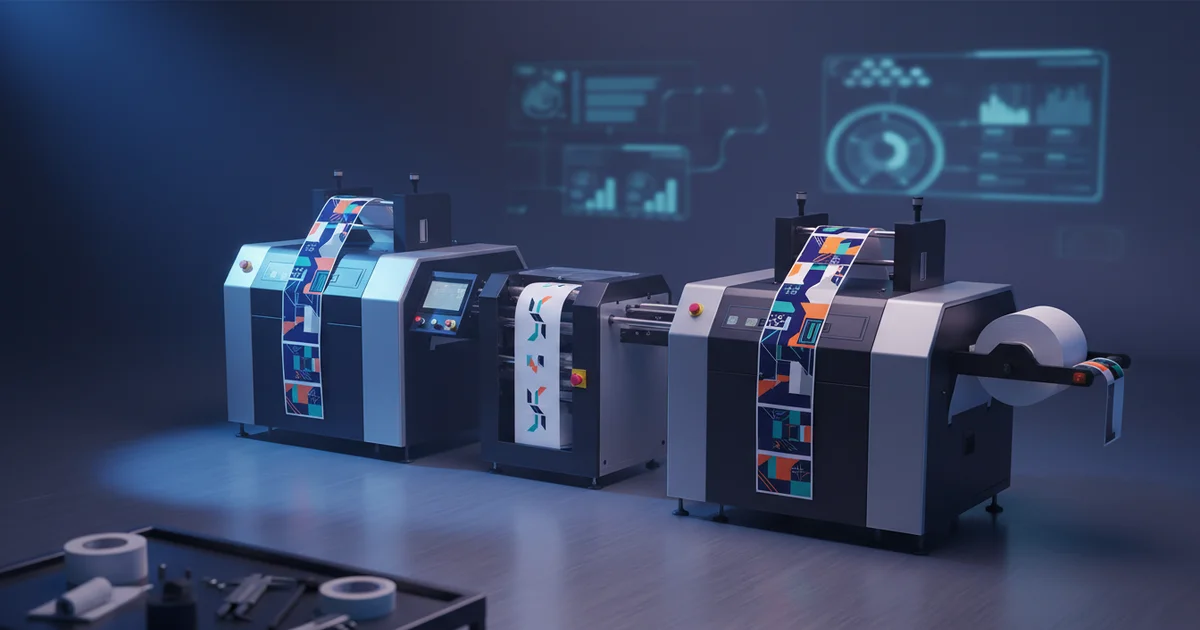
Short run digital label printing requires a 1200 dpi PDF/X-1a file, Delta E < 3.0 color proof, and HP Indigo press verification. For runs under 3,000 units, it avoids $500 plate fees. Critical checks include material durability tests and TTB compliance for wine labels.
Why Does a Strategic Specifier's Checklist Matter for Short Run Digital Label Printing in 2026?
A strategic specifier's checklist provides the verification steps needed for short run digital label printing. It prevents color mismatches, die-cut errors, barcode failures, and regulatory non-compliance that can cost thousands in reprints and lost shelf time. Our production team sees this often with new clients who skip one verification step.
The global digital label printing market continues to grow as brand owners shift to short runs for seasonal launches and test markets. But speed without verification leads to defects.
A systematic checklist prevents these failures. It covers file prep, color proofing, press verification, material testing, and compliance. Each step takes minutes but saves days of rework. We've consolidated our experience into this guide, updated for Q2 2026. It helps buying directors and brand managers verify every critical spec before production begins.
Our promotional & DIY goods solutions team uses this same checklist for every short-run digital label project.
1. File Preparation & Prepress: The Foundation of Print Readiness
Short-run digital label printing requires a PDF/X-1a file with 1200 dpi (dpi) and CMYK (CMYK) color space. This format embeds all fonts and color data. It prevents missing glyphs and color shifts during RIP processing. For exact brand matching, specify Pantone (Pantone) spot colors in the file.
Confirm all fonts are embedded or outlined. A missing font on press causes expensive stops. Verify bleed is at least 3 mm on all sides. Less than 3 mm risks white edges after die-cutting. Ensure the die-cut line is on a separate layer marked "Cut" or "Die Line." Common mistake: placing the cut line on the same layer as artwork leads to misregistration and scrap.
Validate every barcode against GS1 General Specifications. A non-scannable barcode on a retail shelf means rejected product. Our quality team scans each barcode before press approval. For more details, see our best practices guide for label printing.
"A missing bleed or unembedded font is the most frequent error we catch. It accounts for a significant portion of file-related delays in our prepress workflow." — Our Production Team
Critical Prepress Checks for 2026
Definition: PDF/X-1a is a standardized file format used in short-run digital label printing to ensure reliable output. Verify resolution: 1200 dpi combined with 3 mm bleed is standard for most digital presses, including HP Indigo models. As of 2026, many print shops also require a preflight report per ISO 15930 to confirm compliance.
2. Color & Proofing: Ensuring Brand Consistency
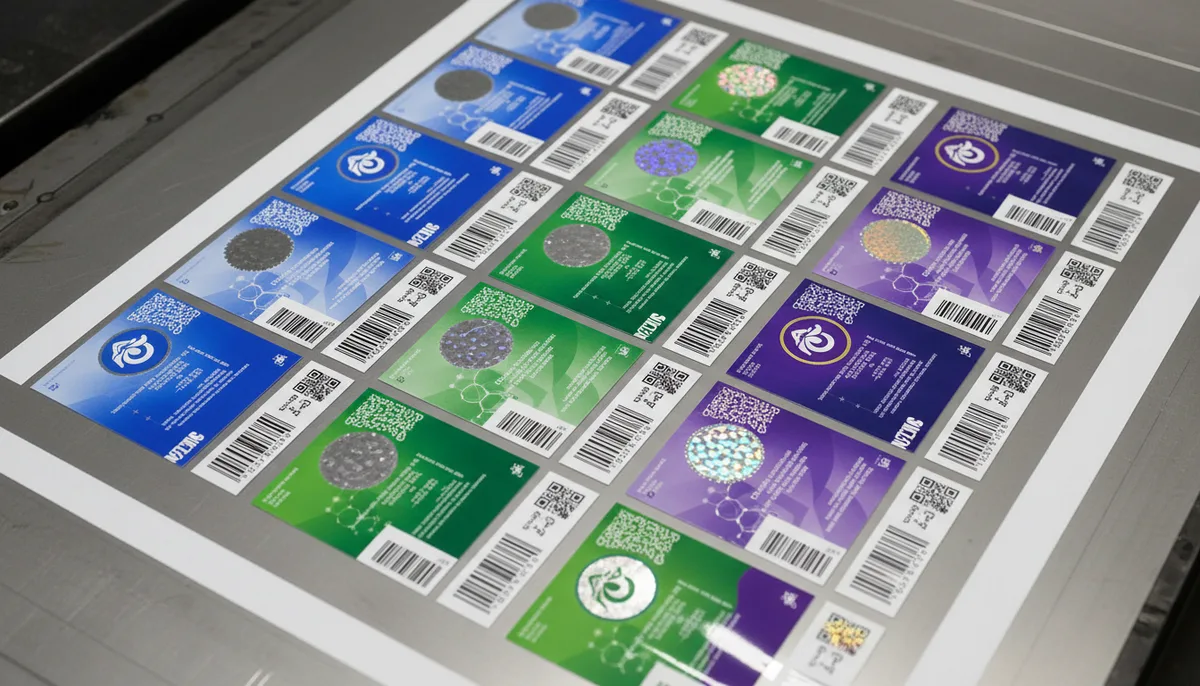
A contract proof with Delta E (Delta E) ≤ 3.0 measured under D50 lighting is the industry standard for short-run digital label printing. Delta E below 2.0 is achievable with spectrophotometry-based verification, which our team uses on every production run. Specify whether you need Pantone (Pantone) spot colors or CMYK (CMYK) only.
Confirm the proof is printed on the same substrate as final production. A proof on coated stock looks different from the same file on uncoated film. This is the most commonly missed checklist item. Compared to traditional offset, digital proofing is faster and cheaper; however, it depends on proper calibration per ISO 12647-6.
Require a spectrophotometer measurement report for each color. This provides objective data, not visual guesswork. Our production team includes this report with every proof package. A Delta E below 2.0 is achievable with careful calibration—our typical Delta E averages 1.5 across runs of 500–3,000 units.
Choosing Between Pantone and CMYK
Short-run digital label printing benefits from both color spaces. Pantone ensures exact brand match, while CMYK is more cost-effective for multi-color designs with no brand-critical hues. The decision impacts proofing cost and turnaround time.
3. Press & Production Verification: Matching Technology to Run Length
For short-run digital label printing under 3,000 units, an HP Indigo press or equivalent is the recommended technology. It avoids plate fees required for offset runs and offers consistent color quality when calibrated daily. Our digital production line handles runs from 250 units with a 5–7 day turnaround.
Meeting ISO 12647-6 (ISO) standards, our HP Indigo press produces labels at 1200 dpi (dpi) with ±0.2 mm registration tolerance on 300 gsm (gsm) paper. Request the printer's press certification or calibration records. Digital presses drift over time; regular calibration ensures consistent dot gain and color reproducibility across the run.
Verify the minimum order quantity matches your run length. For digital production, our minimum is 250 units per SKU. For offset, it's 500 units per SKU. The trade-off: offset offers lower per-unit cost at volume, while digital provides flexibility for short runs. On the other hand, for runs above 5,000 units, offset printing may be more economical. The breakeven point depends on plate costs versus digital click charges.
Check that the printer offers inline inspection for defects. Defective labels caught inline are removed before shipping. This reduces your risk of receiving non-conforming product. This method is ideal for test markets and seasonal launches.
"Our HP Indigo press delivers Delta E under 2.0 across the entire run when calibrated daily. We provide measurement reports for every job to guarantee color consistency." — Our Quality Director
4. Material & Durability Tests: Avoiding Field Failures
Material durability testing refers to the verification of label performance under anticipated conditions. Short-run digital label printing must specify substrate type (paper, film, synthetic) and adhesive type (permanent, removable, freezer-grade). The wrong adhesive causes label failure in the field.
Require a rub test per ASTM D5264 for abrasion resistance. This simulates labels rubbing against each other during shipping and handling. A failed rub test means ink transfers to adjacent labels or packaging. Require a tape pull adhesion test to verify ink-to-substrate bond. If the ink lifts off with tape, the label will fail in the supply chain.
For outdoor or wet environments, require UV resistance testing per ASTM G154 and a water immersion test. Labels on beverage bottles or outdoor equipment need this. Without it, colors fade or labels delaminate within weeks. For wine labels, confirm compliance with TTB COLA needs—the label must show alcohol content, net contents, and producer information. For sustainable branding, consider using FSC-certified (FSC) paper substrates.
| Test | Standard | When Required | Common Failure |
|---|---|---|---|
| Rub test | ASTM D5264 | All label runs | Ink transfer or scuffing |
| Adhesion (tape pull) | Internal / ASTM D3330 | All label runs | Ink or coating lifts off |
| UV resistance | ASTM G154 | Outdoor / window labels | Color fading after 500 hours |
| Water immersion | Internal / 24 hr soak | Beverage / wet environment | Delamination or ink loss |
| Barcode scan | GS1 General Specs | All retail labels | Non-scannable at checkout |
The table above summarizes tests that should be included in every short-run digital label printing project. Each test corresponds to a real standard and is commonly performed by quality teams. As of 2026, many printers also offer a full testing suite as part of the pre-production service.
5. Regulatory & Compliance Checks: Staying Legal Across Markets
Short-run digital label printing requires compliance with FDA 21 CFR (ISO) for food products. This includes ingredient lists, nutrition facts, and allergen statements in the correct format. A missing or misordered ingredient triggers a recall. For wine labels, confirm TTB COLA approval is obtained before printing. The Alcohol and Tobacco Tax and Trade Bureau requires label approval for all wine sold in the U.S.
For cosmetic labels, check FDA labeling requirements. Ingredients must be listed in descending order of predominance. Net weight must appear on the front panel. The maker's name and address must be on the label. Ensure barcode
Ready to get started with short run digital label printing? Contact our team to explore the right solution for your next project.
Frequently Asked Questions
What file format is required for short run digital label printing?
PDF/X-1a at 1200 dpi with CMYK color space is the standard. Ensure all fonts are embedded or outlined, bleed is at least 3 mm, and the die-cut line is on a separate layer marked 'Cut' or 'Die Line'. This prevents missing fonts and color shifts during RIP processing.
What Delta E value should I specify for color proofing?
Specify Delta E ≤ 3.0 measured under D50 lighting. For tighter control, request Delta E below 2.0, which is achievable with spectrophotometry-based verification. Our production team averages Delta E 1.5 across runs of 500–3,000 units.
When should I choose HP Indigo over offset printing?
HP Indigo is ideal for runs under 3,000 units due to no plate fees and fast turnaround. For runs above 5,000 units, offset may be more economical. The breakeven point depends on plate costs versus digital click charges.
What material tests are essential for beverage labels?
For beverage labels, require a water immersion test (24-hour soak) and UV resistance per ASTM G154. Also verify TTB COLA approval for wine labels. These tests prevent delamination, ink loss, and regulatory non-compliance.
How do I verify barcode scannability?
Validate every barcode against GS1 General Specifications. Our quality team scans each barcode before press approval. A non-scannable barcode at retail checkout means rejected product, so this step is critical.