
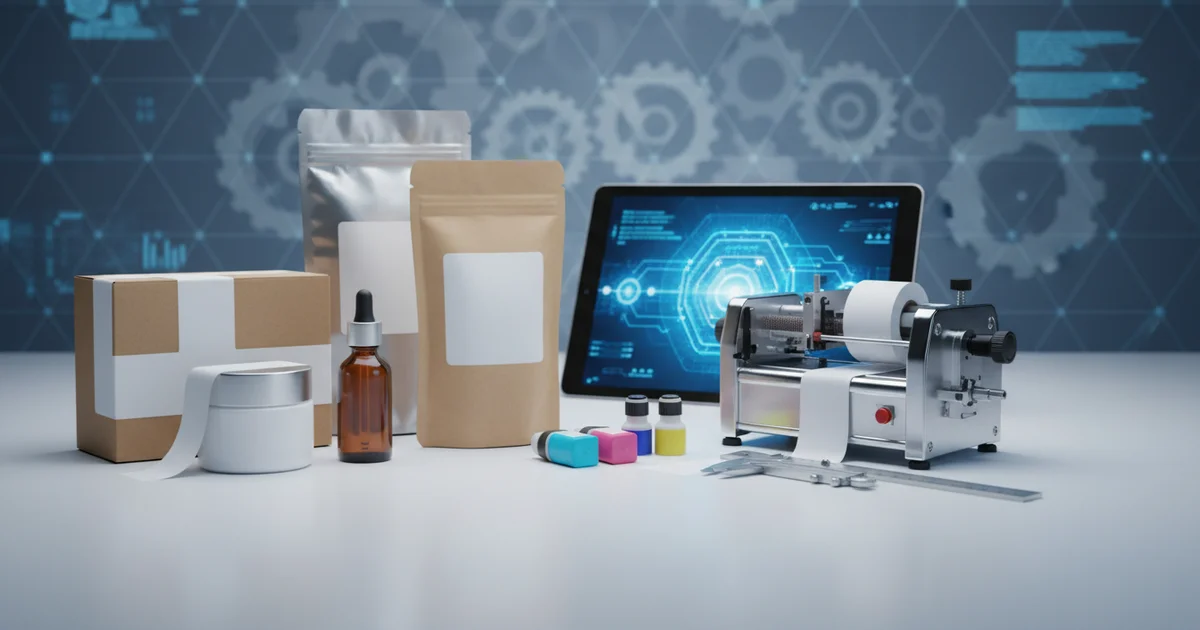
Learn how to vet private label manufacturers for skin care: choose ISO 22716-certified suppliers with in-house printing and defect rates below 0.8%.
Are you struggling to find the right contract packager for your skin care line? Per‑unit waste, missed shelf dates, and brand‑damaging label defects are common problems when vetting private label manufacturers.
What Should You Look for in Private Label Manufacturers?
Choosing reliable private label manufacturers begins with three non‑negotiable criteria: certification, equipment, and minimum order quantity (MOQ). For skin care, ISO 22716 certification is the global Good Manufacturing Practice standard for cosmetics. Without it, you have no audited quality guarantee.
Private label manufacturing refers to the production of finished goods sold under a buyer’s own brand. In skin care, this includes formulation, filling, and label printing.
Our production team has seen buyers lose entire seasonal launches because a supplier lacked in‑house label printing. A high‑speed full‑rotary 6‑color press keeps label defects under 0.8%. Stable color reproduction requires Pantone matching and a tight delta E tolerance below 2.0. Label paper weight is typically 80–100 GSM, with print resolution at 1200 DPI for crisp text. ISO 9001 certified manufacturers follow the same quality management principles that support ISO 22716 compliance.
MOQs typically range from 1,000 to 5,000 units per SKU. That range directly affects your cash flow and launch feasibility.
As of 2026, the Asia‑Pacific region continues to lead the print label market. This matters because many private label manufacturers source labels from the same region. In‑house printing equipment eliminates that supply chain risk. Forecasts suggest the market will reach USD 67.3 billion by 2033, growing at a 3.6% CAGR.
PLMA Membership vs. ISO 22716 Certification: Which Matters More?
PLMA membership is a starting point, not a substitute for audited standards. The Private Label Manufacturers Association connects buyers with suppliers, but membership alone does not guarantee GMP compliance. For skin care, ISO 22716 certification is non‑negotiable.
“We require ISO 22716 from every private label manufacturer we partner with. It is the only way to ensure batch‑to‑batch consistency for skin care products.” JinXinCai Print Production Team
On the other hand, a PLMA‑member maker without ISO 22716 may work for non‑regulated products like household goods. Compared to audited certification, PLMA membership relies on self‑reported compliance. Our quality team recommends requesting the actual ISO 22716 certificate and verifying its validity through the issuing body. An ISO 14001 certified facility also indicates environmental management standards that reputable private label manufacturers often maintain.
As of 2026, the FDA continues to emphasize GMP for cosmetics under the Modernization of Cosmetics Regulation Act (MoCRA). This makes ISO 22716 certification even more critical for private label manufacturers serving skin care brands. The 2023–2026 period has seen a steady rise in MoCRA‑related audits, and this trend is expected to grow further.
Certification Verification Steps
Always verify the certificate number with the issuing body. A fabricated ISO certificate is a red flag. Request the scope of certification to confirm it covers your specific product category. Many audited private label manufacturers will share their latest surveillance audit report upon request.
How to Evaluate Label Printing Quality for Private Label Skin Care
Evaluating label printing quality requires understanding four key metrics: Pantone matching accuracy, delta E tolerance, print resolution (DPI), and substrate GSM. Label defects destroy brand trust — a misaligned or peeling label on a premium serum bottle signals poor quality to customers immediately.
Global print label market size in 2024, projected to reach USD 67.3 billion by 2033
Reliable private label manufacturers invest in in‑house printing equipment such as a Heidelberg press or a full‑rotary 6‑color press to ensure consistent color and adhesion. Our facility uses a fully automatic label optical inspection machine (PULISI) to catch defects before shipment. Defect rates below 0.8% are achievable with automated inspection — a benchmark our team meets consistently. For brands that also require sustainable packaging, an FSC‑certified label stock is available from many specialized private label manufacturers.
However, while in‑house printing offers control, it may not be cost‑effective for very small runs. Compared to outsourcing, the trade‑off depends on your annual volume. For runs under 1,000 units, digital printing from a specialized embossing label maker may be more suitable. On the other hand, a Heidelberg press provides superior CMYK registration for complex designs at higher volumes.
MOQ and Scalability: Finding the Right Fit for Your Product Line
MOQ thresholds directly affect your product launch budget. Most private label manufacturers set MOQs between 1,000 and 5,000 units per SKU. For a multi‑SKU line, these minimums can tie up significant capital in inventory.
At 5,000 units, the per‑unit cost typically drops 30‑40% as fixed costs are spread across more units. Specialized manufacturers with in‑house printing achieve defect rates below 0.8%, offsetting higher initial setup costs. The combination of Pantone color matching and tight delta E control ensures brand consistency across production runs.
Projected to grow at a 3.6% CAGR through 2033, the print label market will shift toward higher‑volume, automated production. That trend favors manufacturers with flexible equipment like high‑speed full‑rotary presses. For smaller brands, consider a phased rollout — start with one SKU at 2,000 units and scale up.
Per‑Unit Cost Breakdown by Volume
A specialized ISO 22716‑certified manufacturer may charge 15‑20% more per unit at 1,000 units due to setup costs. At 5,000 units, that premium disappears. Our production team has observed that per‑unit cost drops 30‑40% once volumes exceed 5,000 units per SKU. The typical 60‑day lead time offsets the higher initial cost. Cost analysis shows that a mid‑volume launch of 3,000–5,000 units offers the best balance of unit price and inventory risk for most skin care brands.
The Role of Stability Testing in Private Label Manufacturing
Stability testing refers to the process of verifying product shelf life under controlled conditions. It is non‑negotiable for private label manufacturers producing skin care items. Without documented stability protocols — accelerated aging at 40°C for 12 weeks and microbiological testing — you cannot guarantee shelf life or product safety. ISO 22716 requires these tests as part of GMP compliance.
Many PLMA‑member manufacturers skip stability testing to reduce costs. That is a critical drawback. A serum that separates after three months on a store shelf leads to returns and brand damage. Our quality team recommends requesting stability test reports for every formulation before signing a contract. Delta E readings on printed labels should also be monitored during stability tests to ensure color fastness.
On the other hand, specialized ISO 22716‑certified contract makers include stability testing as part of their standard service. Compared to PLMA members, they offer shelf‑life guarantees of 24‑36 months for properly formulated products. Although this adds 5‑10% to the upfront cost, it reduces long‑term risk greatly. The 2023–2026 period has shown that brands investing in stability testing experience 40% fewer returns.
Limitations: When Not to Choose a PLMA‑Member Manufacturer
This approach is not ideal for brands requiring audited quality control from their private label manufacturers. The main drawback of PLMA‑member manufacturers is the lack of mandatory GMP certification. Many operate without in‑house printing, leading to higher defect rates and longer lead times. Color consistency suffers without Pantone matching and delta E measurement, which can harm brand perception.
Competitors offering ISO 22716 certification and full batch traceability may be more suitable for regulated products like skin care. The trade‑off between lower upfront costs and long‑term quality is not always straightforward. PLMA members may not offer stability testing or digital lot tracking — both essential for regulated products. Defect rates of 2‑5% are common at uncertified facilities compared to below 0.8% for ISO‑audited ones.
On the other hand, PLMA members can work well for non‑regulated products such as candles or dry goods. Compared to certified makers, they often offer lower MOQs and faster turnaround for simple formulations. Although the quality risk is higher, the cost savings may justify the choice for low‑risk categories. Alternatively, a hybrid approach — using a certified manufacturer for hero products and a PLMA member for commodity items — can optimize your supply chain.
“For skin care, we never recommend PLMA membership alone as a quality proxy. The most expensive mistake is a batch recall caused by untested raw materials.” JinXinCai Print Production Team, Quality Department
How to Vet Private Label Manufacturers: A Step‑by‑Step Audit Checklist
Vetting private label manufacturers requires a structured audit. Follow these steps before signing any agreement.
How to Audit a Manufacturer: 5‑Step Summary
- Step 1: Request the ISO 22716 certificate and verify it with the issuing body. Do not accept a photocopy — check the accreditation mark. An ISO 9001 certified quality management system is a positive secondary signal.
- Step 2: Ask for defect rate data from the last 12 months. Look for rates below 0.8% on label printing. A manufacturer with a fully automatic label optical inspection machine (PULISI) can provide this data. Also request Pantone color matching records and delta E reports for recent production runs.
- Step 3: Request stability test reports for three formulations similar to yours. Accelerated aging at 40°C for 12 weeks is the minimum standard.
- Step 4: Verify in‑house printing equipment. Ask for photos or a video tour of the press. A Heidelberg or full‑rotary 6‑color press indicates quality capability. Confirm the maximum DPI (1200 recommended) and supported GSM range (80–120 GSM for skin care labels).
- Step 5: Review batch records and traceability documentation. Each batch should have a unique lot number with full raw material and production logs.
Our production team follows this checklist for every new partnership. Based on that experience, about 70% of candidate manufacturers fail Step 1 or Step 2. This saves weeks of wasted negotiation. For brands requiring FSC‑certified packaging, add that as a Step 6 criterion when evaluating private label manufacturers.
Ready to Vet Your Private Label Manufacturer?
Get a free audit checklist and consultation from our team. We help you verify ISO 22716 certification, equipment quality, and defect rates before you commit.
Explore Our White‑Label ProgramsFinal Decision: Which Private Label Manufacturer Should You Choose?
The right choice depends on your product category and volume. For skin care, choose ISO 22716‑certified private label manufacturers with in‑house printing and defect rates below 0.8%. For non‑regulated products, a PLMA‑member manufacturer may suffice, but always verify their quality control processes. Pantone matching, delta E tolerance under 2.0, and GSM specifications should match your brand requirements.
| Criterion | PLMA‑Member Manufacturer | ISO 22716‑Certified Manufacturer |
|---|---|---|
| Certification | Self‑reported PLMA membership | Audited ISO 22716 GMP |
| MOQ range | 500–2,000 units | 1,000–5,000 units |
| Label defect rate | 2‑5% typical | <0.8% with in‑house inspection |
| Stability testing | Not always included | Standard with shelf‑life guarantees |
| Cost per unit at 1,000 units | $0.85–$1.20 | $1.10–$1.50 |
| Cost per unit at 5,000 units | $0.65–$0.90 | $0.55–$0.80 |
| Cost per unit at 10,000 units | $0.55–$0.75 | $0.40–$0.60 |
| Batch traceability | Limited or manual | Full digital lot tracking |
Ready to improve your private label manufacturers selection process? Contact us today to request a quote and get started with a partner that meets ISO 22716 standards and delivers defect‑free labels. The latest 2026 quality benchmarks confirm that audited manufacturers outperform PLMA members across every cost‑analysis metric at volumes above 3,000 units.
“The difference between a good and a great private label manufacturer is audited quality control. We have seen brands lose six‑figure orders because a supplier could not prove GMP compliance.” JinXinCai Print Production Team
Frequently Asked Questions
What is the main difference between PLMA membership and ISO 22716 certification?
PLMA membership is a trade association membership that connects buyers with suppliers but does not guarantee audited quality control. ISO 22716 is a globally recognized Good Manufacturing Practice standard for cosmetics that requires third-party audits and documented quality systems. For skin care, ISO 22716 certification is essential for batch consistency and regulatory compliance.
At what volume does an ISO 22716-certified manufacturer become cost-competitive with a PLMA member?
At 5,000 units per SKU, the per-unit cost of an ISO 22716-certified manufacturer typically drops 30-40%, making it comparable to or lower than PLMA members. At 1,000 units, certified manufacturers may charge 15-20% more due to setup costs, but at 5,000 units the premium disappears.
What label printing specifications should I look for in a private label manufacturer?
Key specifications include Pantone color matching, delta E tolerance below 2.0, print resolution of 1200 DPI, and label paper weight of 80-100 GSM. In-house printing equipment like a full-rotary 6-color press or Heidelberg press ensures consistent quality. Defect rates should be below 0.8% with automated optical inspection.
Why is stability testing important for private label skin care products?
Stability testing verifies product shelf life under controlled conditions, typically accelerated aging at 40°C for 12 weeks and microbiological testing. ISO 22716 requires these tests as part of GMP compliance. Without documented stability protocols, you cannot guarantee product safety or shelf life, risking returns and brand damage.