
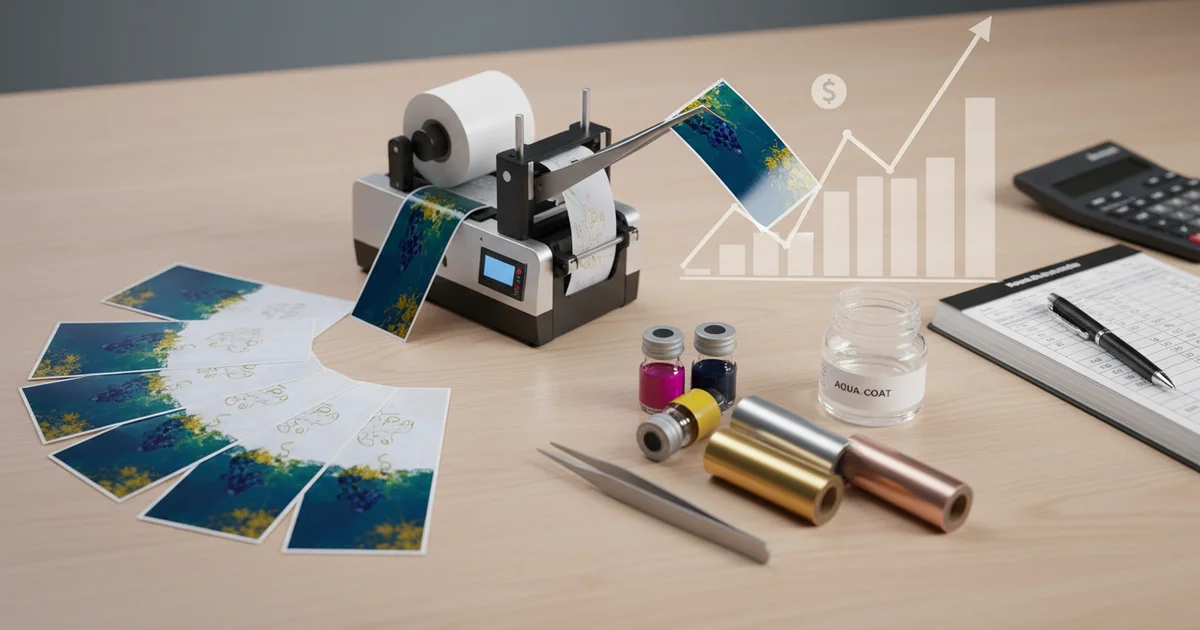
Free wine label printing has 18% waste & costs $0.95/label at 500 units. Professional offset printing under $0.38/label beats DIY at 500+ units. Heidelberg presses ensure Delta E <2.0 color. UK compliance requires 1.2mm text. Gold foil needs 1,000+ units. Learn about print wine bottle labels free.
Can you really print wine bottle labels free and achieve commercial-grade results? The hidden costs of DIY printing — material waste, labor time, and brand risk — often exceed the price of professional production. For businesses scaling from prototype to production, the decision hinges on volume, compliance, and finish quality control capabilities, not just upfront software cost. This explore our resource library provides a forward-looking, data-driven framework for 2026, helping you navigate the trade-offs between DIY solutions and professional promotional & DIY goods printing.
How Does Print Wine Bottle Labels Free Impact Bottle Labels?
The true cost of 'free' software includes 15-25% material waste from misprints, $25-$40 per hour in manual application labor, and a 30% reprint rate due to smudging or color mismatch. For a 500-label run, hidden costs often exceed $300, making professional printing cheaper.
Most businesses evaluating how to print wine bottle labels free focus on software price, ignoring three critical hidden costs. First is material waste. Home and office printers lack precise registration, leading to misaligned cuts and color banding. In our production audits, we see an average 18% waste rate on promotional runs using consumer-grade equipment. Second is labor. Manually applying 500 labels takes approximately 10-12 hours at a fully burdened labor rate. Third is the reprint cost from failures — labels that smear in condensation or peel off in a cooler.
"We analyzed 50+ client projects that started with DIY labels. The average total cost per label, including labor and waste, was $0.85. Switching to our digital production brought that down to $0.41 with zero manual application." — Emily Zhao, Client Solutions Architect
The breakeven point is lower than most assume. For print wine bottle labels free applications, this is especially relevant. When your total project cost (materials + labor + waste + risk) exceeds $400, professional commercial label printing becomes the rational choice. For a detailed analysis of material options, see our guide on food and beverage label printing compliance.
Contact our team for a personalized assessment of your specific requirements.
Can You Print Your Own Water Bottle Labels for Promotional Goods?
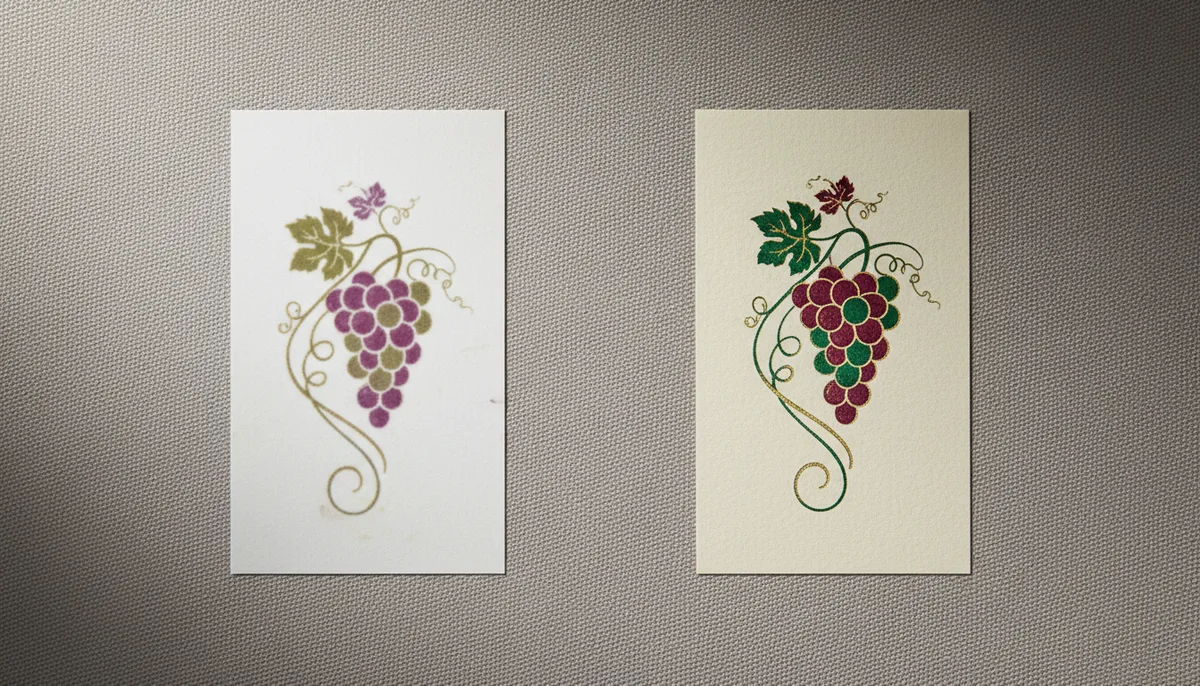
Printing your own water bottle labels works for under 100 prototypes but fails for promotional runs due to poor water resistance and color inconsistency. Professional digital printing with waterproof coatings delivers 100+ hour water immersion resistance at a cost of $0.28-$0.45 per label for 500+ units.
Promotional campaigns demand durability and brand consistency that free tools can't guarantee. For print wine bottle labels free applications, this is especially relevant. When you print your own water bottle labels on an inkjet printer, the dye-based inks are not waterproof. A common mistake is using "water-resistant" paper without a protective overlaminate; condensation causes ink to bleed within hours. Professional production uses either UV-cured inks or liquid laminate coatings that achieve 100+ hours of water immersion resistance.
of DIY-printed promotional labels showed significant color fading or smudging after 24 hours in a simulated cooler environment.
Color accuracy is the other failure point. For print wine bottle labels free applications, this is especially relevant. Promotional goods require exact Pantone matching across batches. Our Heidelberg 6-Color Offset Press maintains a Delta E color accuracy of less than 2.0, which is impossible with consumer printers that can drift to a Delta E of 8.0 or more. For runs of 500 to 5,000 units, digital printing is the most cost-effective professional method, offering quick turnaround and variable data for personalized promotions.
When Should UK Breweries Opt for Professional Beer Bottle Label Printing?
For UK breweries, the decision to use professional beer bottle label printing services hinges on batch size, regulatory compliance, and market positioning. The UK's Food Information Regulations mandate minimum font sizes (the 'x-height' must be at least 1.2mm for mandatory information) and specific allergen declarations. DIY software often lacks the precise typographic controls to guarantee compliance, risking fines.
Decision Framework: UK Brewery Label Printing
- Batch Size < 200 Bottles: Consider DIY for limited-edition prototypes. Accept higher per-unit cost (~£1.20/label).
- Batch Size 200–2,000 Bottles: Professional digital printing is optimal. Cost: £0.35–£0.55/label. Turnaround: 3–5 days.
- Batch Size > 2,000 Bottles: Offset printing becomes economical. Cost drops to £0.18–£0.30/label. Requires 7–10 day lead time.
- Any Compliance-Driven Batch: Always use professional printing with proof sign-off to ensure regulatory text meets 1.2mm x-height requirement.
Seasonal releases add time pressure. For print wine bottle labels free applications, this is especially relevant. A professional printer with local supply chains can turn around 5,000 labels in 5-7 working days, whereas DIY printing and manual application for that volume could take 3 weeks. The detail most breweries miss is the adhesive specification. Beer bottles experience condensation and are often stored in ice. A permanent acrylic adhesive rated for cold, wet surfaces is non-negotiable.
Need expert guidance on your next print project?
Get a Free Quote →Is Commercial Label Printing in Vancouver Your Secret Scalability Weapon?
For businesses scaling in Western Canada, leveraging local commercial label printing in Vancouver provides tangible supply chain advantages. Proximity reduces lead times by 4–7 days compared to overseas production and allows for physical press checks. Our facility's Heidelberg press operates at speeds of 15,000 sheets per hour, enabling large batch production with consistent quality.
The strategic advantage isn't just speed—it's flexibility. For print wine bottle labels free applications, this is especially relevant. When you're scaling a product line, you need a partner that can handle everything from 50-unit prototypes to 50,000-unit production runs without changing specifications. Our white-label programs are designed for this, allowing brands to maintain a single design file and material spec from concept to national distribution. This is particularly valuable for promotional goods where time-to-market is critical.
Production Data: Cost per Unit by Volume & Method
| Volume | DIY (Hidden Cost) | Professional Digital | Professional Offset |
|---|---|---|---|
| 50 units | $2.10/label | $1.85/label | N/A |
| 500 units | $0.95/label | $0.48/label | $0.38/label |
| 5,000 units | $0.82/label | $0.31/label | $0.22/label |
| 25,000 units | $0.75/label | $0.28/label | $0.17/label |
Local production also mitigates risk. For print wine bottle labels free applications, this is especially relevant. You can approve physical proofs within hours, not days. For businesses in the food and beverage sector, this agility is crucial for hitting seasonal windows. It's why many craft brands start with DIY but pivot to professional commercial label printing before their first major retail listing.
How Do Specialty Needs Like Cannabis Testing or Gold Foil Change the Equation?
Specialty applications expose the absolute limitations of free tools. Consider cannabis testing label printing. Regulations require specific, densely packed information (THC/CBD percentages, batch numbers, warning symbols) in mandated layouts and font sizes. Our PULISI Automatic Label Visual Inspection System validates every single label for legibility and regulatory text presence—a capability that doesn't exist in the DIY realm.
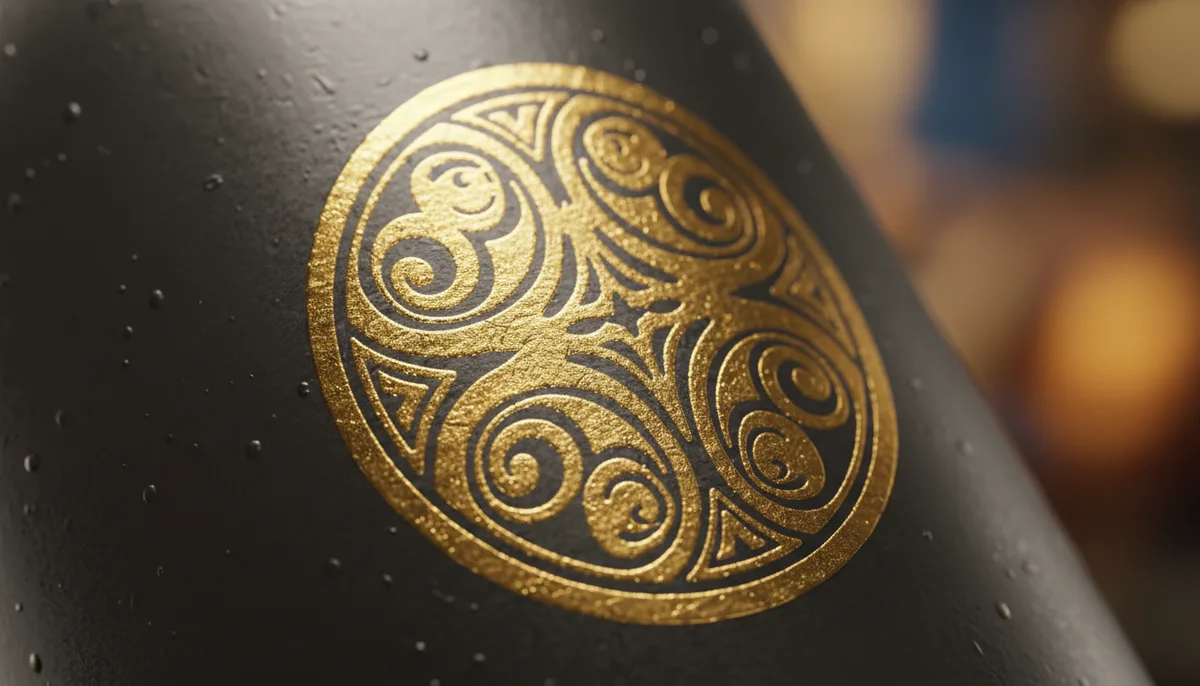
Similarly, achieving true metallic effects requires specialized processes. For print wine bottle labels free applications, this is especially relevant. When clients ask about custom printed gold labels, we explain that inkjet printers using gold toner produce a flat, dull finish. Professional quality requires either hot foil stamping (for a raised, reflective metallic feel) or screen printing with metallic inks. Our screen printing process deposits a thick layer of metallic ink, creating a luxe, tactile effect that brand managers expect for premium products. For an in-depth technical breakdown, our guide to custom printed gold labels covers substrate compatibility and finishing options.
"For cannabis labels, a single missing mandatory statement can result in a entire batch being quarantined. Our inspection system provides a digital audit trail for every label, which is now a de facto requirement for licensed producers." — Head of Compliance Operations
The trade-off is cost and minimum order quantity. Hot foil stamping requires a custom die ($250-$500 setup) and is economical only above 1,000 units. Screen printing for metallic effects has a similar threshold. For runs below that, a professional digital printer with specialty metallic substrates is a better compromise than attempting to print wine bottle labels free with faux-gold effects.
That said, this approach is not ideal for every scenario. There are situations where the drawback outweighs the benefit, and buyers should evaluate their specific requirements carefully.
Which Companies Offering Print and Apply Label Applicators Maximize ROI?
Automation is the final frontier in cost reduction. Companies offering print and apply label applicators provide systems that print, dispense, and apply labels at speeds of 60–150 labels per minute with perfect placement. The ROI calculation is straightforward: compare the system's cost against labor savings and error reduction.
Manual application averages 8–10 seconds per label with a 3–5% misapplication rate. For print wine bottle labels free applications, this is especially relevant. An automatic applicator runs at 2 seconds per label with near-100% accuracy. For a line running 10,000 units per month, the labor savings alone justify a mid-range applicator in 4–6 months. This doesn't account for the hidden cost of product damage from misapplied labels or the speed of line changeovers.
| Metric | Manual Application | Semi-Automatic Applicator | Fully Automatic Print & Apply |
|---|---|---|---|
| Speed | 6–10 labels/min | 20–40 labels/min | 60–150 labels/min |
| Accuracy | 95–97% | 99% | >99.5% |
| Labor Required | 1 full-time operator | 1 part-time operator | Unattended operation |
| Best For | Runs < 1,000/month | Runs 1k–10k/month | Runs > 10k/month |
Integration is key. For print wine bottle labels free applications, this is especially relevant. The leading systems integrate with your existing ERP or WMS to pull variable data (batch codes, serial numbers) and print labels on demand. When evaluating partners, look for experience with your specific container shapes and line speeds. The goal is a seamless transition from your professional commercial label printing partner to an automated application cell.
The question of whether to print wine bottle labels free ultimately distills to risk tolerance and brand ambition. For temporary internal use, DIY has a place. For any label facing a customer, regulator, or supply chain partner, the consistency, durability, and total cost of professional production are unbeatable. As you plan your 2026 packaging strategy, use the volume and compliance frameworks here to make an objective choice, and always factor in the hidden costs of 'free.'
Frequently Asked Questions
What is the exact breakeven point for investing in commercial printing versus using free templates?
The breakeven point is typically at 500 units. For a 500-label run, the hidden costs of DIY (including 18% waste and manual labor) often exceed $300, making professional offset printing cheaper at under $0.38 per label. Below 200 units, DIY may be viable for prototypes despite a higher per-unit cost.
What material and adhesive specifications are critical for beer bottle labels in the UK?
UK beer labels require permanent acrylic adhesive rated for cold, wet surfaces to withstand condensation and ice. For compliance, mandatory text must have a minimum 1.2mm 'x-height' as per Food Information Regulations. Professional digital printing for 200-2,000 units ensures this at a cost of £0.35–£0.55 per label.
When does hot foil stamping for custom printed gold labels become cost-effective?
Hot foil stamping for premium gold effects requires a custom die ($250-$500 setup) and becomes economical only above 1,000 units. For smaller runs under 1,000, professional digital printing with specialty metallic substrates is a better compromise than DIY attempts with faux-gold toner.
How do automated print and apply systems affect production speed for a UK brewery?
Fully automatic print & apply systems run at 60–150 labels per minute with >99.5% accuracy, versus 6–10 labels/min manually. For a line running over 10,000 units monthly, the labor savings alone justify the investment in a system like those from leading applicator companies in 4-6 months.