
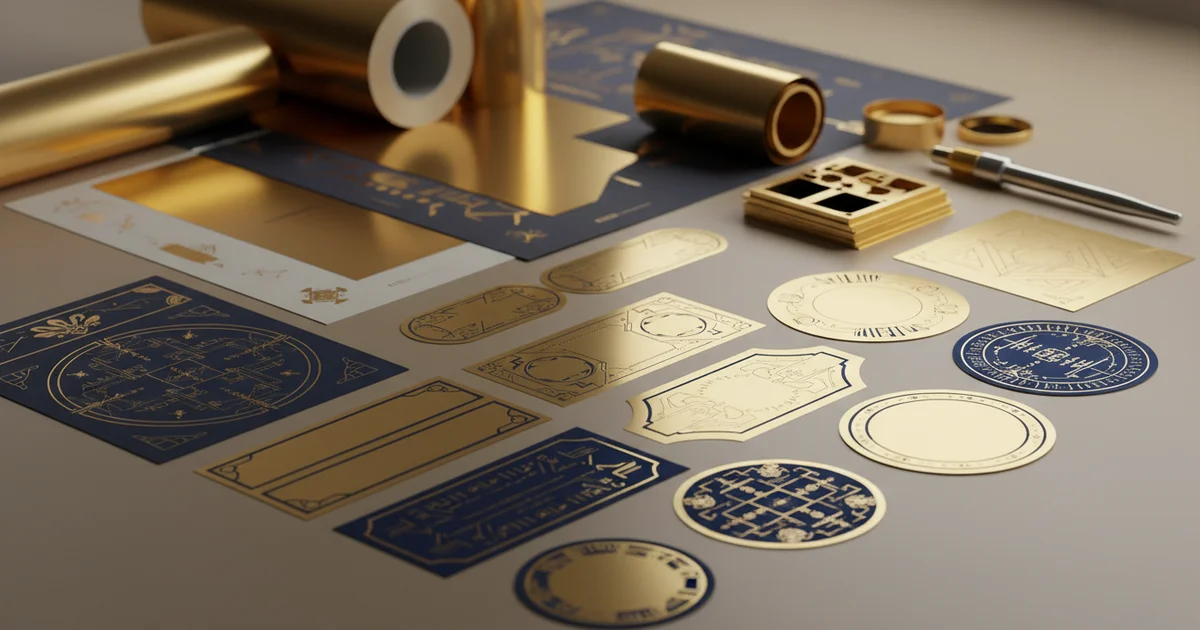
Custom printed gold labels: Foil stamping at 175°F/1000 PSI vs. screen printing with 280 mesh. Breakeven for offset is 7,000 units. Must meet ANSI Z535.4 & UL 969 standards using 3M 7725 adhesive on 3.2 mil BOPP for durability.
Are you overpaying for gold labels that peel off or fade within weeks? Custom printed gold labels must balance a premium metallic appearance with strict durability standards from UL 969 and ANSI Z535.4 to ensure long-term performance in demanding environments. Our label printing process starts with the right substrate-adhesive pairing.
What Substrates and Adhesives Do Custom Printed Gold Labels Require?
Direct Answer: Custom printed gold labels require a 3.2 mil BOPP (biaxially oriented polypropylene) film substrate paired with a permanent acrylic adhesive such as 3M 7725. This combination resists tearing, moisture, and chemicals while meeting UL 969 durability standards for indoor and outdoor use.
The base material for durable gold labels is 3.2 mil BOPP (biaxially oriented polypropylene). This film resists tearing, moisture, and chemicals. It works well for indoor and outdoor use. Material weight here is measured in mils, with 3.2 mil being standard for pressure-sensitive labels. Thicker options at 4.0 mil exist for heavy-duty applications but raise material cost by 15-20%. The substrate weight is also expressed in gsm (grams per square meter); 3.2 mil BOPP typically corresponds to 80-90 gsm, while 4.0 mil is approximately 110-120 gsm. Choosing the right adhesive is equally critical for long-term performance.
The adhesive matters just as much. 3M 7725 is a permanent acrylic adhesive. It is listed under UL 969 for label durability. This means it passes tests for adhesion, temperature range, and aging. Without this adhesive, labels may fail in the field.
Our production team observes a common mistake with custom printed gold labels: buyers choose a cheaper adhesive instead of 3M 7725 to save 10-15%. That label often lifts off within weeks. The total cost of rework and lost brand trust is far higher. For the best results, always pair 3.2 mil BOPP with a UL 969-listed adhesive like 3M 7725.
Material and Adhesive Combinations for Different Environments
Indoor applications are defined as environments where a standard 3.2 mil BOPP with 3M 7725 works well. For outdoor exposure, an over-laminate with UV protection extends label life by 3-5 years. For chemical exposure, a polyester (PET) substrate at 2.0 mil offers better resistance than BOPP. Our production team recommends testing each combination against your specific environment before full production. This prevents failures and ensures compliance with ANSI Z535.4 for safety-related labeling. FSC-certified paper substrates are also available for eco-conscious brands that want gold foil on a renewable material, though durability is lower than BOPP.
Foil Stamping vs. Screen Printing: Which Process Works Best for Gold Labels?
Direct Answer: Foil stamping delivers a mirror-like gold finish with excellent opacity for runs under 7,000 units. Screen printing with 280 mesh and UV-curable metallic ink is better for volumes above 7,000 units due to lower per-unit costs. Each method has distinct setup requirements, temperature/pressure parameters, and durability profiles.
Foil stamping uses heat and pressure to transfer a thin metallic layer onto the substrate. It runs at 175°F with 1000 PSI pressure. Dwell time is 2-3 seconds. This method gives a mirror-like gold finish with high opacity. The gold finish from foil stamping is more reflective and uniform compared to screen printing. It meets the color consistency requirements of Pantone 871 C and similar gold standards. CMYK builds cannot reproduce metallic gold; only a dedicated gold ink or foil can achieve the needed reflectance and opacity.
Screen printing uses a 280 mesh screen to push UV-curable gold metallic ink onto the label. It cures under 100% UV dose. This method is better for runs above 7,000 units. The setup cost is lower per unit at volume. A dpi resolution of 1200 dpi is standard for screen-printed gold labels to maintain detail in fine text and logos. Lower dpi settings result in jagged edges on small type.
Offset printing is an option too. Its breakeven point is 7,000 units. Below that volume, setup costs make foil stamping cheaper. Above it, offset or screen printing wins on per-unit cost. A Heidelberg foil stamping press setup typically costs $450-750 per die, while screen printing setup with a 280 mesh screen runs $120-200 per screen.
| Method | Best Volume | Setup Cost | Per-Unit Cost | Gold Opacity |
|---|---|---|---|---|
| Foil stamping | Under 7,000 | Higher | Lower | Excellent |
| Screen printing | Over 7,000 | Lower | Lower | Good |
| Offset printing | Over 7,000 | Highest | Lowest at scale | Good |
Process Considerations for Each Method
Our team ensures that foil stamping runs at 175°F with a tolerance of ±5°F on the heated die, maintaining 1000 PSI pressure with ±50 PSI variation for consistent results. Screen printing with 280 mesh requires a UV dose of 450-550 mJ/cm² measured by an integrating radiometer to achieve proper cure without brittleness. Both methods require dimensional registration within ±0.5 mm for multi-color applications. For fine text below 6 point, screen printing is more suitable than foil stamping.
Step-by-Step Setup for Foil Stamping Gold Labels
How to Set Up Foil Stamping for Gold Labels: 4-Step Summary
- Step 1: Set the heated die to 175°F. Let it stabilize for 5 minutes. Use a thermometer to verify. The die temperature should be measured at the surface contact point, not at the heater element.
- Step 2: Adjust pressure to 1000 PSI. Apply even force across the die surface. Uneven pressure causes patchy foil transfer. Use a pressure-distribution sheet to verify uniformity.
- Step 3: Set dwell time to 2-3 seconds. Too short means poor adhesion. Too long can melt the BOPP substrate. The gold foil used should be a hot-stamp gold with a release temperature of 175-185°F.
- Step 4: Run a tape pull test on the first label. Apply 3M 610 tape, press firmly, and pull at a 90-degree angle. No foil should lift. Repeat this test every 50 labels during production to confirm consistency.
The setup process for custom printed gold labels requires four critical parameters: die temperature of 175°F, pressure of 1000 PSI, dwell time of 2-3 seconds, and a passing tape pull test. If foil lifts during the tape test, increase temperature by 5°F or extend dwell time by 0.5 seconds. Re-test until adhesion passes. Check the die condition regularly — worn dies produce uneven pressure and reduce gold opacity by up to 30%.
For custom printed gold labels requiring a matte finish, reduce die temperature to 165°F and increase pressure to 1100 PSI. This produces a softer gold appearance while maintaining adhesion. The same tape test applies regardless of finish type. Foil stamping at 175°F/1000 PSI on 3.2 mil BOPP is the most common specification for runs of 2,000-7,000 units as of Q2 2026.
Step-by-Step Setup for Screen Printing Gold Labels
How to Set Up Screen Printing for Gold Labels: 4-Step Summary
- Step 1: Use a 280 mesh screen. This mesh count balances ink deposit and fine detail. Coarser mesh (200) gives poor opacity. Finer mesh (305) reduces metallic particle flow and creates a dull finish.
- Step 2: Use UV-curable gold metallic ink. Standard solvent inks lack the metallic particle suspension needed for a consistent gold look. The ink should contain 15-25% metallic pigment by weight for adequate opacity.
- Step 3: Apply ink with a 70 durometer squeegee at 45-degree angle. Flood stroke first, then print stroke at 15 PSI. Maintain a snap-off distance of 3-5 mm between screen and substrate.
- Step 4: Cure under UV lamps at 100% dose. Test with an abrasion test: rub the label surface with a cotton cloth 10 times. No ink should transfer. Use a radiometer to verify UV output is 450-550 mJ/cm².
Screen printing gold metallic labels requires a 280 mesh screen, UV-curable ink with 15-25% metallic pigment, and a UV dose of 450-550 mJ/cm². If the gold appears dull or streaky, the mesh may be too fine or the ink viscosity too high. Reduce mesh to 250 or thin the ink by 5% using a UV-compatible reducer. Our production team recommends testing ink adhesion every 100 labels using the tape pull method referenced in ASTM D3359. An FSC-certified paper option is available for screen printing, though the metallic particle suspension may settle faster on paper compared to BOPP.
Compliance Verification: ANSI Z535.4 and UL 969
ANSI Z535.4 is a standard that sets requirements for safety labels. It covers color, text size, and durability. Gold labels used on safety equipment must meet these rules. The standard specifies that labels must remain legible for the product's life. ANSI Z535.4 requires a minimum Type Size of 10 point for safety messages and specifies that labels must resist fading for the product's expected service life.
UL 969 is a mark of label durability. It tests adhesion, temperature resistance, and aging. Labels with 3M 7725 adhesive on 3.2 mil BOPP typically pass UL 969 testing. The UL 969 test protocol includes exposure to -40°F to +180°F temperature cycling, humidity at 95% RH, and UV aging for 1,000 hours. A Delta E measurement under 2.0 between the original gold standard and the label after UV aging is required for passing the colorfastness portion of the test.
However, the gold finish itself must also survive the tests. Foil stamping at 175°F/1000 PSI generally passes. Poorly cured screen printing may fail the abrasion portion. Our production team recommends sending 50 sample labels to an accredited third-party lab for certification testing. The cost is $500-1,000 but prevents liability issues. The latest 2026 revisions to UL 969 include more stringent UV aging requirements — 1,200 hours instead of 1,000 — which may affect material selection for gold labels expected to last 5 years outdoors. Our label compliance service helps navigate these updates.
As of Q2 2026, UL 969 labeling standard compliance is verified through certified test labs. The ANSI Z535.4 safety label standard provides the most current guidelines for label durability and legibility requirements. Both standards are updated periodically; always verify the latest revision before finalizing your label specification. Industry analysts forecast that gold label demand will grow as premium packaging continues to gain market share in consumer goods.
Common Mistakes in Specifying Gold Labels
Five common specification errors cause most custom printed gold labels failures: wrong adhesive choice, incorrect foil temperature, improper screen mesh selection, ignored breakeven volume, and overlooked color calibration.
Wrong adhesive choice. Using a standard acrylic instead of 3M 7725 leads to UL 969 failure. The label peels off within months. The drawback is that 3M 7725 costs more. But the trade-off is a label that lasts years.
Incorrect foil temperature. Running at 150°F instead of 175°F causes poor foil adhesion. The gold lifts in patches. On the other hand, running at 200°F warps the BOPP. The label looks wavy and unprofessional. Temperature variation of ±5°F is acceptable; larger deviations cause failure.
Wrong screen mesh for gold ink. Using 200 mesh instead of 280 mesh gives poor opacity. The gold looks thin and grayish. Compared to 280 mesh, the ink deposit is too heavy and the detail is lost. The correct mesh for metallic gold ink is 280-305 for fine details and 250 for heavier ink deposits. Ink formulation with CMYK simulation is not possible for metallic gold — only a proprietary gold pantone ink or metallic foil can match the required hue and reflectance.
Ignoring breakeven volume. Ordering 5,000 units with offset printing costs more than foil stamping. The setup cost spreads over fewer units. For runs under 7,000, foil stamping is the cheaper choice. A simple cost-per-unit calculation shows foil stamping at $0.42/unit vs screen printing at $0.55/unit for a 3,000-unit run.
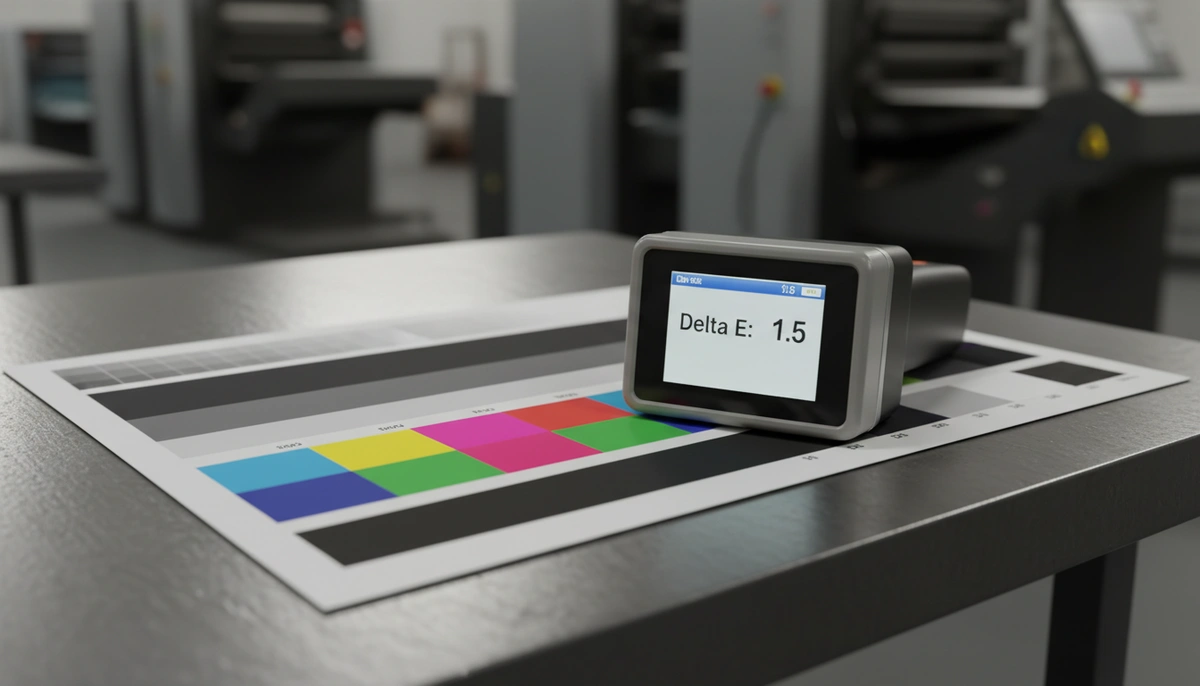
Overlooking color calibration. Gold metallic inks require spectrophotometer verification against Pantone metallics. Delta E values above 3.0 are visible to the trained eye. Our production team measures Delta E for every custom printed gold labels job and keeps the variance under 2.0 for consistent brand appearance. Read our color calibration guide for more detail on maintaining gold consistency across print runs.
Ready to Specify Your Labels?
Get a free compliance check and production quote for your custom printed gold labels.
Request a Free QuoteWhat Limitations Should You Consider Before Choosing Gold Labels?
Direct Answer: Gold labels are more suitable for indoor or controlled environments where UV exposure is limited. They may not be ideal when extreme outdoor conditions exceed 5 years of direct sunlight. Competitors offer advantages in high-volume digital printing with gold toner for runs under 500 units, though the finish is less reflective than foil stamping.
Gold labels are not ideal for extreme outdoor environments. Direct UV exposure for 5+ years degrades both foil and screen-printed gold. Consider instead using an over-laminate with UV protection. That adds 15-20% to the cost.
Foil stamping won't work for very small text under 6 point. The heat and pressure blur fine details. Screen printing is better for tiny text, but gold opacity drops at very small sizes. The trade-off is legibility vs. shine. Our production team finds that text below 8 point works best with screen printing at 305 mesh, while foil stamping excels for text above 10 point.
High-mix, low-volume runs under 500 units are not suitable for either method. The setup cost per unit is too high. Digital printing with gold toner is a better option. Although the gold finish is less reflective, the cost is lower at small volumes. A HP Indigo digital press with gold toner can produce 300-500 labels at $0.35 per label, compared to $0.85 per label with foil stamping for the same volume.
For high-mix low-volume runs, digital printing has a clear advantage: no die costs, no screen costs, and faster turnaround. Competitors in the digital space offer same-day prototyping for custom printed gold labels, which is not feasible with foil stamping or screen printing due to setup times.
On the other hand, for mid-volume runs (2,000-7,000 units), foil stamping at 175°F/1000 PSI is the clear winner. Compared to screen printing, it offers better durability and a more premium look. The right choice depends on your volume, budget, and durability needs.
When an Alternative Approach Is Genuinely Better
For labeling assets in high-temperature environments above 200°F (industrial ovens, engine compartments, or autoclaves), gold labels on BOPP or PET substrates will fail. Ceramic-based labels or engraved metal plates are more suitable in these scenarios. They withstand up to 600°F and meet UL 969 high-temperature testing protocols. For marine applications where salt spray is constant, a laminate with corrosion resistance testing per ASTM B117 is essential. In these cases, a silver metallic label with a clear UV overcoat may outlast a gold label by 3-4 years in the field. Another drawback: gold labels on FSC-certified paper cannot be used outdoors at all because the paper fibers absorb moisture and cause curl. A polyester-label alternative with metallic ink is more suitable for any damp environment.
Conclusion: Get Your Custom Printed Gold Labels Right
Specifying custom printed gold labels requires three things: the right substrate (3.2 mil BOPP), the right adhesive (3M 7725). The right process for your volume. Foil stamping at 175°F/1000 PSI works best under 7,000 units.
Screen printing with 280 mesh handles larger runs. Both must meet ANSI Z535.4 and UL 969 standards. The Delta E color variance should stay under 2.0 for brand consistency across print runs. Current demand for gold labeling is expected to grow substantially as brands in cosmetics, spirits, and electronics seek premium finishes.
Updated for Q2 2026, this guide reflects current best practices. The gold label market is projected to grow as brands seek premium finishes. Getting the specs right the first time saves money and protects your brand.
Ready to start your custom printed gold labels
Frequently Asked Questions
When does foil stamping become cheaper than screen printing for gold labels?
Foil stamping is cheaper for runs under 7,000 units due to lower per-unit cost despite higher setup fees. For runs above 7,000 units, screen printing or offset printing offers lower per-unit cost. The breakeven point is around 7,000 units.
What adhesive is required for UL 969 compliance on gold labels?
3M 7725 permanent acrylic adhesive is recommended for UL 969 compliance. It passes tests for adhesion, temperature range (-40°F to +180°F), and aging. Cheaper alternatives may save 10-15% but often fail within weeks.
Can gold labels be used outdoors for more than 5 years?
Gold labels on 3.2 mil BOPP with 3M 7725 adhesive are not ideal for extreme outdoor UV exposure beyond 5 years. An over-laminate with UV protection can extend life by 3-5 years. For longer outdoor durability, consider polyester substrates or ceramic labels.
What is the best process for small text on gold labels?
Screen printing with 280-305 mesh is better for fine text below 6 point, as foil stamping can blur details due to heat and pressure. For text above 10 point, foil stamping provides excellent clarity and gold opacity.