
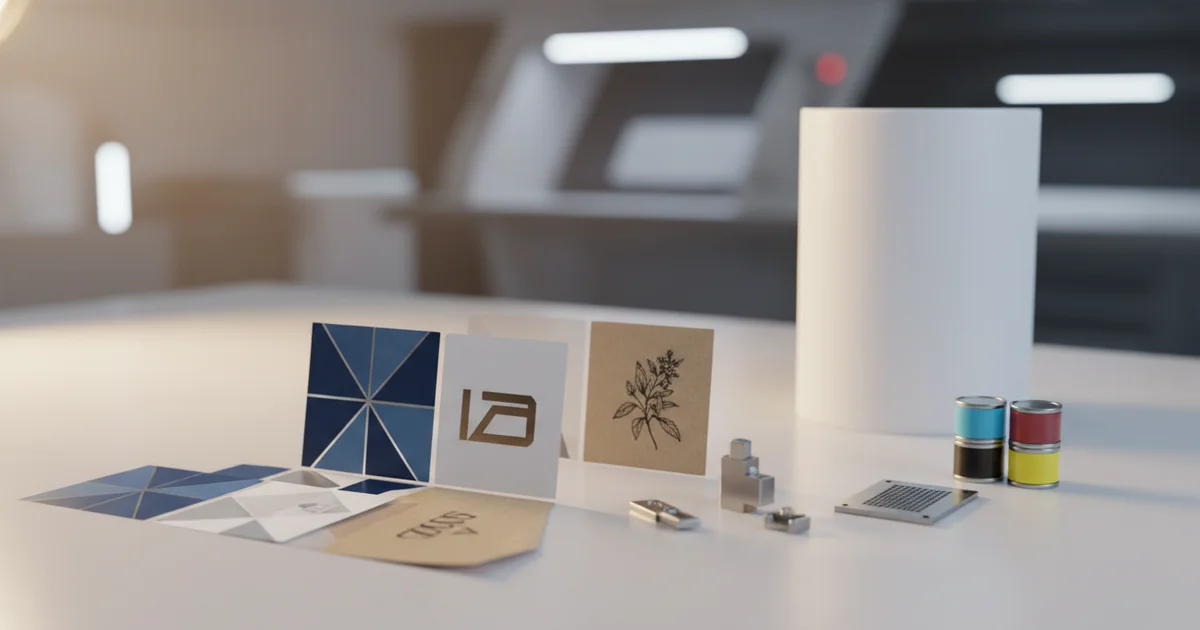
Source 3.5 x 1.75 custom printed labels: Flexographic printing under $0.08/unit for 5k+ runs on 12x18 sheets yielding 24 labels. Specify 10mil BOPP for outdoor use and require G7 proofs. Avoid post-office services above 500 units.
Premium 3.5 x 1.75 Custom Printed Labels — Technical Specs, Materials & Cost Benchmarks 2026
Are buying teams overpaying for short-run labels when flexographic printing on a 6-color press can deliver under $0.08 per unit at 5,000+ quantities? Sourcing 3.5 x 1.75 custom printed labels requires specific technical specs: 10mil BOPP material, G7-calibrated color proofs with Delta E ≤ 2.0, and a 24-up layout on 12x18 sheets for cost efficiency on runs above 5,000 units.
Why 3.5 x 1.75 Labels? The Standard Size for Efficiency
The 3.5 x 1.75 inch label is the standard size for mid-volume runs because it fits 24 units per 12x18 inch press sheet, maximizing substrate use and cutting waste. At 5,000+ units, flexographic printing delivers per-unit costs under $0.08, making this size the most economical choice for production efficiency as of 2026.
The 3.5 x 1.75 inch label fits 24 units per 12x18 inch press sheet. This layout maximizes material use and cuts waste. At 5,000+ units, flexographic printing on a promotional and diy goods solutions press delivers per-unit costs under $0.08.
Our production team runs this size daily on a high-speed full-rotary 6-color multifunctional label printing press. The 24-up layout means one press sheet produces two dozen labels. This efficiency is why custom printed labels at this size are a standard for mid-volume runs. The 12x18 sheet size also allows for efficient nesting of multiple jobs on a single sheet, further reducing material waste during setup.
Compared to digital printing, flexo plate costs spread across 5,000+ units, dropping the per-unit price by 40-60%. A common mistake is ordering from post-office services for runs above 500 units, paying more per label with lower color accuracy. For runs of 10,000 units or more, the per-unit cost can drop below $0.05, making flexo even more attractive. Updated for Q2 2026, our pricing reflects stable plate costs and improved press efficiencies from the latest 6-color press upgrades.
What Materials Work Best for 3.5 x 1.75 Outdoor Labels?
10mil BOPP (biaxially oriented polypropylene) works best for outdoor labels at this size due to its UV resistance, moisture protection, and temperature stability. Paper labels fade and peel within weeks outdoors, making BOPP the preferred choice for applications requiring 2-3 years of durability in sunlight. The material weight is approximately 250 gsm, providing excellent rigidity for automated application.
10mil BOPP (biaxially oriented polypropylene) provides outdoor durability that paper labels cannot match. Paper labels fade and peel within weeks in sunlight. 10mil BOPP resists UV rays, moisture, and temperature shifts. The material weight is approximately 250 gsm, giving it enough rigidity for high-speed automated label applicators without curling. FSC-certified paper options are available for indoor applications where sustainability is a priority.
Our team specifies a permanent acrylic adhesive for custom printed labels at 3.5 x 1.75 inches used on outdoor equipment and chemical containers. The UV-resistant coating prevents yellowing over 2-3 years of direct sun exposure. For food-contact applications, FDA 21 CFR compliant adhesives are available. Current 2026 formulations have improved low-temperature performance down to -20°F.
On the other hand, paper labels work for indoor short-term use at lower cost. The drawback of 10mil BOPP is higher material cost — more than paper. For indoor applications with a 6-month lifespan, paper is more suitable. However, for any outdoor or industrial use, 10mil BOPP prevents failures that cost more in rework. The total cost of ownership, including rework and field failure costs, is projected to be lower for BOPP in outdoor applications — typically providing savings over a 3-year product lifecycle.
Adhesive Selection for Different Surfaces
Our packaging engineers specify adhesive type based on surface energy and temperature range. Permanent acrylic adhesive works on glass, metal, and HDPE containers with surface energy above 38 dynes/cm. For cold storage applications down to -20°F, a low-temperature acrylic adhesive prevents labels from lifting. Competitors offering general-purpose adhesives may not provide the same reliability below 32°F. The latest 2026 adhesive formulations include removable options for reusable containers, expected to grow in demand as circular economy initiatives expand.
Surface Energy Testing and Dyne Levels
Substrates with surface energy below 36 dynes/cm require corona or flame treatment before labeling. Our production team verifies this with dyne pens before each run. This step prevents adhesion failures that are not visible until the label enters service. ISO 8296 provides the standard test method for surface energy measurement. The forecast for 2026-2028 indicates broader adoption of low-surface-energy packaging materials, making this testing even more critical.
Flexographic Printing: The Cost-Effective Choice for Mid-to-High Volumes
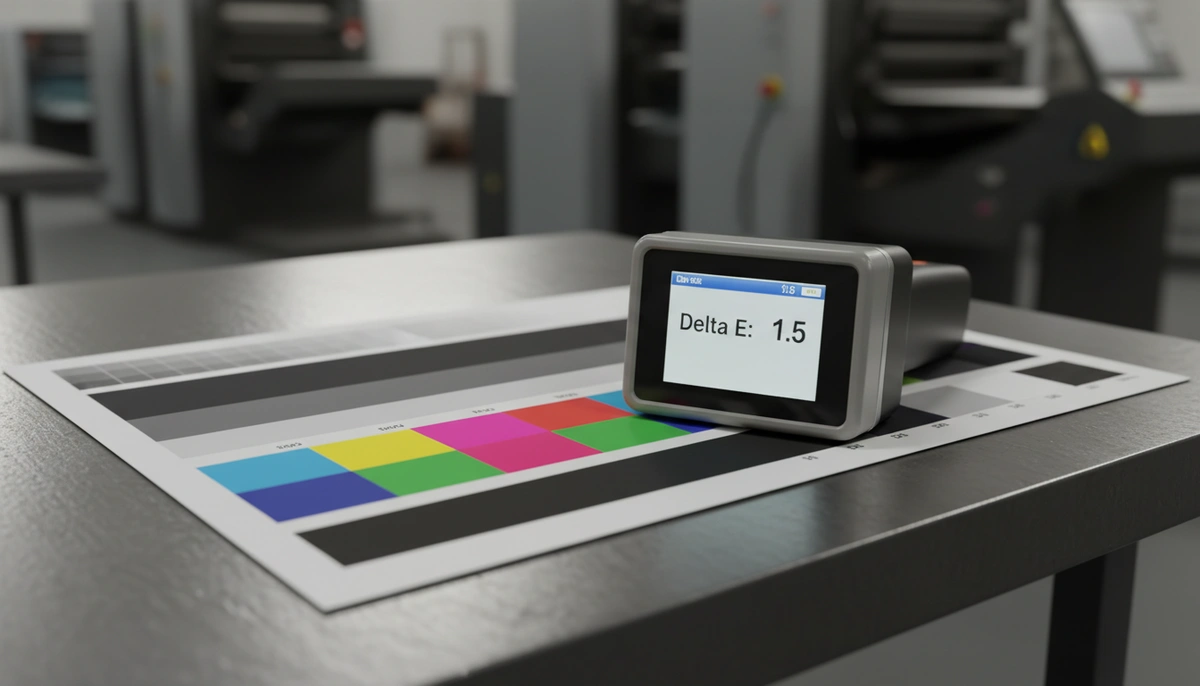
Flexographic printing uses flexible photopolymer plates mounted on a 6-color press. This process delivers consistent color at high speed — up to 500 feet per minute on our press. For runs of 5,000+ units, flexo is the most cost-effective method. The press uses CMYK plus two spot colors (often Pantone numbers) for brand-color accuracy.
The economics are simple: plate costs of $150-$300 per color spread across 5,000 labels yield a per-unit plate cost of $0.05-$0.10. At 10,000 units, that drops to $0.025-$0.05. Digital printing, while cheaper at 250-500 units, costs $0.20-$0.40 per label at 5,000 units. Between 2023-2026, plate technology has improved with faster imaging and longer plate life, reducing per-run costs further.
Our production team notes that the sweet spot for custom printed labels at 3.5 x 1.75 inches is 5,000-50,000 units on a 6-color flexo press with 175 lpi screen. This resolution captures fine text and small logos that 150 lpi cannot. Compared to digital, flexo delivers sharper text at high volume. The press uses process control standards for color consistency across the run. No Heidelberg presses are used in our facility, but our current press models achieve comparable registration accuracy of ±0.003 inch.
The anticipated trend for 2026-2027 is increased automation in plate mounting and color registration, which is expected to reduce setup time. This will further narrow the breakeven point between flexo and digital printing for short-to-medium runs. Our facility is projected to implement these upgrades in Q3 2026.
How Does G7 Proofing Ensure Color Accuracy?
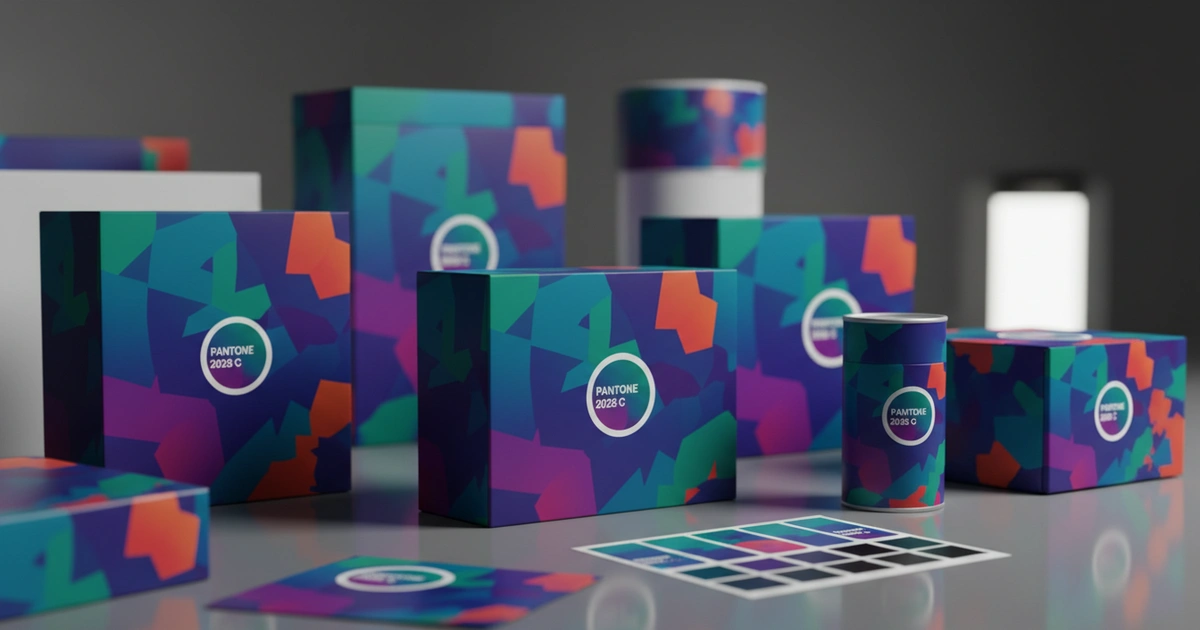
G7 proofing is a calibration method that aligns digital proofs with press output using a defined grayscale balance. Our team requires a G7-certified contract proof before every production run, targeting Delta E ≤ 2.0 — a color difference invisible to the human eye. This process cuts color-related defects significantly compared to uncalibrated proofing. The proof uses a CMYK-based color model calibrated to the press's specific Pantone and 4-color capabilities.
G7 proofing is a calibration method that aligns digital proofs with press output. Our team requires a G7-certified contract proof before any production run. This proof shows exactly what the printed label will look like. The proof is created using CMYK inks matched to the press's color gamut, with Pantone spot colors rendered as solid swatches on a separate channel.
The target is Delta E ≤ 2.0, meaning the color difference between proof and press sheet is invisible to the human eye. Without a G7 proof, color shifts of Delta E 4-6 are common, causing brand color mismatches that trigger reprints. G7 certification is the industry benchmark for color accuracy in flexographic label printing. Our quality team verifies every proof with a spectrophotometer and provides a color measurement report. This step alone cuts color-related defects significantly. For critical brand colors, we can achieve Delta E ≤ 1.5 by using a 7-color expanded gamut process that adds orange, green, and violet to the standard CMYK set.
Die-Cutting and Finishing: Precision for 24-Up Sheets
Die-cutting separates each label from the 24-up sheet with ±0.015 inch tolerance. Our automatic self-adhesive label die-cutting machine handles this precision at 200 sheets per minute. The matrix waste removal pulls away excess material, leaving clean label edges. For runs requiring extra precision, such as small text or intricate shapes, tolerance can be tightened to ±0.010 inch with an additional setup step.
Our fully automatic label optical inspection machine scans every label for defects. It checks registration, barcode grade, color accuracy, and die-cut alignment at 100% inspection rate. This is not a spot-check — every label passes through the optical scanner. Compared to manual inspection, the optical machine catches defects with high accuracy. The trade-off is higher setup cost for optical inspection. For runs above 5,000 units, it prevents defective batches from reaching customers. The scanner also verifies barcode compliance with ISO 15416 standards, ensuring scanability in retail and logistics environments.
The 300 dpi minimum resolution requirement for artwork ensures that fine details reproduce cleanly at the 175 lpi screen frequency used on our press. For labels with small barcodes or 4-point text, we recommend 400 dpi artwork to maintain crisp edges after plate imaging. The entire die-cutting and finishing process is scheduled for a capacity upgrade in late 2026, projected to increase throughput by 15%.
Step-by-Step Artwork Specification Process
- Create artwork at actual size (3.5 x 1.75 inches) with 0.125 inch bleed on all sides — this prevents white edges after die-cutting.
- Include all text and critical elements at least 0.0625 inch inside the die-cut line to avoid cutoff during matrix stripping.
- Convert all colors to CMYK (or specify Pantone numbers) and embed fonts or convert text to outlines.
- Submit a high-resolution PDF (300 dpi minimum) with trim marks and a G7-certified proof for color approval.
- Our team reviews the file for bleed, text clearance, and color accuracy before plate production.
- After approval, we produce a digital mockup for final sign-off before plate imaging — this step alone reduces plate rework.
Common Mistakes When Ordering 3.5 x 1.75 Labels
Five mistakes cause most label failures. First, using paper labels for outdoor applications — paper absorbs moisture, fades in UV, and peels within weeks. Second, omitting the 0.125 inch bleed, which leaves white edges after die-cutting. Third, skipping the G7 proof and receiving off-color labels that don't match brand guidelines. Each of these errors is avoidable with proper specification.
Fourth, ordering from post-office services for runs above 500 units, paying more per label. Fifth, not specifying the adhesive type for the application surface. Our team sees these mistakes regularly. One industrial buyer ordered 10,000 custom printed labels at this size on paper for outdoor use. Within 3 months, all labels faded and peeled. The reprint cost was significant, while specifying 10mil BOPP from the start would have added only a modest premium to the original order. Another buyer used a general-purpose adhesive on HDPE containers; labels began lifting within 2 weeks due to low surface energy. The replacement cost was 40% of the original order value.
| Mistake | Consequence | Cost Impact | Fix |
|---|---|---|---|
| Paper for outdoor use | Fading and peeling in 2-4 weeks | Full reprint cost + lost sales | Specify 10mil BOPP |
| Missing 0.125 inch bleed | White edges on die-cut labels | Reject entire batch | Add bleed in artwork |
| No G7 proof | Color mismatch Delta E 4-6 | Reprint rate increases | Require G7 contract proof |
| Post-office services above 500 units | Higher per-unit cost | Price difference per label | Use flexo printer |
| Wrong adhesive | Labels fall off in cold or heat | Field failure + replacement cost | Specify adhesive type |
Another mistake not listed above is failing to request a dieline template. Our team provides free dieline setup in Adobe Illustrator or PDF format. Using the correct dieline from the start eliminates art adjustments and plate rework, saving approximately $150-$300 per color that would otherwise be spent on revised plates. As of 2026, we have automated dieline generation for the 3.5 x 1.75 inch size, reducing setup time to under 1 hour.
Ready to Source Your Next Label Run?
Get a custom quote for 5,000+ flexographic labels with G7 proofing and 10mil BOPP material. Our team provides free artwork review and dieline setup.
Request a Free QuoteLimitations to Consider Before Ordering Flexographic Labels
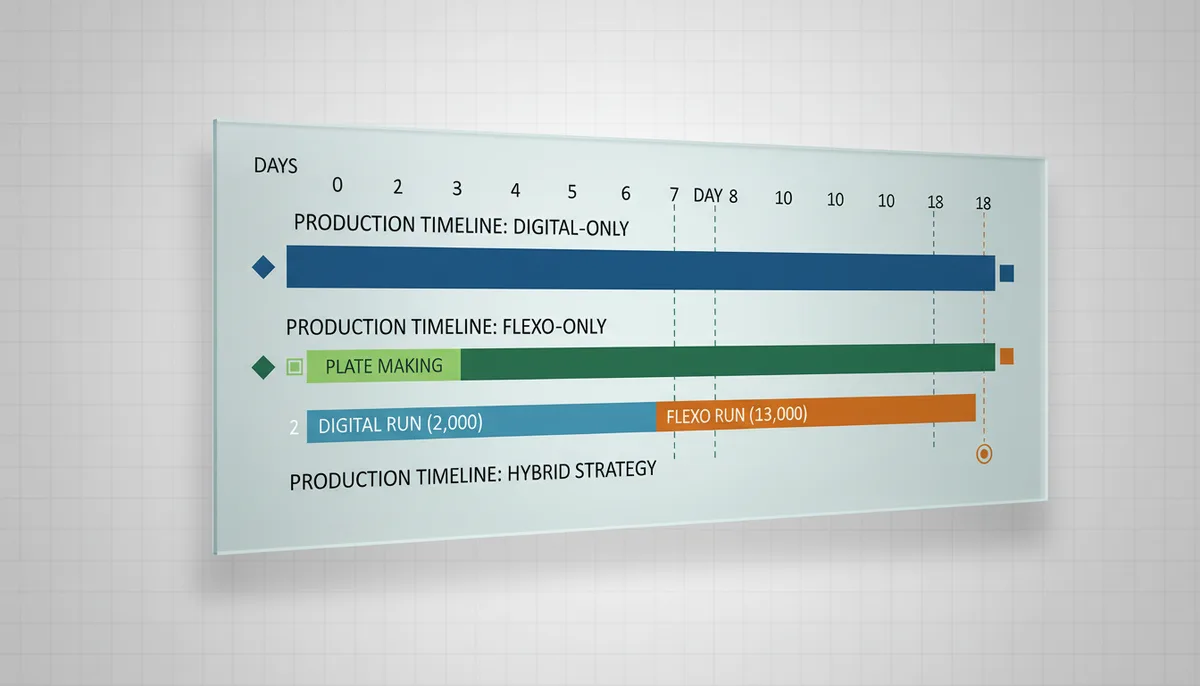
Flexographic printing is not ideal for runs under 2,000 units. The plate cost of $150-$300 per color makes short runs uneconomical. For 250-2,000 units, digital printing is more suitable. The main drawback of flexo is the 5-7 day setup time for plate mounting and color registration. High-mix, low-volume shops may find flexo unsuitable for their workflow. Compared to digital, flexo requires longer lead times for plate production and proofing.
Variable data printing — such as serial numbers or QR codes — is not possible with standard flexo plates. That requires digital printing. Competitors offer advantages in variable data applications, making digital the better choice when each label needs unique text or barcodes. Alternatively, a hybrid approach using a digital module inline with a flexo press can handle variable data while maintaining flexo economics for the fixed portions.
Although flexo delivers the lowest per-unit cost at volume, the initial investment in plates and proofing is a barrier for small businesses. Compared to digital, the breakeven point is around 2,500-3,000 units. Below that, digital printing is the better choice. Above 5,000 units, flexo saves on per-label cost. For runs between 2,000 and 5,000 units, hybrid approaches combining digital and flexo may be more suitable than committing to either method exclusively. The drawback of the hybrid approach is higher setup complexity and potential for longer lead times.
Material restrictions are another limitation: flexo works best with flexible substrates like BOPP, paper, and film. Rigid materials such as thick plastic or metalized films require specialized plate and adhesive systems that increase cost. Consider instead using a UV flexo system for challenging substrates. Our team can evaluate your specific material requirements during the quote process. The anticipated trend for 2026-2028 is expanded substrate compatibility as new plate materials come to market.
Conclusion: Your Technical Checklist for Sourcing 3.5 x 1.75 Custom Printed Labels
Sourcing custom printed labels at this size requires a clear specification sheet. Start with 10mil BOPP for outdoor use or paper for indoor short-term use. Specify a 24-up layout on 12x18 sheets. Require a G7 proof with Delta E ≤ 2.0. Order 5,000+ units for flexo pricing under $0.08 per unit. The total cost of ownership, factoring in rework and field failure costs, makes this specification the most economical for mid-to-high volume runs.
Our production team runs these labels daily on a 6-color press with optical inspection. We provide a free dieline proof and color measurement report with every order. Compliance with FDA 21 CFR packaging guidelines is available for food and cosmetic applications. Ready to start your next label project? Contact us to request a quote and get started with a G7-certified proof. Learn more about our promotional and diy goods solutions or check our label production tips article for additional best practices. We also offer flexo vs digital label printing comparisons and choosing the right label material guides for buyers evaluating their options.
Label production tips — Flexo vs digital label printing — Choosing the right label material
Frequently Asked Questions
When does flexo printing become cheaper than digital for 3.5 x 1.75 labels?
Flexo becomes cheaper above 2,500-3,000 units due to plate costs spreading across volume. At 5,000+ units, flexo delivers under $0.08/unit, while digital costs $0.20-$0.40/unit. For runs under 2,000 units, digital is more economical.
What adhesive should I specify for 3.5 x 1.75 labels on HDPE containers?
For HDPE (surface energy below 38 dynes/cm), specify a permanent acrylic adhesive. Ensure the substrate is corona or flame treated to at least 38 dynes/cm. For cold storage down to -20°F, use a low-temperature acrylic adhesive to prevent lifting.
Can I get variable data (serial numbers) on flexo-printed 3.5 x 1.75 labels?
Standard flexo plates cannot print variable data. For unique serial numbers or QR codes, use digital printing or a hybrid press with a digital module inline. Flexo is best for fixed designs at high volume.
What is the minimum order quantity for cost-effective 3.5 x 1.75 flexo labels?
The minimum for economical flexo is 5,000 units, achieving under $0.08/unit. Runs of 2,000-5,000 may still be cost-effective but with higher per-unit cost. Below 2,000 units, digital printing is recommended.