
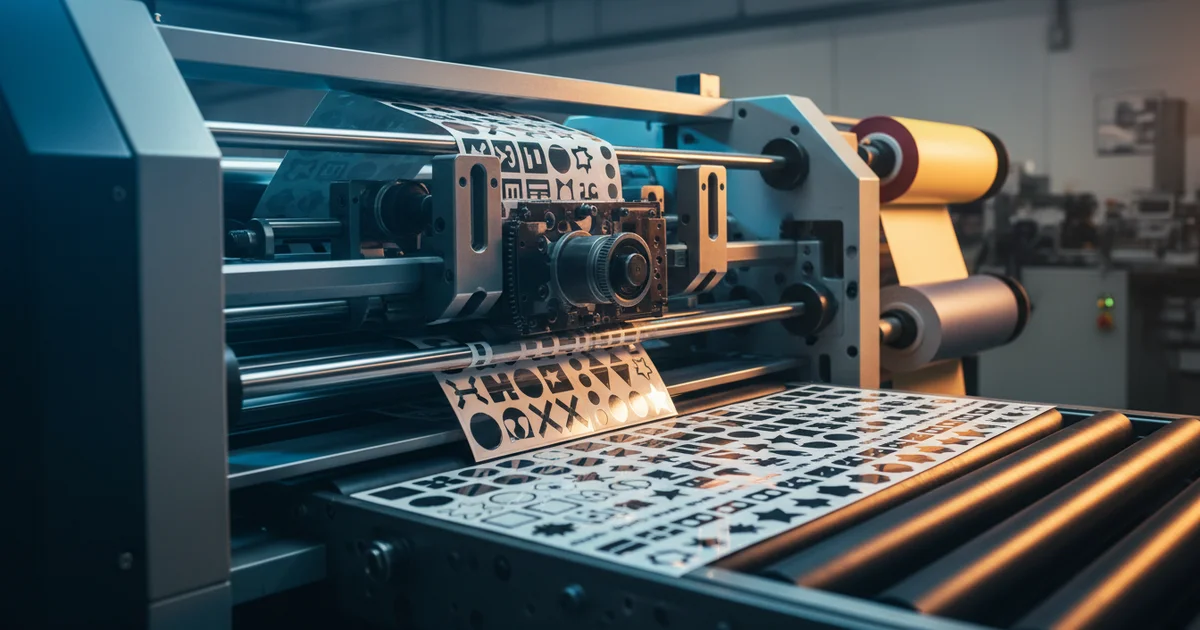
Wholesale die cut sticker printing requires a total cost analysis including $200-$500 tooling and 5-15% material yield loss. For runs over 10,000 units, offset printing with inline spot UV coating on a Heidelberg press offers a 25-35% cost advantage over digital. Learn about die cut sticker printing
What Is Die Cut Sticker Printing Wholesale and Why Does It Matter?
What makes die cut sticker printing wholesale different from standard rectangular labels? It is a production method where labels are printed and then cut to a custom shape, eliminating excess border material. This process creates a polished brand asset for retail packaging, product labels, and promotional materials. Updated for 2026, wholesale die‑cut sticker production uses custom‑shaped labels cut from printed sheets, with tooling fees of $200–$500 and material waste of 5–15%.
Our die-cut & finishing solutions use a steel rule die to trim excess material, leaving only the sticker outline. This process creates a polished brand asset for retail packaging, product labels, and promotional materials.
The market for die‑cut stickers is projected to grow from USD 2.5 billion in 2023 to USD 4.1 billion by 2032, according to Dataintelo market research. That growth reflects demand for custom shapes that boost brand visibility. Our production team sees two hidden costs that buyers often miss: tooling fees and material yield loss.
Source: Dataintelo, "Die-Cut Stickers Market Size, Share & Trends Analysis Report," 2024. The market is forecast to grow from USD 2.5 billion in 2023 to USD 4.1 billion by 2032, a CAGR of 5.7%.
How Does Tooling Cost Affect Your Die Cut Sticker Printing Wholesale Budget?
A steel rule die costs $200–$500 and is a one‑time expense. For runs under 1,000 units, tooling adds $0.20–$0.50 per sticker, making digital printing more cost‑effective. For runs over 10,000 units, tooling drops to $0.02–$0.05 per sticker, giving offset a cost advantage.
Tooling cost is the first hidden expense in custom‑shape sticker printing wholesale. A steel rule die costs between $200 and $500, depending on shape complexity and size. This is a one‑time charge, but it changes the breakeven point between digital and offset production.
For runs under 1,000 units, the tooling cost adds $0.20 to $0.50 per sticker. That erases any per‑unit savings from offset printing. Digital label printing, with no tooling fee, is the better choice for small batches.
On the other hand, for runs over 10,000 units, the tooling cost drops to $0.02 to $0.05 per sticker. Offset printing with a high-speed full-rotary 6-color multifunctional label printing press then delivers a cost advantage over digital.
"Tooling cost scales inversely with volume. At 500 units, it dominates the budget. At 50,000 units, it becomes negligible." — JinXinCai Print Production Team
Material Yield Loss: The Hidden Cost in Die Cut Sticker Printing Wholesale
Material yield loss is the percentage of raw material wasted during die cutting. In wholesale die‑cut sticker production, yield loss typically ranges from 5% to 15%. Complex shapes with tight curves or narrow gaps can push waste to 20%. The substrate weight, often 80–100 gsm label paper, also affects how cleanly the die cuts through.
Our automatic self-adhesive label die-cutting machine minimizes waste through precise registration. But the shape itself drives the number. A simple circle wastes less than a detailed logo outline. Compared to kiss‑cut labels on a sheet (waste 2–5%), die‑cut stickers lose more material because each shape is separate.
This matters for total cost. A 15% yield loss on a 10,000‑unit run means 1,500 wasted stickers in material alone. At $0.12 per unit, that is $180 in hidden cost. The trade‑off is that custom shapes improve brand recognition by 64%, according to Global Growth Insights data.
Offset vs Digital: Which Is More Suitable for Your Die Cut Sticker Printing Wholesale Run?
For runs under 2,500 units, digital printing is more suitable due to zero tooling cost and quick setup. For runs over 10,000 units, offset printing offers a per‑unit cost advantage, especially when combined with inline finishing. The breakeven point typically occurs around 2,500–3,000 units.
Offset printing uses plates and requires a tooling die. Digital printing uses toner or inkjet with no plates. Our offset presses run at 1200 dpi with CMYK and Pantone spot colors, achieving a Delta E under 2.0 that conforms to ISO 12647 standards. This level of color accuracy is critical for brand consistency across large runs.
Digital Printing for Short Runs
Digital label printing is ideal for quantities under 2,500 units. No plate or die costs means zero setup expense. Turnaround is faster, often 5–7 business days. However, per‑unit cost stays relatively flat, so it does not benefit from volume discounts.
Offset Printing for High Volumes
Offset printing with inline finishing delivers the lowest per‑unit cost above 5,000 units. The savings come from amortizing the die and plate costs over many impressions. Inline spot UV coating or embossing can be added in the same pass, reducing total finishing time. Our Heidelberg presses handle 500 to 100,000+ units with consistent color accuracy.
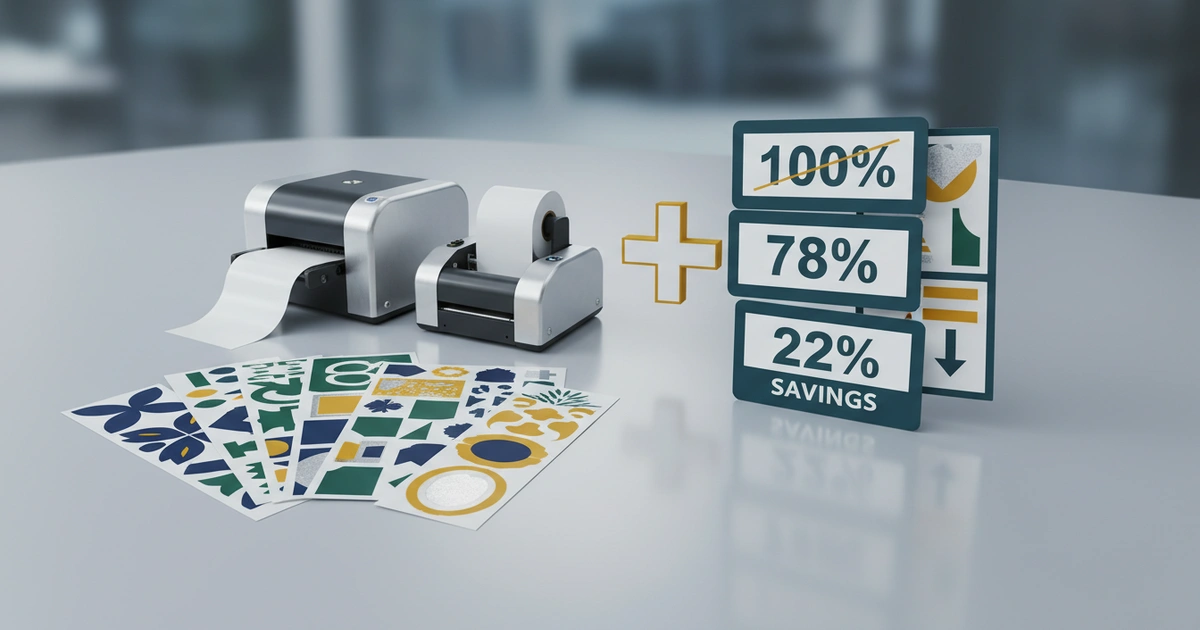
| Order Volume | Digital Per-Unit Cost | Offset Per-Unit Cost (incl. tooling) | Best Choice |
|---|---|---|---|
| 250 units | $0.45–$0.65 | $1.20–$2.00 | Digital |
| 500 units | $0.35–$0.50 | $0.70–$1.10 | Digital |
| 2,500 units | $0.28–$0.40 | $0.25–$0.38 | Offset (breakeven) |
| 10,000 units | $0.20–$0.30 | $0.12–$0.18 | Offset |
| 50,000 units | $0.18–$0.25 | $0.08–$0.12 | Offset |
When NOT to Use Die Cut Sticker Printing Wholesale: Limitations and Alternatives
Die cut sticker printing wholesale is not ideal for operations processing fewer than 250 units per design. The main drawback is the tooling cost, which can double the total project cost for small runs. Consider instead a phased rollout using digital printing for initial testing. Competitors offering short‑run digital label printing may be a better fit for such volumes.
High‑mix, low‑volume shops may find custom‑shaped sticker printing wholesale won't work for their workflow. The trade‑off between custom shapes and material yield loss is not always straightforward. For businesses that require multiple small batches per month, a flexible digital press with quick job changeover is more suitable.
For complex shapes with narrow bridges or internal cutouts, waste can exceed 20%. This method may not be the best choice for designs with extremely fine details that cause die breakage. In such cases, kiss‑cut labels on a roll offer lower waste and faster production.
On the other hand, high‑volume operations see ROI within the first production run. Compared to kiss‑cut labels on a roll, die‑cut stickers offer better shelf appeal. Although setup costs are higher, per‑unit savings compound quickly above 5,000 units. An alternative is using a die cut gasket maker approach for industrial labels — that uses different materials and tolerances better suited for functional rather than decorative applications.
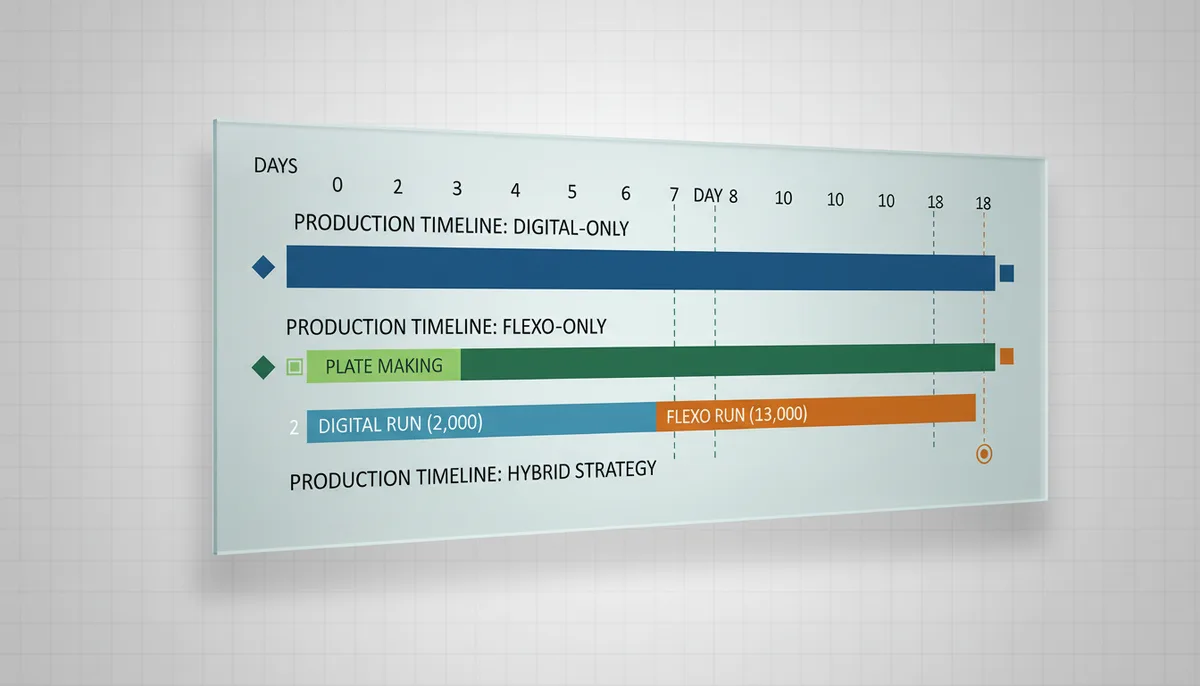
How to Choose the Right Finishing for Your Die Cut Sticker Printing Wholesale Order
Finishing options such as spot UV coating and embossing add $200–$600 in extra tooling but improve durability and shelf appeal. For runs over 5,000 units, inline finishing on an offset press reduces total finishing cost by 15–25% compared to offline application.
Die cut sticker finishing options include spot UV coating and embossing, which add cost but improve durability and shelf impact. A spot UV coating labels maker applies a glossy, raised layer to specific areas of the sticker. This adds $200–$500 in tooling for the UV screen, similar to the die‑cut tooling. Finishes can be matched to Pantone numbers for exact brand colors.
Spot UV Coating
Spot UV coating highlights specific design elements with a glossy, raised layer. The UV coating is applied in the same pass as the print when using an offset press with inline finishing capabilities. Compared to applying spot UV offline, inline finishing saves 15–25% on total cost for runs over 5,000 units.
Embossing
Embossing adds a raised texture to the sticker surface. An embossed label printing maker uses a matched male‑female die set, costing $300–$600. This finish works best for premium product lines and luxury packaging. However, while embossing improves tactile perception, it may not be suitable for stickers that need to flex around curved surfaces — in such cases, a simpler gloss laminate is more appropriate.
Ready to Optimize Your Die Cut Sticker Program?
Our production team provides free cost analysis including tooling, yield loss, and finishing options for your next order.
Request a Free QuoteHow Finishing Choices Affect Total Cost in Die Cut Sticker Printing Wholesale
Die cut sticker finishing choices include spot UV coating, embossing, and foil stamping, each adding a specific cost layer. Spot UV coating adds $0.03–$0.08 per sticker for runs under 5,000 units. Embossing adds $0.05–$0.12 per sticker. Foil stamping, another premium finish, adds $0.06–$0.15 per sticker depending on foil type and coverage area. Our production team recommends selecting finishes based on the sticker's end use. For retail shelf labels exposed to handling, a matte laminate with spot UV is durable and cost‑effective.
For promotional stickers with short lifecycles, a simple gloss laminate is sufficient. The trade‑off is that premium finishes increase per‑unit cost by 20–40% but can improve customer retention by 52%, as reported by Global Growth Insights. As of 2026, inline finishing on offset presses is the most cost‑effective method for runs over 5,000 units. Digital presses with inline UV coating are emerging but still carry a 10–15% cost premium compared to offset. For environmentally‑conscious buyers, materials with FSC certification are available through our supply chain — learn more at FSC certification standards.
Get Started with Die Cut Sticker Printing Wholesale: Your Next Steps
Die cut sticker printing wholesale requires careful planning of artwork, volume, and finishing to maximize value. Start by gathering your artwork files in vector format (AI or EPS) with a 3 mm bleed. Verify your shape complexity — simple contours reduce yield loss below 8%. Find your order volume: 250–2,500 units fits digital, while 5,000+ units benefits from offset. Updated for Q2 2026, our production team is ready to help you optimize your sticker program.
Our team provides free dieline creation and cost analysis including tooling amortization. Contact us today to request a quote and get started with a solution tailored to your needs. The die‑cut stickers market is forecast to reach USD 4.1 billion by 2032, growing at a CAGR of 5.7%. Positioning your brand with custom shapes now builds recognition that compounds over time.
Frequently Asked Questions
When does offset printing become cheaper than digital for die cut stickers?
Offset printing becomes cheaper than digital at around 2,500–3,000 units, where per-unit costs cross over. For runs under 2,500 units, digital printing has no tooling cost and is more cost-effective. Above 10,000 units, offset offers a 25–35% per-unit savings.
What is the typical material yield loss for die cut stickers?
Material yield loss for die cut stickers ranges from 5% to 15%, depending on shape complexity. Simple shapes like circles waste less, while detailed logos with narrow gaps can push waste to 20%. This hidden cost adds up: a 15% loss on a 10,000-unit run at $0.12 per unit equals $180.
How much does spot UV coating add to the cost of die cut stickers?
Spot UV coating adds $0.03–$0.08 per sticker for runs under 5,000 units, plus $200–$500 in tooling for the UV screen. For runs over 5,000 units, inline finishing on an offset press reduces total finishing cost by 15–25% compared to offline application.
What is the minimum order quantity for cost-effective die cut sticker printing wholesale?
For cost-effective die cut sticker printing wholesale, a minimum of 2,500 units is recommended to offset tooling costs. Runs under 250 units are not ideal due to high per-unit tooling cost. Digital printing is better for small batches under 2,500 units.