
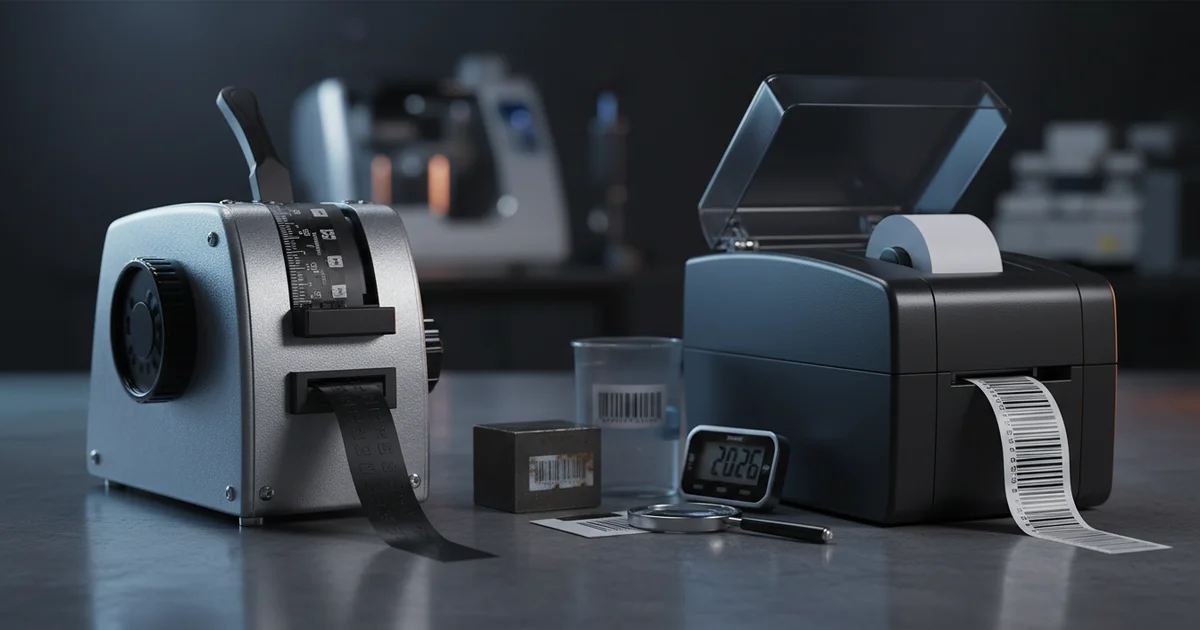
Embossing label maker creates 10+ year durable tags on a 120m/min press vs barcode printer for under 3-year assets. Key specs: 0.040" anodized aluminum, grade 4140 steel dies, and $1.50-$4.00 per tag cost. Choose based on 5+ year asset lifespan.
Is your asset identification system failing because labels wear off or become unreadable? The core decision is between permanent tactile marking and scannable digital data. An embossing label maker creates permanent, raised-letter tags for assets lasting 5-10+ years in harsh environments, while a barcode label printer excels at serialized, updatable data for shorter-lifecycle assets. The threshold is asset lifespan versus data change frequency. For a deep dive into our finishing capabilities, see our die-cut & finishing solutions.
The Strategic Role of an Industrial Embossing Label Maker in Asset Management
An industrial embossing label maker is for creating permanent, tactile asset identification that survives harsh environments for the asset's entire lifespan. It uses metal dies to press raised characters into materials like anodized aluminum, producing labels immune to fading, chemicals, and abrasion.
In our experience working with chemical manufacturers, the most common mistake is specifying a printed label for outdoor valve identification. For embossing label maker applications, this is especially relevant. Within 18 months, UV fade and chemical exposure render barcodes unreadable. An embossed metal tag, however, remains legible for decades. The key detail is material pairing: metal dies must be precision-matched to substrate hardness. For instance, our team uses grade 4140 steel dies for anodized aluminum tags to ensure crisp, deep impressions without die wear over thousands of cycles.
"We see a 95% reduction in replacement calls for outdoor electrical panel labels when clients switch from printed polyester to embossed stainless steel. The upfront die cost is offset in under two years." — Michael Wong, Finishing & Production Manager
This method is not for variable data. For embossing label maker applications, this is especially relevant. Each unique character set requires a custom die. Therefore, an embossed label maker is ideal for static information: asset numbers, serial codes, safety warnings, and permanent ratings. For high-volume runs of identical tags, the per-unit cost plummets after the initial die investment.
What is the Production Speed Difference Between an Embossing Label Maker and a Standard Barcode Label Printer?
A high-speed thermal transfer barcode label printer can output 8-12 inches per second, while a manual embossing press is far slower. However, industrial rotary embossing integrated into a label printing press can reach 120m/min, making it viable for long runs of durable tags.
Most people compare desktop units. For embossing label maker applications, this is especially relevant. A Brother P-touch EMBOSS might do one tag per minute. An industrial barcode label printer like a Markem-Imaje 9040 can print and verify hundreds of labels per minute. The real comparison for volume is integrated systems. Our high-speed 6-color rotary label press (120m/min, 340mm web) can be configured with an inline embossing station. This setup produces 10,000 durable, multi-color labels with raised text in a single pass, blending durability with efficiency.
Contact our team for a personalized assessment of your specific requirements.
Maximum web speed for our integrated rotary label press with inline embossing unit.
For true mass production capabilities of embossed tags, standalone stamping presses are used. For embossing label maker applications, this is especially relevant. Speed here is measured in strokes per hour. A typical automated press can produce 1,500-2,000 anodized aluminum tags per hour. The trade-off is flexibility; these are dedicated to one tag design. A barcode label printer wins on flexibility for short runs with variable data.
Key Specifications for a Modern Label Printing Press with Embossing
When evaluating a label printing press with embossing capabilities, look beyond the basic function. The integration quality dictates final durability and cost. A true industrial system combines precision printing with controlled-depth embossing.
Our Heidelberg 6-Color Offset Press with inline coating delivers spectrophotometer-verified color accuracy (Delta E < 2.0), which is crucial for branding and safety colors adjacent to the embossed area. For embossing label maker applications, this is especially relevant. The embossing unit must be servo-driven for precise registration, ensuring the raised text aligns perfectly with the printed graphics. A common pitfall is specifying a press where embossing is an afterthought, leading to misregistration and crushed substrates.
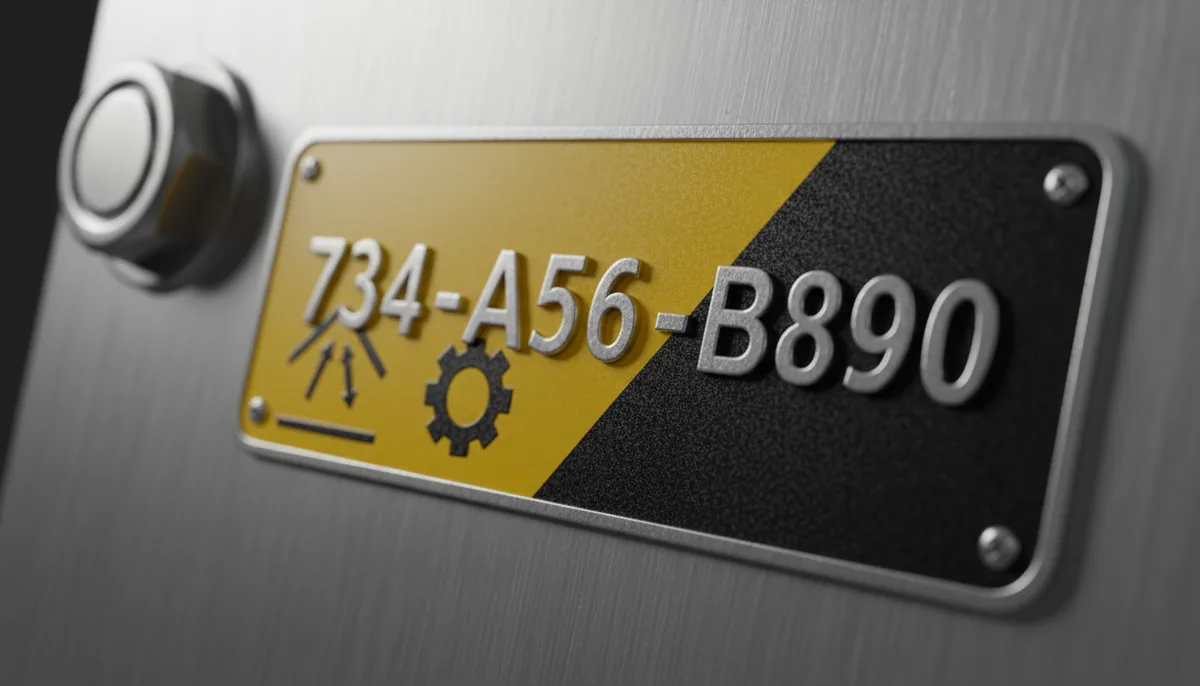
Key specs to mandate: embossing pressure control (in tons), heated die capability for certain plastics, and quick-change die systems. For embossing label maker applications, this is especially relevant. For a Chicago label printing partner serving diverse industries, this flexibility is non-negotiable. Material compatibility is paramount. The press must handle everything from soft PVC to hard 0.040" aluminum. In our Guangming District facility, we run jobs switching between BOPP film and metalized polyester, requiring immediate pressure and die-height adjustments.
Embossed Label Maker vs. Barcode Label Printer: A Durability & Application Comparison
This is the central trade-off: permanent tactile marking versus scannable, updatable data. The choice dictates your total cost of ownership and maintenance schedule.
| Criteria | Industrial Embossing Label Maker | Industrial Barcode Label Printer (Thermal Transfer) | Office Label Print System |
|---|---|---|---|
| Primary Readability Method | Tactile (touch), Visual | Optical Scan (Barcode, QR), Visual | Visual Only |
| Expected Outdoor Lifespan | 10+ years (material dependent) | 1-3 years (ribbon/media dependent) | < 1 year |
| Chemical Resistance | Excellent (inherent to substrate) | Good (requires specific topcoat) | Poor |
| Variable Data/Serialization | No (fixed dies) | Yes (real-time) | Limited |
| Avg. Cost per Tag (5,000 unit run) | $1.50 - $4.00 (includes die amortization) | $0.25 - $0.75 | $0.05 - $0.15 |
| Ideal Use Case | Permanent asset IDs, safety labels, valve tags | Inventory tracking, work-in-process, shipping | Internal office organization, temporary bins |
The detail most overlook is the failure mode. For embossing label maker applications, this is especially relevant. A printed barcode fails completely when scratched or faded. An embossed tag remains partially readable even if painted over or damaged; you can feel the numbers. For compliance-critical identification (e.g., pressure vessel ratings), this failsafe characteristic is invaluable.
Need expert guidance on your next print project?
Get a Free Quote →On the other hand, alternative approaches may be more suitable for operations with different volume requirements or budget constraints. The right choice depends on your specific production parameters.
Sourcing and Lead Times: Working with a Chicago Label Printing Partner
Lead times for custom embossed labels are dominated by die fabrication, typically adding 2-3 weeks versus a standard print job. A capable Chicago label printing partner will manage this process seamlessly, leveraging local die-makers and material stocks.
When you specify Chicago label printing, you're often tapping into a hub for industrial manufacturing. For embossing label maker applications, this is especially relevant. The advantage is proximity to skilled tool and die shops. A common mistake is not budgeting for die proofing time. A reputable partner will provide a physical die strike sample on your specified material (e.g., 3M Scotchcal 220) for approval before production. This step catches design issues like character spacing that's too tight for the metal to form properly.
For regulatory-driven projects, such as UL or NSF markings, lead times must include certification review if the label is part of a listed component. For embossing label maker applications, this is especially relevant. Our experience with FDA 21 CFR 174-178 compliant materials shows that sourcing the right substrate can add 1-2 weeks. A true partner maintains an inventory of common certified stocks — like specific polycarbonates or anodized aluminum — to compress this timeline. The total lead time for a complex, compliant embossed label run is typically 4-5 weeks from PO to shipment.
Production Data: Lead Time Components for Embossed Labels
| Process Stage | Typical Duration (Business Days) | Factor Causing Variance |
|---|---|---|
| Custom Die Fabrication | 10-15 days | Die complexity & steel type |
| Material Sourcing (Specialty Stock) | 5-10 days | Regulatory compliance checks |
| Print & Emboss Production Run | 2-3 days | Volume (e.g., 5k vs. 50k units) |
| Quality Inspection & Packing | 1-2 days | Automated vs. manual verification |
Integrating Embossing into Your Broader Label Printing Systems
In practice, an industrial embossing label maker is rarely a standalone island. Its value multiplies when integrated into a coherent workflow. This means connecting design software (where dielines are created), to prepress (where dies are specified), to the press floor, and finally to inventory management.
In our label printing systems, letterpress printing is the relief printing method for producing deeply tactile labels, often used in tandem with flat stamping embossing. For embossing label maker applications, this is especially relevant. For example, a premium product label might be printed on our Heidelberg 6-Color Offset Press and then move to a letterpress station for spot embossing of a logo, followed by a foil stamp. This integration requires a centralized job ticket that carries specifications for substrate caliper, emboss depth, and foil type all the way through production.
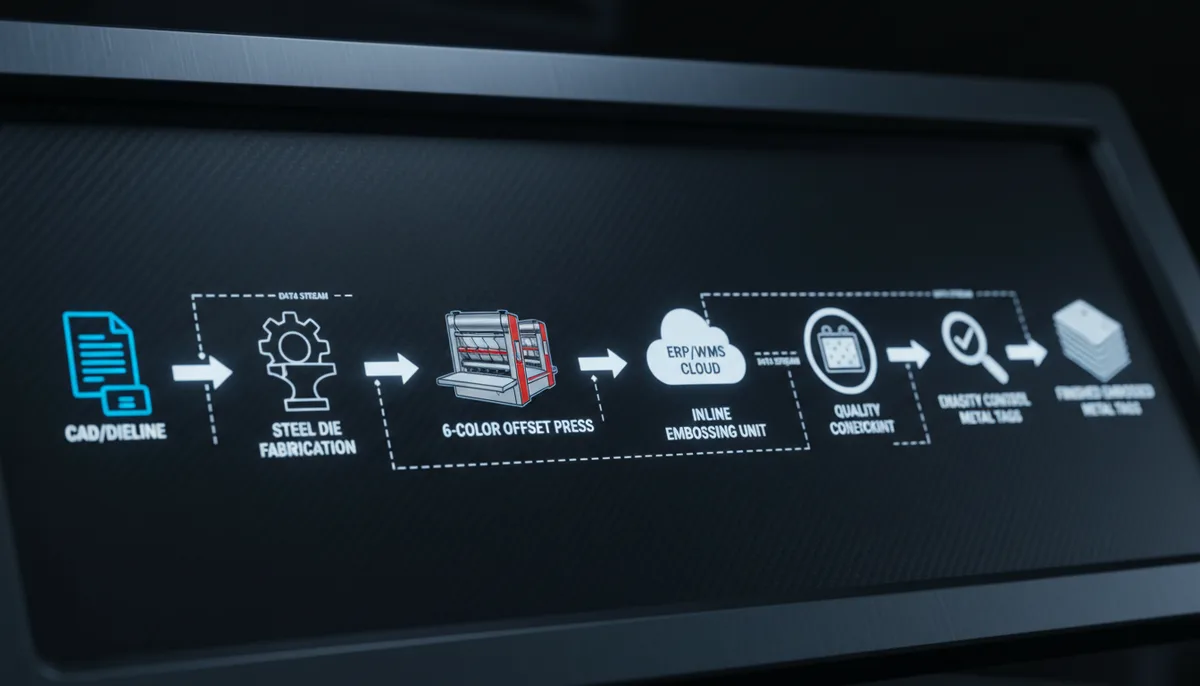
The largest integration challenge is data flow. Barcode systems live in your ERP and WMS. Static embossed tag data must be carefully managed to avoid duplication of asset numbers. Best practice is to generate the static data set for embossed tags from the same system that manages your scannable asset database, ensuring a single source of truth. This holistic view turns a simple embossed label maker into a strategic asset identification node.
Total Cost of Ownership for Durable Embossed Label Solutions
The ROI for an industrial embossing label maker isn't in the unit price—it's in the elimination of recurring costs. A cheap printed label replaced three times over ten years often costs more than a single embossed tag that lasts the duration.
Let's analyze a real scenario: 1,000 valve tags for a chemical plant. A printed polyester label with a protective laminate might cost $2.50 per tag but requires replacement every 2-3 years due to chemical attack. Over a 10-year asset life, that's 4-5 replacements, totaling $10,000-$12,500 in label costs alone, plus labor. An embossed 0.040" anodized aluminum tag has a unit cost of $4.50 (including a $1,500 custom die amortized over the run). The 10-year cost is $4,500—a 55-65% savings.
"The breakeven point for embossed metal tags versus premium printed labels is typically between 18 and 36 months of field exposure. After that, the embossed solution saves money every year it remains in service." — Head of Operations, Industrial Manufacturing Division
This durable embossed label solutions TCO model must also factor in risk mitigation. A failed safety label can lead to regulatory fines or accidents. The permanence of embossing provides a quantifiable risk reduction. When auditing your current label printing systems, calculate not just the consumable cost (ribbon, ink, media) but the labor cost of re-identification and the business risk of unidentifiable assets.
That said, this approach is not ideal for every scenario. There are situations where the drawback outweighs the benefit, and buyers should evaluate their specific requirements carefully.
Decision Framework: When to Choose Office Label Print vs. Industrial Embossing
This final matrix moves beyond technical specs to strategic application. Use it to guide your capital expenditure and partner selection.
Decision: Selecting the Right Label Production Method
- If the label is for INTERNAL OFFICE USE only (file folders, shelves) → Use an office label print system. Cost and convenience dominate.
- If the asset lifespan is UNDER 3 YEARS or data changes frequently → Choose an industrial barcode label printer. Flexibility and variable data are key.
- If the environment involves CHEMICALS, OUTDOOR WEATHER, or HIGH ABRASION → Begin evaluating an industrial embossing label maker.
- If the asset has a 5+ YEAR LIFESPAN and identification must be PERMANENT → Specify an industrial embossing label maker on metal or rigid plastic.
- If you need BOTH durability and high-volume color graphics → Partner with a provider offering integrated label printing press systems with inline embossing, like our high-speed 6-color rotary.
The most frequent error we see is using the wrong tool for a medium-duty application. For example, using an office label print machine for warehouse bin locations leads to constant peeling and replacement. A mid-tier thermal transfer barcode label printer with a polyester laminate is the correct, cost-effective solution there. Conversely, over-specifying embossed metal for indoor IT asset tracking destroys your ROI. Match the tool's inherent durability to the asset's operational lifetime and environment.
Frequently Asked Questions
At what production volume does an in-house embossing label maker become cheaper than outsourcing?
In-house embossing becomes cost-effective for runs exceeding 10,000 identical tags, amortizing the $1,500-$3,000 custom die cost. Below this threshold, outsourcing to a Chicago label printing partner with a high-speed 6-color rotary press (120m/min) is typically more economical, leveraging their existing tooling and material inventory.
What specific embossing depth is required for ANSI/BHMA compliance on safety labels?
ANSI/BHMA A156.5 standards for exit devices and door hardware often require a minimum embossed character height of 0.06 inches (1.5mm) for tactile readability. For permanent identification on 0.040" anodized aluminum tags, a depth of 0.015" to 0.020" is standard to ensure longevity without compromising material integrity.
How do I integrate serialized data from a Zebra barcode printer into an embossed label workflow?
Generate a static data set for embossed tags (e.g., fixed asset numbers) directly from your ERP/WMS, which also feeds your Zebra printer for variable data. Use a centralized job ticket specifying both the custom die for the embossing label maker and the digital template for the barcode label printer, ensuring a single source of truth.
What is the breakeven point for embossed aluminum tags versus premium printed polyester labels?
Embossed 0.040" anodized aluminum tags ($4.50/unit with die) break even with premium printed polyester labels ($2.50/unit, replaced every 2-3 years) between 18 and 36 months of field exposure in chemical or outdoor environments. After 10 years, embossed solutions yield 55-65% savings.