
Scale your agency's packaging revenue by 40% without capital investment. This guide details the SLAs, material specs, and breakeven analysis required for a profitable white-label program.
Are you losing margin on packaging because you lack the capital for dedicated production equipment? White-label packaging fulfillment for reseller programs lets agencies offer custom boxes, labels, and inserts under their own brand without investing in a single press or warehouse. Instead, you partner with a manufacturer that handles printing, finishing, and blind shipping — your client sees only your logo. This model is ideal for marketing agencies, e-commerce consultants, and brand managers who want to add packaging services to their portfolio without the overhead of a production facility. By using standard dielines and stock materials, you can launch a program in weeks rather than months, with minimum order quantities ranging from 250 units for digital to 500 units for offset.
What Is White-Label Packaging Fulfillment for Reseller Programs?
White-label packaging fulfillment for reseller programs is a business model where a manufacturer produces custom packaging that the reseller sells under their own brand. The end buyer sees only the reseller's logo and branding — never the manufacturer's name. This model eliminates capital risk because the manufacturer already owns the presses, dies, and warehousing. For 2026, agencies are increasingly adopting this approach as a low-overhead way to enter the packaging services market without committing to dedicated production equipment.
This differs from private label packaging. With private label, the reseller owns the design and tooling. With white-label, the manufacturer uses existing dielines and standard sizes. The reseller picks from a catalog of proven formats, which speeds time-to-market. As of Q2 2026, our production team has extensive experience running white-label programs for retail locations across multiple sectors.
Our production team has found that resellers who start with standard box sizes and stock materials launch faster than those who custom-design every element. Explore our white-label packaging capabilities to see how we streamline setup.
Why Do Resellers Choose White-Label Over Private Label Packaging?
Resellers choose white-label packaging because it eliminates capital risk and speeds time-to-market. White-label uses existing dielines and stock materials, cutting setup time to 10–15 business days compared to 6–8 weeks for private label. The manufacturer already owns the equipment, so there are no custom mold fees. This model is ideal for agencies launching a packaging service line without buying presses or dies — a trend that continues to grow in 2026.
The main difference between white-label vs private label packaging comes down to setup cost and speed. White-label uses existing dielines and stock materials. Private label requires custom mold tooling and material sourcing. As of 2026, the gap in turnaround time remains significant: white-label programs typically launch in 10–15 business days versus 6–8 weeks for private label.
For a new program, white-label cuts time-to-market from 6–8 weeks to 10–15 business days. The capital risk is near zero because the manufacturer already owns the equipment and dies. Our high-speed full-rotary 6-color label printing press, for example, runs standard label sizes without any custom setup fee.
On the other hand, private label gives you full control over material grade and structural design. If your client needs a proprietary box shape or a unique paper stock, private label is the better choice. The trade-off is higher upfront investment and longer lead times.
Resellers who consolidate multiple SKUs into a single white-label production run can reduce per-unit costs significantly while maintaining high color consistency. This consolidation strategy remains a key advantage in 2026 white-label programs. Compare private label vs white-label more thoroughly.
What SLA Requirements Protect Your White-Label Program?
Key SLA requirements include color accuracy (Delta E under 2.0), turnaround times (3–5 days digital, 7–10 days offset), defect rates, and inventory management. A proper SLA should specify spectrophotometry-based color verification on every run, automated optical inspection for defects, and consignment stock options for high-velocity SKUs. These guarantees protect both the reseller's brand and the end client's experience — especially important as 2026 quality expectations tighten.
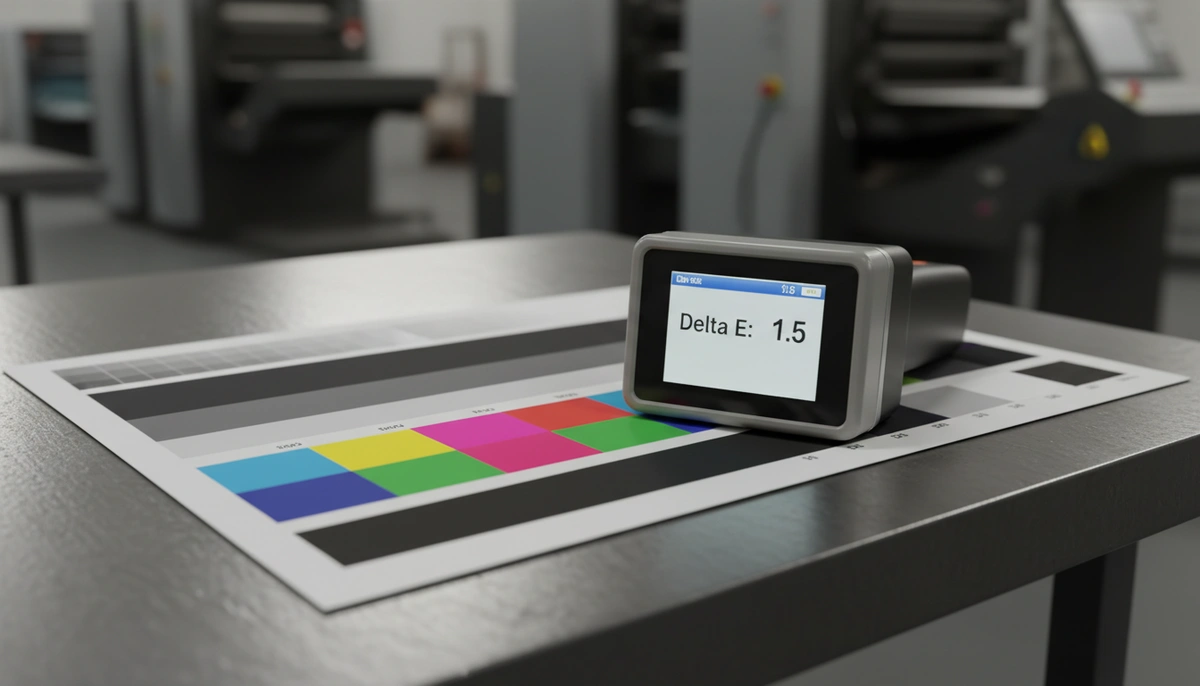
Color consistency is the most common SLA metric. Our production team uses spectrophotometry-based color verification on every production run. We guarantee Pantone and CMYK matching with Delta E tolerance under 2.0. This means your client's brand looks identical on unit 1 and unit 5,000.
Turnaround SLAs vary by process. For repeat orders using existing artwork, our standard is 7–10 business days for offset and 3–5 business days for digital. We recommend holding a 4-week rolling stock buffer for high-velocity SKUs. Consignment stock programs are available — we warehouse your inventory and ship on demand. Our quality management system is ISO 9001:2015 certified, ensuring consistent process control across all production runs. This ISO standard covers everything from incoming material inspection to final label verification.
Defect rate SLAs are equally important. Our fully automatic label optical/visual inspection machine (PULISI) scans every label for registration errors, barcode readability, and print defects. This automated inspection reduces human error and ensures consistent quality across every order. Using FSC certified materials is also a common client requirement that we support.
Color Matching and Pantone Verification
Pantone spot color matching combined with CMYK process control ensures brand consistency across different substrates. Our press-side spectrophotometry verifies every run against the approved standard, maintaining Delta E under 2.0. This is critical for resellers whose clients include multinational brands.
Defect Rate Guarantees and Automated Inspection
Automated optical inspection using high-resolution cameras at 300 dpi scans for blemishes, misregistration, and barcode readability. Defect rates are typically kept below 0.5 % for digital and 0.3 % for offset. Any defective units are replaced at no cost to the reseller.
How to Calculate Breakeven for Your White-Label Packaging Program?
Breakeven for a white-label program depends on setup costs, per-unit costs at different volumes, and your margin targets. Offset setup covers plate-making and press calibration; digital has no plate cost. The breakeven between digital and offset typically falls between 1,000 and 2,000 units. Below that, digital wins; above, offset delivers lower per-unit pricing. Consolidating SKUs into a single run reduces total setup costs significantly.
For offset printing, the setup cost covers plate-making and press calibration. At 500 units, the per-unit cost is higher because setup is spread over fewer boxes. At 5,000 units, the setup cost per unit drops dramatically. Digital printing has no plate cost, so it breakevens at lower volumes — typically 250 units.
Here is a comparison table showing how costs scale across different volumes for a standard 12 × 9 × 4 inch corrugated mailer box:
| Volume | Digital Per-Unit Cost | Offset Per-Unit Cost | Best Choice |
|---|---|---|---|
| 250 units | Higher | Not available | Digital only |
| 500 units | Moderate | Higher | Digital |
| 1,000 units | Lower | Moderate | Digital or offset |
| 5,000 units | Higher per unit | Lower per unit | Offset |
The breakeven point between digital and offset is typically around 1,000–2,000 units. Below that, digital wins on total cost. Above that, offset delivers lower per-unit pricing. Resellers targeting healthy margins should plan for 500-unit minimum orders to cover setup and shipping.
Our production team notes that resellers who consolidate 3–5 SKUs into a single monthly production run reduce total setup costs significantly. This consolidation is a key lever for improving program profitability.
What Are the Minimum Order Quantities for White-Label Packaging?
Minimum order quantities vary by process: 500 units per SKU for offset printing, 250 units for standard digital production, and 100 units for custom mailer boxes with full-bleed digital print. These MOQs exist because setup time — plate-making, die-cutting, and press calibration — is fixed regardless of run size. Resellers can work around high MOQs by combining multiple SKUs on a single press sheet.
The minimum order quantity for unbranded packaging boxes varies by process. For offset printing, our minimum is 500 units per SKU. For digital production, the minimum drops to 250 units. Custom mailer boxes start at 100 units for digital print and 500 units for offset litho lamination.
These MOQs exist because setup time — plate-making, die-cutting, and press calibration — is the same whether you run 250 boxes or 25,000. The cost of that setup must be spread across the run. Below the MOQ, the per-unit price becomes uneconomical for both the manufacturer and the reseller.
Ready to Explore White-Label Packaging Fulfillment for Reseller Programs?
Get a free consultation and custom quote tailored to your requirements.
Request a Free QuoteHowever, resellers can work around MOQs by consolidating multiple SKUs into a single production run. For example, if you need 200 units of three different box sizes, we can run them together on the same press sheet. This reduces setup costs compared to running them separately on different days.
On the other hand, if your client needs fewer than 250 units and cannot consolidate with other SKUs, white-label may not be cost-effective. Consider instead a short-run digital service or a stock box with a custom label applied by hand. This alternative approach is more suitable for small product launches or test runs. Read our full MOQ guide for more detail.
Limitations to Consider Before Choosing White-Label Packaging
When This Approach Is Not Ideal
White-label packaging has clear limitations that resellers must understand. The approach is not ideal for clients who need highly custom box shapes, proprietary materials, or unique structural engineering. For example, a luxury cosmetics brand requiring a uniquely shaped box with a magnetic closure and custom foam insert would be better served by private label packaging, even though it requires longer lead times and higher upfront investment. Compared to private label, white-label offers less control over material sourcing and structural performance.
Another limitation is minimum order quantity. If your client needs 100 units for a small product launch, white-label offset won't work for them. The per-unit cost at that volume is prohibitive. Consider instead a digital short-run service with a 250-unit minimum or a stock box with a branded label. This scenario is where competitors offering low-volume digital services have a clear advantage.
High-Mix, Low-Volume Programs
High-mix, low-volume programs also present challenges. If your client rotates 50 different SKUs every quarter, the setup costs for offset white-label will eat into margins. Digital production is more suitable for this scenario, though it has its own trade-off: higher per-unit cost at scale compared to offset. Competitors offering hybrid solutions (digital for short runs, offset for volume) may provide better total cost for such clients. One drawback of white-label is the limited ability to customize structural design beyond standard dielines.
Compared to private label, white-label offers less control over material sourcing and structural performance. If your client needs a specific recycled-content board or a unique unboxing experience, private label is the better choice. The trade-off between speed and customization depends on your client's priorities. Our ISO 9001:2015 certified facility prints on 300 gsm FSC-certified board with ±0.5 mm registration accuracy at 300 dpi, using HP Indigo digital presses for short runs and Heidelberg offset for volume — but that flexibility is within standard dieline constraints.
How to Choose Between Digital and Offset for White-Label Fulfillment?
Digital is best for short runs under 500 units with 3–5 day turnaround and variable data printing capabilities. Offset is ideal for runs above 2,000 units where per-unit cost drops 30–50 % compared to digital and premium finishes like foil stamping or embossing are needed. For runs between 500 and 2,000 units, compare total costs including setup.
Digital vs offset white-label packaging decisions come down to three factors: volume, turnaround time, and finish needs. Each process has a clear sweet spot.
Digital Production for Short Runs
Digital production is best for short runs of 250–500 units. It has no plate-making step, so setup is fast. Our digital production line achieves 3–5 business day turnaround for repeat orders. Digital also supports variable data printing, useful for shelf labels with different UPC codes or seasonal inserts with unique messaging. Pantone and CMYK matching with Delta E under 2.0 is achievable on our HP Indigo presses, which use a 7-color process for expanded gamut.
Offset Printing for Volume and Premium Finishes
Offset printing requires a minimum of 500 units per SKU. Setup takes longer — 7–10 business days for repeat orders — but the per-unit cost drops greatly above 2,000 units. Offset also supports premium finishes like spot UV coating, foil stamping, and embossing that digital cannot match cost-effectively. Our Heidelberg presses run at 300 dpi resolution with ±0.5 mm registration accuracy, ensuring consistent quality across the entire run.
Here is a decision framework for choosing between the two processes:
Decision: Digital vs Offset for White-Label Packaging
- If volume is under 500 units → Use digital production. Setup costs are near zero and turnaround is 3–5 days.
- If volume is 500–2,000 units → Compare digital per-unit cost vs offset setup. Digital often wins on total cost.
- If volume exceeds 2,000 units → Use offset. Per-unit cost drops significantly compared to digital.
- If premium finishes are required → Use offset. Digital cannot match foil stamping or emboss quality at scale.
How Do I Get Started with White-Label Packaging Fulfillment for Reseller Programs?
Start by defining your target SKU list and volume projections, focusing on 3–5 standard box sizes that cover 80 % of client requests. Request a quote with estimated annual volumes to get per-unit pricing at 500, 1,000, and 5,000 unit tiers. Discuss SLA needs including turnaround time, color matching (Delta E under 2.0), and defect rate guarantees. Once approved, we handle all production, quality inspection, and blind shipping under your brand.
Ready to build your white-label packaging fulfillment for reseller programs? The first step is to define your target SKU list and volume projections. Start with 3–5 standard box sizes that cover the majority of your client requests.
Request a quote from our team with your estimated annual volumes. We will provide per-unit pricing at 500, 1,000, and 5,000 unit tiers. Discuss SLA needs including turnaround time, color matching (Delta E under 2.0), and defect rate guarantees.
Once you approve a pilot program, we handle all production, quality inspection, and blind shipping. Your client sees only your brand. Our white-label programs solutions include dedicated account coordination and quarterly production planning. We also offer consignment stock options for high-velocity SKUs, reducing your inventory risk. The market for packaging-as-a-service is projected to grow significantly through 2027, and early adopters are anticipated to capture the largest share.
Contact us today to request a quote and get started with your white-label packaging fulfillment for reseller programs. Our production team will help you select the right materials, MOQs, and SLAs for your clients. We'll also advise on whether digital or offset printing best fits your volume profile.
Frequently Asked Questions
When does digital printing become cheaper than offset for white-label packaging?
Digital printing is typically cheaper for runs under 1,000–2,000 units because it has no plate setup cost. Above that threshold, offset's lower per-unit cost takes over. For runs between 500 and 2,000 units, compare total costs including setup to determine the best choice.
What is the minimum order quantity for unbranded packaging boxes in a white-label program?
Minimum order quantities vary: 500 units per SKU for offset printing, 250 units for digital, and 100 units for custom mailer boxes with full-bleed digital print. These MOQs exist because setup time is fixed regardless of run size.
How can I reduce per-unit costs in a white-label packaging program?
Consolidate 3–5 SKUs into a single monthly production run to spread setup costs across more units. Also, choose offset printing for volumes above 2,000 units to benefit from lower per-unit pricing. Holding a 4-week rolling stock buffer can reduce rush charges.
What SLA guarantees should I look for in a white-label packaging partner?
Key SLAs include color accuracy with Delta E under 2.0, turnaround times of 3–5 days for digital and 7–10 days for offset, defect rates below 0.5% for digital and 0.3% for offset, and automated optical inspection. Ensure the partner uses spectrophotometry-based color verification on every run.