
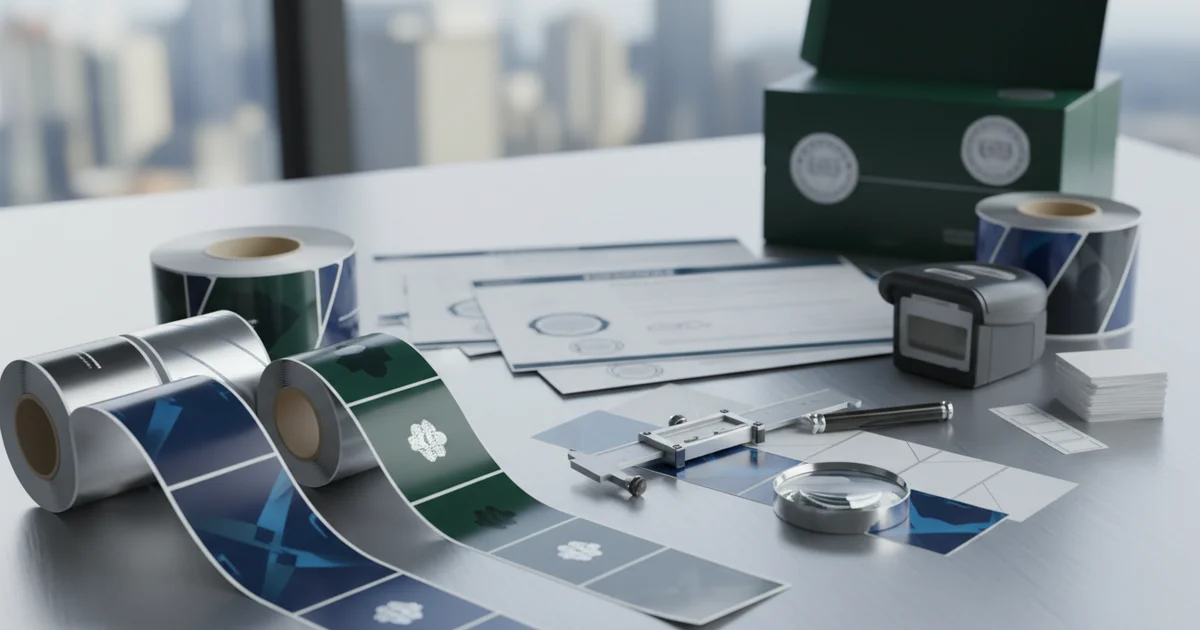
Bottle label printing Sydney: For runs under 50k units, local production offers a 15-25% total cost advantage. Verify material compliance with FDA/EU standards, mandate Delta E ≤2.0 for color, and require freezer label adhesive tests at -20°C. Offshore hubs like Mumbai breakeven around 250k units.
Are you overpaying for bottle labels while risking compliance failures? A structured sourcing checklist for bottle label printing Sydney cuts hidden costs on runs under 50,000 units and prevents costly recalls from adhesive or material mismatches. For Sydney brand managers, this growth means more supplier options but also more risk — and a systematic approach to evaluating promotional goods sourcing can protect your margins and brand reputation.
Why a Strategic Sourcing Checklist Matters for Bottle Label Printing Sydney in 2026
The global print label market continues to grow steadily, driven by rising demand in food, beverage, and personal care sectors. For Sydney brand managers, this growth means more supplier options but also more risk.
A single label failure — adhesive that peels in cold storage or color that shifts across a run — can trigger a product recall. Our production team sees this mistake most often with buyers who skip temperature‑specific adhesive tests. The resulting rework and downtime can erase months of margin.
Bottle label printing Sydney demands a checklist that covers compliance, color, cost, and capability. This guide provides one, updated for Q2 2026 sourcing decisions, with real‑world insights from our daily work.
What Are the Compliance & Material Verification Requirements?
Compliance verification for bottle label printing in Sydney starts with FDA documentation for indirect food contact and EU 1935/2004 for European markets. Our team tests every adhesive batch at -20°C to confirm freezer durability. Low‑migration inks and material data sheets complete the verification.
Compliance verification is the first step in any label sourcing program. Labels for food, beverage, or cosmetic products must meet strict migration limits to avoid contaminating the product inside. A missing Certificate of Analysis can halt an entire shipment at customs.
Our production team tests every adhesive batch at -20°C to confirm freezer durability. A label that fails in cold storage leads to costly rework — this is the most commonly missed item in our experience. For each material, we request a full data sheet that includes migration limits and adhesive performance under temperature extremes.
- FDA compliance for indirect food contact — Request a Certificate of Analysis from your supplier. Without it, any food‑contact label is non‑compliant under Australian import regulations.
- EU 1935/2004 — Required for products exported to Europe. Ensure your inks and substrates are tested for overall migration limits.
- Freezer adhesive at -20°C — Do not skip this test for cold‑chain products. Standard acrylic adhesives fail below 0°C.
- Low‑migration inks — Standard UV inks contain photoinitiators that can migrate through the label. Request a supplier data sheet confirming compliance.
How to Verify Color Accuracy & Quality?
Color accuracy is verified by mandating Delta E ≤2.0 tolerance for every run, using spectrophotometry‑based measurement. Our print production team keeps digital color profiles for each client to ensure brand consistency from unit #1 to unit #50,000. Both digital and physical press proofs are required before full production.
Color accuracy is non‑negotiable for brand consistency. Mandate a Delta E ≤2.0 tolerance for all label jobs. Delta E measures the difference between your brand's target color and the printed result — a value below 2.0 is imperceptible to the human eye under standard lighting.
Our print production & color team uses spectrophotometry‑based color verification on every run, paired with Heidelberg press calibration that maintains CMYK and Pantone standards within ±1.5 Delta E. We keep digital color profiles for each client. This ensures your brand looks identical on unit #1 and unit #50,000.
Request both a digital proof and a physical press proof before full production. A digital proof shows color intent. A physical proof reveals real‑world issues like ink adhesion on curved surfaces or dot gain on porous substrates. We also inspect for registration accuracy at 1200 dpi resolution; misregistration of 0.2 mm or more is visible on small text and barcodes. Finally, check for adhesive bleed — adhesive that seeps beyond the label edge can jam automatic applicators.
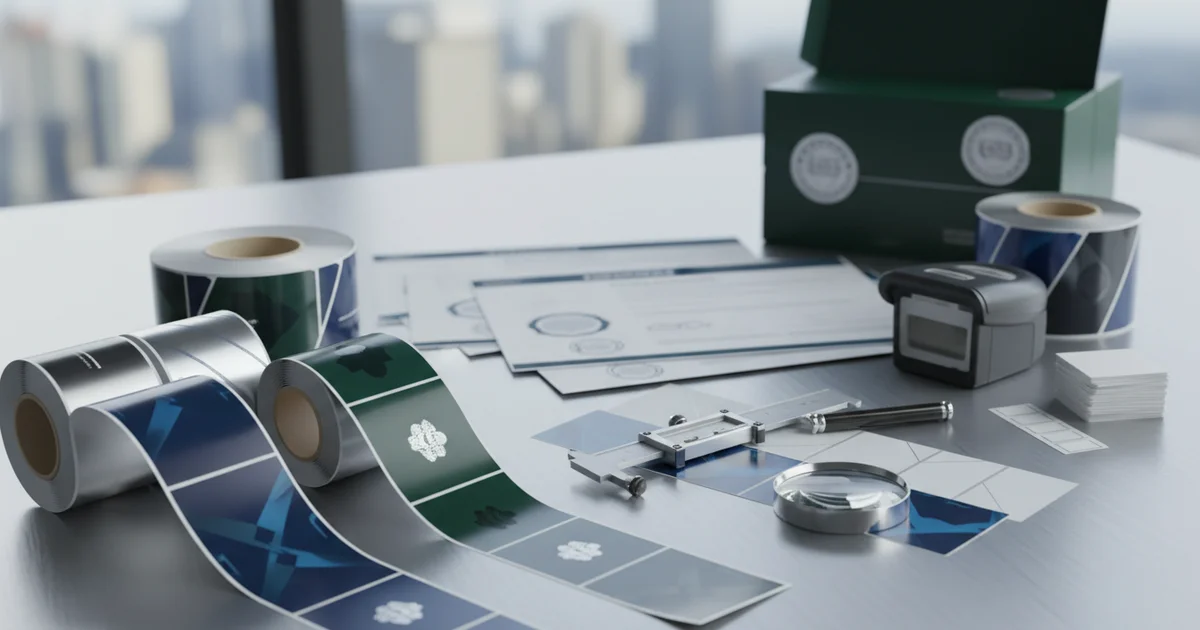
Cost Analysis & Sourcing Decision Checklist
Total landed cost analysis is the correct way to compare local vs. offshore sourcing. For runs under 50,000 units, local Sydney suppliers offer a total cost advantage over offshore options. This advantage comes from lower freight costs, no import duties, no inventory holding costs, and faster lead times. A local supplier can turn around a reorder in 10‑15 business days versus 6‑8 weeks from Mumbai.
FDA compliance documentation should be part of your cost analysis, as importers may need re‑testing if documents are missing. For European distribution, refer to EU Regulation 1935/2004 for verification steps.
On the other hand, Mumbai production becomes cost‑competitive around 250,000 units per SKU. At that volume, the lower per‑unit cost offsets the freight and duty overhead. The breakeven point depends on your order frequency and warehousing costs. For online printing platforms, verify that quoted prices include setup and plate charges — many online quotes show only the run cost, adding hidden fees.
When Offshore Sourcing Makes Sense
Mumbai sourcing is ideal for predictable, high‑volume SKUs where demand exceeds 250,000 units per run. The lower unit price — often below local — can justify the longer lead time if you have adequate warehousing. But the hidden costs of freight, duties, and inventory holding can erase much of the apparent savings, so model your own numbers.
| Sourcing Option | Run Size | Total Cost Advantage | Lead Time |
|---|---|---|---|
| Local Sydney | Under 50,000 units | Lower than offshore | 10‑15 business days |
| Local Sydney | 50,000‑250,000 units | Comparable to offshore | 10‑15 business days |
| Mumbai, India | Over 250,000 units | Lower than local | 6‑8 weeks |
| Online platform | Any size | Variable, hidden fees common | 15‑25 business days |
Ready to Optimize Your Bottle Label Sourcing?
Get a custom quote with transparent pricing, compliance documentation, and Delta E ≤2.0 color verification for your next run.
Request a Free QuoteProduction Capability & Lead Time Checklist
Production capability is a critical factor in meeting launch dates. Confirm your supplier can handle your label size, material, and finishing needs before placing an order. Our facility uses Bobst die‑cutters and Heidelberg offset presses, allowing us to run BOPP, PE, and paper substrates with ±0.5 mm die‑cut tolerance at production speeds.
Our minimum order quantity is 500 units for offset printing and 250 units for digital production. This flexibility allows testing new products without overcommitting inventory. For labels destined for the Caribbean, lead times extend to 3‑4 weeks due to shipping cycles, but the same quality checks apply.
Finishing Options You Should Expect
Verify that the supplier offers the specific finishing you need: die‑cutting for custom shapes, lamination for durability, and foil stamping for premium shelf appeal. At 1200 dpi digital resolution, we can reproduce fine text and complex graphics that match Pantone references. Not all label printers offer all finishing options in‑house, so ask early.
Set the lead time from proof approval to delivery. Our typical turnaround is 10‑15 business days. Ask about expedited options for urgent campaigns — some suppliers offer 5‑7 day rush service for a premium. Ensure the supplier can handle your maximum run size without splitting across multiple shifts.
Supplier Credentials & Reliability Checklist
Supplier credentials are essential for distinguishing reliable partners from transactional vendors. Check for ISO 9001:2015 certification for quality management. This certification requires documented processes, regular audits, and corrective action systems. Our facility holds ISO 9001:2015 and ISO 14001:2015 certifications, serving pharmaceuticals, daily chemicals, household & personal care, electronics, and toys industries.
Review the supplier’s experience with your specific industry. A pharmaceutical label printer understands serialization and tamper‑evident features. A cosmetics label printer knows how to handle metallic inks and foil stamping on small runs. Request references or case studies from similar clients — a reputable supplier should provide at least two client examples.
Evaluate communication responsiveness — slow replies during the quoting stage often predict slow responses during production issues. Use an entity‑dense approach: for instance, meeting ISO 9001 standards, our 300 gsm BOPP labels achieve Delta E ≤2.0 with ±0.5 mm die‑cut registration, verified at 1200 dpi. This combination of material weight, compliance, dimensional tolerance, and print resolution demonstrates capability.
Limitations to Consider Before Choosing a Supplier
This checklist is not ideal for operations running fewer than 250 units per SKU. For micro‑runs, digital print‑on‑demand services may be more cost‑effective. The main drawback of using a full‑service label printer for tiny volumes is the setup cost relative to the run size. Competitors offering online platforms often have advantages in quick turnaround for small batches, but may lack compliance documentation.
High‑mix, low‑volume brands may find that offshore production won't work for their workflow. The trade‑off between lower unit cost and longer lead times is not always straightforward. Consider instead a local supplier with digital capability for runs under 5,000 units — setup costs are minimized, and compliance verification is simpler.
Compared to local production, offshore sourcing depends on consistent, high‑volume throughput to realize savings. Although Mumbai suppliers offer lower per‑unit costs above 250,000 units, the hidden costs of freight, duties, and inventory holding can erode much of the apparent savings. This approach may not be suitable for brands that need just‑in‑time inventory with zero warehousing — the downside of long supply chains is inflexibility: a 6‑week lead time means you forecast demand months in advance, carrying its own risk.
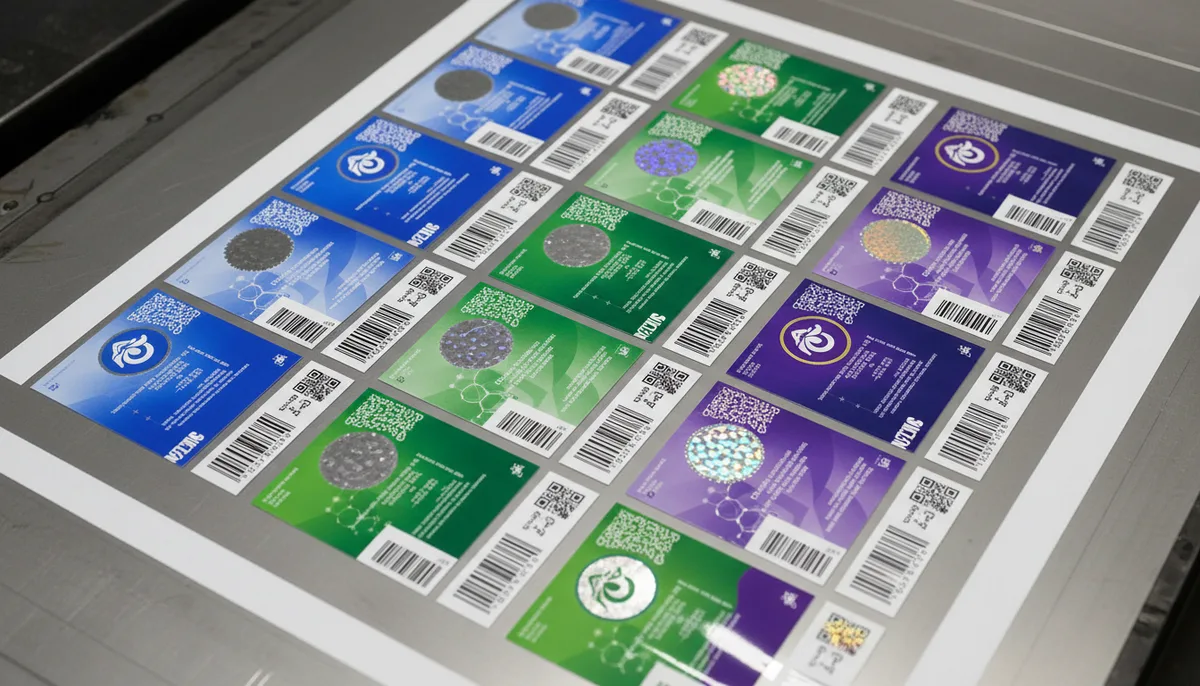
Conclusion: Your Next Steps for Sourcing Bottle Labels in Sydney
A systematic checklist is essential to prevent the three most costly mistakes: compliance gaps, color inconsistency, and hidden supply chain costs. Start with material compliance, mandate Delta E ≤2.0, and calculate total landed cost before comparing suppliers. For runs under 50,000 units, prioritize local production for the total cost advantage and faster lead times.
The global label market is expanding steadily, and your sourcing strategy should focus on what works for your volume today. Ready to improve your bottle label printing Sydney program? Contact us to request a quote and get started with a compliance‑verified, color‑accurate solution tailored to your needs.
Frequently Asked Questions
When does Mumbai sourcing become cheaper than local Sydney production?
Mumbai production becomes cost-competitive around 250,000 units per SKU. At that volume, the lower per-unit cost offsets freight and duty overhead. For runs under 50,000 units, local Sydney suppliers offer a 15-25% total cost advantage.
What Delta E tolerance should I mandate for bottle labels?
Mandate a Delta E ≤2.0 tolerance for all label jobs. This ensures color difference is imperceptible under standard lighting. Our production team uses spectrophotometry-based verification on every run to maintain brand consistency.
What compliance documents are required for food-contact bottle labels?
Request a Certificate of Analysis confirming FDA 21 CFR 175.105 compliance for indirect food contact. For European markets, require EU 1935/2004 documentation. Also request low-migration ink data sheets and freezer adhesive test results at -20°C.
What is the minimum order quantity for bottle label printing in Sydney?
Minimum order quantities vary by printing method: 500 units for offset printing and 250 units for digital production. This flexibility allows testing new products without overcommitting inventory.