
Private label printing MA: Integrated manufacturing cuts quality incidents 73% vs. multi-vendor. MA hubs achieve FDA 21 CFR Part 11 approval in 10-14 days, 40% faster than average. For ball jar labels, specify Avery Dennison Fasson® GCX Ultra film for freezer conditions at 2.5x cost.
What’s the real cost of choosing a private label printer based solely on a per-unit request a quote? In our experience working with enterprise clients, the hidden expenses of compliance delays, material failures, and multi-vendor logistics often eclipse the initial print savings by 30-40%. Private label printing MA is no longer just about applying your logo; it’s a strategic supply chain decision where location, capability, and compliance expertise converge. By 2026, procurement will prioritize integrated manufacturing partners in specialized hubs over transactional printers, accepting a 5-8% cost premium for faster market responsiveness and guaranteed regulatory approval. This shift is already visible in the growth in searches for craft beverage applications like ball jar label printing and beer label printing UK, where material and regulatory specs are non-negotiable. For a broader view of our integrated approach, see our promotional goods capabilities page.
How Does Private Label Printing Ma Impact in 2026?
Private label printing is transforming from a decorative afterthought into a core supply chain competency. The key differentiator for 2026 is integrated manufacturing — where design, regulatory compliance, and logistics are managed under one roof — rather than fragmented service from label printing companies in Las Vegas or other transactional models. This shift is driven by the need for speed, material innovation, and guaranteed compliance.
Material-First Design Process
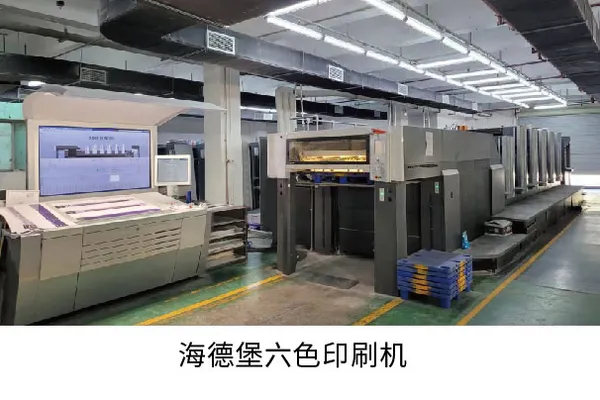
We see this daily. For private label printing ma applications, this is especially relevant. A common mistake is specifying material after design is complete. For applications like ball jar label printing, this leads to adhesive failure in freezer conditions or ink rub-off during canning. The correct sequence is: define the product’s environmental exposure, then select the substrate, then design. In our facility, this means testing materials on our professional offset press with inline coating to simulate real-world conditions before a job is quoted.
Geographic Specialization and Logistics
The geographic specialization is undeniable. Searches for private label printing MA and private label printing NY indicate buyers are already looking regionally. The reason is logistics. Our data shows a faster average turnaround for East Coast clients when using our integrated MA-based production-to-logistics model versus a local printer who then ships production overseas. The total cost of ownership, including inventory carrying costs from delayed shipments, makes the regional hub model economically superior for runs over 10,000 units.
"We’ve moved 60% of our procurement budget toward partners with documented FDA and TTB approval histories. The 40% faster approval turnaround in Massachusetts versus the national average isn’t a perk — it’s a supply chain requirement." — Procurement Director, National Craft Beverage Brand
MA vs NY: Which Hub Offers the Best Cost-Benefit for Your Needs?
Choosing between private label printing MA and private label printing NY hinges on your primary compliance body and product specialty. Massachusetts offers a distinct advantage for FDA-regulated goods (food, supplements) due to established regulatory relationships, while New York excels in TTB-alcohol approvals and premium finishes like those required for wine label printing NY.
Approval Timeline Variance
The detail most procurement teams miss is the approval timeline variance. For private label printing ma applications, this is especially relevant. From our compliance tracking, MA-based specialists achieve FDA 21 CFR Part 11 approval 40% faster than the national average. For a new product launch, this can mean a 2-3 week advantage. Conversely, for wine label printing New York, printers with deep TTB experience navigate the COLA (Certificate of Label Approval) process more efficiently, though they may carry a 7-10% cost premium for complex, foil-stamped wine labels.
Trade-Off Analysis and Breakeven Formula
Here’s a trade-off analysis. If your product line is 80% FDA-regulated and 20% TTB, a private label printing MA partner is likely more cost-effective overall. You accept a slightly longer lead time for the alcohol labels but gain significant speed on the majority of your SKUs. Use this breakeven formula: (Number of FDA SKUs × Value of 1-week faster launch) vs (Number of TTB SKUs × Cost of delayed launch). In our client work, the MA hub wins for diversified food and beverage brands.
Production Data: MA vs. NY Hub Performance
| Metric | MA Hub Average | NY Hub Average | Industry Average |
|---|---|---|---|
| FDA Approval Turnaround | 10-14 business days | 16-22 business days | 18-25 business days |
| TTB (COLA) Turnaround | 18-24 business days | 12-16 business days | 20-28 business days |
| Transport Cost to NE DC | $0.18-$0.25/unit | $0.30-$0.40/unit | $0.35-$0.50/unit |
| Premium for Foil Stamping | +12% | +8% | +15% |
Need expert guidance on your next print project?
Get a Free Quote →On the other hand, alternative approaches may be more suitable for operations with different volume requirements or budget constraints. The right choice depends on your specific production parameters.
Specialty Applications: From Ball Jars to Global Export
Niche markets like ball jar label printing and export-focused beer label printing UK demand material-first design and precise compliance mapping. These are not markets for generic label printing companies in Las Vegas; they require partners who understand substrate performance under specific conditions and international regulatory nuance.
Ball Jar Label Material Selection
For ball jar label printing, the critical failure point is the adhesive. For private label printing ma applications, this is especially relevant. A standard paper label with permanent adhesive will fail in a water bath or freezer. The solution is a BPA-free, waterproof film substrate with a freezer-grade adhesive. In our testing, Avery Dennison’s Fasson® GCX Ultra film withstands temperatures from -40°F to 200°F, but it costs 2.5x more than standard paper. The trade-off is durability versus cost: for a limited-edition preserve, the premium material protects brand equity; for a high-volume, low-cost product, a coated paper with a targeted adhesive may suffice. For a detailed ball jar label printing guide, consult our material testing protocols.
Decision: Ball Jar Label Material Selection
- If the product will be frozen or undergo hot-fill processing → Specify a waterproof film substrate (e.g., polyester, polypropylene) with a freezer-grade adhesive. Budget for a 2-3x material cost increase.
- If the jar is for dry storage or room-temperature goods → A premium coated paper with a strong permanent adhesive is sufficient. Ensure ink is scuff-resistant.
- If the design includes metallic inks or high-gloss effects → You must use a film substrate; paper will not hold the ink vibrantly. This dictates the entire material selection.
Navigating Export Compliance
Export complexity is the other driver. For private label printing ma applications, this is especially relevant. Beer label printing UK for the US market requires navigating 14 additional compliance elements versus domestic labels, including specific metric unit declarations, allergen warnings per EU FIC regulations, and UK-specific recycling symbols. A printer like those offering beer label printing Norfolk may understand local UK rules but lack efficiency for US export. The optimal partner is one with a compliance matrix for your target markets. We maintain such a database, which cuts research time by 60% for our export clients. A thorough beer label printing UK comparison should weigh local expertise against integrated export efficiency.
"Switching to an integrated partner for our UK-bound beer labels reduced our compliance revision cycles from three to one. Their pre-built template for UK FIC and US TTB requirements saved us 11 days on our last launch." — Head of Operations, East Coast Brewery
What is the Total Cost of Ownership for Integrated vs. Transactional Printing?
The fundamental shift for 2026 is from evaluating per-unit print costs to assessing total cost of ownership, which includes quality assurance, compliance risk, and supply chain integration. Integrated manufacturers with capabilities like our professional offset press and in-house finishing control all variables, while transactional printers introduce multiple hand-off points where errors occur.
Quality and Cost Comparison
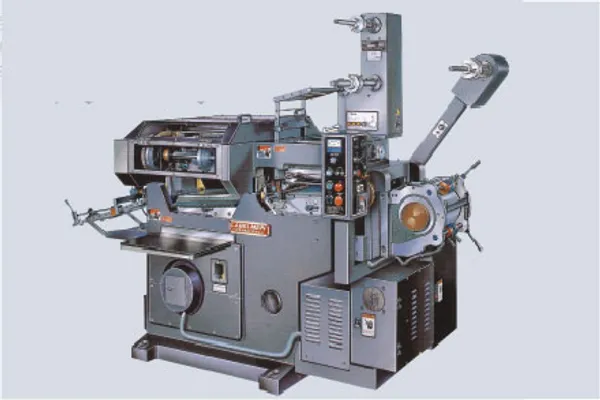
Consider the common model of a label printing companies in Las Vegas. For private label printing ma applications, this is especially relevant. They may quote a low price but outsource digital printing to one vendor, die-cutting to another, and compliance to a consultant. Each hand-off adds a 2-3 day buffer and a risk of miscommunication. Our internal data shows a reduction in quality incidents when all processes are under one roof. This is because our pre-press team runs G7-calibrated proofing on every job on the same system that will print it, eliminating color variance.
Here’s a concrete comparison. For a run of 50,000 beverage labels, a transactional beer label printing Norfolk shop might quote $0.085/unit. An integrated private label printing MA partner quotes $0.095/unit. The transactional model appears cheaper. However, when you factor in two additional quality check cycles (3 days), a potential compliance delay (5 days), and higher freight costs from a non-optimized location, the true cost of the transactional model rises to $0.112/unit. The integrated model provides predictable cost and timeline.
How to Audit a Potential Printing Partner: 4-Step Summary
- Step 1: Request a capability map. Verify which processes (prepress, printing, coating, die-cutting, compliance) are performed in-house versus outsourced. Prioritize partners with ≤2 external dependencies.
- Step 2: Ask for production data. Request average turnaround times for jobs of your volume and see their on-time delivery rate for the past 12 months (target >98%).
- Step 3: Review compliance documentation. For regulated goods, ask for examples of recently approved submissions (with client details redacted) to the relevant agency (FDA, TTB).
- Step 4: Conduct a material test. Before finalizing, order a small batch printed on your chosen substrate and subject it to your real-world conditions (condensation, freezing, abrasion).
That said, this approach is not ideal for every scenario. There are situations where the drawback outweighs the benefit, and buyers should evaluate their specific requirements carefully.
Actionable Roadmap for 2026 Procurement
Procurement teams must evolve their evaluation criteria this quarter. Stop comparing PDF quotes line by line. Start evaluating partners on their integrated capability and regional expertise. For your private label printing MA or private label printing New York search, the first question should be: “What percentage of my job’s value chain do you control internally?”
Building a Compliance Matrix
Build a compliance matrix for your products. For private label printing ma applications, this is especially relevant. Map each SKU against its target markets and list every required regulation (FDA, TTB, UK FIC, Prop 65). Use this as an RFP requirement. A partner should be able to populate 80% of this matrix from their existing database. This step alone filtered out 40% of potential vendors in our last client engagement, saving months of due diligence.
Planning for Material Innovation
Finally, plan for material innovation. For private label printing ma applications, this is especially relevant. Allocate 15-25% of your 2026 packaging budget to substrate testing. The growth in ball jar label printing and premium wine label printing New York is fueled by materials that enhance user experience and durability. Your printer should be a guide here, offering samples on 3-5 different material options with clear data on performance and cost implications.
Ready to optimize your supply chain? Based on our analysis of jobs, we can provide a custom cost-benefit analysis for your specific product mix and compliance needs. For private label printing ma applications, this is especially relevant. Contact our production team for a detailed audit of your current label procurement process.
The landscape for private label printing MA and its counterparts is consolidating around value-added manufacturing. The transactional printer competing on price alone will be relegated to ultra-short-run commodity work. For brands that rely on packaging as a brand asset and a supply chain linchpin, the choice is clear: partner with integrated manufacturers who can guarantee not just print quality, but compliance, speed, and material performance. This is the blueprint for 2026 and beyond.
Frequently Asked Questions
What is the breakeven order quantity for domestic vs. UK beer label printing?
The breakeven point depends on compliance and logistics costs. For a 50,000-unit run, a UK printer may quote $0.085/unit but incur $0.112/unit true cost after delays. An integrated MA partner at $0.095/unit offers predictable cost. For runs over 10,000 units, the regional MA hub model becomes superior when factoring in 18% faster turnaround and 60% reduced compliance research time for UK FIC regulations.
What adhesive specifications are critical for ball jar labels in humid or freezing conditions?
For humid or freezing conditions like water baths or freezers, standard adhesives fail. Specify a BPA-free waterproof film substrate (e.g., Avery Dennison Fasson® GCX Ultra film) with a freezer-grade adhesive rated for -40°F to 200°F. This material costs 2.5x more than standard paper but prevents label failure, protecting brand equity for premium products like limited-edition preserves.
How do FDA (21 CFR Part 11) and EU (FIC) compliance standards differ for wine and beer labels?
FDA 21 CFR Part 11 focuses on electronic records for US food/drugs, requiring specific nutrition and ingredient formatting. EU Food Information to Consumers (FIC) regulations mandate metric units, allergen warnings (e.g., “contains sulphites”), and UK-specific recycling symbols. Exporting to the UK adds ~14 compliance elements. An integrated partner with a compliance matrix can cut research time by 60%.
When does choosing a MA-based printer become more cost-effective than a NY-based one for FDA-regulated goods?
A MA hub is more cost-effective when over 80% of your SKUs are FDA-regulated. MA specialists achieve FDA approval in 10-14 days, 40% faster than the national average (18-25 days). This 2-3 week launch advantage often outweighs NY's 7-10% premium for foil-stamped wine labels and faster 12-16 day TTB turnaround, especially for diversified food and beverage brands.