
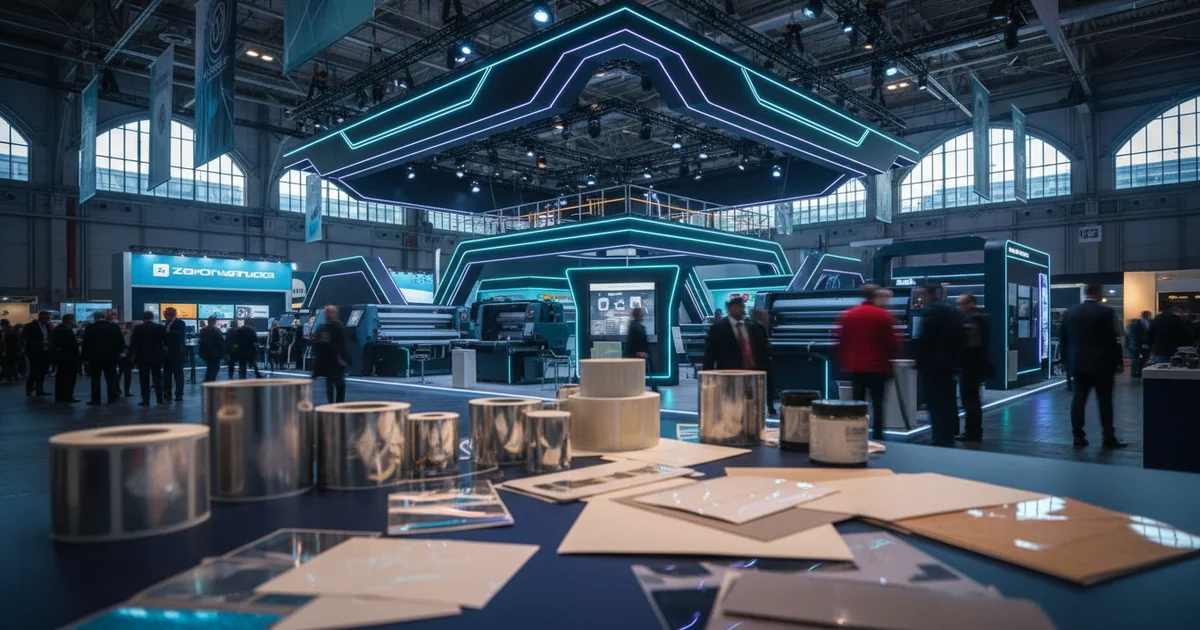
Labelexpo Asia 2025 revealed key shifts in digital printing, sustainable materials, and finishing. This review translates trends into actionable strategies for brand managers evaluating pressure sensitive label manufacturers.
You're reviewing your packaging budget for 2025, and the pressure is on. Marketing wants premium finishes, sustainability demands certified materials, and procurement needs cost-effective runs under 10,000 units. The buzz from Labelexpo Asia 2025 can feel overwhelming — was it all just shiny new presses, or were there tangible innovations that impact your custom label printing decisions? Based on our direct observations from the show floor and 28 years of manufacturing pressure sensitive labels, the trends point toward a clear convergence: digital flexibility is finally meeting the quality control capabilities and durability demands of mid-volume brand applications, while material science is delivering sustainability without sacrificing performance.
What Were the Key Trends at Labelexpo Asia 2025?
The dominant theme was convergence. For custom label printing applications, this is especially relevant. The hard line between digital and flexographic label printing blurred, with hybrid solutions taking center stage. For brand managers, this means more options and a more complex supplier evaluation process. The show wasn't about one technology winning, but about integrated workflows that leverage the strengths of each.
We saw a pronounced shift toward modularity. For custom label printing applications, this is especially relevant. Press manufacturers showcased digital print engines coupled with inline flexographic stations for varnish, cold foil, or specialty colors. This addresses a critical pain point we've experienced firsthand: the historical bottleneck of sending digitally printed labels out for separate finishing, which adds days and increases handling damage risk. One exhibitor demonstrated a workflow where a digitally printed prime label received a tactile spot UV and a serialized QR code — all in a single pass. This directly impacts your label printing quotes by consolidating production steps.
"The conversation has moved from 'digital vs. flexo' to 'how do we orchestrate both.' The most cost-effective label in 2025 might start on a digital press for variable data and be finished on a flexo station for a consistent metallic effect," noted a lead engineer from a major press OEM.
Another key trend was data-driven transparency. For custom label printing applications, this is especially relevant. Cloud-connected presses and finishing units provide real-time yield, waste, and color consistency data. For procurement directors, this means potential access to granular production analytics from your supplier, moving beyond simple lot acceptance reports to predictive insights on material performance.
How Does Custom Label Printing Impact Technology Advanced?
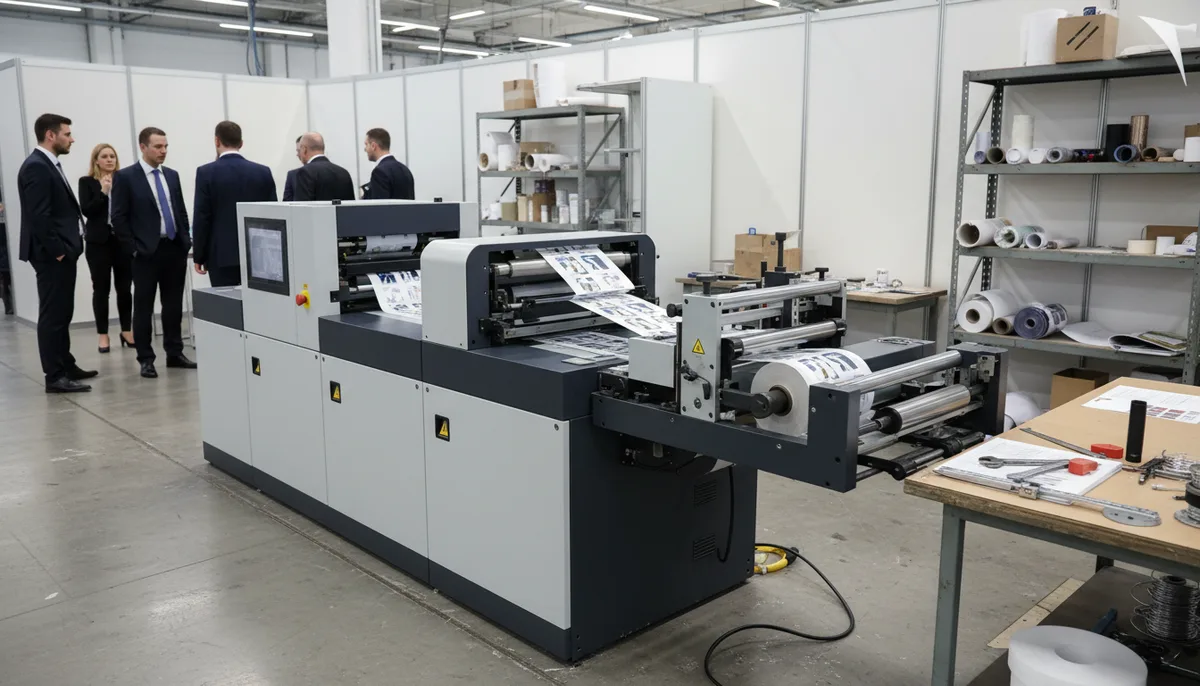
Digital label presses now consistently deliver offset-quality graphics and durability suitable for primary packaging. For custom label printing applications, this is especially relevant. The advancement isn't just in print heads, but in the entire ecosystem — inks, substrates, and color management. For runs between 500 and 50,000 units, digital is often the most economical and agile choice.
The most significant leap is in ink durability and color gamutpharmaceutical printing solutions, including alcohol wipe and mild solvent resistance. The results were within 5% of our standard flexo-produced labels, a threshold that makes digital viable for many regulated products. This closes a major gap for brands needing short runs of compliant labels.
Color consistency, the historical weakness of digital, has been addressed through advanced closed-loop calibration. For custom label printing applications, this is especially relevant. Systems now use inline spectrophotometers to measure and adjust color density and dot gain in real-time, referencing Pantone spot color libraries. In our facility, we've integrated a similar system, and it has reduced color approval time for digital jobs by nearly 60%. The practical implication: you can now order a 5,000-unit digital run in January and a reprint of 3,000 units in June with near-perfect color match, enabling more responsive inventory management.
Reduction in color approval time for digital label jobs after implementing inline spectrophotometer calibration.
Furthermore, the digital label press market has expanded to include robust mid-production models priced for converters serving the mid-market. For custom label printing applications, this is especially relevant. This trickle-down technology means more pressure sensitive label manufacturers can offer true production-grade digital, increasing competition and potentially lowering your costs for runs under 20,000.
Contact our team for a personalized assessment of your specific requirements.
Which Sustainable Label Materials Gained Attention in 2025?
Sustainability moved beyond marketing claims to focus on verifiable lifecycle reductions in waste, carbon, and chemical use. For custom label printing applications, this is especially relevant. The spotlight was on sustainable label materials 2025 that are commercially viable at scale, not just niche prototypes. The trends we saw directly inform how you should vet material options with your supplier.
Post-Consumer Recycled (PCR) Films were prominent. For custom label printing applications, this is especially relevant. Several suppliers showcased BOPP and PET films with 30-50% PCR content that maintained critical performance properties: clarity, tensile strength, and convertibility on high-speed presses. The key insight for brand managers: not all PCR is equal. Films with higher PCR content can have slightly higher haze levels, which may affect vibrancy on transparent labels. Always request physical samples for your specific design before committing to a full production run.
Linerless label technology matured significantly. For custom label printing applications, this is especially relevant. By eliminating the silicone-coated release liner — which can constitute up to 50% of a label roll's waste — linerless systems offer a dramatic reduction in material use and shipping weight. New adhesive technologies allow labels to be wound upon themselves without sticking. The catch? Application equipment. If your co-packer or filling line isn't equipped with a linerless applicator, the savings vanish. This is a system decision, not just a material one.
We also saw advances in paper substrates from responsible forestry initiatives and in adhesive types designed for easier recycling. For custom label printing applications, this is especially relevant. A notable example was a wash-off adhesive for PET bottles that allows the label to cleanly separate in standard recycling flotation systems, improving the yield of recycled PET flake. When discussing sustainable label materials with your manufacturer, push beyond the material itself. Ask about the de-labeling or recycling process it enables. At JinXinCai, our material lab is now testing all new sustainable substrates not just for printability, but for their end-of-life behavior as part of our ISO 14001 commitment.
On the other hand, alternative approaches may be more suitable for operations with different volume requirements or budget constraints. The right choice depends on your specific production parameters.
What Finishing Techniques Offer a Competitive Advantage?
Embellishment is where labels build premium brand perception and functionality. For custom label printing applications, this is especially relevant. The Labelexpo Asia 2025 trends in finishing focused on integration, precision, and tactile differentiation. The most impactful techniques combine visual appeal with a tangible user experience.
Cold foil adoption has accelerated, now rivaling hot foil stamping for metallic effects on sensitive filmic materials like BOPP. For custom label printing applications, this is especially relevant. The advantage is speed and the ability to foil digitally printed labels without a separate stamping die. We've run jobs where cold foil applied inline on a digital press reduced total production time by 40% compared to offline hot foil. The metallic layer is also thinner, which can improve flexibility and reduce cracking on contoured containers.
Tactile varnishes and embossing are being used more strategically. For custom label printing applications, this is especially relevant. Instead of coating an entire label, we're seeing brands use raised spot UV to guide user interaction — for example, a textured area around a QR code or a subtle ridge denoting a tamper-evident seal. New high-build UV varnishes can create a pronounced 3D effect without the cost of a deep embossing die. When specifying this, provide your manufacturer with a clear hierarchy: which elements need maximum tactile prominence versus visual gloss.
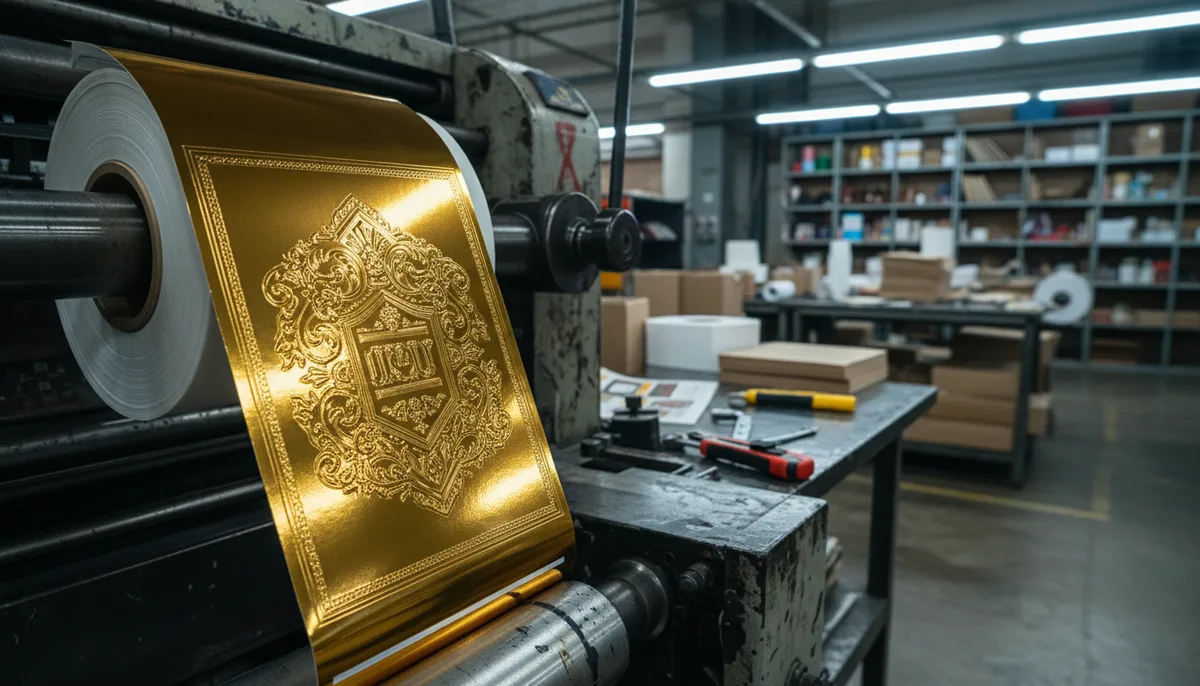
The most technical advancement is in die-cutting precision, particularly for complex shapes on thin films. For custom label printing applications, this is especially relevant. Laser die-cutting systems, often paired with vision inspection, can achieve tolerances of ±0.15mm, essential for labels fitting precise windows on electronics or medical devices. This precision reduces application errors on automated lines. For your next project requiring a complex shape, ask your supplier about their die-cutting method and tolerance documentation. A $500 investment in a precision laser die can save thousands in reduced application waste.
Need expert guidance on your next print project?
Get a Free Quote →How to Evaluate Label Suppliers Post-Labelexpo
Seeing advanced technology at a trade show is one thing; finding a pressure sensitive label manufacturer who can implement it reliably is another. For custom label printing applications, this is especially relevant. Your evaluation criteria must now include digital-analog workflow integration and material science expertise, not just press count.
First, audit their pre-press and color management process. For custom label printing applications, this is especially relevant. Ask specific questions: Do you use G7 or similar methodology for calibrating both digital and flexo presses? Can you provide an ICC profile for your standard digital press on my chosen material? How do you handle Pantone spot color matching across different print processes? At JinXinCai, our pre-press team runs every new material through a characterization process to build custom profiles, ensuring color intent is preserved whether the job runs digital or flexo.
Second, probe their material testing and compliance capabilities. For custom label printing applications, this is especially relevant. The trend toward sustainable and high-performance materials makes this critical. Can they test adhesive bond strength on your specific container material (e.g., HDPE, glass, coated cardboard)? Do they have a climate chamber to simulate cold-chain or high-humidity environments? For our pharmaceutical client needing tamper-evident, cold-chain labels, we ran 50 freeze-thaw cycles from -30°C to +25°C in our lab before production, verifying the PET film and permanent adhesive would maintain integrity and barcode scanability. This level of validation separates partners from vendors.
Finally, examine their business continuity and scalability. For custom label printing applications, this is especially relevant. Do they have redundant systems for critical path equipment? What is their maximum monthly capacity for your label type, and what lead time do they require to scale up 50%? The ideal partner is transparent about their constraints. Our 15,000 sqm facility and 50M+ monthly piece capacity, for instance, allow us to accommodate sudden volume spikes, but we always communicate the realistic lead time implications upfront.
What Do 2025 Trends Mean for Your Packaging Budget?
The innovations from Labelexpo Asia 2025 present both cost opportunities and new investment considerations. For custom label printing applications, this is especially relevant. Strategic adoption can lower your total cost of ownership, while missteps can inflate it. The key is aligning technology choices with your volume, lifecycle, and brand positioning.
For short to mid-run custom label printing (500–20,000 units), digital technology now offers a compelling total cost advantage. The elimination of physical plates and dies (a $200–$500 savings per design) and reduced setup waste make digital cost-competitive at lower volumes than ever. We've seen clients reduce their unit cost by 25–35% when switching appropriate jobs from flexo to digital, primarily by avoiding plate costs and minimizing obsolete inventory through more frequent, smaller print runs.
However, material costs are becoming a larger budget factor. For custom label printing applications, this is especially relevant. Upgrading from a standard paper substrate to a certified sustainable film or opting for a linerless system may increase your unit material cost by 10–30%. The return comes in brand equity, potential retail compliance, and reduced waste disposal fees. Build a business case that quantifies these softer benefits. For example, a 15% premium on a label that allows your product into a zero-waste retailer's aisle can have a direct ROI.
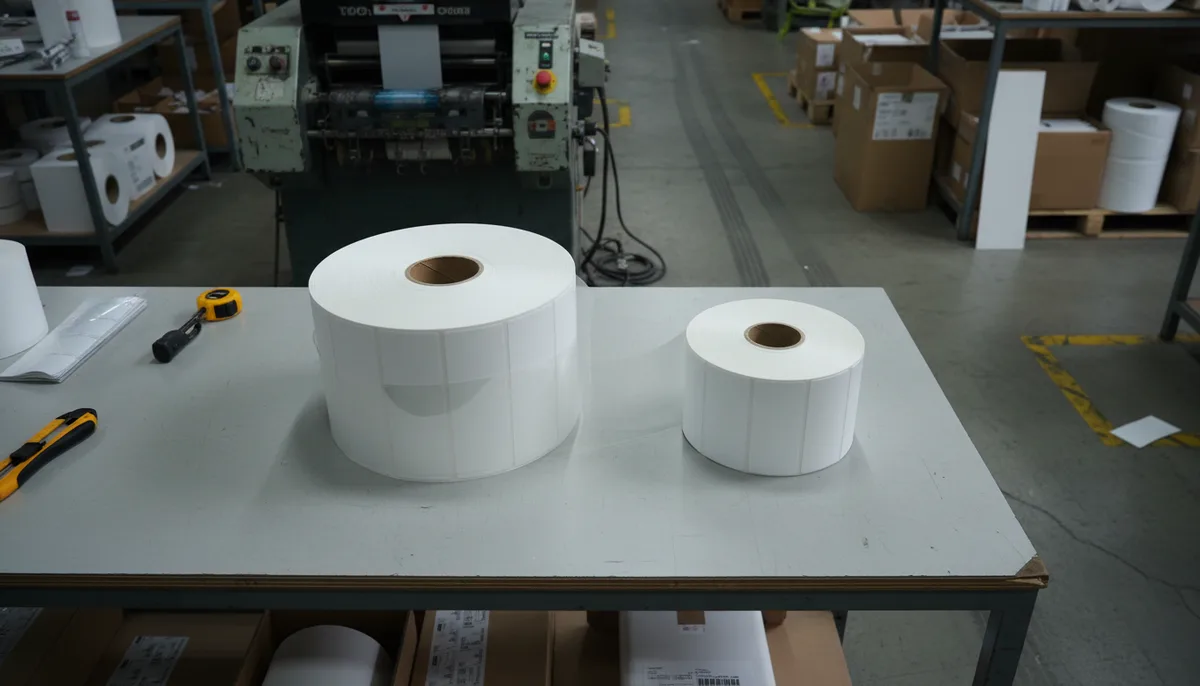
Finishing is another budget lever. For custom label printing applications, this is especially relevant. Inline hybrid finishing (like digital print with inline cold foil) often has a higher hourly machine rate but eliminates multiple handling steps. For a complex label requiring foil and varnish, the consolidated process might be 20% more expensive per machine hour but 40% faster overall, reducing your total labor and factory overhead allocation. Request a process map from your supplier comparing traditional vs. hybrid production for your specific design.
That said, this approach is not ideal for every scenario. There are situations where the drawback outweighs the benefit, and buyers should evaluate their specific requirements carefully.
Next Steps: Implementing Labelexpo Insights
The insights from Labelexpo Asia 2025 are only valuable if they inform action. Start by auditing your current label portfolio and supply chain against the new realities of digital quality, material sustainability, and integrated finishing.
First, categorize your SKUs by volume and complexity. Identify which products have runs under 20,000 units and are candidates for a digital or hybrid production review. For each, gather data on current costs, lead times, and inventory obsolescence. This creates a baseline for evaluating new manufacturing approaches.
Second, initiate a material review with your top two suppliers. Present them with the trends around PCR films, linerless options, and wash-off adhesives. Ask for sample rolls, cost comparisons, and, critically, their testing data on performance metrics relevant to your application (e.g., moisture resistance, scuff resistance, recyclability). A credible pressure sensitive label manufacturer will have this data or be willing to generate it.
Finally, prototype and test. Before overhauling your primary packaging, run a pilot. Produce your next promotional or limited-edition label run using a new digital process or sustainable material. Monitor performance on the filling line, gather consumer feedback if possible, and measure the total cost impact. This low-risk experiment provides the concrete data needed to justify a broader strategic shift.
The landscape for custom label printing is evolving rapidly. The manufacturers who will win your business in 2025 and beyond are those who combine technological agility with deep material expertise and rigorous process control. Your next step is to engage them not just as printers, but as innovation partners for your brand.
Frequently Asked Questions
How does digital label printing affect minimum order quantities?
Digital label printing significantly lowers effective MOQs by eliminating plate and die costs. While our standard MOQ is 500 units, digital makes runs of 500-5,000 units economically viable. For a standard paper label, digital can be cost-competitive with flexo at around 3,000-5,000 units, but this breakeven point shifts based on color count and finishing complexity.
What should I look for when choosing between paper and film label substrates?
Base your decision on the product's lifecycle environment. Choose paper for dry, indoor goods where a natural feel is desired; it's cost-effective and recyclable. Opt for film substrates like BOPP or PET when facing moisture, oils, chemicals, or extreme temperatures. For example, a PET film label can withstand -40°C to +120°C, making it essential for cold-chain logistics. Always test adhesion on your specific container material.
How do Labelexpo 2025 trends impact lead times for custom labels?
Trends like hybrid inline finishing can compress lead times by 30-40% for complex labels by consolidating production steps. However, adopting new sustainable materials may add 3-5 days for initial testing and validation. For standard jobs, digital's lack of plate-making can shave 2-3 days off a typical 15-day flexo timeline. Discuss a detailed process map with your supplier to identify time-saving opportunities specific to your design.
What sustainability certifications matter most for brand managers in 2025?
Focus on chain-of-custody certifications like FSC (paper) and credible recycled content standards (e.g., UL 2809 for PCR). For manufacturers, ISO 14001 demonstrates environmental management system rigor. For adhesives and inks, look for compliance with FDA 21 CFR and EU 10/2011 for food contact, and evidence of low VOC formulations. Certifications should be verifiable with audit reports, not just marketing claims.