
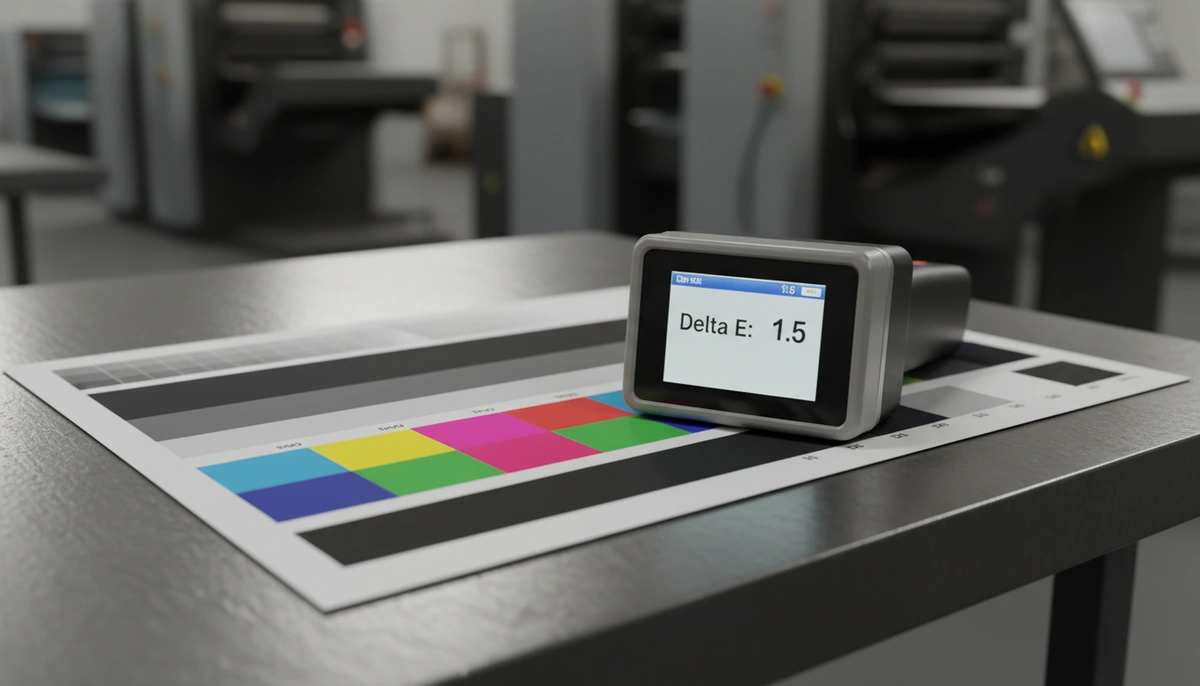
Food label design: 5-step process for FDA compliance, thermal transfer vs laser marking cost, and material selection. Includes Heidelberg offset press and HP Indigo digital press.
Introduction: Why Food Label Design Matters for Compliance and Sales
A poor food label design can cost you a recall. The FDA requires nutrition facts, ingredient lists, and allergen declarations on most packaged foods. Missing one element means reprinting thousands of labels. Our team sees this mistake weekly. Learn more about our full production capabilities.
Designing a compliant label starts with the right data. You need net weight, maker details, and a correct nutrition panel. The format must follow FDA 21 CFR 101.9. A compliant design also sells your product. It builds trust at the shelf. See also: Automated Label Printing ROI: Calculate Payback & Avoid.
This article walks you through a step-by-step process. You will learn how to pick materials, meet custom print production standards, and avoid costly errors. The goal is a label that passes inspection and attracts buyers.
How Does Thermal Transfer vs Laser Marking Affect Food Packaging Cost?
Thermal transfer printing uses a heated ribbon to transfer ink onto a label. It is cost-effective for short runs. Laser marking uses a focused beam to etch the surface. It offers high resolution but higher equipment cost.
For runs under 2,000 units, thermal transfer wins on price. The per-unit cost is lower because there are no plate fees. For longer runs, offset printing on a Heidelberg 6-Color Offset Press drops the cost further. At 5,000+ units, offset delivers the best value. See also: Problem Printing Labels: Technical Breakdown and Fixes Guide.
Laser marking is ideal for durable, high-contrast marks. It works well on metal or hard plastics. But for most food labels on paper or film, thermal transfer or digital is more practical. The trade-off depends on your volume and material.
On the other hand, if you need variable data — like batch codes or expiration dates — digital printing on an HP Indigo digital press is the best choice. It handles regional label variations without plate changes. This method is projected to grow as personalization demands increase.
What Are the FDA Compliance Printing Requirements for Food Packaging?
The FDA requires that food packaging inks and coatings do not migrate into food. This is covered under 21 CFR 174-178. Printers must use food-grade inks and provide a certificate of analysis for aqueous coatings.
Our team asks for an aqueous coating certificate of analysis printing from every supplier. This document proves the coating is safe for indirect food contact. Without it, you risk a recall.
The food packaging FDA compliance printing needs also cover label adhesion. Labels must stay on in wet or cold conditions. Test your label material under refrigeration before full production. BOPP label stock is a common choice for its moisture resistance.
Compared to general packaging, food labels face stricter rules. The FDA also requires that all mandatory text be at least 1/16 inch tall. This includes the ingredient list and allergen declaration. Missing this minimum is a common error.
Digital printing is projected to hold a significant value share of the USA labels market by 2035. Driven by demand for variable data and short runs in food packaging.
How to Use a Food Label Template That Meets Indirect Food Additive Regulations
A food label template saves time, but it must include all mandatory elements. Start with a template that has placeholders for nutrition facts, ingredients, allergens, net weight, and maker info. Many free templates miss the allergen statement.
The indirect food additive regulations for printed packaging apply to the ink and coating, not the template design. However, your template should note the material type. If you use C1S board, ensure it is food-grade. Our team prints on FSC certified paper for compliance and sustainability.
Customize the template to your brand. Keep the hierarchy clear: brand name at top, product name below, then nutrition panel. Use at least 6-point font for ingredients. The barcode must meet GS1 standards. Place it on the back or side panel.
One drawback: a pre-made template may not fit your exact package shape. Consider instead a custom layout from your printer. This ensures all elements fit within the label area. The trade-off is higher design cost, but it avoids reprint fees.
Step-by-Step Food Label Design Process for Beginners
How to Design a Food Label: 5-Step Summary
- Step 1: Gather required data. Collect nutrition facts, ingredient list, allergen declarations, net weight, and manufacturer details. Cross-check against FDA 21 CFR 101.
- Step 2: Choose a template or layout. Use a food label template with clear hierarchy. Set minimum font size to 1/16 inch for mandatory text.
- Step 3: Select material and printing method. For short runs under 2,000 units, use thermal transfer or digital. For 5,000+ units, offset printing on a Heidelberg press delivers lower cost and Delta E < 2.0 color accuracy.
- Step 4: Verify indirect food additive compliance. Request an aqueous coating certificate of analysis from your printer. Ensure inks are food-grade per FDA regulations for indirect food contact.
- Step 5: Proof and finalize. Check barcode scannability, color accuracy with a spectrophotometer, and placement of all mandatory elements. Run a small test batch before full production.
Our team recommends starting with design software like Adobe Illustrator. Set your document to 300 dpi for print resolution. This ensures text and barcodes are sharp. A common mistake is using 72 dpi, which causes blurry labels.
After design, request a physical proof. Check the color against your brand guide. Our Heidelberg press holds Delta E below 2.0, meaning colors match your specification. If you skip this step, you may get 500 labels with wrong brand colors.
Need expert guidance on your next print project?
Get a Free Quote →Best Practices for Label Readability and Material Selection
Best Practices for Label Readability and Material Selection refers to Label material choice affects both durability and cost. BOPP label stock is waterproof and works for refrigerated items. Paper labels are cheaper but may peel in wet conditions. PET labels offer high clarity for clear-on-clear designs.
Color accuracy matters for brand recognition. Use Pantone spot colors for logos. For full-color images, CMYK printing on a digital press works well. The HP Indigo digital press can match Delta E under 1.5, which is excellent for brand consistency.
Label adhesive must match your surface. Permanent adhesive works for glass jars. Removable adhesive is better for reusable containers. Test adhesion on your actual packaging material. A label that falls off in transit is a loss.
For shelf life, consider UV-resistant inks if the product sits in sunlight. Our team uses aqueous coatings that protect against scuffing. The coating must be food-safe per indirect food additive regulations.
| Material | Best Use | Durability | Cost per Label (5K run) |
|---|---|---|---|
| BOPP | Refrigerated, wet environments | High | $0.08–0.12 |
| Paper | Dry goods, short shelf life | Low | $0.04–0.07 |
| PET | Clear labels, premium look | High | $0.10–0.15 |
Limitations to Consider Before Choosing a Printing Method
Thermal transfer is not ideal for runs over 5,000 units. The per-unit cost stays flat, while offset drops. The main drawback is slower speed compared to digital or offset. Consider instead digital for variable data or offset for volume.
Laser marking won't work for thin films or heat-sensitive materials. The heat can warp the substrate. It may not be suitable for labels that need full-color graphics. On the other hand, it offers the best durability for metal or glass.
Offset printing has a higher setup cost due to plate fees. This isn't right for runs under 2,000 units. Compared to digital, the turnaround is longer because plates take time to make. Although the per-unit cost is lower at volume, the upfront cost can be a barrier for small brands.
A key trade-off is speed versus cost. Digital printing can turn around in 2-3 days. Offset takes 5-7 days but costs less per label above 5,000 units. The right choice depends on your budget and timeline.
Common Mistakes and How to Avoid Them
One frequent error is using non-food-grade inks. This violates indirect food additive regulations for printed packaging and can lead to recalls. Always request an aqueous coating certificate of analysis printing from your supplier. Our team provides this for every food job.
Another mistake is ignoring font size minimums. The FDA requires 1/16 inch for most text. If your label is small, reduce the design elements, not the font. A crowded label is hard to read and may fail inspection.
Choosing the wrong label material is also common. Paper labels on a refrigerated product will peel. Use BOPP or PET for wet or cold environments. Test a sample before ordering a full run.
Finally, poor barcode placement causes scanning failures. Place the barcode on a flat, unobstructed area. Avoid curving it around a bottle. Check the barcode with a verifier before printing. A non-scannable barcode means retail rejection.
Conclusion: Balancing Cost, Compliance, and Design
Effective food label design is a balance of three factors: regulatory compliance, print cost, and visual appeal. Start with FDA needs. Then pick a printing method that fits your volume. Finally, design for readability and brand consistency.
Our team at JinXinCai Print Production & Color runs both offset and digital presses. We handle food packaging FDA compliance printing needs daily.
We provide food-grade inks, aqueous coating certificates, and color accuracy within Delta E < 2.0. For complex projects with regional variants, our HP Indigo press handles variable data seamlessly.
Ready to improve your food label design? Contact us today to request a quote and get started on your next compliant packaging run.
Frequently Asked Questions
How does thermal transfer affect food packaging cost compared to laser marking?
Thermal transfer uses a heated ribbon to transfer ink onto labels, making it cost-effective for short runs under 2,000 units with no plate fees. Laser marking uses a focused beam for high-resolution marks but has higher equipment costs. For most food labels on paper or film, thermal transfer or digital printing is more practical than laser marking.
What is the breakeven point for thermal transfer vs laser marking in food label production?
For runs under 2,000 units, thermal transfer wins on price due to lower per-unit cost. For longer runs, offset printing on a Heidelberg 6-Color Offset Press drops cost further, with best value at 5,000+ units. Laser marking is ideal for durable marks on metal or hard plastics but not for typical food labels on paper or film.
What should I specify when ordering food labels to ensure FDA compliance?
Specify food-grade inks and coatings per FDA 21 CFR 174-178, and request an aqueous coating certificate of analysis. Ensure label adhesion for wet or cold conditions using BOPP stock. All mandatory text must be at least 1/16 inch tall, including ingredient list and allergen declaration.
How do indirect food additive regulations impact my label material choice?
Indirect food additive regulations under 21 CFR 174-178 require that inks and coatings do not migrate into food. This means you must use food-grade inks and coatings, and your printer should provide a certificate of analysis. The regulations apply to the ink and coating, not the template design, but your material choice must be food-grade.