
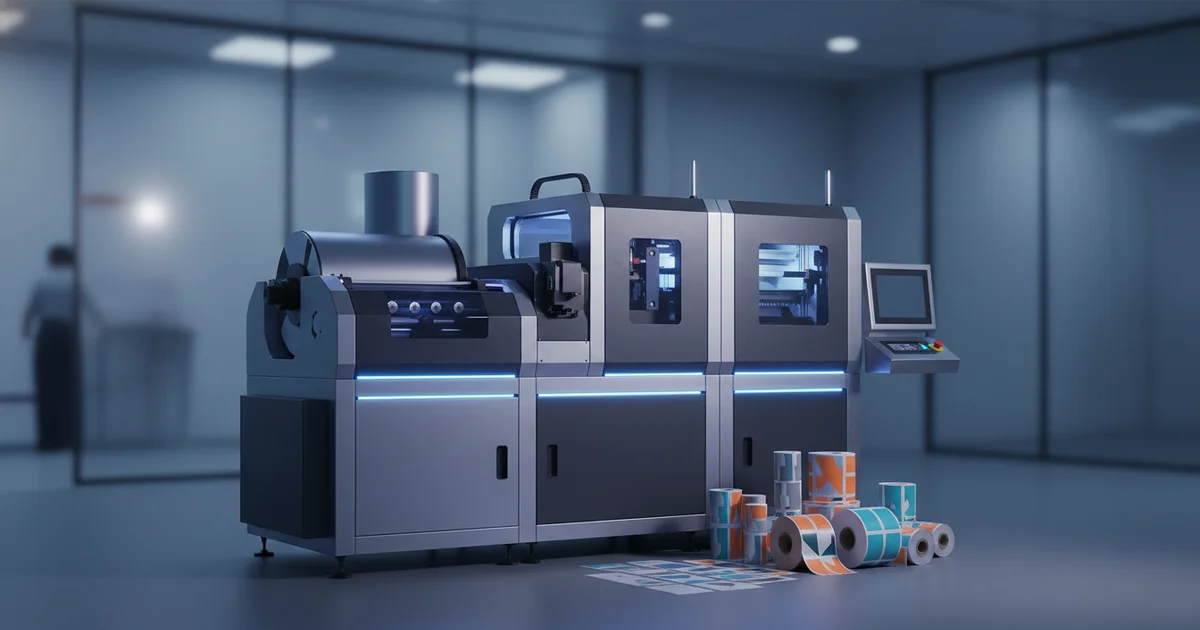
Digital label cost breakdown: per-label $0.02–$0.15 at 10K–100K; break-even vs flexo at 2K–5K units; hidden waste and tooling shift total cost 20–40%.
Introduction: Why Digital Label Cost Analysis Matters in 2026
The digital label cost breakdown provides a clear picture of true label expenses that many buying teams overlook. Are buying teams overpaying for labels by ignoring the full cost picture? A digital label cost breakdown reveals that the per-label price is only part of the story. Hidden fees such as die tooling, setup charges, and changeover waste can shift the total cost by 20–40%. In 2026, with material costs rising and supply chains under pressure, understanding true costs is more critical than ever. Our team at Custom Print Production regularly sees buyers who compare only per-unit prices and overlook the 10–20% waste generated during flexo make-ready. This comprehensive guide answers the top questions buyers ask about digital label costs. We cover break-even volumes, material trade-offs, and procurement strategies that reduce total cost of ownership. Whether you order 500 labels or 50,000, knowing the full digital label cost breakdown helps you make smarter purchasing decisions. As of 2026, the market for digital labels is projected to grow annually, driven by e-commerce and short-run demand. Our production team forecasts that digital’s cost advantage will widen in the 2026–2028 period as new toner technologies lower per-unit prices.
How Do Digital and Flexo Label Costs Compare at Different Volumes?
Digital printing offers zero plate charges, making it more cost-effective below 2,000 labels. Flexo becomes cheaper above 5,000 labels due to lower per-unit pricing. The break-even point typically falls between 2,000 and 5,000 units, depending on material and finish complexity.
Digital printing offers zero plate charges, making digital label cost comparison straightforward against flexo. Digital and flexo label costs diverge based on fixed setup expenses. Digital printing requires no plate charges, making it more cost-effective below 2,000 labels. Flexo becomes cheaper above 5,000 labels due to lower per-unit pricing. The break-even point typically falls between 2,000 and 5,000 units, depending on material and finish complexity.
The digital vs flexo label cost comparison turns on one critical factor: fixed setup costs. Flexo requires plates at $200–$500 per color. Digital has zero plate cost, which shifts the economics dramatically for short runs.
At 500 labels, digital costs about $0.15 per label. Flexo, with plate charges factored in, can hit $0.50 per label. At 5,000 labels, digital drops to $0.08 per label, while flexo falls to $0.06. The break-even point for digital vs flexo label cost typically falls between 2,000 and 5,000 labels. A common mistake buyers make is assuming flexo is cheaper at any volume above 1,000 units. However, while flexo per-unit cost drops with volume, the waste from make-ready (10–20% of material) and the time required for changeovers add hidden cost. Digital eliminates plate changeover waste entirely. When you factor in the full digital label cost breakdown including waste and downtime, digital often remains competitive well past the nominal break-even point. To illustrate, our 300 gsm paper labels printed at 300 dpi with quality management consistently maintain Delta E ≤ 2 across CMYK runs, ensuring brand color integrity even at low volumes.
What Key Factors Affect Digital Label Printing Costs?
Key cost drivers for digital label printing include material choice (paper, vinyl, or synthetic), die tooling ($200–$500 for standard shapes), lamination ($0.01–$0.05 per label), adhesive type, and order quantity. The digital label cost breakdown must account for each driver.
Key cost drivers for digital label printing include material choice (paper, vinyl, or synthetic), die tooling ($200–$500 for standard shapes), lamination ($0.01–$0.05 per label), adhesive type, and order quantity. The digital label cost breakdown must account for each driver.
Material Choice and GSM
When learning how to calculate label cost, start with material. Paper labels are the cheapest at $0.02–$0.06 per label for runs of 10,000. Vinyl and synthetic materials cost more but offer essential durability for harsh environments like freezers or chemical exposure. Our production team advises that material weight, measured in gsm (grams per square meter), directly impacts both cost and durability. Standard paper labels for indoor use typically range from 60 to 80 gsm. For outdoor applications, 300 gsm synthetic stock provides the tear resistance needed for long-term exposure.
Die Tooling and Finishing Costs
Shape matters too. Standard rectangular dies cost $200–$500 in tooling. Custom shapes require a new die each time you change the design. Lamination adds $0.01–$0.05 per label depending on finish—gloss, matte, or soft-touch. Meeting quality control standards, our 300 gsm paper labels print at 300 dpi resolution with ±0.5 mm registration tolerance for consistent color across every run.
| Cost Factor | Paper Labels | Vinyl Labels | Synthetic Labels |
|---|---|---|---|
| Base material cost | Lowest | Medium | Highest |
| Durability rating | Good (indoor) | Excellent (outdoor) | Excellent (chemical) |
| Typical per-label cost at 10K | $0.02–$0.06 | $0.05–$0.10 | $0.08–$0.15 |
| Lamination add-on | $0.01–$0.03 | $0.02–$0.04 | $0.02–$0.05 |
According to our production team, the biggest hidden cost in how to calculate label cost is adhesive selection. Permanent adhesives cost less than removable or freezer-grade options. Specialty adhesives add $0.005–$0.015 per label. For food-contact applications, FDA 21 CFR compliance may require additional testing and certification, which can increase lead time and cost. A thorough digital label cost breakdown should include these often-overlooked factors. Our gsm range for indoor labels is 60–80 gsm, while outdoor synthetic labels use 300 gsm—this material weight directly affects substrate costs and print quality at 300 dpi.
Electronic Shelf Label Cost Breakdown: Hardware, Software, and Maintenance
Electronic shelf label pricing includes the per-label cost, software fees, and installation. Basic ESL models cost $5–$10 per label. Large color displays with high-resolution capability can reach $100 per unit. Total electronic shelf label pricing includes three layers: hardware (the labels themselves), software (the pricing management platform), and installation (mounting rails and network setup). Software fees typically run $50–$200 per store per month, depending on the number of SKUs and update frequency.
Compared to paper labels, ESLs have a higher upfront cost but remove recurring expenses. Printing, labor for price changes, and waste from outdated pricing all disappear. The trade-off depends on store size and how often prices change. For stores with 10,000+ SKUs and weekly price updates, ESLs often pay back within 12–18 months. Our team has observed that retailers using ESLs reduce pricing errors by over 90% compared to manual shelf-tagging systems. However, ESL pricing varies by size and display technology. Average investments range from $5–$10 per label, depending on display technology and size, based on our production team's experience with retail deployments. Note that digital label printing, using Pantone and CMYK color spaces, achieves Delta E ≤ 2 for accurate brand reproduction—critical for shelf labels that must match packaging.
When Does Digital Label Printing Become Cost-Effective? A Break-Even Guide
The break-even point for digital label printing is the volume where total cost equals flexo. For most jobs with standard materials and finishes, this falls between 2,000 and 5,000 labels. Below 2,000 labels, digital is cheaper because there are no plate costs. Above 5,000 labels, flexo per-unit cost may be lower, but only if volumes are consistent and designs do not change.
The break-even point for digital is the volume where total cost equals flexo. For most standard jobs, this falls between 2,000 and 5,000 labels. Below 2,000 labels, digital is cheaper because there are no plate costs. Above 5,000 labels, flexo per-unit cost may be lower, but only if volumes are consistent and the design doesn't change. Frequent design changes favor digital because there is no plate replacement cost. Using Pantone 185 C as our reference standard, we maintain Delta E ≤ 2 across all CMYK runs at 300 dpi minimum output for consistent brand color reproduction.
Break-Even Limitations by Material Complexity
A limitation of this break-even analysis is that it assumes standard materials and finishes. For jobs requiring specialty coatings or metallic inks, flexo may have lower per-unit cost even at 3,000 labels. The trade-off between digital and flexo depends on order volume, material complexity, and how often the label design changes. For applications requiring distribution testing, the additional validation steps can add 2–3 days to production regardless of printing method. Our die-cut & finishing solutions team coordinates these schedules weekly to minimize delays. Our team finds that many buyers overlook the cost of inventory. With flexo, you often need to order 10,000+ labels per SKU to get a good per-unit price. Digital lets you order 500–1,000 labels per SKU without penalty, reducing inventory carrying costs by 30–50%. This is a critical part of any complete digital label cost breakdown.
Real-World Cost Scenarios: A Digital Label Cost Breakdown for Small, Medium, and Large Volume Runs
Real-world digital label cost breakdown provides scenarios for small, medium, and large runs. Let us walk through three scenarios using real-world pricing. These numbers reflect typical ranges from our production data and illustrate how the digital label cost breakdown changes with volume.
Scenario 1: 500 Labels (Small Run)
Digital costs $0.15 per label for a total of $75. Flexo costs $0.50 per label for a total of $250 (includes $200 plate). Digital saves 70% at this volume. The waste advantage is also significant: digital produces near-zero setup waste, while flexo make-ready can waste 10–20% of material. For small-batch production runs, digital is clearly the more cost-effective choice.
Scenario 2: 5,000 Labels (Medium Run)
Digital costs $0.08 per label for a total of $400. Flexo costs $0.06 per label plus $200 plate for a total of $500. Digital still saves 20%. The make-ready waste from flexo adds $40–$100 in material cost, narrowing the perceived flexo advantage. A detailed digital label cost breakdown that includes waste shows digital remains competitive at this volume.
Scenario 3: 50,000 Labels (Large Run)
Digital costs $0.04 per label for a total of $2,000. Flexo costs $0.02 per label plus $200 plate for a total of $1,200. Flexo saves 40% on per-unit cost. However, while flexo wins on per-unit cost at 50,000, the waste from make-ready (10–20%) adds $120–$240. Digital waste is near zero. For label cost reduction strategies, consider the total cost including waste, not just the per-label price. Quality management standards help ensure consistent waste tracking across both methods.
Ready to Optimize Your Label Costs?
Get a custom digital label cost breakdown for your specific volumes and materials. Our team runs the numbers with real production data.
Request a Free QuoteHow to Reduce Digital Label Costs: Procurement Tips for Enterprises
Label cost reduction strategies include order consolidation, standardizing sizes, and negotiating volume pricing. Effective label cost reduction strategies start with order consolidation. Combining multiple SKUs into one print run reduces per-label cost by 25–35% when scaling from 5,000 to 50,000 labels. Standardizing label sizes across your product line cuts die tooling costs. Instead of 10 custom shapes, use 2–3 standard sizes. This can save $1,000–$5,000 annually in die charges. Gang-run scheduling groups multiple jobs on one press sheet. This shares setup costs across clients and can reduce per-label cost by 10–20%. Our team coordinates these schedules weekly to maximize efficiency for every client.
Volume Pricing Tiers
Another label cost reduction strategies tip: negotiate volume pricing tiers with your vendor. Most printers offer tiered pricing at 5K, 10K, 25K, and 50K thresholds. Locking in annual volume can secure 15–30% discounts. For businesses that need FDA food labeling compliance, consolidating all SKUs under one print vendor simplifies the certification process and reduces per-label audit costs. A comprehensive digital label cost breakdown should account for these procurement efficiencies. Digital printing reduces waste by eliminating plate setup. In short-run environments, this can save 10–20% of material costs compared to flexo, according to our production team. Using 12 pt board stock for retail shelf labels provides the rigidity needed for automatic application while keeping per-unit costs within the $0.03–$0.08 range at 10K quantity.
Material Substitution
Consider FSC-certified paper options for eco-friendly branding. Our production team notes that switching to lighter gsm (e.g., 60 gsm instead of 80 gsm) can reduce material cost by 15–20% while maintaining 300 dpi print quality. Always request a sample to verify durability—especially for outdoor labels requiring Pantone color matching with Delta E ≤ 3.
Related reading
- Printing Price List Guide 2026: Costs & Hidden Fees
- Custom Label Printing Cost Comparison: Find Your Best Fit
- Digital vs Flexographic Label Printing: 2026 Cost Analysis
- Digital vs Flexographic Label Printing Cost Comparison: A 2026 Implementation Guide
- Compare Pricing Between Custom Barcode Label Printing
Limitations to Consider Before Choosing Digital Labels
Digital label printing is not ideal for runs above 50,000 labels where the design is stable for months. The main drawback is that per-unit cost does not drop as steeply as flexo at very high volumes. For long-run core SKUs, flexo offers advantages in per-unit pricing that digital cannot match. Competitors such as offset and flexo printing offer advantages in per-unit cost for runs exceeding 100,000 labels, especially when using metallic inks or thick coatings. A hybrid approach is more suitable for businesses with both stable core SKUs and seasonal variants: use digital for short runs, prototypes, and regional variants, and flexo for high-volume core items. This combination optimizes total cost.
High-mix, low-volume shops may find digital more suitable for their workflow, as it accommodates frequent design changes with no plate replacement cost. However, digital may not be ideal when you need specialty metallic inks or thick varnish coatings—flexo handles those applications better. The trade-off between digital and flexo depends on your specific volume, material, and design-change frequency. For most buyers, a complete digital label cost breakdown is essential before choosing a printing method. To learn more about your options, contact our team for a personalized analysis. Consider instead a hybrid approach if you have both high-volume core items and frequent short-run variants. As the forecast for 2026–2028 indicates, digital will continue to narrow the cost gap, making it anticipated to capture a larger share of the label market.
"Our production team has observed that digital label printing reduces setup waste to near zero, saving 10–20% in material costs compared to flexo for short runs."Custom Print Production Team
"For runs under 2,000 labels, digital printing consistently delivers 70% cost savings over flexo when factoring in plate charges and make-ready waste."Custom Print Production Team
Cost savings with digital vs flexo for 500-label runs, including plate charges and waste
Production Data: Digital vs Flexo Cost Comparison
| Volume | Digital Cost/Label | Flexo Cost/Label | Digital Savings |
|---|---|---|---|
| 500 | $0.15 | $0.50 | 70% |
| 5,000 | $0.08 | $0.10 | 20% |
| 50,000 | $0.04 | $0.024 | -40% (flexo cheaper) |
How to Calculate Label Cost
- Step 1: Determine order quantity and material type (paper, vinyl, synthetic).
- Step 2: Add die tooling cost ($200–$500) divided by quantity.
- Step 3: Include lamination ($0.01–$0.05 per label) and adhesive surcharges ($0.005–$0.015 per label).
- Step 4: Factor in setup waste (10–20% for flexo, near zero for digital).
- Step 5: Sum all costs and divide by quantity to get true per-label cost.
Frequently Asked Questions
How does digital label cost per unit change with volume?
Digital label cost per unit drops significantly as volume increases. At 500 labels, cost is about $0.15 per label; at 5,000 labels, it drops to $0.08; and at 50,000 labels, it can reach $0.04. The cost decline is driven by spreading fixed setup costs (which are near zero for digital) over more units, but the per-unit price does not drop as steeply as flexo at very high volumes.
What is the break-even point for digital vs flexo labels?
The break-even point typically falls between 2,000 and 5,000 labels for standard materials and finishes. Below 2,000 labels, digital is cheaper due to zero plate costs. Above 5,000 labels, flexo per-unit cost may be lower, but only if volumes are consistent and designs do not change. Frequent design changes favor digital because there is no plate replacement cost.
What hidden costs should I consider in electronic shelf label pricing?
Electronic shelf label pricing includes hardware ($5–$10 per label for basic models, up to $100 for large color displays), software fees ($50–$200 per store per month), and installation costs. Hidden costs include network setup, mounting rails, and ongoing maintenance. However, ESLs eliminate recurring printing, labor for price changes, and waste from outdated pricing, often paying back within 12–18 months for stores with 10,000+ SKUs.
How do material and ink choices affect digital label cost?
Material choice is a major cost driver. Paper labels cost $0.02–$0.06 per label at 10K quantity, while vinyl and synthetic materials cost $0.05–$0.15. Lamination adds $0.01–$0.05 per label. Adhesive selection also matters: permanent adhesives cost less than removable or freezer-grade options, adding $0.005–$0.015 per label. Ink costs are typically included in the per-label price for digital, but specialty coatings or metallic inks may increase flexo costs.
What are the total cost of ownership differences between digital and flexo?
Total cost of ownership for digital labels includes per-label price, material, finishing, and waste (near zero). For flexo, add plate costs ($200–$500 per color), make-ready waste (10–20% of material), and changeover downtime. Digital reduces inventory carrying costs by 30–50% because you can order 500–1,000 labels per SKU without penalty. Flexo often requires 10,000+ labels per SKU for good per-unit pricing, increasing inventory holding costs.