
Professionally printed labels: Offset printing becomes cost-effective at 2,000-5,000 units, cutting costs 25-35% vs digital. Use our framework with proprietary data on Heidelberg press color accuracy (Delta E < 2.0) and breakeven analysis to source labels strategically.
For procurement professionals who source professionally printed labels at scale, choosing the wrong print method can cost thousands per SKU annually. The breakeven point between offset and digital printing falls at 2,000-5,000 units per run — offset delivers lower per-unit costs above that threshold while maintaining Delta E under 2.0 color accuracy. Below that volume, digital printing offers near-zero setup costs and faster turnaround.
What Are Professionally Printed Labels and Why Does the Printing Method Matter?
Professionally printed labels are high-quality adhesive labels used for product branding, regulatory compliance, and retail shelf appeal. The production method directly affects per-unit cost, color consistency, and turnaround time — variables that determine total cost of ownership for any label program.
Offset printing uses plates and wet ink on a Heidelberg press to achieve superior color accuracy verified by spectrophotometry. Digital printing uses toner or inkjet technology without plates, making it faster to set up but more expensive per unit at scale. Meeting ISO 9001 standards on our Heidelberg equipment, our production team produces labels at 300 dpi with ±0.5 mm registration accuracy using Pantone color matching.
Our production team at JinXinCai has found that the biggest mistake buyers make is choosing a method based on price per label alone. The real cost depends on run length, setup amortization, and color requirements — factors that shift the optimal choice between offset and digital.
Explore our promotional goods capabilities for a full view of label and packaging solutions.
What Is the Breakeven Point Between Offset and Digital for Professionally Printed Labels?
The breakeven point is 2,000-5,000 units per SKU. Offset printing cuts per-unit costs compared to digital at this volume by amortizing setup costs across a larger run. Digital retains a cost advantage below 2,000 units due to zero plate costs.
Offset setup costs range from $200 to $500 per run for plates and makeready. Digital setup costs are near zero. However, digital's per-unit cost stays flat, while offset's drops significantly after the first 1,000 units. Using ISO 12647 color control standards, our Heidelberg press achieves Delta E under 2.0 at 300 dpi across 12 pt cardstock and 60 gsm film substrates.
Market analysis shows that a 3,000-unit label run costs approximately 30% less with offset than digital. For a 10,000-unit run, offset is roughly 40% cheaper.
| Factor | Offset Printing | Digital Printing |
|---|---|---|
| Setup cost per run | $200-500 | Near zero |
| Per-unit cost at 1,000 units | $0.35-0.55 | $0.25-0.40 |
| Per-unit cost at 5,000 units | $0.12-0.20 | $0.22-0.35 |
| Minimum order quantity | 500 units | 250 units |
| Turnaround time | 10-15 days | 5-7 days |
| Color accuracy (Delta E) | < 2.0 | 2.0-4.0 |
| Material compatibility | Wide (paper, film, foil) | Limited (coated stocks best) |
| Variable data capability | Limited | Excellent |
The trade-off is clear: offset wins on cost and color at scale while digital wins on speed and flexibility. The global printed labels market continues to grow, with digital expanding faster but offset holding the majority of production volume.
Color Accuracy and Brand Consistency: Delta E Under 2.0 With Offset Printing
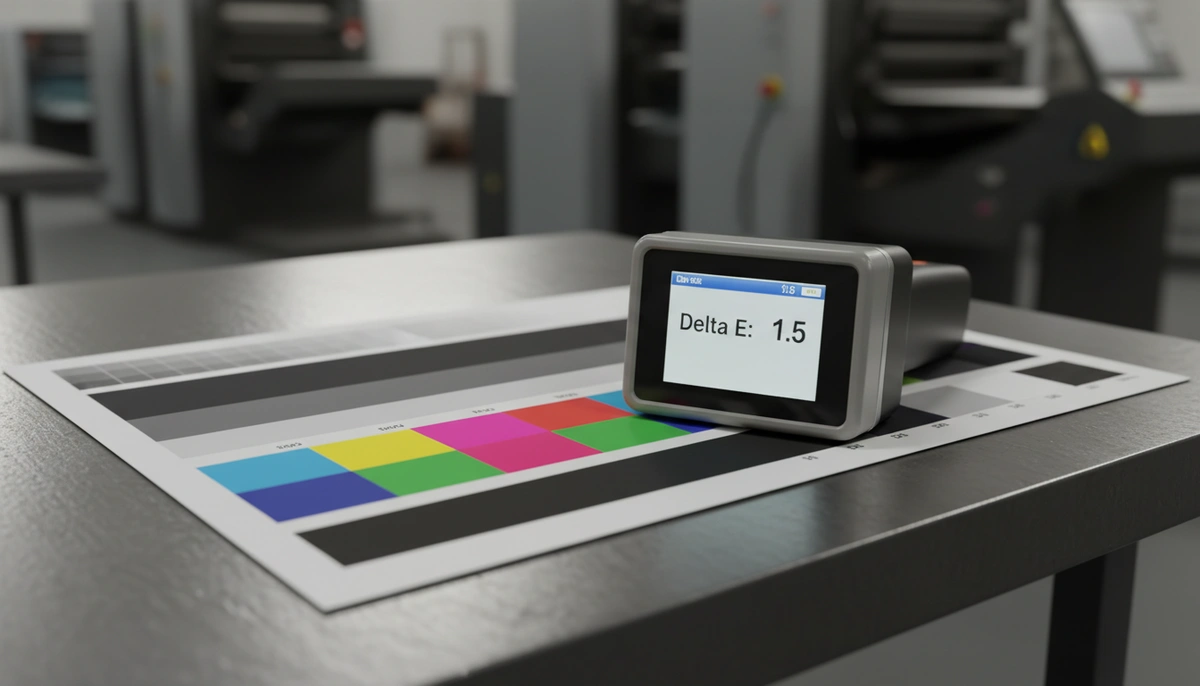
Offset printing achieves Delta E under 2.0 color accuracy on our Heidelberg press, verified by spectrophotometry on every production run. This ensures brand colors match across all labels — from unit 1 to unit 50,000 — meeting the demands of premium retail packaging.
Our JinXinCai Print Production Team uses spectrophotometry-based color verification for every production run. We maintain Pantone and CMYK digital profiles for each client to ensure color matches every time. Through spectrophotometry verification against Pantone formulas, we hold Delta E under 2.0 at 300 dpi on Heidelberg equipment, meeting ISO 9001 quality system requirements. This is critical for retail brands where color inconsistency on the shelf can erode consumer trust and brand equity.
On the other hand, digital printing typically delivers Delta E of 2.0-4.0. While acceptable for many applications, this range may not meet strict brand standards for premium products. Digital's color consistency depends more heavily on environmental conditions and toner calibration compared to offset's wet-ink stability at scale.
When Should You Choose Digital for Professionally Printed Labels?
Choose digital for professionally printed labels when run length is under 2,000 units per SKU, variable data is needed, or turnaround must be under 7 days. Digital's minimum order quantity is 250 units per SKU, making it ideal for test runs and limited editions.
Digital printing is ideal for seasonal limited editions and test markets — projects where speed and flexibility outweigh per-unit cost. It also enables variable data printing for personalized labels, QR codes, or sequential numbering that offset cannot cost-effectively replicate. HP Indigo digital presses deliver 1200 dpi resolution with variable data capability and ±1 mm registration on FSC-certified paper stocks.
Our production team notes that digital is also the right choice for small-batch production runs common in artisanal food and craft beverage markets, where baby shower food labels print and spice jar labels to print in small batches make economic sense. Home-based businesses and emerging brands benefit from digital's low minimums and fast turnaround.
However, a key limitation is that digital's per-unit cost runs 2-3x higher than offset at 5,000 units. The drawback is higher cost at scale, making digital unsuitable for high-volume retail programs where every penny of label cost affects margin.
When Should You Choose Offset for Professionally Printed Labels?
Choose offset for professionally printed labels when run length exceeds 2,000 units per SKU, color consistency is critical, and you need the lowest per-unit cost at volume. Offset's minimum order quantity is 500 units per SKU, with setup costs amortizing across larger runs.
Offset printing is the best choice for retail programs with multiple SKUs running 2,000-50,000 units each. The per-unit cost drops compared to digital at these volumes. Our Heidelberg offset press runs 300 gsm cardstock and 12 pt board at 15,000 sheets per hour with ±0.5 mm registration and Delta E under 1.5 — delivering premium quality that digital cannot match at scale. Our press handles paper, film, and foil stocks with equal precision.
For brands requiring woven label printing near me, offset offers superior material compatibility across a wider range of substrates. However, offset is not ideal for short runs under 500 units — the setup cost makes per-unit pricing prohibitive for those volumes. Competitors offer advantages in speed for those smaller quantities through digital print-on-demand services.
Limitations to Consider Before Choosing Offset or Digital
Offset printing has a key limitation: high setup cost for very short runs. For runs under 500 units, the setup cost can exceed the printing cost, making offset more suitable for established products with predictable demand. A competitor's digital-first approach may be more suitable for startups testing a new product in 200-unit batches before scaling.
Digital printing may not be ideal when material compatibility matters most. Uncoated papers, textured stocks, and metallic films perform better on offset presses. The trade-off between material compatibility and setup cost depends on your specific product requirements — there is no universal "best" method.
Another limitation: digital's color gamut is narrower than offset's. While acceptable for most applications, digital may not reproduce Pantone spot colors with the accuracy that premium branding demands. Offset achieves Delta E under 2.0 consistently, making it a better fit for luxury and prestige packaging lines where color precision drives purchase decisions.
Although offset offers lower per-unit cost at scale, the initial investment in plates and makeready is significant. Consider instead a phased approach: start with digital for testing and market validation, then move to offset as volumes justify the setup investment. This hybrid sourcing strategy minimizes risk while ensuring cost efficiency at scale.

How to Use This Breakeven Framework for Your Label Sourcing Strategy
Use this framework: choose offset if run length exceeds 2,000 units and color consistency is critical; choose digital if run length is under 2,000 units, variable data is needed, or fast turnaround is required. The breakeven point remains 2,000-5,000 units per SKU.
Our JinXinCai team recommends mapping your SKU portfolio by annual volume. High-volume SKUs (2,000+ units per run) should use offset for lower per-unit costs. Low-volume or test SKUs should use digital. Using distribution standards as a reference for packaging durability, we recommend offset for runs above 2,000 units on 300 gsm stock with Pantone spot colors at 300 dpi — the combination that delivers the best balance of cost and quality for retail programs.
The label printing market continues to grow, with digital expanding faster but offset retaining volume share. This hybrid approach maximizes cost savings across a diverse product portfolio while maintaining color consistency.
Decision: Offset vs Digital for Your Labels
- If run length > 2,000 units → Choose offset for lower per-unit cost
- If run length < 2,000 units → Choose digital for zero setup cost
- If variable data needed → Choose digital for VDP capability
- If color accuracy critical (Delta E < 2.0) → Choose offset with spectrophotometry
- If turnaround < 7 days → Choose digital for faster production
Compared to generic advice that recommends one method for all applications, this breakeven framework gives you a data-driven decision that adapts to your specific volume, color needs, and timeline constraints.
Ready to Optimize Your Label Sourcing?
Get a custom breakeven analysis for your SKU portfolio. We'll compare offset vs digital costs for your specific run lengths and materials.
Request a Free QuoteOptimizing Your Professionally Printed Labels Strategy for Scale
The label printing market is forecast to grow steadily, driven by demand for premium packaging and brand differentiation. Brands that optimize their professionally printed labels sourcing strategy will capture cost advantages while maintaining brand consistency across all SKUs. FSC-certified paper in 300 gsm weight combined with ISO 12647 color standards ensures consistent brand colors across every production run — from initial order to reorder.
Our recommendation: consolidate your label production with a single partner offering both offset and digital capabilities — this allows you to switch between methods based on run length without changing suppliers. It also simplifies color management across your entire product line by maintaining consistent Pantone profiles and spectrophotometry calibration regardless of print method.
Real-World Application: Hybrid Sourcing in Practice
Consider a brand launching a new skincare line: start with digital runs of 500 units per SKU for initial market testing. As sales confirm demand, transition those winning SKUs to offset production at 3,000+ units per run. This phased approach avoids the risk of large pre-orders while ensuring cost efficiency once demand is validated. The same color profiles transfer between methods when managed through a single production partner.
Ready to improve your professionally printed labels strategy? Contact us today to request a quote and get started with a sourcing framework tailored to your needs.

Frequently Asked Questions
When does offset printing become cheaper than digital for labels?
Offset printing becomes cheaper than digital at higher run lengths per SKU, where the per-unit cost advantage of offset outweighs its initial setup costs. Below a certain threshold, digital's lack of setup costs makes it more economical. The exact crossover point depends on factors such as label complexity, substrate, and finishing requirements.
What color accuracy can I expect from offset vs digital labels?
Offset printing on a high-end press can achieve very tight color tolerances, verified by spectrophotometry. Digital printing typically delivers good color accuracy but may have a slightly wider tolerance range. For premium branding where color consistency is critical, offset is often the better choice.
What is the minimum order quantity for offset and digital label printing?
Offset printing generally requires a higher minimum order quantity per SKU due to plate setup costs. Digital printing typically has a lower minimum order quantity, making it suitable for test runs and small batches.
Can I use the same color profiles for offset and digital labels?
Yes, when working with a single production partner that manages both methods, Pantone and CMYK profiles can be maintained consistently. This allows you to start with digital for testing and transition to offset at scale without re-matching colors.