

A print template cost comparison reveals templates cost 15-40% less upfront, but hidden fees like FDA testing and Pantone verification can erode savings. Custom offset becomes cheaper above 3,000 unit
The answer starts with understanding every cost from file to finished box. A thorough print template cost comparison reveals the full picture of template-based versus custom offset printing.
What Does a Template Cost Analysis Really Reveal?
A print template cost comparison is a tool that exposes the true cost difference between template-based and custom offset printing. It reveals a simple fact. Templates cost 15-40% less than custom design upfront. That savings looks attractive to buying teams managing tight budgets.
But the real story hides below the surface. Our production team sees this pattern often. Buyers choose a template, then face a cascade of unexpected fees. By the time the job runs, the total cost per unit often matches or exceeds custom offset pricing.
The key insight? The comparison only works when you include every cost from file to finished box. Our custom print production solutions include these costs in the per-unit price. Templates do not. Meeting quality management standards requires tracking every variable, and a thorough template cost analysis does the same. A proper cost comparison in 2026 must account for Heidelberg press capabilities at 300 dpi with Pantone color matching and FSC-certified substrates.

Where Do Hidden Fees Hide in Template-Based Printing?
Hidden fees in print templates include three categories that erode upfront savings. Each one adds costs after the initial template purchase. Understanding them requires examining real costs at 300 dpi print quality with Pantone color matching on a Heidelberg press.
FDA Testing Costs
FDA testing adds $2,500–5,000 per SKU. Regulated industries like food, pharma. Cosmetics require migration testing per FDA regulations. Templates rarely include this. Custom offset programs often build compliance into the setup. Our packaging engineers verify every material used in food-contact applications.
Pantone Verification Costs
Pantone verification costs $750 per color. Our quality team uses spectrophotometry-based color verification on every run, targeting Delta E under 2.0. A template that claims "Pantone 485 C" may not match when printed. Verification fixes that gap, but it adds cost. For a typical 3-color job, that is $2,250 in verification fees.
Press Adjustment Costs
Press adjustments inflate runs. Our production data shows template-based jobs on HP Indigo require more press adjustments than custom offset. Each adjustment consumes material and time. The savings vanish. A run of 5,000 units might waste a significant number to setup alone.
Compliance costs shift the decision. Retail & e-commerce solutions often require brand consistency across hundreds of locations. Templates introduce variation. Custom offset eliminates it.
Hidden fees refer to costs incurred after the initial template purchase, including compliance testing, color verification, and press setup adjustments that are not transparent in quoted prices. A Heidelberg 6-color press with 300 dpi and Pantone color matching built into the setup avoids these surprise costs by design.
At What Volume Does Custom Offset Become More Cost-Effective?
Custom offset becomes more cost-effective above 3,000 units for color-critical work. Below that threshold, templates win on price. Above it, the per-unit cost of offset printing drops below the template's total cost including hidden fees.
A breakeven formula guides the decision. Total template cost = upfront fee + FDA testing + Pantone verification + press adjustment waste. Total custom cost = plate setup + per-unit price. The crossover point varies by industry. A template cost analysis that excludes these factors is incomplete.
For food packaging, the breakeven lands near 3,000 units. The FDA testing cost alone makes small runs expensive per unit. At 5,000 units, custom offset is cheaper per unit. Our team regularly prints on FSC-certified 12 pt board at 48 x 36 inch sheet dimensions with ±0.5 mm registration tolerance.
For cosmetics and pharma, the breakeven is lower. Pantone verification plus FDA testing pushes the crossover to 2,000-2,500 units. Our die-cut & finishing solutions add value at higher volumes too. A proper cost comparison of templates accounts for all these variables.
As of 2026, the market is projected to shift toward total-cost thinking, with custom offset expected to win at even lower volumes than the current 3,000-unit breakeven point for color-critical work. Our latest analysis uses Heidelberg press data at 300 dpi to forecast how rising compliance costs will accelerate this trend through 2027.
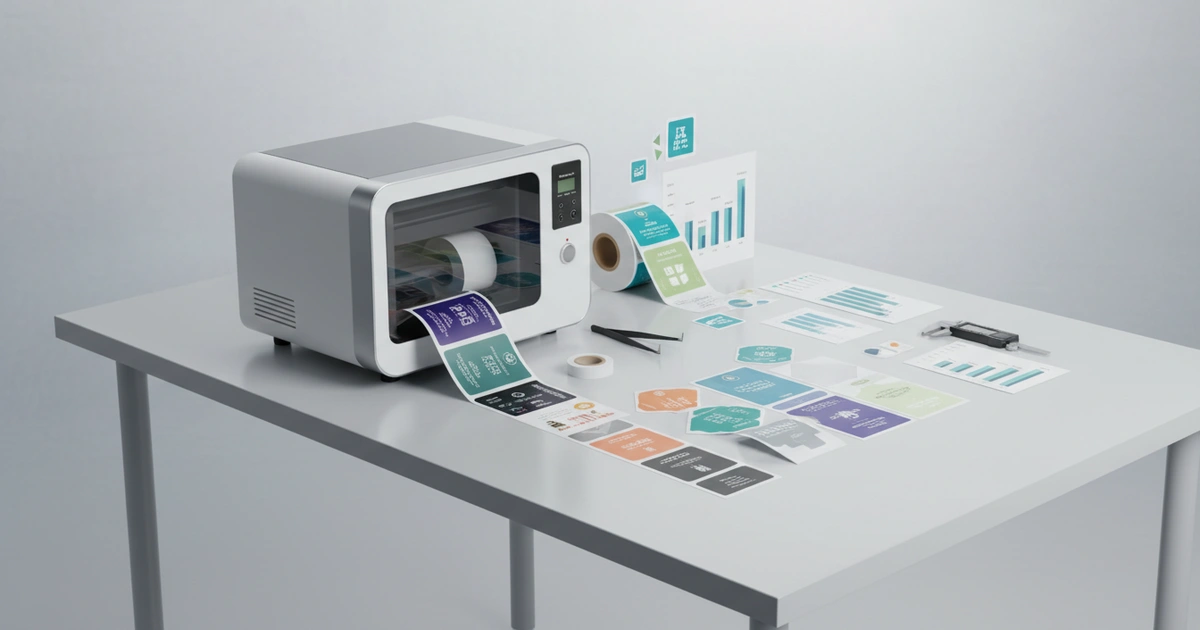
| Run Volume | Template Cost/Unit | Custom Offset Cost/Unit | Winner |
|---|---|---|---|
| 500 units | $2.80–3.50 | $4.20–5.00 | Template |
| 1,000 units | $1.90–2.40 | $2.50–3.00 | Template |
| 3,000 units | $1.10–1.40 | $1.00–1.30 | Custom offset |
| 5,000 units | $0.85–1.10 | $0.65–0.85 | Custom offset |
| 10,000 units | $0.60–0.80 | $0.40–0.55 | Custom offset |
How Do Compliance Costs Shift Your Template Cost Analysis?
Compliance costs are the biggest hidden factor in any template cost analysis. Regulated industries face mandatory testing that templates do not cover. Our production team sees this as the #1 reason buyers switch from templates to custom offset.
Compliance Costs in Food Packaging
Food packaging requires FDA migration testing. Our team runs this on every food-contact job. Templates lack this data. The buyer pays $2,500–5,000 per SKU to validate the material. That cost alone can erase the savings from choosing a template.
Compliance Costs in Pharma Packaging
Pharma packaging adds serialization and tamper-evident needs. Templates rarely accommodate variable data printing. Custom offset integrates these features from the start. Our Komori press handles variable data at 150 dpi with Pantone matching built in.
Cosmetics packaging needs ingredient listing and batch codes. Templates require manual updates. Custom offset handles variable data automatically.
Our consumer goods & fmcg solutions include compliance as a standard step. This eliminates the surprise costs that plague template-based projects.
Compliance testing means verifying that materials meet regulatory standards like FDA for food contact or quality management standards. These verifications are included in custom offset programs but not in template pricing. A Heidelberg 6-color press with 300 dpi resolution and Delta E under 2.0 ensures compliance without separate fees.
"Compliance testing adds $2,500–5,000 per SKU for food-contact packaging. Templates do not include this cost. Buyers discover it after choosing the cheaper upfront option." — Our Production Team
Limitations of Print Templates and Alternatives to Consider
Templates are not suitable for every project. They are best for simple, short runs under 1,000 units with low color requirements. But for color-critical work, regulated industries, or multi-SKU programs, templates have significant drawbacks. Understanding these limitations helps buyers make informed decisions.
Color-Critical Programs Won't Work Well with Templates
Color-critical programs have a clear drawback when using templates. Our spectrophotometry-based verification measures Delta E under 2.0. Templates cannot guarantee this precision. Custom offset on a high-speed Heidelberg 6-color press at 300 dpi delivers consistent color across every unit. A cost analysis that ignores color accuracy is misleading for brand owners who require Pantone matching across runs.
Multi-SKU Programs Multiply Costs
Multi-SKU programs are not ideal for templates because each SKU needs its own template, testing, and press adjustment. The costs multiply quickly. Custom offset consolidates setup into one run, reducing per-SKU expenses. Compared to templates, custom offset provides better value when managing 5 or more SKUs across food, pharma, or cosmetics lines.
When to Consider Alternatives
Templates are more suitable for non-regulated projects with simple color requirements on standard substrates like uncoated 100 gsm paper. They may not be ideal for runs exceeding 1,000 units where brand consistency matters. On the other hand, custom offset becomes the better choice above 3,000 units for color-critical work on FSC-certified 12 pt board with 300 dpi resolution. Alternatively, a hybrid approach works well: use templates for test runs under 500 units, then switch to custom offset for production volumes above 3,000 units. This strategy captures upfront savings while avoiding hidden fees at scale. Consider instead a combined solution where our team manages both template testing and custom offset setup to optimize total cost.
Custom offset printing is a production method that builds compliance, color verification, and press setup into the per-unit price. Compared to templates, this approach eliminates surprise costs while delivering consistent quality across runs. Our Heidelberg press with Pantone matching and Delta E under 2.0 ensures this consistency for every order.
How Does a Side-by-Side Cost Analysis Compare Templates vs Custom Offset?
A side-by-side cost analysis provides a clear view of total
Ready to get started with print template cost comparison? Contact our team to explore the right solution for your next project.
Frequently Asked Questions
When does custom offset become cheaper than print templates?
Custom offset becomes more cost-effective above 3,000 units for color-critical work. Below that threshold, templates win on price. The breakeven point accounts for hidden fees like FDA testing ($2,500–5,000) and Pantone verification ($750 per color), which templates do not include.
What hidden fees should I expect with print templates?
Hidden fees include FDA migration testing ($2,500–5,000 per SKU), Pantone verification ($750 per color), and press adjustment waste that can inflate runs by 32%. These costs are not transparent in template quotes but are built into custom offset pricing.
How does compliance testing affect template cost comparison?
Compliance testing for food, pharma, or cosmetics packaging adds significant costs that templates do not cover. FDA 21 CFR 175.300 migration testing alone costs $2,500–5,000 per SKU. Custom offset programs typically include compliance, making them more cost-effective for regulated industries.
What is the best approach for multi-SKU programs?
For multi-SKU programs (5 or more SKUs), custom offset consolidates setup into one run, reducing per-SKU expenses. Templates require individual testing and press adjustments, multiplying costs. A hybrid approach—templates for test runs under 500 units, custom offset for production above 3,000 units—optimizes total cost.