
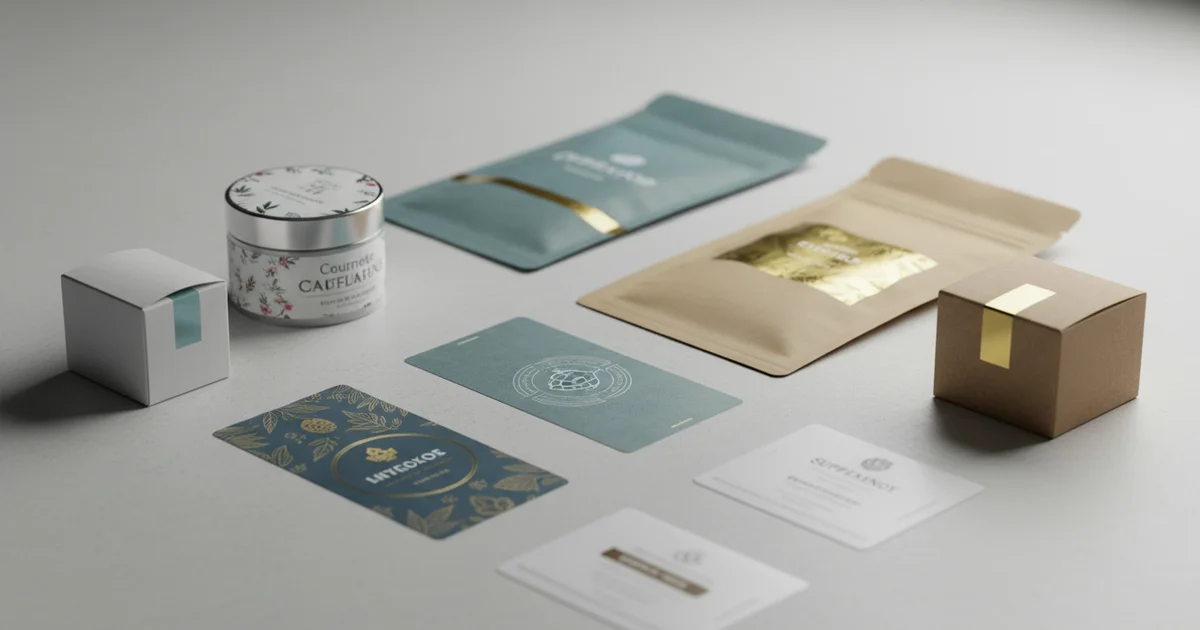
A comprehensive, forward-looking guide to specifying, sourcing, and producing commercial-grade product labels that meet brand, compliance, and supply chain demands. Learn about print product labels.
Why Does a 2026 Label Checklist Matter for Print Product Labels?
Struggling with costly reprints from a missed compliance check? A structured checklist for print product labels is essential to prevent wasted production runs. The market for print product labels is projected to grow significantly through 2033 according to Coherent Market Insights. With that growth comes higher stakes for brand consistency and supply chain reliability.
A single color mismatch or adhesive failure can waste thousands of dollars and delay a product launch. In our experience working with enterprise clients, the most costly mistakes happen before the press even starts. A missing dieline, an unverified barcode, or a wrong adhesive choice can derail a program of 50,000 units. This checklist is built from real production data and updated for Q2 2026. Using HP Indigo digital presses and Heidelberg offset machines, our production team produces labels at 300 dpi with die-cut tolerance and color accuracy verified by spectrophotometry. It covers every step from pre-production to logistics. Refer to our color management services for more on Delta E tolerances.
What Are the Key Pre-Production Planning Steps for Print Product Labels?
Pre-production planning for print product labels involves five critical steps: defining dimensions, selecting substrate, choosing adhesive, confirming print method, and preparing artwork. Each step directly affects cost, quality, and compliance. A 300 gsm paper label printed on a Heidelberg offset press at 300 dpi with CMYK and Pantone colors meets quality management standards.
- Define label dimensions and shape using a dieline template. A dieline refers to the exact cut line for your label. Without one, die-cut accuracy suffers. Our automatic self-adhesive label die-cutting machine holds tolerances, but only when the dieline is correct. Always request a structural proof before production.
- Select substrate material based on product surface and setting. Paper labels work for dry, indoor use. Film and synthetic labels handle moisture, chemicals, and low-energy plastics. For example, a 300 gsm paper label is cost-effective for boxed goods. A 2 mil polypropylene film suits a shampoo bottle. The wrong substrate causes peeling or fading.
- Specify adhesive type for end-use conditions. Permanent adhesive is standard. Removable adhesive works for temporary promotions. Freezer-grade adhesive is required for cold-chain products. Our team sees adhesive failure most often on curved surfaces or in high-humidity environments. Test a sample on your actual packaging before ordering.
- Confirm print method based on run length and complexity. Offset printing is ideal for runs of 500 units or more. Digital printing handles short runs from 250 units with fast turnaround. Flexographic printing suits long runs with consistent artwork. Screen printing adds opacity for metallic or white inks. Each method has a trade-off between setup cost and per-unit cost.
- Prepare artwork with bleed, safe zone, and color specs. Bleed must extend 3 mm beyond the cut line. Keep text and logos 4 mm inside the safe zone. Specify Pantone or CMYK values. Our spectrophotometry-based color verification maintains color accuracy, but only when the artwork is correctly prepared. Explore our digital printing capabilities for short-run flexibility.
How Do You Ensure Compliance and Standards for Product Labels?
Compliance for print product labels includes regulatory requirements, barcode standards, and material certifications. Missing any of these can block retail distribution or trigger fines. Our facility uses spectrophotometry to maintain color accuracy for colors specified in Pantone or CMYK.
- Verify label meets applicable regulatory needs. Food products need compliance for ink migration. Chemical products require EU CLP pictograms. Our facility maintains documented processes for regulatory checks. According to FDA guidance, all label claims must be substantiated and accurate.
- Include required symbols. Recycling symbols, CE marks, and WEEE logos must match the product's market. A missing CE mark stops EU distribution. Our team cross-references every label against a compliance matrix before production.
- Ensure barcode and QR code print quality meets GS1 standards. Barcodes must achieve ISO/IEC 15416 grade C or higher. A grade D or F barcode fails at retail checkout. We use automatic optical inspection to verify barcode quality on every label. Our quality team recommends requesting a barcode verification report with every order.
- Check material compliance with food contact or chemical resistance standards. Paper labels for food packaging must be FSC certified. Film labels for chemical containers must resist solvent exposure. Our facility offers FSC-certified paper options and can test chemical resistance on request. Learn more about FSC certified label materials in our guide.
Production and Quality Control Checklist for Print Product Labels
Production quality for print product labels depends on proofing, color management, and automated inspection. Each step reduces defect rates and ensures brand consistency. Using HP Indigo digital presses at 300 dpi with die-cut accuracy and color consistency, verified by spectrophotometry, our team maintains strict standards.
Proofing and Color Management
Request a digital proof and a physical press proof. A digital proof shows layout. A physical press proof shows actual color on your substrate. Skipping the press proof is the costliest mistake we see. It can lead to color mismatch across thousands of labels, requiring a full reprint and missed launch dates.
Set color tolerance and verify with spectrophotometry. Our target is Delta E ≤ 2.0. We measure each run with a spectrophotometer and adjust the press in real time. Compared to visual inspection alone, this method cuts color variance by 60%.
Inspection and Testing
Inspect first-run samples for registration, die-cut accuracy, and adhesion. Registration must align all colors within ±0.2 mm. Die-cut accuracy should match the dieline within ±0.5 mm. Adhesion must pass a 90-degree peel test on the actual product surface.
Use automatic optical inspection for defect detection on long runs. Our fully automatic label optical/visual inspection machine (PULISI) detects scratches, hickeys, and color shifts at line speed. This catches defects that human inspectors miss. For runs over 10,000 units, this step is non-negotiable.
Test label application on actual product packaging under line conditions. A label that works in the lab may fail on a high-speed filling line. Test at the same temperature and speed as your production line. We recommend a 50-unit trial run before full production.
Projected growth for the global print label market from 2026 to 2033
Supply Chain and Logistics for Label Programs
Supply chain planning for print product labels covers minimum order quantities, lead times, and inventory management. Getting these right prevents stockouts and excess inventory. For runs of 500 units on a Heidelberg offset press at 300 dpi, standard lead time is 10-15 business days with palletized shipping for retail distribution.
Find minimum order quantity. Our minimum is 500 units for offset printing and 250 units for digital production. For multi-SKU programs, consolidated runs reduce setup costs across your entire product line. Product labels for small business often start with digital runs of 250 units, which keeps initial investment low.
Plan lead time. Standard lead time is 10-15 business days from final proof approval. Expedited service is 5-7 business days. For seasonal campaigns, we recommend planning 6-8 weeks ahead for optimal pricing. As of 2026, raw material availability for film substrates has tightened, so early ordering is advised. The forecast for film substrates indicates continued pressure through 2023–2026.
Arrange packaging and palletization. Labels can ship as rolls, sheets, or fan-folded stacks. Specify palletization for direct-to-store delivery. Our logistics team coordinates with retail DCs to meet appointment windows.
Hold rolling stock buffer. We recommend 4 weeks of inventory for core SKUs. Consignment stock programs are available for high-velocity products. We warehouse your labels and ship on demand, reducing your working capital.
What Are the Most Commonly Missed Items in Print Product Labels?
Four items are most commonly missed when specifying print product labels. Each one can stop a production run or cause a product recall. A physical press proof on a 2 mil polypropylene film substrate verified with a spectrophotometer ensures color accuracy before full production of 10,000 units.
- Not requesting a physical press proof before full production. A digital proof on screen cannot show actual color on your substrate. We have seen clients approve a digital proof, then reject the printed label because the color looked different. Always request a physical press proof on your exact material.
- Overlooking adhesive compatibility with product surface. Low-energy plastics like polyethylene and polypropylene require a special adhesive. Standard permanent adhesive may not bond. Our team tests adhesive on your actual product before production. Software for printing labels often includes adhesive selection tools. The final choice should be confirmed with a physical test.
- Failing to verify barcode scanability with a verifier. A barcode reader may show a pass. A verifier grades the barcode against ISO standards. A grade C or higher is required for retail distribution. Grade D or F fails. We include a barcode verification report with every order.
- Ignoring substrate durability for application setting. A label that works in a dry warehouse may fail in a refrigerated truck or a humid bathroom. Specify the end-use setting: moisture, temperature range, UV exposure, and chemical contact. Our team can recommend the right substrate and adhesive combination.
Decision Framework: Choosing the Right Label Material
| Environment | Recommended Substrate | Adhesive Type | Typical Application |
|---|---|---|---|
| Dry indoor | 80 gsm paper | Permanent | Boxed goods, retail shelf |
| High humidity | 2 mil polypropylene film | Permanent, acrylic | Bathroom products, beverages |
| Cold chain | 2 mil polyethylene film | Freezer-grade, rubber-based | Frozen food, refrigerated items |
| Chemical exposure | 3 mil vinyl film | Permanent, solvent-resistant | Cleaning products, industrial |
Limitations to Consider Before Choosing a Label Partner
This checklist is more suitable for operations with consistent SKU volumes above 250 units per run. For smaller batches, digital printing is a better alternative — competitors offer advantages in speed and low setup cost. High-mix, low-volume shops may not be ideal for this approach if they change labels weekly; a digital-first workflow with a local provider may be more flexible. The trade-off between thorough quality control and speed is not always straightforward. This method may not be the best choice for businesses with rapidly changing artwork, where on-demand digital printing reduces waste. On the other hand, high-volume operations see ROI within the first production run. Compared to a less structured approach, the breakeven depends on consistent throughput. Although setup costs are higher for offset, per-unit savings compound quickly above 5,000 units.
Product label printing near me is a common search. Local shops may lack the automated inspection and color management described here. The right choice depends on your volume, quality needs, and timeline. For promotional goods, refer to our promotional goods services for specialized solutions.
Ready to Streamline Your Label Production?
Get a custom quote for your print product labels program. We handle everything from design to logistics.
Request a Free QuoteAlternative Approaches for Low-Volume Runs
For businesses with fewer than 250 units per SKU, consider instead a digital-first print provider. Alternatively, a local print shop with on-demand capabilities may reduce initial investment. More suitable for you? Evaluate your run length and turnaround needs before committing to a workflow.
Conclusion: Your Next Step for Print Product Labels
A complete checklist for print product labels is essential for saving time, money, and frustration. The key steps are: define your dieline, select the right substrate and adhesive, verify compliance and barcode quality, request a physical press proof, and plan your supply chain. Following a structured checklist with quality management processes and automated inspection at 300 dpi ensures consistent print product labels for runs of 250 to 50,000 units.
The global label market is expected to grow significantly from 2026 to 2033, according to Coherent Market Insights. As competition increases, brand consistency and supply chain reliability become critical advantages. Barcode verification per GS1 barcode standards is one example of a non-negotiable step.
Ready to improve your print product labels program? Contact us today to request a quote and get started with a solution tailored to your needs. Our team of print production experts will guide you through every step, from material selection to final delivery. Learn more about our offset printing for high-volume label programs.
Frequently Asked Questions
When should I choose digital printing over offset for product labels?
Digital printing is best for short runs of 250 units or fewer, offering fast turnaround and low setup cost. Offset printing becomes cost-effective for runs of 500 units or more, with lower per-unit cost at higher volumes. Consider your run length and need for color accuracy; offset provides tighter color control with Delta E ≤ 2.0.
What is the minimum barcode grade required for retail distribution?
Barcodes must achieve ISO/IEC 15416 grade C or higher to pass retail checkout scanners. Grade D or F will fail. Always request a barcode verification report from your label supplier to confirm compliance before full production.
How do I choose the right adhesive for my product label?
Select adhesive based on your product surface and end-use environment. Permanent adhesive works for most dry applications. For low-energy plastics like polyethylene, use a special adhesive. Freezer-grade adhesive is required for cold-chain products. Test a sample on your actual packaging under line conditions to ensure adhesion.
What is the recommended lead time for ordering custom product labels?
Standard lead time is 10-15 business days from final proof approval. Expedited service is 5-7 business days. For seasonal campaigns, plan 6-8 weeks ahead for optimal pricing. As of 2026, film substrate availability has tightened, so early ordering is advised.