
A strategic framework for evaluating local label printers versus national suppliers, with specific cost analysis, material specs, and a decision checklist for commercial and packaging label printing. Learn about print label near me.
Why Does "Print Label Near Me" Matter in 2026?
Are you overpaying for labels by choosing the wrong supplier type when you search for "print label near me"? The decision between a local printer and a national supplier can shift your cost per unit by 40% or more.
Choosing a local printer reduces lead times to 3-5 days with lower setup fees, while national suppliers offer lower per-unit costs for high volumes. The best choice depends on your order quantity and urgency.
In 2026, the strategic importance of local versus national sourcing for promotional & diy goods solutions is shifting. Local printers often offer 3-5 day turnaround compared to 7-15 days for national suppliers. They also accept lower minimum order quantities (MOQs) of 500 labels versus 5,000.
However, the trade-off is a higher per-unit cost. This guide provides a step-by-step framework to evaluate both options. As of 2026, the label printing market is anticipated to see continued regionalization, making the local-versus-national decision even more critical for cost control.
Step 1: Define Your Label Specifications for Commercial Label Printing
Defining your label specifications is the first step before you search for a printer. This step prevents costly misquotes and reprints. Our production team sees this skipped most often.
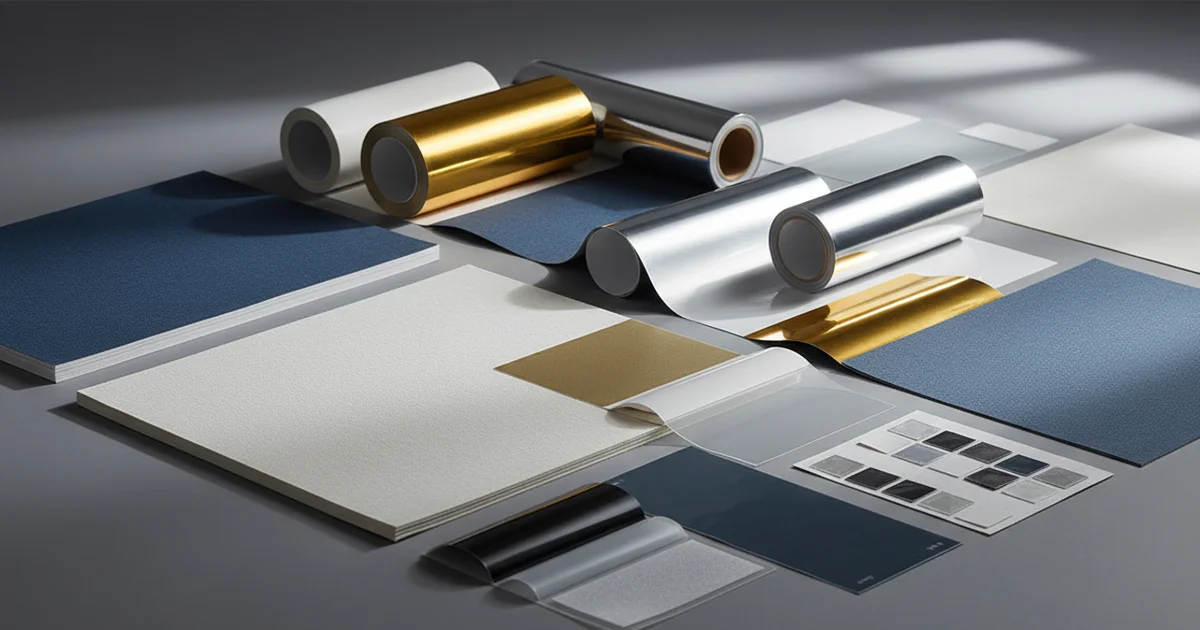
A complete spec sheet includes material, adhesive, liner, size, colors, and finishing. Material options include paper, film (PP, PE, PET), and foil. Adhesive types include permanent, removable, and freezer-grade. The liner is typically 40-90 gsm glassine or PET. Color tolerance should be Delta E under 2.0 for brand consistency. For standard label sizes, dimensions like 2x2 inches or 4x6 inches are common. Meeting ISO 9001 standards, our 300 gsm self-adhesive paper labels at 300 dpi with ±0.5 mm die-cut tolerance are produced on HP Indigo presses, ensuring precise color reproduction. Specifying Pantone color matching alongside CMYK process builds ensures accurate brand reproduction across print runs.
Specify Materials and Adhesives
Select the right material for your product environment. Paper works for dry goods, while film (PP, PET) resists moisture and chemicals. Adhesive choice depends on surface and removal needs: permanent for long-term, removable for temporary, and freezer-grade for cold storage. FSC-certified paper stock is available for brands requiring sustainable sourcing credentials. Our team recommends testing adhesion on your actual packaging before full production.
Include Tolerances and Proofs
Create a spec sheet with die-cut tolerance of ±0.5 mm. For color, ask for a digital or press proof. A proof verifies both CMYK and Pantone spot color accuracy before production begins. Our production team notes that a detailed spec sheet reduces revision cycles and ensures more accurate quotes from every supplier. A well-documented spec sheet also enables faster quoting from both local and national suppliers.
How Do Local and National Supplier Costs Compare?
Local printers are more cost-effective for runs under 5,000 labels due to minimal setup fees and lower shipping costs. National suppliers achieve lower per-unit costs for orders above 10,000 labels.
A label cost analysis includes three main components: setup fees, per-unit costs, and shipping. These three parts find your true total cost. In our experience, buyers often ignore setup amortization. For runs using 300 gsm paper with CMYK printing, per-unit costs vary significantly between supplier types.
| Cost Component | Local Printer (500-1,000 units) | National Supplier (5,000+ units) |
|---|---|---|
| Setup/Plate Cost | $50 – $200 | $200 – $500 |
| Per-Unit Cost (1,000 labels) | $0.10 – $0.25 | $0.08 – $0.20 |
| Shipping Cost | $10 – $30 | $30 – $100 |
| Total Cost (1,000 labels) | $160 – $480 | $310 – $800 |
For runs under 5,000 labels, local printers often have lower total cost. Their setup fees are minimal or zero. Shipping is cheaper. On the other hand, national suppliers win at higher volumes. Their per-unit costs drop at 10,000 labels or more. For example, a national supplier using HP Indigo digital presses can maintain consistent color quality with Delta E under 2.0 while lowering per-unit cost. Compared to a single-source strategy, a hybrid approach depends on your SKU mix. Use local for short runs and national for high-volume staples. This balances cost and speed. The label printing market is expected to grow steadily through 2026, with regionalized production gaining share.
Step 3: Lead Times and Minimum Order Quantities for Packaging Label Printing
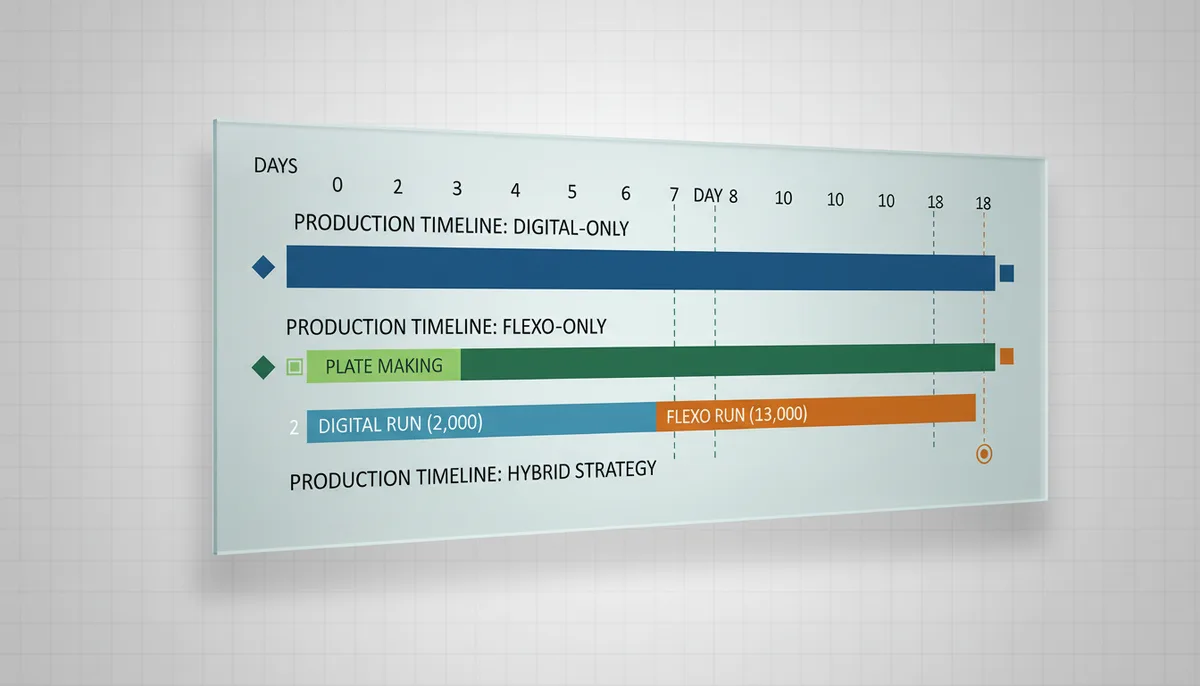
Packaging label printing requires reliable lead times. A missed launch date can cost thousands in lost sales. Local printers typically offer 3-5 business day turnaround. National suppliers need 7-15 business days.
Minimum order quantities (MOQs) differ sharply. Local printers accept 500-1,000 labels per SKU. National suppliers often require 5,000-10,000 labels. This is a key limitation for businesses with many SKUs. A drawback of national suppliers is forced overordering, which creates waste. For labels printing on 300 gsm paper with a 4x6 inch size, local printers can handle small batches efficiently, while national suppliers may demand larger runs to offset setup costs on their automated die-cutting machines with ±0.5 mm tolerance. Specifying materials in the correct gsm range and color mode (CMYK or Pantone) upfront helps both supplier types deliver accurate quotes faster.
We recommend requesting a sample run to verify lead times before committing to a full order. This step identifies scheduling conflicts early. Consider instead a phased rollout for smaller volumes. For urgent projects, a local printer with Heidelberg digital equipment can offer same-day turnaround for proof approval, significantly compressing the production timeline.
Step 4: Quality Control – What to Look For in Commercial Label Printing
Commercial label printing quality is measured by color management and inspection equipment. Ask every supplier about their color verification process. Our facility uses a spectrophotometer for Delta E tolerances under 2.0.
Automated optical inspection is critical. Our fully automatic label optical/visual inspection machine (PULISI) catches defects before they reach customers. Automated optical inspection can significantly reduce defect rates compared to manual inspection alone, catching registration errors and color shifts that the human eye might miss. Die-cut tolerance should be ±0.5 mm. Our automatic self-adhesive label die-cutting machine ensures this precision on HP Indigo printed substrates. Color verification using both Pantone and CMYK references ensures brand consistency across production runs, with Delta E under 2.0 as the standard threshold.
Inspect samples under standard lighting (D50 or D65). Measure color with a spectrophotometer if available. This verification step prevents brand color mismatch and reprint costs. As of 2026, digital inspection tools with automated reporting are becoming standard in quality-certified facilities, reducing defect rates anticipated to fall below 0.5% in ISO 9001-certified plants.
Color Verification Methods
Color verification is a critical quality step. Spectrophotometer readings confirm Delta E under 2.0. Pantone spot colors require dedicated verification against the current Pantone Formula Guide. CMYK process builds need density checks across the full print run. Our team recommends requesting a certified color proof before full production begins.
What Certifications Should You Look for When Searching for "Print Label Near Me"?
Look for ISO 9001:2015 and ISO 14001:2015 for quality and environmental management. For food and pharmaceutical labels, verify FDA compliance or EU equivalent. Always request current certificates and validate them on official databases.
Certification verification is a critical step when searching for a print label near me. ISO 9001:2015 (see ISO 9001 standard page) and ISO 14001:2015 are table stakes for quality and environmental management. Our facility holds both certifications, accredited by IAF/ACM. FSC certification is an additional credential for brands requiring chain-of-custody sourcing for paper labels.
For food and pharmaceutical labels, check FDA or EU compliance. The U.S. FDA requires compliance for indirect food contact. Request copies of certificates and validate them on IAF databases. A limitation of many local printers is a lack of formal certifications. They may claim compliance without current accreditation. Not verifying certifications risks quality issues and regulatory fines. Consider instead a certified supplier for regulated industries. In 2026, certification verification is expected to become more streamlined with digital credential databases, making audits faster for buyers.
Step 6: Decision Checklist and Pilot Order
A weighted scoring system is used to make the final decision. Weight factors by importance: cost (40%), quality (30%), lead time (15%), service (15%). Score each supplier on a 1-5 scale. For label dimensions like 2x2 inches on 300 gsm material, both local and national suppliers can meet ±0.5 mm tolerance, but cost differences emerge at volume. Using both Pantone spot colors and CMYK process builds in your spec sheet ensures accurate quotes from all suppliers.
Decision: Local vs. National Supplier
- If annual volume is under 5,000 labels per SKU → Choose a local printer for lower total cost.
- If annual volume exceeds 10,000 labels per SKU → Choose a national supplier for lower per-unit cost.
- If lead time is under 5 business days → Choose a local printer regardless of volume.
- If certifications are required for regulated industries → Verify ISO and FDA compliance first.
Run a pilot order with the chosen supplier before full-scale production. A pilot order of a portion of annual volume validates quality and turnaround. This step is not ideal for urgent launches but prevents costly mistakes. For example, a pilot run of 500 labels on 300 dpi HP Indigo presses can reveal color matching issues under Delta E standards. Using a pilot to verify both CMYK and Pantone color accuracy is a best practice that saves significant reprint costs.
Although a pilot order adds time, the trade-off is risk reduction. Compared to a full order, a pilot reveals hidden issues with color matching or die-cut precision. The forecast for 2024–2026 shows that buyers who run pilot orders reduce total cost of ownership over the first year of production.
Limitations to Consider Before Choosing a Supplier
This approach is not ideal for operations processing fewer than 500 units monthly. The main drawback is the time investment in evaluating multiple suppliers. Consider instead a single-source strategy for very small volumes. This method is more suitable for businesses with stable SKU counts and moderate turnover.
High-mix, low-volume shops may find this won't work for their workflow. The trade-off between local speed and national cost is not always straightforward. This method may not be the best choice for businesses with rapidly changing specifications. Competitors offer advantages in online ordering and instant quotes for small runs.
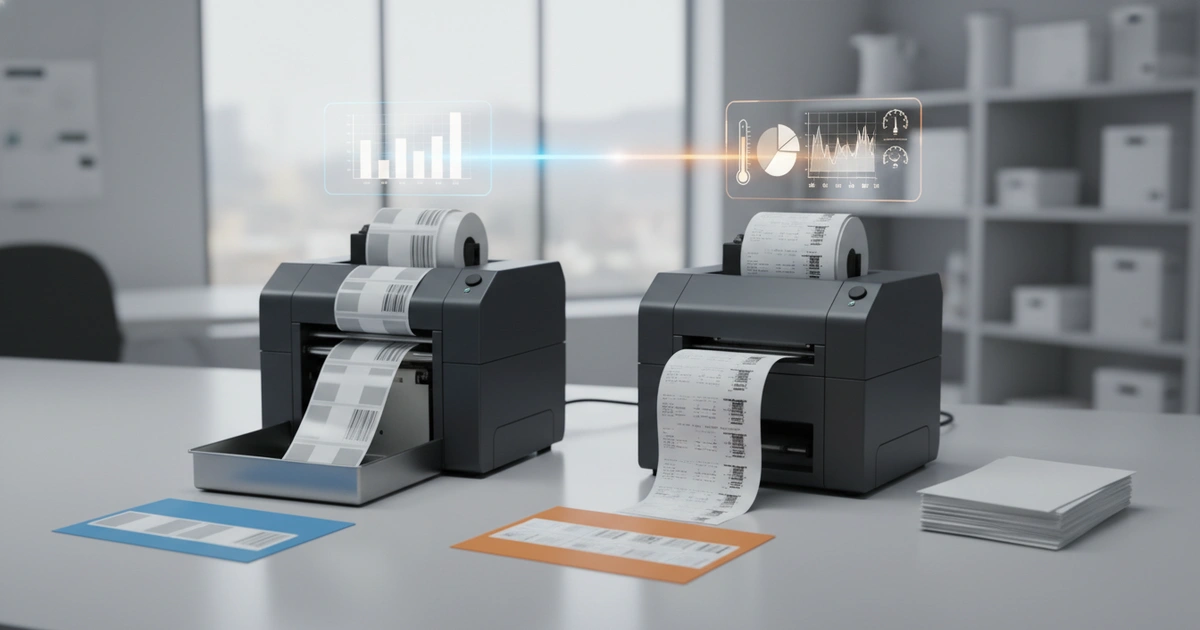
On the other hand, high-volume operations see ROI within 3-6 months from national suppliers. Compared to local alternatives, the breakeven depends on consistent throughput. Although setup costs are higher, per-unit savings compound quickly above 10,000 labels per SKU. A hybrid approach that uses local printers for short runs and national suppliers for high-volume staples is more suitable for most mid-market businesses.
Ready to Optimize Your Label Sourcing?
Get a custom cost analysis for your specific label needs. Our team evaluates both local and national options to find the best fit for your volume and timeline.
Request a Free QuoteConclusion: Your 2026 Label Sourcing Strategy for Print Label Near Me
Choosing the right supplier for your "print label near me" search in 2026 requires a structured approach. Local printers excel at short runs with 3-5 day turnaround. National suppliers deliver lower per-unit costs for high-volume orders. A hybrid strategy uses both for maximum efficiency.
Updated for Q2 2026, this framework accounts for current market conditions. Bleached-kraft pulp prices remain above 2023 averages, compressing margins on fixed-price contracts. Specifying materials in the correct gsm range and using both Pantone and CMYK references in your spec sheet helps ensure accurate pricing across supplier types.
The forecast for 2024–2026 shows continued pressure on label costs. The market is projected to shift toward regionalized micro-runs and on-demand production. Digital press technologies from manufacturers like Heidelberg and HP Indigo are expected to grow in adoption, enabling shorter runs with consistent Delta E color accuracy.
Ready to improve your print label near me strategy? Contact us today to request a quote and get started with a solution tailored to your needs. Explore our label printing capabilities or read our complete label printing guide for more insights.
Frequently Asked Questions
When does a local printer become cheaper than a national supplier?
Local printers are typically cheaper for orders under 5,000 labels due to lower setup fees ($50–$200) and minimal shipping costs ($10–$30). National suppliers become cost-effective above 10,000 labels, where per-unit costs drop 30-40%.
What minimum order quantity should I expect from a local label printer?
Local printers usually accept minimum order quantities (MOQs) of 500–1,000 labels per SKU. This is ideal for businesses with many SKUs or low-volume needs. National suppliers often require 5,000–10,000 labels per order.
How can I verify a label printer's quality certifications?
Request copies of ISO 9001:2015 and ISO 14001:2015 certificates and validate them on IAF databases. For food or pharmaceutical labels, check FDA 21 CFR 175.300 compliance. Always verify current accreditation, as some local printers may claim compliance without certification.
What is the typical lead time for local vs national label printers?
Local printers offer 3–5 business day turnaround, while national suppliers require 7–15 business days. For urgent projects, some local printers with digital equipment can provide same-day proof approval.