
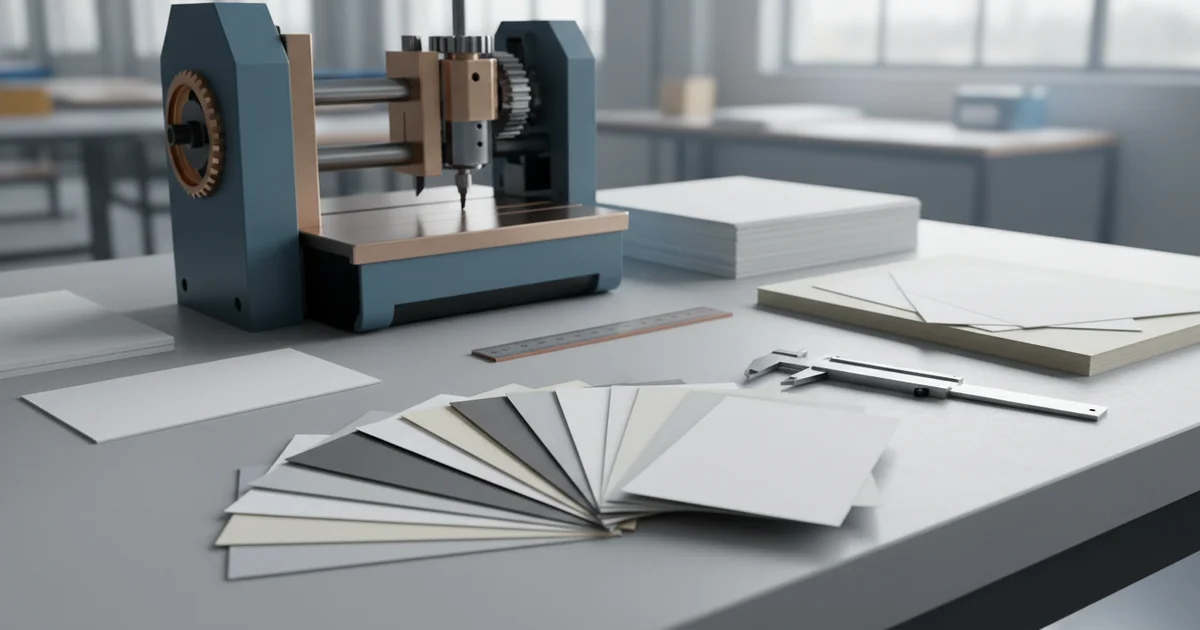
Print custom size cards within ±5mm of press sheet divisions to cut material waste 18%. Screen printing deposits 8-12 micron ink for 1,000+ units, while digital suits under 500. Local Brisbane printers offer 5-7 day turnaround vs 10-14 days online.
Why Does Card Size Matter for Print Costs?
Choosing the wrong card dimensions costs more than most buyers realize — press sheet waste from poorly nested layouts drives per-unit price up significantly. A card just 5 mm wider than an even division on the press sheet can waste up to 24% of the paper, which you pay for directly. When you decide to print custom size cards rather than forcing a non-optimal standard size, you can actually reduce material costs — provided your dimensions divide evenly into the press sheet. Most printers run standard sheets at 28 x 40 inches or 20 x 28 inches. Our production team at JinXinCai sees this daily: buyers who ask about press sheet divisions before committing to a quote typically save substantially on material costs alone. The key is providing your exact card dimensions early so your supplier can optimize the layout against their press sheet.
What Print Technology Is Best for Your Custom Card Quantity?
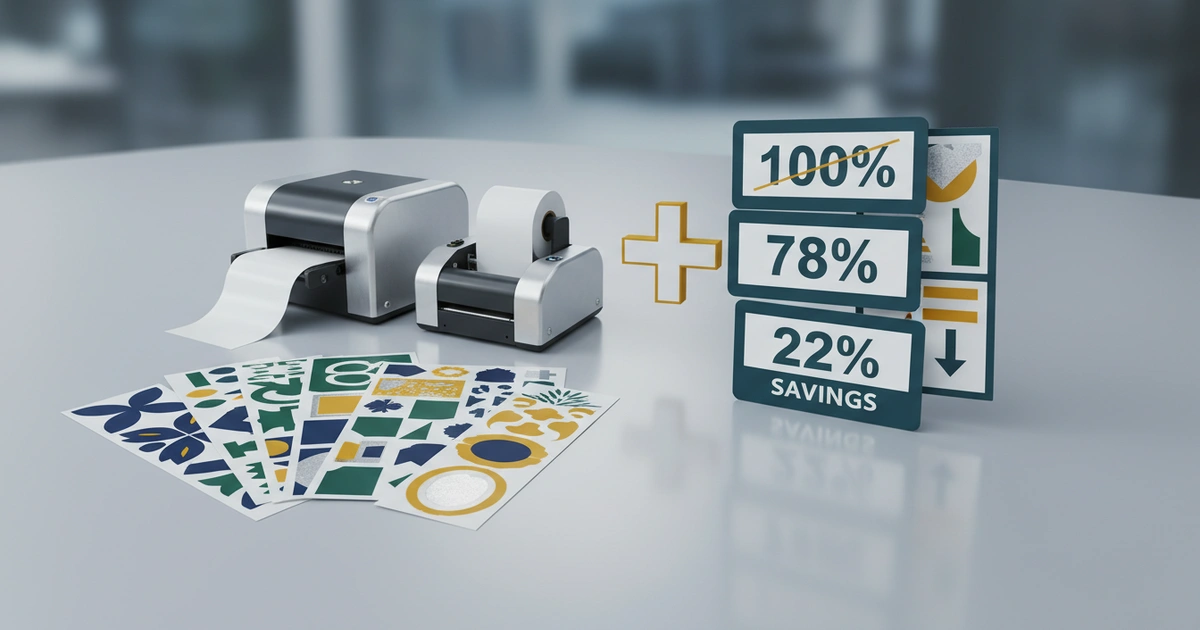
Digital printing is best for runs under 500 units with no setup cost and fast turnaround — typically 5–7 business days. Offset printing suits 500–1,000 unit runs. Screen printing excels above 1,000 units, depositing thicker ink that gives vibrant, durable color using Pantone matching for brand accuracy at 175 dpi.
Your order quantity decides the best print method. Digital printing suits runs under 500 units — it has no setup cost and fast turnaround, typically 5 to 7 business days. Ink cost per card is higher, but you pay no plate fees. For 500 to 1,000 units, offset printing offers better per-unit pricing because setup costs spread across more cards. Our offset presses handle runs with consistent CMYK color across the batch. Screen printing deposits a noticeably thicker ink film compared to offset — ideal for premium card projects where thick, vibrant color matters. It is best for runs over 1,000 units where setup cost is justified by volume. The trade-off is slower turnaround, typically 10 to 15 business days. Compared to digital, screen printing has a higher upfront cost but lower per-unit price at volume. For most retail card programs, offset printing at higher quantities gives the best balance of cost and quality.
How Do You Evaluate Suppliers for Custom Card Printing?
Evaluating a supplier requires a structured check of press sheet optimization, print technology match, turnaround time, color consistency measured by Delta E, and MOQ flexibility. A production-focused partner asks about your dimensions before quoting and guarantees minimal waste.
Choosing a printer for your custom cards requires a structured check. Not all suppliers handle custom sizes well. Use this table to evaluate each candidate.
| Criterion | How to Verify | Red Flag | Green Flag |
|---|---|---|---|
| Press sheet optimization | Ask for press sheet dimensions and how they nest your card size. | Supplier cannot provide sheet size or waste estimate. | Supplier offers free layout optimization; guarantees waste is minimized. |
| Print technology match | Request samples from each technology — digital, offset, screen. | Supplier recommends digital for large runs without explaining cost trade-offs. | Supplier explains screen for higher volumes, digital for lower volumes, offset for mid-range. |
| Color consistency | Request a color proof; ask about spectrophotometry and Delta E within 2.0 tolerance. | Supplier does not provide proofs or cannot explain color management. | Supplier uses spectrophotometry with tight Delta E tolerance; offers free hardcopy proof. |
| MOQ flexibility | Inquire about MOQ for different technologies; ask about multi-SKU consolidation. | Supplier has rigid MOQ for all technologies. | Supplier offers lower digital MOQ and offset MOQ with consolidated runs. |
In our experience, the best suppliers ask about your card size before quoting. They check if your dimensions fit their press sheets. A supplier that quotes without asking about size may not optimize your layout. Choose a partner who treats your dimensions as the starting point, not an afterthought.
What Should You Ask Suppliers About Press Sheet Optimization?
Press sheet optimization is where buyers save the most money when they request to print custom size cards. Asking about sheet dimensions, technology recommendations, lead times, samples, color management using Pantone and CMYK, MOQs, and ISO standards reveals a supplier's production depth.
Press sheet optimization is where you save the most money, yet most buyers do not ask about it. Questions that reveal a supplier's production skill include: What are your standard press sheet dimensions? For my quantity, which technology — digital, screen, or offset — do you recommend and why? What is your color management process — do you use spectrophotometry and Delta E tracking? Do you hold ISO 9001:2015 for quality management and FSC certification for sustainable materials? A supplier that answers these clearly is a production partner you can trust through repeated runs. Our production team follows ISO 12647 standards for CMYK process control, ensuring consistent results across every batch. The combination of Pantone spot-color matching and Delta E measurement under 2.0 on Heidelberg press equipment delivers predictable brand color.
What Are the Red Flags in Supplier Responses?
Red flags include no proof provided before production, rigid MOQ across all technologies, no color management process using Delta E or CMYK standards, and vague answers about press sheet dimensions. These indicate a supplier who may not optimize your layout.
Not every supplier is transparent. Watch for these red flags when you evaluate responses to your RFQ.
No proof provided. A supplier that skips the proof step may not stand behind their work. Color shifts are common without a hardcopy proof. Our quality team always provides a proof before production. If a supplier says "we do not do proofs," consider that a deal-breaker for brand-consistent projects.
Rigid MOQ. A supplier that demands high minimums for every technology may not have flexible production — a limitation for small test runs. Consider instead a supplier with lower digital MOQ that lets you test the market before scaling.
No color management. If a supplier cannot explain their color process using Pantone matching or Delta E measurement, expect inconsistent results. Compared to a supplier with no color process, one with tight Delta E tolerances delivers predictable brand color run after run.
Vague about press sheets. A supplier that avoids questions about press sheet sizes may not optimize layouts, meaning you pay for wasted material. On the other hand, a supplier that shares sheet dimensions is a partner who cares about your costs. The difference is where buyers either save or lose money.
Ready to Cut Your Card Printing Costs?
Get a free layout optimization when you request a quote for your custom size cards. Our team checks your dimensions against our press sheets to minimize waste.
Request a Free QuoteHow Do You Compare Pricing and Lead Times?
Pricing varies by technology and quantity. Digital printing suits under 500 units at higher per-card cost. Offset printing for 500–1,000 units costs less per card. Screen printing for over 1,000 units offers the lowest per-unit cost. Lead times range from 5–7 days for digital to 10–15 days for offset and screen.
Pricing for custom size cards varies by technology and quantity. Digital printing for under 500 units costs more per card than offset. Offset printing for 500 to 1,000 units costs less per card than digital. Screen printing for over 1,000 units offers the lowest per-unit cost. These ranges depend on card size, finish, and quantity. A 260 gsm card stock will cost differently than a 350 gsm stock due to material cost differences. Our production team recommends asking for an itemized quote that separates setup from per-unit costs. For urgent projects, confirm both standard and rush pricing upfront — as of 2026, digital turnaround remains 5–7 days for most shops, while offset requires 10–15 days. Competitive pricing expected to grow modestly through 2026 as paper costs fluctuate.
Limitations of Standard Pricing Models
Standard pricing models work well for rectangular cards with straightforward quantities. However, they are not ideal when your project involves complex die-cut shapes, extremely tight deadlines under 3 business days, or ultra-low volume runs under 100 units. For these cases, print-on-demand services or local same-day printing may offer better turnaround and flexibility. For high-volume runs above 50,000 units, screen printing may provide lower per-unit costs compared to offset for simple solid-color designs. The drawback of offset at very high volumes is plate wear; screen printing's thicker ink deposit gives better opacity for solid colors. Alternatively, for projects requiring CMYK plus multiple Pantone spot colors, offset remains more suitable than screen printing.
What Certifications Should a Custom Card Printer Have?
ISO 9001:2015 is the most important certification — it means the supplier has a documented quality management system. ISO 14001:2015 indicates responsible environmental management. FSC certification ensures paper comes from responsibly managed forests.
Certifications tell you about a printer's quality systems and sustainability practices. ISO 9001:2015 is the most important — a documented quality management system that tracks defects, manages processes, and improves continuously. Our facility holds both ISO 9001:2015 and ISO 14001:2015 certifications. FSC certification ensures paper comes from responsibly managed forests — a growing need for retail programs. For buyers with sustainability goals, FSC matters. As of 2026, the ISO 12647 standard for CMYK process control has become the benchmark for color-accurate card printing. Printers using Heidelberg presses with Delta E measurement under 2.0 deliver consistent results across runs spanning 2023–2026. Our quality team anticipates that ISO 14001 certification will become table-stakes for retail suppliers, and we expect to grow our certified output. Compared to a supplier with no certifications, one with these standards is more reliable. Ask your supplier about their certification status before committing.
Getting Started with Print Custom Size Cards
Ready to optimize your print custom size cards? Start with a clear card size and quantity. Ask about press sheet optimization using gsm stock options and ISO-compliant color processes. Check certifications. Request samples and proofs. Compare pricing across technologies to get the best value.
Ready to optimize your print custom size cards? The right supplier saves you money and time. Start with a clear card size and quantity. Ask about press sheet optimization. Check certifications. Request samples and proofs. Compare pricing across technologies. This process ensures you get the best value for your budget. Our team at JinXinCai offers free layout optimization when you request a quote. We provide digital printing with CMYK color at 300 dpi, offset with Pantone spot-color matching, and screen printing with thick ink deposits. Check our sizing guide for more details on optimizing your card dimensions.
RFQ Questions to Ask Every Supplier
These questions reveal supplier quality before you commit budget:
- What is your defect rate for first production runs? — Look for under 2% defect rate
- What is your MOQ and do you offer sample runs? — Look for MOQ ≤5,000 units with sample option
- What certifications do you hold? — Look for ISO 9001:2015 minimum, FSC if needed
- What is your standard lead time? — Look for 15–21 days with written SLA
- How do you handle reprints for quality failures? — Look for free reprint within 7 days
- What is your pricing at different volume tiers? — Look for clear volume breaks locked for ≥90 days
Frequently Asked Questions
When does digital printing become more expensive than offset for custom size cards?
Digital printing is cost-effective for runs under 500 units due to no setup cost. Above 500 units, offset printing offers lower per-unit pricing because setup costs are spread across more cards. For runs over 1,000 units, screen printing provides the lowest per-unit cost.
What press sheet dimensions are standard for custom card printing?
Most printers use standard sheets at 28 x 40 inches or 20 x 28 inches. Aligning your card dimensions to divide evenly into these sheets reduces material waste by up to 24%. Always ask your supplier for their press sheet size before finalizing your card dimensions.
What certifications should I look for in a custom card printer?
ISO 9001:2015 for quality management is essential. ISO 14001:2015 indicates environmental responsibility, and FSC certification ensures sustainable paper sourcing. For color accuracy, look for ISO 12647 compliance and Delta E measurement under 2.0.
How can I verify a supplier's color consistency for custom cards?
Request a hardcopy proof and ask about their color management process. Reliable suppliers use spectrophotometry with Delta E tolerance under 2.0, Pantone spot-color matching, and CMYK process control per ISO 12647 standards. Avoid suppliers who cannot provide proofs or explain their color process.