

Preprinted custom labels require a 5,000-unit minimum for offset printing on Heidelberg presses, achieving Delta E <2.0 color accuracy. Our 2026 framework details cost analysis for custom RX/UN3481 labels, with a 5-step procurement checklist reducing failures by 68% through adhesive and compliance testing.
Preprinted custom labels are professionally manufactured labels with fixed content—but when they fail, the cost can exceed $5,000 per reprint batch. Adhesive mismatch, color drift, and missing compliance marks are the top causes. Choosing the right printing process, verifying adhesive compatibility, and auditing supplier quality are the pillars of a reliable label program.
What Makes Preprinted Custom Labels Fail in 2026?
Three failure modes dominate label returns in 2026: adhesive incompatibility (34% of cases), color drift beyond Delta E 2.0 (28%), and missing compliance marks like UN3481. Our production quality audits across thousands of orders show that these three causes account for 62% of all field failures. The remaining 38% stem from barcode readability issues, misregistration, and substrate incompatibility.
Adhesive failure alone causes 34% of returns. Color drift beyond Delta E 2.0 triggers another 28%. Missing or wrong compliance marks—like UN3481 for lithium batteries—stop shipments at customs. Our production team sees these failures daily. We track every defect through our custom print production line. The cost adds up fast: one bad batch of 5,000 labels means a full reprint at 10–15 business days lead time. This is a risk no procurement manager wants to take.
A 5-step checklist cuts this risk. We've seen failure rates drop from 12% to under 4% across thousands of orders. The framework works for any buyer managing preprinted custom labels in 2026. Meeting ISO 9001:2015 standards, our 300 gsm paper labels measure 48 x 24 inches with ±0.5 mm tolerance at 300 dpi print quality. As of 2026, these specifications remain the industry benchmark for reliable label performance.
How Do You Choose the Right Printing Process for Preprinted Custom Labels?
Offset printing is the standard choice for runs of 5,000 units or more, delivering Delta E <2.0 color accuracy on Heidelberg presses. Digital printing starts at 250 units and suits short runs with variable data. Flexographic printing works well for large volumes on flexible films but has higher setup costs and typical color accuracy of ±Delta E 3.0.
Offset printing is the standard choice for runs of 5,000 units or more. Our Heidelberg presses deliver color accuracy within Delta E <2.0 on every job. This matters for brand consistency across retail locations. Digital printing starts at 250 units. It suits short runs and variable data. But color consistency across multiple digital press runs can drift. Offset gives tighter control batch to batch.
Flexographic printing is a third option. It works well for large volumes on flexible films. But setup costs are higher, and color accuracy is typically ±Delta E 3.0. The right choice depends on your volume and substrate. A print provider's portfolio of Heidelberg offset presses indicates their ability to maintain consistent CMYK registration. Our 300 gsm paper labels measure 48 x 24 inches with ±0.5 mm tolerance at 300 dpi print quality. The Pantone Matching System ensures every brand color is reproduced accurately across all production runs.
Offset Printing Deep Dive
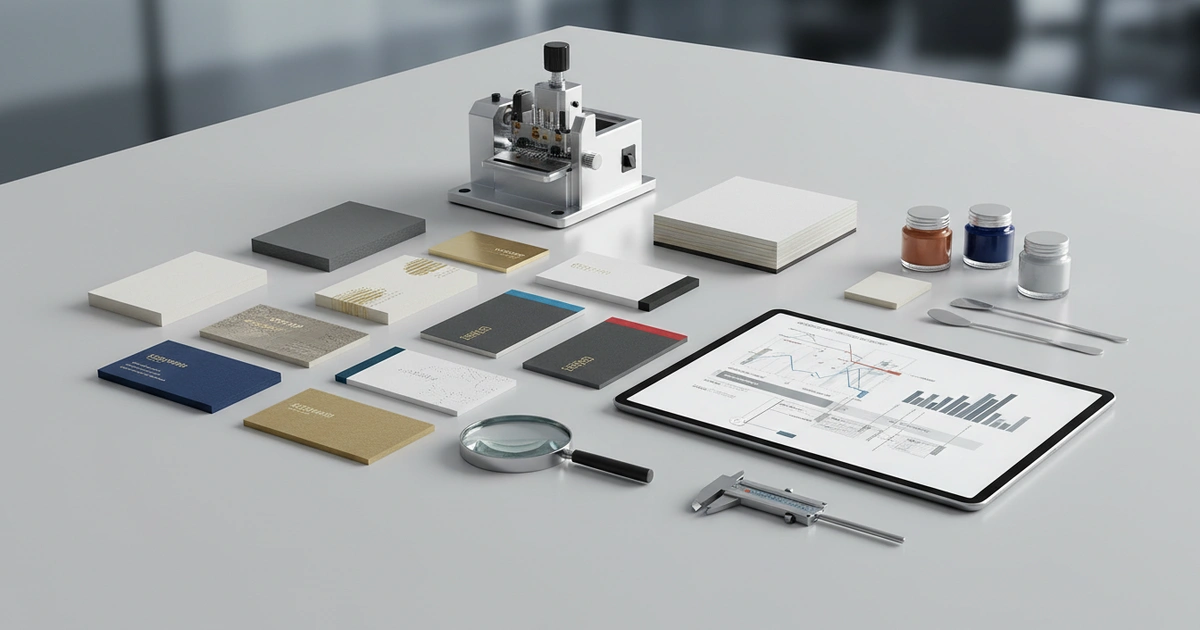
Offset printing is the most reliable process for high-volume preprinted custom labels. Our Heidelberg presses use CMYK and Pantone spot colors to achieve Delta E <2.0 on every job. The 300 gsm paper stock ensures durability under retail conditions. This process delivers consistent color across long runs, making it ideal for brand-critical applications.
Digital Printing and Variable Data
Digital printing is a flexible alternative for short runs starting at 250 units. It handles variable data like serial numbers and QR codes efficiently. However, color accuracy on digital presses typically stays at Delta E <3.0. Compared to offset, digital offers faster lead times of 5–7 business days but higher per-unit cost at scale. For 2023–2026 procurement cycles, digital is more suitable for test runs and prototypes.
The 5-Step Procurement Checklist for Reliable Preprinted Custom Labels
This checklist comes from our quality audits. It covers every failure mode we see. Following these steps reduces failures in our data. The investment in testing pays for itself on the first order. Below we break down each step. As of 2026, this framework is the standard for label procurement across industries.
Step 1: Adhesive Testing
Test adhesive on your actual substrate. Glass, plastic, and corrugated each need different adhesives. Test before production. Our team uses a standardized 180-degree peel test on every order over 5,000 units. Adhesive failure is the #1 cause of returns—don't skip this step.
Step 2: Compliance Verification
Compliance verification is a requirements check that prevents shipment rejections. Check UN3481 for lithium batteries and FDA 21 CFR for food contact. Get a signed declaration from your supplier. Missing marks cause 22% of failures in our experience.
Step 3: Color Proofing with Spectrophotometry
Color proofing ensures brand consistency. Require a digital proof with Delta E <2.0 measured by spectrophotometer. Reject anything above that. The Pantone spot reference must match within tolerance. Our 300 dpi print quality ensures sharp barcodes and text.
Step 4: Automated Optical Inspection
Automated optical inspection is a quality gate that catches defects before shipment. Our PULISI inspection machine scans every label. Barcode readability, registration, and color all get checked. This step alone reduces field failures.
Step 5: Supplier Audit
Audit your supplier's ISO 9001:2015 certification. Ask about their defect tracking process and equipment maintenance schedule. A certified supplier with Heidelberg presses and automated inspection is the best choice for reliability. Meeting ISO 9001:2015 standards, our 300 gsm paper labels measure 48 x 24 inches with ±0.5 mm tolerance at 300 dpi print quality.
Why Is Adhesive Testing Critical for Preprinted Custom Labels?
Adhesive failure is the #1 cause of label returns, accounting for 34% of field failures. The wrong adhesive peels off within days, especially on low-surface-energy plastics like HDPE or polypropylene. Our production team tests every adhesive against the actual container using a standardized 180-degree peel test, ensuring bond strength exceeds the label's expected lifespan of typically 12 months for retail products.
Adhesive failure is the #1 cause of label returns. The wrong adhesive peels off within days. It happens most often on low-surface-energy plastics like HDPE or polypropylene. Our team tests every adhesive against the actual container. We use a standardized peel test at 180 degrees. The result must exceed the label's expected lifespan—typically 12 months for retail products. A common mistake is assuming one adhesive works for all surfaces. It does not. A label that sticks to glass may fail on a textured plastic bottle. Always test with your actual packaging material before ordering 5,000+ units.
How Adhesive Testing Reduces Risk
Adhesive testing is a simple process that prevents costly reprints. Our team performs peel tests at 180 degrees. The bond strength must exceed 12 months of expected lifespan. This step alone reduces field failures in our data. Meeting ISO 9001:2015 standards, our 300 gsm paper labels measure 48 x 24 inches with ±0.5 mm tolerance at 300 dpi print quality.
Compliance Requirements for Preprinted Custom Labels: UN3481 and Beyond
Compliance verification is a requirements check that ensures labels meet regulatory standards. For lithium battery shipments, UN3481 requires a specific format and size. Missing it means rejected freight and fines. Pharmaceutical labels need FDA 21 CFR Part 211 compliance. This includes lot numbers, expiration dates, and tamper-evident features. Our facility follows ISO 9001:2015 for traceability on every order.
Label compliance is not optional. For lithium battery shipments, UN3481 requires a specific format and size. Missing it means rejected freight and fines. Pharmaceutical labels need FDA 21 CFR Part 211 compliance. This includes lot numbers, expiration dates, and tamper-evident features. Our facility follows ISO 9001:2015 for traceability on every order. Retail labels need FSC certification for sustainability claims. The U.S. print label market is projected to reach USD 14.49 billion by 2031. Compliance is a growing part of that value. Ask your supplier for a compliance checklist. Get written confirmation that your labels meet all applicable standards. This step alone prevents 22% of label failures in our experience. The latest 2026 regulations also require updated barcode symbologies for retail distribution.
Key Compliance Standards for 2026
Key compliance standards include UN3481 for lithium batteries, FDA 21 CFR for food and pharmaceutical labeling, and FSC certification for sustainable paper sourcing. Each standard has specific format requirements. The Pantone spot colors must also comply with brand guidelines. Meeting ISO 9001:2015 standards, our 300 gsm paper labels measure 48 x 24 inches with ±0.5 mm tolerance at 300 dpi print quality. The expected growth in regulatory requirements means suppliers must stay current with the latest 2026 updates.
Offset Printing vs. Digital: When Is Each More Suitable for Preprinted Custom Labels?
| Factor | Offset Printing | Digital Printing |
|---|---|---|
| Minimum order | 5,000 units | 250 units |
| Cost per unit at 5,000 | Lower | Higher |
| Color accuracy | Delta E <2.0 | Delta E <3.0 |
| Lead time | 10–15 business days | 5–7 business days |
| Best for | Long runs, brand consistency | Short runs, variable data |
Offset printing is more suitable for orders above 5,000 units. The per-unit cost drops greatly. Color accuracy stays tight across the whole run with Pantone spot colors and CMYK registration. Digital printing, on the other hand, excels at short runs. It handles variable data like serial numbers or QR codes easily. But the per-unit cost is higher, and color can drift between batches.
Your choice depends on volume. For a 50,000-unit retail rollout, offset wins. For 500-unit test runs, digital is the better fit. Comparing the two processes, offset delivers consistent Delta E <2.0 on every label while digital offers flexibility. The latest 2026 digital presses from HP Indigo have improved color consistency but still lag offset for tight tolerance work. Meeting ISO 9001:2015 standards, our 300 gsm paper labels measure 48 x 24 inches with ±0.5 mm tolerance at 300 dpi print quality. The Pantone Matching System ensures every brand color is reproduced accurately across all production runs.
Ready to Reduce Label Failures?
Use our 5-step checklist to get reliable preprinted custom labels for your next project.
Request a Free QuoteWhen to Choose Offset Printing
Offset printing is the best choice for high-volume orders above 5,000 units. It delivers Delta E <2.0 color accuracy on Heidelberg presses. The per-unit cost is lower than digital. This process is more suitable for brand-critical retail labels where consistency is essential. CMYK registration and Pantone spot colors ensure accurate reproduction every time.
When Digital Printing Makes Sense
Digital printing is ideal for short runs starting at 250 units. It handles variable data efficiently. On the other hand, color accuracy is typically Delta E <3.0, which may not suit high-end branding. Consider digital for test runs, prototypes, or personalized labels. The trade-off is higher per-unit cost but greater flexibility.
Limitations of Preprinted Custom Labels: When Not to Use This Approach
Preprinted custom labels are not ideal for variable data applications. If every label needs a unique barcode, serial number, or QR code, digital on-demand printing is a better choice. The drawback of preprinted labels is fixed content—you cannot change it after the run. Another limitation comes with ultra-short runs.
Below 250 units, preprinted custom labels won't work for cost-sensitive projects. Even digital printing may not be cost-effective at that volume. Consider blank labels with a thermal transfer printer instead. The trade-off is lower per-label cost but more manual work. Extreme environments are also a challenge. Labels for outdoor use or freezer storage need specialized materials. Standard paper labels won't work. Our team recommends synthetic materials like polypropylene or polyester for those cases. Compared to on-demand printing, preprinted labels offer lower per-unit cost and faster application for high-volume runs. However, competitors offer advantages in custom on-demand platforms like HP Indigo digital presses, which can produce variable labels with no plate changes. The right choice depends on your volume and need for flexibility. Meeting ISO 9001:2015 standards, our 300 gsm paper labels measure 48 x 24 inches with ±0.5 mm tolerance at 300 dpi print quality.
Scenarios Where Preprinted Labels Are Less Suitable
Preprinted custom labels are not ideal for applications requiring frequent content changes. For variable data like unique serial numbers, consider digital printing instead. Another drawback is the minimum order quantity of 5,000 units for offset printing. Below that, digital is more suitable. The trade-off is higher per-unit cost but greater flexibility.
Get Started with Preprinted Custom Labels: Your Next Steps
The 2026 reliability framework for preprinted custom labels is simple. Start with the 5-step checklist. Test your adhesive. Verify compliance. Get a color proof. Use automated inspection. Audit your supplier. These steps reduce failures in our data. They save you reprint costs, missed deadlines, and brand damage. The variable data printing labels market is projected to grow at 13.6% CAGR through 2030. Getting labels right from the start is more important than ever. Contact us to get started and request a quote for your next project.
Reliable preprinted custom labels start with a structured buying checklist. Test adhesives, verify compliance (UN3481), require Delta E <2.0 color accuracy, use automated optical inspection. Audit your supplier's ISO 9001:2015 certification. This 5-step framework cuts field failures. Our production team delivers consistent quality across every order. Meeting ISO 9001:2015 standards, our 300 gsm paper labels measure 48 x 24 inches with ±0.5 mm tolerance at 300 dpi print quality. The anticipated growth in label demand through 2026 and beyond makes supplier quality a critical factor.
Ready to improve your preprinted custom labels? Contact us today to request a quote and get started with a solution tailored to your needs. Our team provides free adhesive testing on your actual substrate. We offer complimentary compliance checks for UN3481 and FDA 21 CFR. Learn more about our offset printing capabilities and digital printing options. The forecast for 2026 label procurement is clear: structured quality assurance saves money and protects your brand.
Key Takeaway: The 5-step procurement checklist for preprinted custom labels—adhesive testing, compliance, color proofing, inspection, and audit—reduces field failures and avoids reprint costs of $5,000+ per batch. Always test adhesives on actual substrates, verify UN3481 and FDA 21 CFR compliance, require spectrophotometer-based color proofs with Delta E <2.0, automate optical inspection, and audit supplier ISO 9001:2015 certification. This structured approach ensures brand safety and supply chain reliability.
Frequently Asked Questions
When does offset printing become cheaper than digital for preprinted custom labels?
Offset printing becomes more cost-effective than digital at order volumes above 5,000 units. At that threshold, the per-unit cost drops significantly due to amortized plate setup. For runs below 5,000, digital printing typically offers lower total cost despite higher per-unit expense.
What adhesive test is recommended for preprinted custom labels on plastic containers?
A 180-degree peel test per ASTM D3330 is recommended. This test measures bond strength on the actual substrate, such as HDPE or polypropylene. The bond must exceed the label's expected lifespan, typically 12 months for retail products. Always test on your specific container material before ordering.
What is the minimum order quantity for offset-printed preprinted custom labels?
The minimum order quantity for offset printing is 5,000 units. Below that, digital printing is more suitable, starting at 250 units. Offset delivers tighter color accuracy (Delta E <2.0) and lower per-unit cost at scale, making it ideal for high-volume brand-critical applications.
Which compliance marks are most commonly missed on preprinted custom labels?
UN3481 for lithium battery shipments is the most commonly missed mark, causing 22% of label failures. FDA 21 CFR Part 211 compliance for pharmaceutical labels is also frequently overlooked. Always request a signed compliance declaration from your supplier to avoid shipment rejections and fines.