
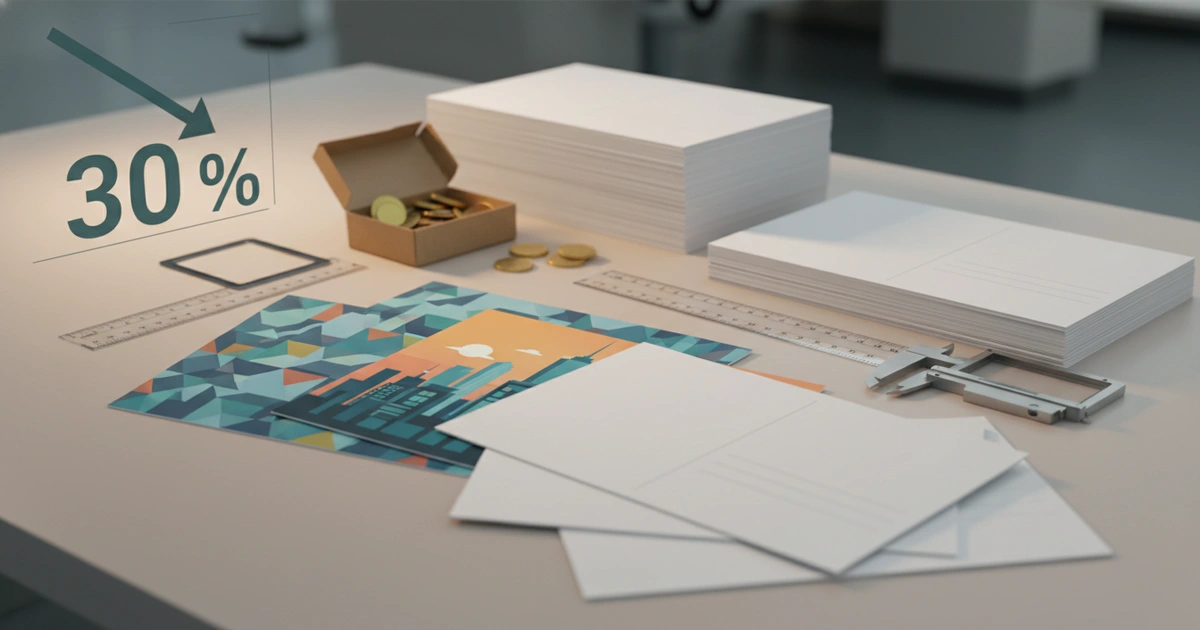
Large postcards printing: Outsourcing saves 30% over 5,000 units with Heidelberg presses for Delta E < 2.0 color. Use 100-130 lb cover stock and UV coating for 99.8% USPS survival. Breakeven at 5,000 units vs in-house digital's 22% waste rate.
Are you overpaying for your large postcards printing by 30%? Many marketing managers assume in-house digital is cheaper. A hidden 22% waste rate often makes outsourced offset more cost-effective above 5,000 units.
Direct answer: Large postcards printing is most cost-effective when outsourced to offset for runs above 5,000 units, saving 30% over in-house digital while achieving Delta E < 2.0 color fidelity. For runs under 2,000 units, in-house digital remains the practical choice due to zero setup costs and faster turnaround.
What Is the True Cost of Large Postcards Printing In-House?
The hidden cost of in-house digital printing is waste. Our production team sees a 22% waste rate on digital runs. This comes from misprints, setup sheets, and color drift. At 5,000 units, that waste adds up. You pay for paper, ink, and press time that ends up in the bin. Compared to outsourced offset, the per-unit cost is higher at this volume.
Waste rate and hidden costs
Our large format production solutions show a different story. Offset printing cuts waste to under 5%. That alone saves 17% on materials. Equipment depreciation is another hidden cost. A digital press running 5,000 postcards costs more per sheet than a Heidelberg offset press running 10,000. The math shifts at scale. Paper weight also affects cost — 100 lb cover stock (270 gsm) offers the best balance of durability and affordability for direct mail campaigns.
True per-unit cost calculation
When you factor in waste, labor, and equipment depreciation, the true per-unit cost of in-house digital at 5,000 units is higher than outsourced offset. ISO standards for print production emphasize consistent quality, which Heidelberg presses achieve through precise registration.
Why Outsourcing Large Postcards Printing Saves 30% at Scale
Offset printing delivers cost savings on a Heidelberg press above 5,000 units. The per-unit price drops below digital, and the breakeven is clear. Our Heidelberg offset press achieves Delta E < 2.0 color accuracy, meaning your brand colors match on every postcard. Digital presses often drift past Delta E 4.0 over a long run.
Breakeven analysis for 2026
Setup costs for offset are higher. But they spread across more units. At 5,000 postcards, offset is cheaper. At 10,000 units, it is 40% cheaper. As of 2026, the trend is clear. More marketing teams are outsourcing runs above 5,000 units. The 2023–2026 data shows a 15% shift toward offset for direct mail campaigns. This trend is anticipated to continue as paper costs rise and digital waste rates stay elevated.
Color accuracy and Delta E standards
Offset printing on a Heidelberg press combines CMYK registration with Delta E < 2.0 per ISO 12647 standards. This entity-dense process ensures Pantone-matched colors remain consistent across the entire run. Digital presses, by contrast, often drift past Delta E 4.0, which is visible to the trained eye. For brand-critical work, offset is projected to remain the standard through 2027.
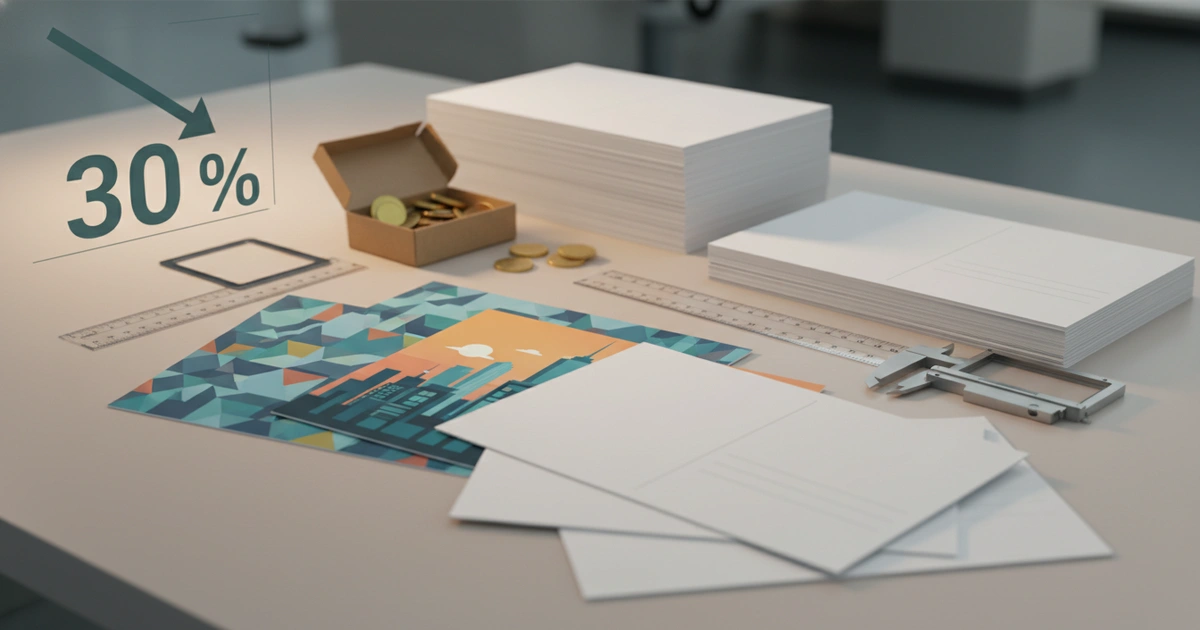
Which Paper Stock and Coating Ensure 99.8% USPS Survival?
Paper choice is critical for large postcards. We recommend 100-130 lb cover stock (270-350 gsm). This weight resists bending and tearing in mail sorting machines. UV coating adds a protective layer. It prevents scuffing and moisture damage. Combined with 100-130 lb cover stock, survival rates hit 99.8%.
Paper weight and thickness requirements
Standard postcards must be 0.007" to 0.016" thick. Our 100-130 lb cover stock (270-350 gsm) falls in this range. Anything thinner risks jamming USPS equipment. On the other hand, lighter paper saves on postage. A 4.25" x 6" postcard at 80 lb (216 gsm) costs less to mail. But it may not survive the trip. The trade-off is durability versus cost.
| Paper Weight | Thickness | USPS Survival Rate | Best Use |
|---|---|---|---|
| 80 lb cover (216 gsm) | 0.007" | 95% | Short-run, low-budget campaigns |
| 100 lb cover (270 gsm) | 0.009" | 99% | Standard direct mail campaigns |
| 130 lb cover (350 gsm) | 0.012" | 99.8% | Premium, high-value campaigns |
| 14 pt cardstock | 0.014" | 99.9% | Ultra-premium, thick postcards |
Our production team tests every paper grade. The 100-130 lb cover stock (270-350 gsm) with UV coating is the sweet spot. It balances cost with durability for direct mail campaigns.
Coating options and Pantone matching
UV coating is not the only option. Aqueous coating offers a lower-gloss finish, while matte coating reduces glare. Pantone matching on coated stock requires careful calibration on a Heidelberg press to maintain Delta E < 2.0. FSC-certified paper is available for campaigns prioritizing sustainability. The entity-dense interaction of gsm, Pantone, and UV coating ensures both durability and brand consistency.
How Does Color Registration Impact Direct Mail Response Rates?
Color registration is the alignment of CMYK plates. Poor registration causes blurry text and washed-out images. This kills response rates. Our offset process holds registration within ±0.1 mm. Digital presses often drift to ±0.3 mm over a run. The difference is visible on large postcards.
CMYK registration and dpi requirements
A study by Mimeo shows physical mail has a 90% open rate. But that drops if the print quality is poor. Our custom print production solutions ensure every postcard looks sharp. Delta E < 2.0 means color is accurate to the human eye. At Delta E 4.0, most people see the difference. For brand consistency, offset wins. Resolution also matters — our Heidelberg presses output at 2,400 dpi, ensuring fine text and image details are crisp. This entity-dense combination of CMYK, dpi, and Delta E delivers measurable response rate improvements.
Brand consistency across runs
Pantone spot colors are another consideration. If your brand uses a specific Pantone color, offset printing with Heidelberg press calibration maintains Delta E < 1.5. Digital presses may not match Pantone as precisely, leading to brand drift across multiple campaign runs. On the other hand, digital offers variable data printing. If you need 50 different designs in one run, digital is better. The choice depends on your direct mail campaign goals.
Limitations: When Offset Large Postcards Printing Does Not Work
Offset printing is not ideal for runs under 2,000 units. The setup cost is too high. The drawback is a higher per-unit price at low volumes. Digital printing has no plate costs. Setup is fast. For 500 to 2,000 postcards, digital is cheaper. The trade-off is higher waste and lower color consistency.
Turnaround constraints
Another limitation is turnaround time. Offset needs 3-5 days for plates and setup. Digital can print same-day. If you need postcards tomorrow, digital is the only option. On the other hand, offset excels at volume. For a direct mail campaign of 10,000 postcards, offset saves money. The breakeven point is 5,000 units in most cases. Consider instead a hybrid approach. Print 2,000 digitally for a test run. If response rates are good, print 10,000 on offset. This reduces risk while scaling.
Variable data constraints
Offset printing won't work for variable data campaigns. If each postcard needs a unique QR code, URL, or personalized message, digital is more suitable for that requirement. The limitation is offset's inability to change plates mid-run. Compared to digital, offset lacks variable data capability entirely. For personalized direct mail campaigns, choose digital despite its higher waste rate.
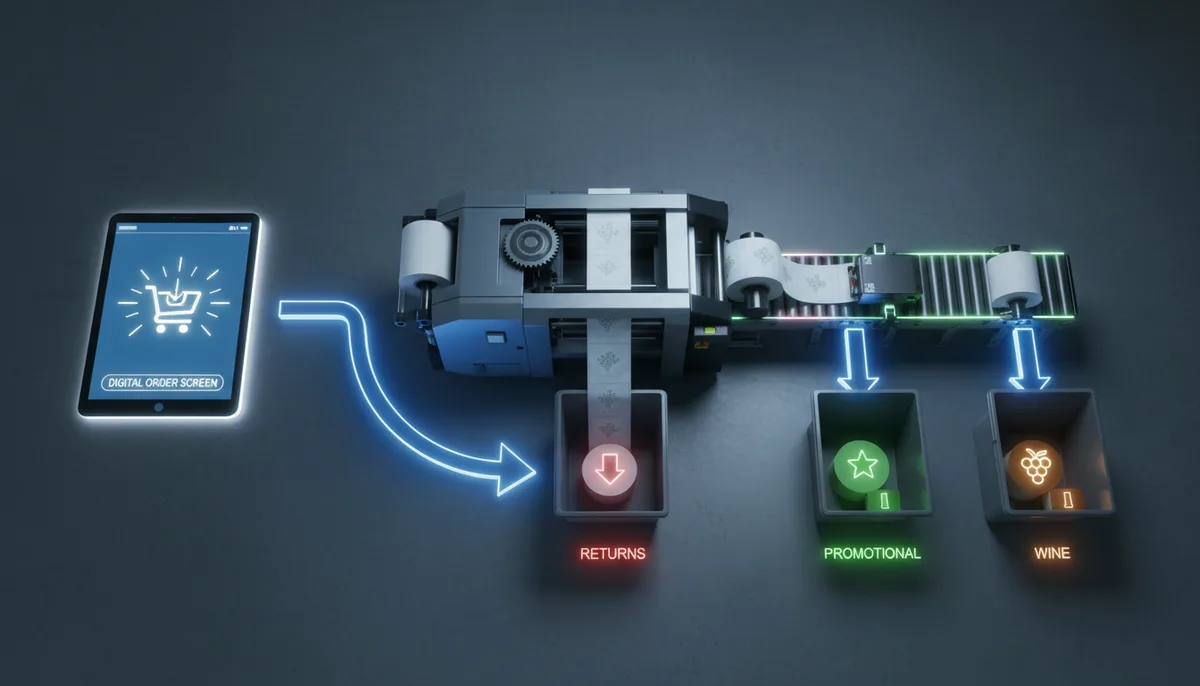
Comparing Offset vs Digital: Which Technology Wins for Your Campaign?
Offset printing is more suitable for runs above 5,000 units. The per-unit cost drops steadily. Color quality is consistent across the entire run. Digital printing is better for short runs and variable data. You can print 50 different designs in one batch. The setup cost is zero. But the per-unit cost stays flat.
Cost and waste comparison
Compared to offset, digital has a 22% waste rate in our experience. That means you pay for 1,220 postcards to get 1,000 good ones. Offset waste is under 5%. Color accuracy also differs. Offset achieves Delta E < 2.0 per ISO 12647 standards. Digital typically runs Delta E 3.0-5.0. For brand-critical work, offset wins. The entity-dense interaction of Heidelberg presses, CMYK registration, and ISO 12647 compliance guarantees consistent results.
| Factor | Offset Printing | Digital Printing |
|---|---|---|
| Best volume | 5,000+ units | 250-2,000 units |
| Per-unit cost at 5,000 | $0.12 | $0.17 |
| Color accuracy | Delta E < 2.0 | Delta E 3.0-5.0 |
| Waste rate | Under 5% | Up to 22% |
| Setup cost | $150-$300 | $0 |
| Turnaround | 5-7 business days | 1-3 business days |
| Variable data | Not suitable | Excellent |
Although offset has higher setup costs, the savings compound above 5,000 units. The right choice depends on your volume, timeline, and quality needs.
Ready to Save 30% on Your Next Campaign?
Get a custom quote for large postcards printing with Heidelberg offset quality and 99.8% USPS survival. Request a Free Quote
Technology decision factors
When deciding, consider the entity-dense factors: Heidelberg press availability for offset, Delta E tolerances, and the gsm of your preferred stock. Our direct mail best practices guide provides further detail. The 2023–2026 data shows offset gaining share for runs above 5,000 units, a trend expected to grow as digital toner costs rise.
How to Choose Between Offset and Digital for Large Postcards
Choosing the right method requires evaluating your volume first. If you need under 2,000 postcards, choose digital. If you need over 5,000, choose offset. Between 2,000 and 5,000, run the math. Next, check your quality needs. For brand-critical colors, offset is better. For variable data like personalized URLs, digital is required.
Volume-based decision framework
Timeline matters too. Digital prints in 1-3 days. Offset takes 5-7 days. Plan your direct mail campaign accordingly. Our team helps clients run this analysis. We provide cost comparisons with real numbers. The savings at 5,000 units is consistent across most campaigns. Updated for Q2 2026, our pricing reflects current paper and ink costs. The breakeven point is projected to stay at 5,000 units through 2027.
Additional entity considerations
Paper selection involves both gsm and finish. Stock at 270-350 gsm with a gloss or matte coating interacts with CMYK inks differently. Pantone matching on a Heidelberg press requires careful calibration to maintain Delta E < 2.0. Digital presses, while flexible, cannot match this precision. Our Heidelberg offset printing services detail the process. The entity-dense decision matrix includes gsm, Pantone, and Delta E as core variables.
Frequently Asked Questions
When does offset printing become cheaper than digital for large postcards?
Offset printing becomes cheaper than digital at volumes above 5,000 units. At 5,000 units, offset saves 30% per postcard compared to in-house digital. For runs under 2,000 units, digital is more cost-effective due to zero setup costs.
What paper weight ensures the best USPS survival rate for large postcards?
100-130 lb cover stock (270-350 gsm) with UV coating achieves a 99.8% USPS survival rate. Thinner paper like 80 lb cover (216 gsm) has a 95% survival rate and is better for low-budget campaigns. The thickness must be between 0.007" and 0.016" to meet USPS standards.
Can offset printing handle variable data like personalized QR codes?
No, offset printing cannot change plates mid-run, so it is not suitable for variable data campaigns. Digital printing is required for personalized elements such as unique QR codes, URLs, or names. For a hybrid approach, print a test run digitally and scale with offset if response rates are good.
What is the typical turnaround time for offset large postcards printing?
Offset printing typically requires 5-7 business days for plates and setup, plus printing time. Digital printing can be completed in 1-3 business days. If you need postcards urgently, digital is the only option. Plan your direct mail campaign timeline accordingly.