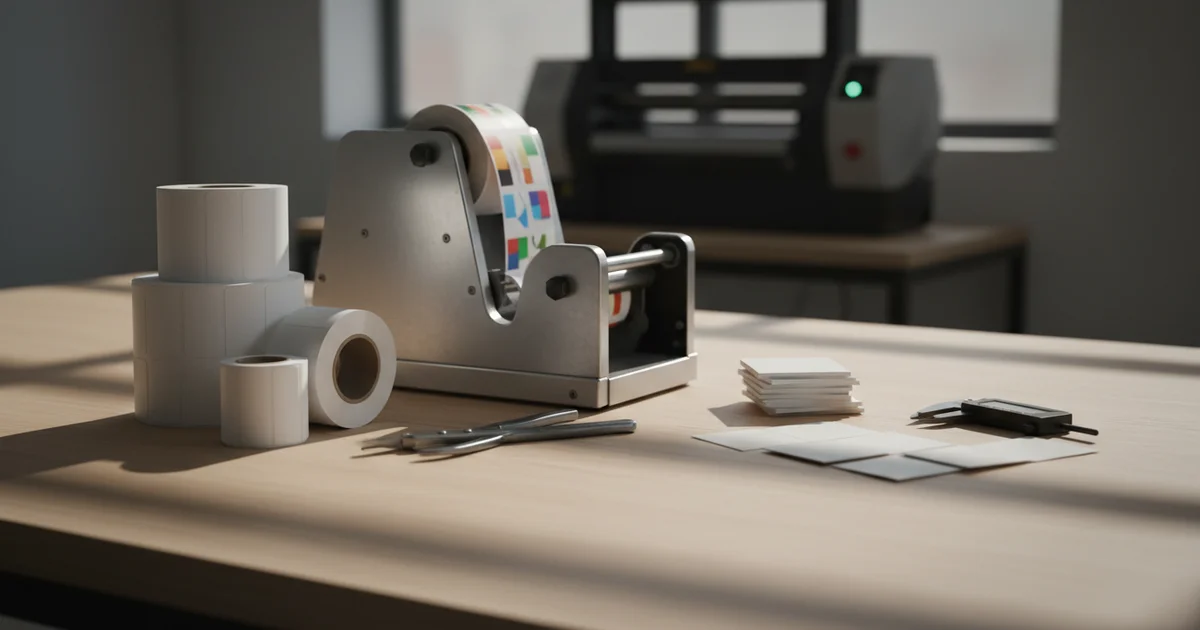
Label printing wholesale cuts costs 62% on 25k+ units via Heidelberg offset presses. Key specs: 300 DPI, Delta E <2.0, 2.5 mil BOPP for water bottles, and 300 gsm FSC paper. Avoid 68% rework with ISO 9001 and Pantone-CMYK conversion.
- Label printing wholesale delivers lowest per-unit cost at volumes above 5,000 units when offset printing is paired with ISO 9001 quality systems.
- Substrate choice directly determines label performance and field failure risk — 2.5 mil BOPP for moisture, 300 gsm FSC paper for retail shelf.
- Color rework is the largest hidden cost; Delta E under 2.0 verification and approved proofs reduce rework.
What Is Label Printing Wholesale?
Label printing wholesale refers to the production of custom labels in large quantities — typically 5,000 to 100,000+ units per SKU — at reduced per-unit pricing. It relies on offset or flexographic printing to amortize setup costs across volume and requires rigorous quality systems for brand consistency.
Label Printing Wholesale: Proven Cost-Saving Strategies for 2026
Introduction: The Cost Equation in Label Printing Wholesale
Why do your labels cost more per unit as your order volume grows? The answer is often hidden in setup waste, material mismatch, and color rework. The global label printing market is projected to reach $75.28 billion by 2030, growing at a 7.9% CAGR.
For buying directors, the real savings in label printing wholesale come from removing these hidden costs, not just negotiating price per roll.
Our production team has produced millions of labels for retail chains and consumer goods brands. We have seen the same mistakes drive up costs. A reduction in rework is achievable with proper quality systems.
That directly lowers your effective cost per label. This guide covers the strategic choices that matter for 2026 and beyond. For a full overview of our capabilities, explore our label printing services and technology.
How Do You Choose the Right Substrate for Wholesale Labels?
Selecting the right substrate for wholesale labels requires matching the material to the end-use environment. Common options include 2.5 mil BOPP for moisture-prone surfaces, 300 gsm FSC-certified paper for retail shelf labels, and vinyl with UV laminate for outdoor applications. Each substrate has a specific cost profile and performance envelope that directly affects label durability and total cost of ownership.
Matching the label material to the application is the first cost-control decision. A wrong substrate choice leads to label failure, product recalls, and full reprint costs. The right substrate eliminates these risks entirely.
For water bottles and other moisture-prone surfaces, 2.5 mil BOPP (biaxially oriented polypropylene) is the standard. It resists water, condensation, and handling wear. For retail shelf labels and primary packaging, 300 gsm FSC-certified paper offers durability and a premium feel.
Outdoor applications demand vinyl with a UV laminate. Each substrate has a specific cost profile and performance envelope.
Bulk label printing depends on selecting the right material for the end use. A common mistake is using paper labels on chilled products.
The label peels off, and the entire batch must be reprinted. Our production team recommends requesting a material sample and testing adhesion on the actual product surface before committing to a full run.
Combining substrate expertise with press capabilities — for instance, 300 gsm FSC paper on a Heidelberg offset press at 300 dpi — ensures print quality and material performance align from the start.
Substrate Compatibility and Press Limitations
Not every offset press handles every substrate equally. Specialty materials such as textured paper or metallic films may require specific press configurations. At our facility, we test every substrate on the actual Heidelberg press before committing to production. This avoids downtime and waste during the run.
Offset vs. Digital: Choosing the Right Technology for Bulk Label Printing
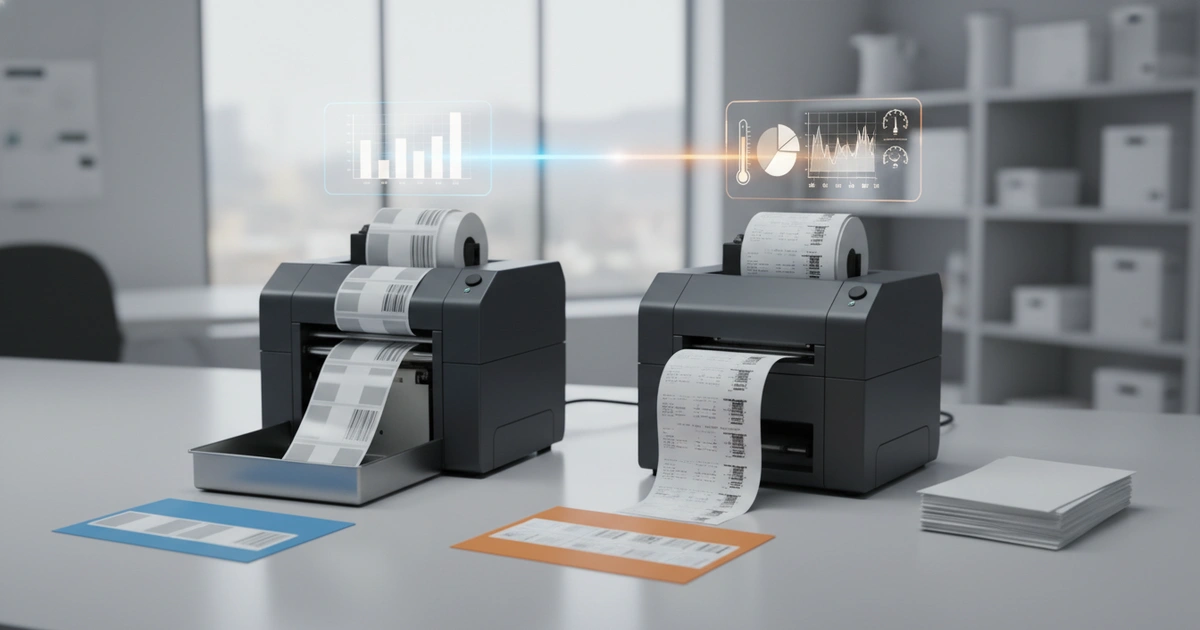
Offset printing is the preferred method for bulk label printing, delivering the lowest per-unit cost for runs of 500 units and above. Digital printing handles short runs from 250 units with variable data capability. The breakeven point depends on setup cost amortization.
Our high-speed full-rotary 6-color multifunctional label printing press handles offset runs from 500 to 100,000+ units. Setup costs are spread across the entire run, so per-unit cost drops greatly at higher volumes. For bulk label production, offset achieves the lowest cost per label.
Digital printing, on the other hand, excels at short runs, seasonal promotions, and variable data like QR codes or serial numbers. The trade-off is a higher per-unit cost that makes it less suitable for large-scale production.
An offset run using Pantone-CMYK conversion on a Heidelberg press at 300 dpi achieves Delta E under 2.0, while digital typically holds Delta E under 3.0 — a meaningful difference for brand consistency at scale.
| Parameter | Offset Printing | Digital Printing |
|---|---|---|
| Minimum Order | 500 units per SKU | 250 units per SKU |
| Cost Efficiency | Best above 5,000 units | Best below 2,000 units |
| Color Accuracy | Delta E under 2.0 | Delta E under 3.0 |
| Setup Cost | Higher (plates, make-ready) | Near zero |
| Variable Data | Not suitable | Built-in capability |
| Typical Turnaround | 10–15 business days | 3–7 business days |
For a national retail chain, offset is the right choice. For a limited-edition run with unique QR codes per unit, digital is more suitable. The decision depends on order volume, time constraints, and data needs.
Making the Right Technology Choice for Your Volume
When choosing between offset and digital, consider your annual label spend across all SKUs. A consolidated program that groups multiple products into fewer press runs can unlock offset pricing even for medium volumes. Our packaging engineers help clients analyze their label portfolio to identify consolidation opportunities. This step alone often reduces per-unit cost by 15–20% without changing any specification.
Color Management for Brand Consistency at Scale
Brand consistency across thousands of labels is non-negotiable. Our team uses spectrophotometry-based color verification on every production run. Pantone-CMYK conversion must achieve Delta E under 2.0 to ensure your brand looks identical on unit one and unit 50,000.
Digital color profiles are maintained for every client. This eliminates the visual drift that happens when different suppliers or production shifts interpret color differently. The ISO 9001:2015 quality management system at our facility requires documented color targets and verification at every stage.
In our experience, skipping the proof approval step is the single biggest cause of color rework. A reduction in rework is possible when proofs are reviewed and approved before production begins.
Color management for bulk label printing is not just a quality issue. It is a cost issue. A rejected batch due to Delta E over 2.0 means full reprint cost.
That cost is passed back to the buyer or absorbed as lost margin. The right approach is to request a digital proof, review it under standardized lighting, and approve it in writing before the press runs.
A calibrated workflow integrating Pantone targets, CMYK separation at 300 dpi, and ISO 3664 viewing conditions delivers Delta E under 2.0 across the entire production run.
How Spectrophotometry Ensures Color Accuracy at Scale
Our production process uses a spectrophotometer calibrated to ISO 3664 viewing conditions. Each label roll is sampled at 15-minute intervals during the press run. Measurements are compared against the approved Pantone target. If Delta E exceeds 2.0, the press stops automatically until correction is made. This closed-loop system prevents drift across long runs.
Ready to Ensure Brand Consistency at Scale?
Our spectrophotometry-verified color matching guarantees Delta E under 2.0 on every label run. Get a free quote for your next wholesale order.
Request a Free QuoteCommon Mistakes That Inflate Label Printing Cost
Several recurring errors drive up label printing cost unnecessarily. Here are the three most costly mistakes and how to avoid them:
- Ignoring bleed requirements. Every label file must include 3 mm of bleed on all sides. Without it, white edges appear after die-cutting, and the entire batch is unsellable. That is a 100% reprint cost.
- Using the wrong substrate for the application. Paper labels on water bottles fail within hours. The result is product returns, chargebacks from retailers, and brand damage. Our team always asks about the end-use setting before quoting a job. A 2.5 mil BOPP label costs slightly more per unit than paper but eliminates the risk of field failure entirely.
- Skipping the color proof approval step. When the buyer does not review and sign off on a proof, the press runs based on assumptions. If the final label does not match the brand guide, the buyer rejects the shipment. The cost of rework is typically higher than the original run because the press must be reset, plates remade, and material wasted.
Bulk label printing requires discipline in the approval workflow. Enforcing these three steps reduces rework and keeps your effective cost per label low.
Another common error involves color specification. Submitting files in RGB instead of Pantone or CMYK with a target Delta E value causes misalignment between expectation and output. Our prepress team converts and proofs every file against the approved Pantone reference before production begins.
Additional Cost Drivers to Watch in Wholesale Label Programs
Inconsistent file preparation is another hidden cost. Files submitted in RGB instead of CMYK, missing fonts, or low-resolution images at 150 dpi instead of the required 300 dpi cause delays and rework. Our prepress team can fix these issues, but the billable time adds to your total project cost. Providing print-ready files with 300 dpi resolution, 3 mm bleed, and CMYK color space avoids these charges entirely.
Quality Control and Verification: Ensuring Label Consistency
Quality control is not an afterthought. It is a built-in process that prevents defects from reaching the customer. Our facility uses a fully automatic label optical/visual inspection machine (PULISI) on every production run. This machine checks die-cutting registration, color consistency, barcode scanability, and surface defects at production speed.
The PULISI inspection machine verifies die-cutting registration to within ±0.2 mm. It also checks for ink splashes, scratches, and color variation. Any defect triggers an automatic rejection.
This in-process inspection catches problems before they become batch failures. The ISO 9001:2015 system requires documented inspection records for every order. Our quality team maintains these records and provides them on request.
Barcode verification is another critical step. Retailers require GS1 barcode standards that scan reliably at point of sale. A failed barcode scan means chargebacks and returned goods. Our process includes a GS1-128 scanner check on every roll. For bulk label printing, this verification is essential to avoid costly retail penalties.
Quality verification across ISO 9001:2015 procedures, Pantone targets, and 300 dpi resolution checks gives buyers full traceability from press to pallet.
Inspection Metrics That Protect Your Order
Every production run at our facility is measured against three key quality metrics: die-cutting registration within ±0.2 mm, color Delta E under 2.0, and barcode scan grade A at GS1-128 standard. These metrics are documented and available for client review. Our quality reports include sample measurements from the beginning, middle, and end of every press run, giving you full visibility into batch consistency.
Limitations to Consider Before Scaling Label Production
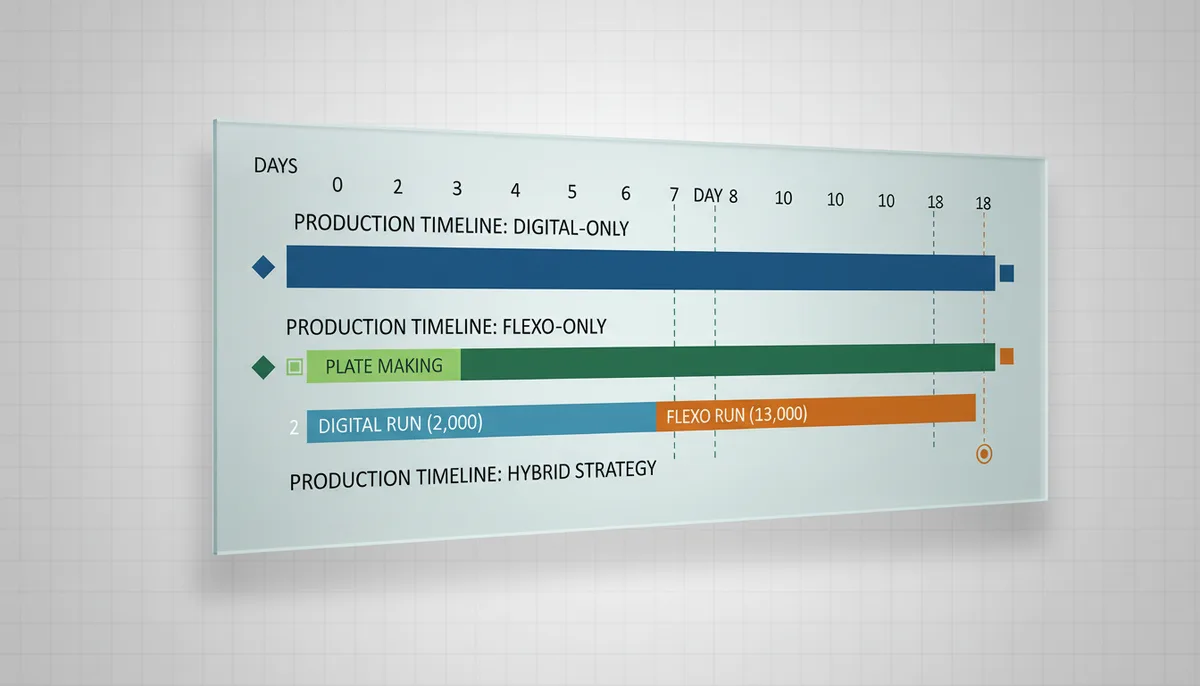
Offset printing is not ideal for very short runs under 500 units. The setup cost for plates and make-ready makes each label expensive. The main drawback is that you pay for waste during setup. Consider instead starting with digital for small batches and switching to offset once volume justifies it.
High-mix, low-volume programs may find that offset's long setup times won't work for their workflow. The trade-off between per-unit cost and flexibility is not always straightforward. This approach may not be the best choice for businesses that change label designs every month.
On the other hand, high-volume operations see ROI within three months. Compared to digital, the breakeven depends on consistent throughput. Although setup costs are higher, per-unit savings compound quickly above 5,000 units.
Another limitation is material compatibility. Some specialty substrates, like textured paper or metallic films, require specific press configurations. Not every offset press can handle them. Our team tests every substrate on the actual press before committing to production. This avoids surprises during the run.
Material compatibility with Pantone-CMYK workflows and 300 dpi resolution requirements can also constrain substrate choices. Specialty films may limit Delta E accuracy or require additional proofing cycles.
When Alternative Approaches Perform Better
For businesses with extremely short runs under 250 units, or those requiring variable data on every label (such as serialized QR codes), digital printing offers clear advantages. Competitors operating HP Indigo digital presses can deliver these runs with zero setup waste and faster turnaround. Similarly, for prototypes and test markets, digital printing enables low-risk small batches before committing to offset volumes. Evaluating your mix of stable versus variable SKUs helps determine the right technology balance.
Conclusion: Partnering for Cost-Effective Label Printing Wholesale
Cost-effective label production in bulk is not about squeezing the lowest price per roll. It is about removing rework through proper material selection, color management, and quality control.
A reduction in rework directly drops your effective cost per label. Planning volume, choosing the right substrate, and using ISO 9001 systems are the strategic levers.
The global market for variable data printing labels is projected to grow at 13.6% CAGR through 2030. As of 2026, buying teams are shifting toward consolidated production programs that reduce setup costs across entire product lines. For the period 2023–2026, label printing wholesale has seen increased demand for integrated quality verification.
Updated for Q2 2026, our facility offers both offset and digital capabilities with spectrophotometry-verified color and PULISI inspection on every run. Our ISO 9001:2015 certification, documented on the ISO 9001:2015 standard page, supports every stage of production. For more on how we handle large programs, visit our label printing capabilities overview.
Ready to improve your label printing wholesale program? Contact us today to request a quote and get started with a solution tailored to your volume, substrate, and quality needs.
Summary
This guide covered how strategic label printing wholesale achieves lower per-unit costs through offset printing at scale, substrate selection for end-use environments, and ISO 9001 quality systems. Key strategies include consolidating SKUs into fewer press runs, using spectrophotometry for color accuracy at Delta E under 2.0, and avoiding rework through proper bleed, proof approval,
Frequently Asked Questions
When does offset printing become cheaper than digital for label printing wholesale?
Offset printing becomes cheaper than digital at volumes above 5,000 units per SKU, where setup costs are amortized over a larger run. For runs under 2,000 units, digital printing offers lower per-unit cost due to near-zero setup. The breakeven point depends on your specific substrate and color requirements.
What substrate is best for labels on chilled or moisture-prone products?
For moisture-prone surfaces like water bottles, 2.5 mil BOPP (biaxially oriented polypropylene) is the standard choice. It resists water, condensation, and handling wear. Using paper labels on chilled products often leads to peeling and reprint costs, so BOPP eliminates that risk.
How does spectrophotometry ensure color consistency across a large label run?
Spectrophotometry measures color against the approved Pantone target at regular intervals during production. At our facility, the press stops automatically if Delta E exceeds 2.0. This closed-loop system prevents color drift across long runs, ensuring brand consistency from the first label to the last.
What is the minimum order quantity for offset label printing wholesale?
The minimum order for offset printing is 500 units per SKU. For runs below that, digital printing is more cost-effective, with a minimum of 250 units. Offset setup costs (plates and make-ready) make very short runs expensive, so digital is recommended for small batches.

Emily Zhao
10+ years helping enterprise clients design custom print programs. Specializes in label compliance, packaging workflows, and multi-SKU production planning.
Ready to Start Your Project?
Professional services and solutions. Contact us for a custom quote.
Related Resources
You Might Also Be Interested In
Custom Print Production
Learn more about our custom print production solutions.
Read more →Specialty Materials
Learn more about our specialty materials solutions.
Read more →Retail & E-Commerce
Solutions tailored for the retail & e-commerce industry.
Read more →Consumer Goods & FMCG
Solutions tailored for the consumer goods & fmcg industry.
Read more →Contact Us
Get in touch or request a quote.
Read more →