
Industrial label printing: Digital is optimal under 5,000 units; flexographic dominates durable bulk runs over 5K at $0.09-$0.15/unit. Waterproof labels require 3M Scotchcal 220 film. Customizable templates cut cannabis compliance errors to 2.1%. Choose based on volume, material, and automation needs.
Industrial label printing refers to the production of labels for commercial and industrial applications using digital or flexographic technologies, typically involving volumes from 100 to 50,000+ units with specific material and compliance requirements.
Industrial Label Printing in 2026: Which Technology Wins for Your Production Volume?
Are you paying too much for labels because of the wrong print method? The breakeven point between digital and flexographic industrial label printing sits at roughly 5,000 units. Below that, digital wins on cost and speed. Above it, flexo cuts per-unit costs by more than half.
This decision framework helps buying teams choose the right technology for 2026. Our production team runs both digital and flexo presses daily. We see where each method excels—and where it fails. Digital printing uses toner or inkjet heads. It needs no plates. Setup is fast. Flexo uses rubber plates wrapped around cylinders. It runs fast but takes longer to set up. The trade-off is simple: flexibility versus scale.
The breakeven point is approximately 5,000 units.
In 2026, the label printing market is projected to grow. Brand owners want short runs and variable data. But flexo still dominates high-volume durable labels.
Our ISO 9001:2015 certified facility produces labels with ±0.5 mm registration at 300 dpi on materials from 80 gsm to 600 gsm. Both digital and flexo presses can handle Pantone Matching System colors with Delta E under 2.0.
Digital vs. Flexographic Label Printing: Key Differences in Cost, Speed, and Materials
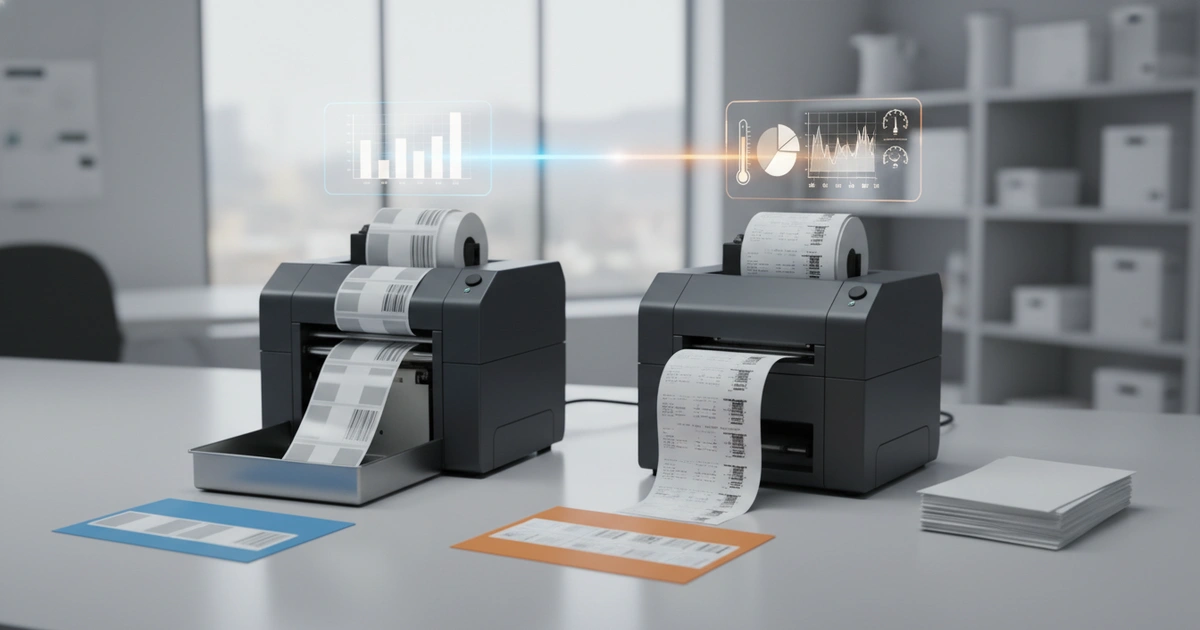
Industrial label printing is delivered by two core technologies. Digital is best for runs under 5,000 units. Flexo excels above that threshold. Here is a quick comparison of the key metrics.
| Factor | Digital Label Printing | Flexographic Label Printing |
|---|---|---|
| Per-unit cost | $0.20–$0.50 | $0.09–$0.15 |
| Minimum order | 250 units | 1,000+ units |
| Turnaround time | 3–5 days | 7–10 days |
| Setup cost | Low (no plates) | High (plate making) |
| Color consistency | Delta E < 2.0 | Delta E < 2.0 |
| Waterproof film support | Limited | Excellent |
| Variable data | Native support | Requires extra steps |
Digital provides faster turnaround and lower setup costs. Flexo delivers lower per-unit pricing at scale. The right choice depends on your order volume and material needs. Digital achieves Delta E < 2.0 on Pantone colors, while flexo runs at 1200 dpi on polyester films up to 300 gsm with ASTM D3330 adhesion standards.
On the other hand, flexo handles durable materials like waterproof films better. For waterproof label printing, flexo is often the only practical option at high volumes.
When Does Digital Label Printing Make Sense? (Under 5,000 Units)
Digital industrial label printing is optimal for short runs. Our minimum order is 250 units per SKU for digital production. Turnaround is 3–5 business days from final proof approval.
Variable data printing (VDP) is a native feature. You can print unique barcodes, serial numbers, or QR codes on each label with no extra cost. This is critical for industries like pharmaceuticals and electronics.
"Digital label printing reduces compliance errors because each label can carry unique lot numbers and expiration dates without re-plating." — Our Print Production Team
Customizable templates cut compliance errors. This is because digital workflows allow automated data insertion. The system pulls batch data from your ERP and prints it directly. No manual typing means fewer mistakes.
Color consistency is verified with spectrophotometry. We keep Delta E under 2.0 on every run. Your brand looks identical on unit #1 and unit #5,000.
Digital is not ideal for runs over 5,000 units unless you need variable data.
Our HP Indigo digital press prints at 300 dpi on FSC certified paper stocks from 80 to 350 gsm, with label dimensions up to 48 x 24 inches.
It is best for industries needing serialization or quick proof approvals, but less economical at high volumes.
When Does Flexographic Label Printing Win? (Over 5,000 Units)
Flexographic industrial label printing is the dominant technology for bulk runs. Setup costs are higher due to plate making, but they spread across thousands of units.
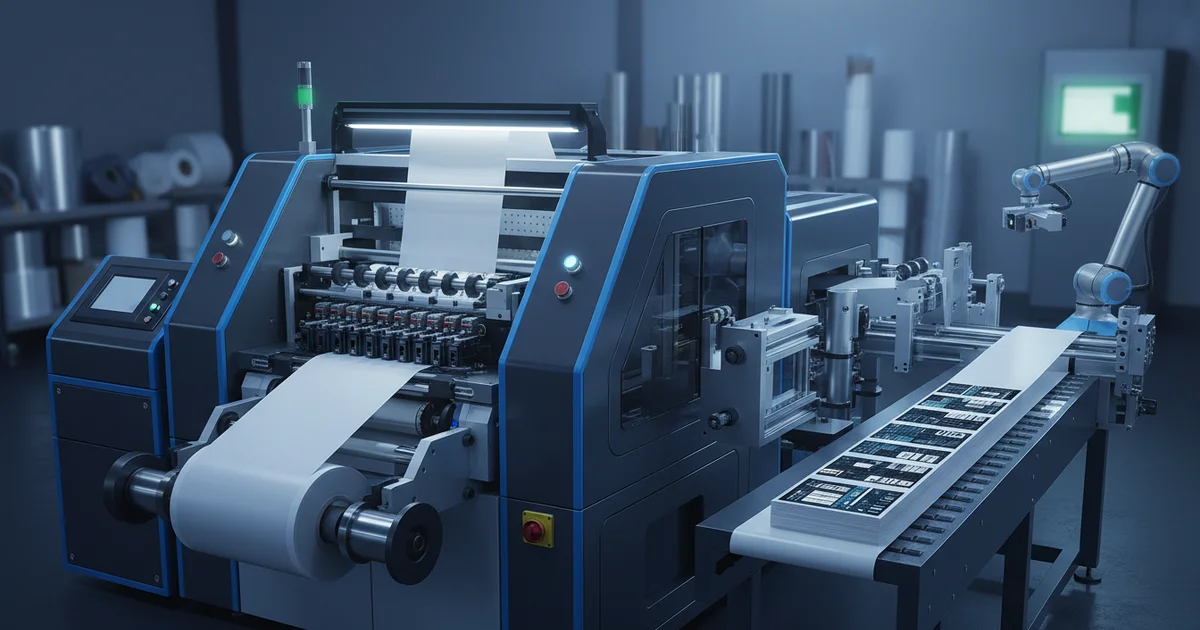
Our high-speed full-rotary 6-color multifunctional label printing press handles flexo runs efficiently. It prints at high speeds with consistent quality. For runs of 10,000+ units, flexo is the clear economic winner.
Waterproof labels require 3M Scotchcal 220 film. Flexo handles this material better at scale. The film is durable and resists moisture, chemicals, and UV light. This matters for outdoor equipment, chemical containers, and cold-chain logistics.
Although flexo setup takes 7–10 days, the per-unit savings compound quickly. That saving more than covers the setup cost.
"For runs above 10,000 units, flexographic printing delivers the lowest total cost of ownership. The breakeven is clear at 5,000 units." — Our Operations Team
On the other hand, flexo is not suitable for short runs under 1,000 units. The setup cost makes each label expensive. Digital is more suitable for those volumes.
Flexo presses can run polyester films up to 600 gsm with ±0.5 mm tolerance and 300 dpi output, meeting ASTM D3330 adhesion standards for industrial labels.
It excels on waterproof films like 3M Scotchcal 220 and delivers consistent color for long runs, but requires higher upfront setup.
What About Waterproof and Durable Labels? Material Considerations
Waterproof label printing requires specific materials. 3M Scotchcal 220 film is a common choice. It is a white polyester film with a permanent acrylic adhesive. It survives immersion, abrasion, and temperature extremes.
Flexo handles durable films better at scale. The pressure from the printing cylinder ensures even ink coverage on textured surfaces. Digital printers sometimes struggle with adhesion on slick films.
Our fully automatic label optical/visual inspection machine (PULISI) checks every label. It detects print defects, color shifts, and registration errors. This ensures 100% inspection for critical applications.
Compliance needs also drive material choice. FDA 21 CFR 175.300 applies to labels for food contact surfaces. Our ISO 9001:2015 quality system tracks material certifications for every batch. We also offer FSC certified paper stocks for sustainable packaging.
"Waterproof labels for industrial applications require flexo printing for consistent coverage on textured films. Digital works for short runs but may show pinholes." — Our Quality Assurance Team
The trade-off is clear: flexo for high-volume durable labels, digital for short-run flexibility. The decision depends on your material needs and volume forecast. For example, a chemical drum label requiring 300 gsm polyester with solvent resistance is more suitable for flexo, while a small batch of cold-chain labels may work better digitally.
How to Automate Label Printing with Print-and-Apply Systems
A print and apply label system is an automated solution that prints labels on demand and applies them to products automatically. It integrates with your production line. This reduces labor costs and eliminates manual application errors.
Digital printing is the natural partner for print-and-apply. Variable data allows each label to be unique. The system prints a barcode, scans it, and applies it to the correct product. This is common in pharmaceutical serialization.
Our automatic self-adhesive label die-cutting machine produces finished rolls ready for applicators. The labels are slit to exact width and rewound for smooth feeding. This avoids jams in high-speed applicators.
Automated systems can reduce labor costs significantly. They also improve accuracy. A misapplied label can cost $50 in rework. Print-and-apply systems reduce that risk to near zero.
However, the upfront investment is significant. A print-and-apply system costs $15,000–$50,000. The breakeven depends on your application volume. For lines running 10,000+ labels per shift, the payback is under 12 months.
Integration with Print-and-Apply Systems
Labels produced on our digital presses can be supplied in fanfold or roll format with consistent 300 dpi print quality and ±0.5 mm die-cut tolerances. For high-volume runs, flexo rolls feed directly into applicators, especially for waterproof film labels meeting ASTM D3330 adhesion.
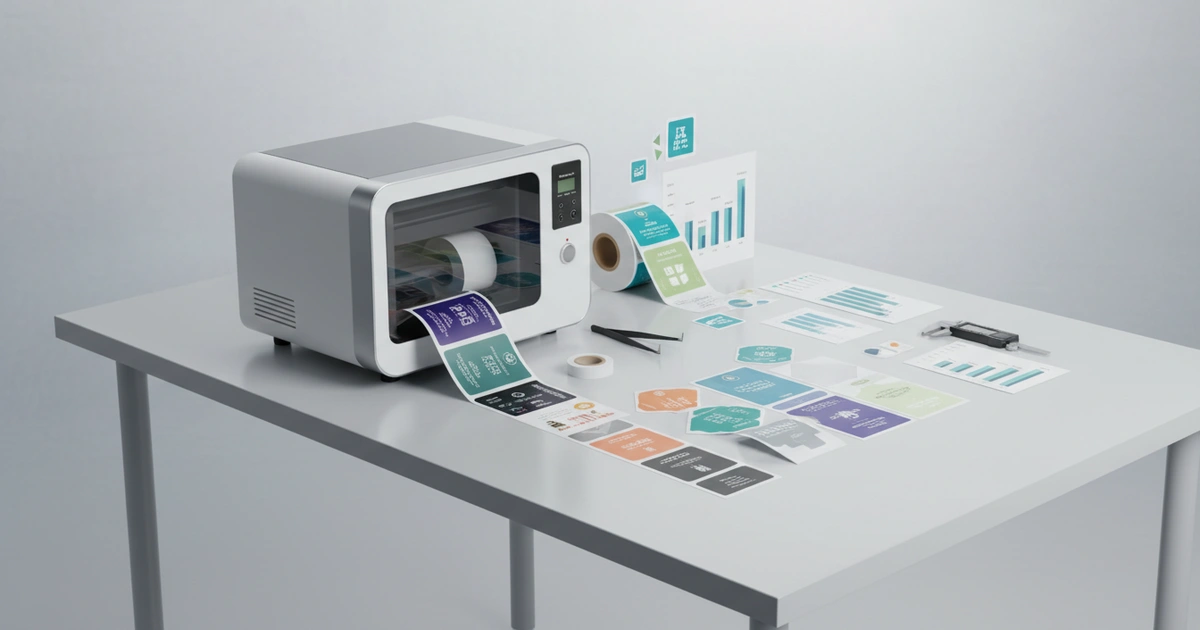
Compared to manual application, automated systems are more suitable for high-speed lines. But for low-volume operations, manual application may be more cost-effective. Our capabilities in promotional goods complement industrial label printing for campaigns requiring both packaging and branded merchandise.
Ready to Optimize Your Label Production?
Get a custom quote for digital or flexographic labels tailored to your volume, material, and compliance needs.
Request a Free QuoteLimitations to Consider Before Choosing Your Label Printing Technology
Industrial label printing has trade-offs that depend on your specific requirements. At 10,000 units, you still pay that price. The limitation is that digital is not ideal for high-volume commodity labels.
When Digital Falls Short
Digital printing may not be ideal when you need waterproof labels for outdoor or chemical applications. While digital can handle short runs on durable films, flexo provides more consistent coverage on textured surfaces at scale. Competitors offering advanced UV digital printers may have advantages in color matching for specialty materials, but the per-unit cost remains higher.
When Flexo Falls Short
Flexographic printing has high setup costs from plate making. For runs under 1,000 units, flexo won't work for your budget. The setup cost makes each label expensive. Digital is more suitable for those short runs with variable data needs. Also, flexo turnaround of 7–10 days may not meet urgent orders, while competitors with digital workflows can deliver in 3–5 days.
Material compatibility is another limitation. Digital works well with paper and standard films up to 350 gsm. But for waterproof labels requiring 3M Scotchcal 220 at thicknesses above 300 gsm, flexo is the better choice. A realistic alternative is manual application for very low volumes (under 500 units), where full automation doesn't pay off.
Digital label printing market projected annual growth through 2031 in the United States
<Ready to get started with industrial label printing? Contact our team to explore the right solution for your next project.
Frequently Asked Questions
When does digital label printing become more expensive than flexo?
Digital label printing costs $0.20–$0.50 per unit regardless of volume, while flexo drops to $0.09–$0.15 per unit above 5,000 units. The breakeven point is approximately 5,000 units. For runs above that, flexo is more economical.
What materials are best for waterproof label printing?
Waterproof labels require durable films like 3M Scotchcal 220. Flexographic printing handles these materials better at scale, providing consistent coverage on textured surfaces. Digital works for short runs but may show pinholes on slick films.
Can digital printing handle variable data for serialization?
Yes, digital printing natively supports variable data printing (VDP). Each label can carry unique barcodes, serial numbers, or QR codes with no extra cost. This is ideal for pharmaceutical and electronics compliance.
What is the minimum order for flexographic label printing?
Flexographic printing typically requires a minimum order of 1,000 units due to high setup costs from plate making. For runs under 1,000 units, digital printing is more cost-effective with a minimum of 250 units.