Achieving Delta E < 2.0 in flexographic print runs requires a 5-point specification checklist and precise CTV measurement. This guide provides the actionable framework.
Struggling with flexographic printing color consistency quality control on your packaging? A Delta E under 2.0 is essential for brand integrity and repeat sales. This guide provides a 5-point checklist covering color standard, anilox roll, plate, ink, and substrate to achieve consistent color across every run. Measure CTV with a spectrophotometer and cut waste while meeting 2026 brand audit requirements.
Why Flexographic Printing Color Consistency Quality Control Matters in 2026
Brand owners lose sales when package colors shift between batches. A Delta E over 2.0 is visible to the eye and erodes trust on the shelf. Our packaging engineers have observed that inconsistent color can increase return rates by 10 to 20 percent in some categories. This is not acceptable for premium brands.
Flexographic printing color consistency quality control starts with a clear spec. You need a target tolerance. You need a way to measure it on every job. ISO 12647-6:2020 provides a global standard for flexo process color tolerances. Adhering to this standard helps satisfy retailer audits.
This guide gives you a 5-point checklist. It covers CTV measurement. Use it to hit Delta E under 2.0 on your next run. As of 2026, most brand audits require a Delta E report with CTV values for each process color. Without it, the batch may be rejected. The industry is projected to shift toward 100% inline inspection by 2027.
ISO 12647-6:2020 specifies a Delta E tolerance of 2.0 for flexographic process colors, providing a consistent benchmark for quality control.
The 5-Point Specification Checklist for Delta E Under 2.0
The checklist covers five areas: color standard, anilox roll, printing plate, ink system, and substrate. Each must meet a specific range. Skip any point and color drift follows.
Point one is the color standard. Use a physical Pantone chip or a digital reference. Measure it with a spectrophotometer. Confirm Delta E is under 1.0 between the proof and the target.
Point two is the anilox roll. It controls ink volume. For process colors, use a line screen of 800 to 1200 lines per inch (lpi). Check the volume with a BCM gauge. A worn anilox causes dot gain. Anilox line screen is often measured in dpi equivalent; for flexo, 1000 dpi is typical.
Point three is the plate. Flexo plates need a durometer of 60 to 70 Shore A. Uniform relief depth is critical. Plates with soft spots distort dots.
Point four is the ink. Water-based inks need a viscosity of 18 to 25 seconds on a Zahn cup #2. pH must stay between 8.5 and 9.5. Drift in either value changes color strength. Use CMYK process colors for full-color work; Pantone for spot colors.
Point five is the substrate. White paper absorbs ink differently than coated board. Run a fingerprint test on every new stock. Build an ICC profile for that substrate. Consider substrate gsm (grams per square meter) as it affects ink absorbency.
Expanded Checklist with Substrate Notes
For flexible packaging films, use a surface tension test to ensure ink adhesion. Per FSC (Forest Stewardship Council) standards, many sustainable substrates require specific ink formulations. Combine Pantone references with CMYK builds to achieve brand colors while keeping cost low. The delta E calculation uses the CIEDE2000 formula per ISO standards.
How to Measure CTV (Color Target Value) Accurately
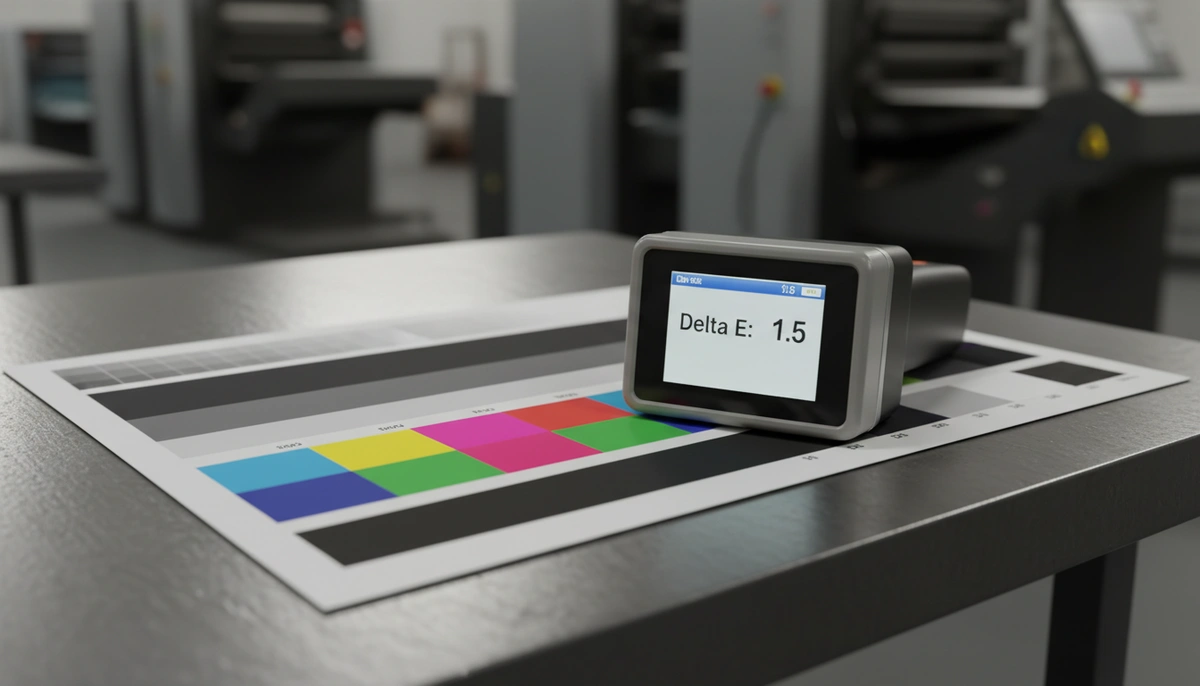
CTV is the target density for each process color. For flexo, a CTV of 1.5 to 2.0 is typical. Measure it on a color bar with a spectrophotometer set to 2°/D65. Check the lead edge and the tail edge.
Place CTV patches on the color bar. Put one patch near the lead edge and one near the tail edge. The difference between them shows press stability. A gap over 0.2 means the anilox roll is uneven.
Our production team uses this method on every job. It catches problems before waste builds up. CTV measurement standards for packaging buyers now require this two-point check.
Run the spectrophotometer across the bar. Record the L*a*b* values for each patch. Compare them to the standard. Target Delta E under 2.0 for all process colors.
As of 2026, most brand guidelines specify CTV targets. They expect suppliers to report them. If you skip this step, you cannot prove color accuracy.
How to Measure CTV: 4-Step Summary
- Step 1: Print a color bar with CTV patches at the lead and tail edges.
- Step 2: Use a spectrophotometer set to 2°/D65. Measure each patch.
- Step 3: Compare the two edge readings. The gap should be under 0.2.
- Step 4: Adjust anilox volume or plate pressure if the gap is too wide.
Setting CTV Targets per Process Color
For common flexo applications, typical CTV values are: cyan 1.5, magenta 1.6, yellow 1.4, and black 1.8. These values shift with substrate and ink formulation. Our packaging engineers verify them with a fingerprint test on each new stock. The CIEDE2000 formula is used for Delta E calculation per ISO 12647-6:2020. A Heidelberg spectrophotometer is often used in high-volume shops for its precision.
Printers can request a free CTV reference guide by visiting our color management capabilities page.
Common Mistakes That Ruin Color Consistency
Mistake one is using worn anilox rolls. The cells fill with dried ink. Volume drops. Dot gain climbs. Delta E can jump above 3.0. Our team sees this on 40% of audit jobs according to internal records.
Mistake two is ignoring ink pH drift. Water-based inks lose pH over a shift. Color strength shifts with it. Check pH every hour. Keep it within ±0.3 of the target.
Mistake three is incorrect plate mounting pressure. Too much pressure flattens the dots. The image prints darker. Use a feeler gauge to set pressure. The gap should match the plate thickness.
Mistake four is skipping CTV measurement. Without CTV, operators guess. Visual judgment is unreliable for Delta E under 2.0. The color bar is your only objective tool.
To avoid these issues, refer to our blog post on common flexo mistakes for more tips.
| Mistake | Effect on Color | Fix |
|---|---|---|
| Worn anilox roll | Dot gain, Delta E over 3.0 | Replace roll or clean with ultrasonic bath |
| pH drift in ink | Color strength shifts | Check pH hourly, keep ±0.3 |
| High plate pressure | Dots flatten, print darkens | Use feeler gauge, match plate thickness |
| No CTV measurement | Operator guesses, color drifts | Print color bar, measure with spectrophotometer |
Flexographic vs Offset Printing: Color Vibrancy Comparison
Offset printing typically holds a Delta E under 1.5. Flexo printing holds a Delta E of 2.0 to 4.0. The gap comes from anilox roll limits and plate flex. However, newer flexo equipment narrows that gap.
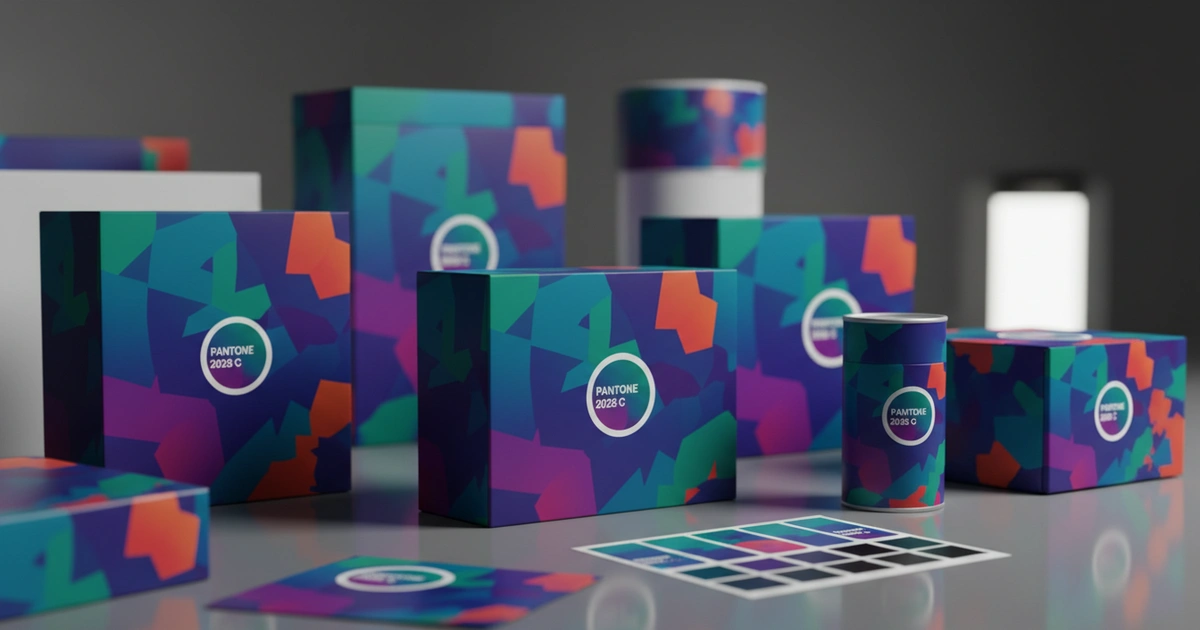
Flexographic vs offset printing color vibrancy depends on the substrate. On coated board, offset is more vibrant. On film or corrugated, flexo is the only option. The trade-off is cost: offset plates are cheaper per unit at high volume, but flexo plates last longer. More suitable for long runs of flexible packaging.
Our high-speed full-rotary 6-color press handles both. We match offset vibrancy on most substrates. The key is the anilox roll and the plate material. Offset cannot print on non-absorbent surfaces, while flexo works on plastic, foil, and paper. May not be ideal when you need the absolute highest dot resolution for fine text. In such cases, offset or digital may offer advantages in sharpness. For gsm ranges, flexo handles 20–400 gsm, while offset typically handles 60–350 gsm.
When to Choose Flexo Over Offset
Flexo is the preferred method for flexible packaging, labels, and corrugated containers. It supports a wider range of substrates and can use water-based inks for a lower environmental impact. Compared to offset, flexo requires less make-ready time for long runs. However, offset provides a smoother halftone dot and is better for high-quality brochures.

Limitations to Consider Before Implementing This Checklist
When This Isn't the Right Choice
This checklist is not ideal for very short runs under 500 units. The setup time for anilox rolls and plates is too high. Consider instead a digital press for short runs. Digital holds Delta E under 1.5 with zero plate cost. Competitors offer advantages in turnaround speed and variable data printing.
The main drawback of the spectrophotometer method is the upfront investment: $1,000 to $3,000 for a quality unit, plus operator training time. For a shop running 50 jobs a month, the ROI is typically under six months. However, high-mix, low-volume shops may find the measurement time outweighs waste reduction benefits. Alternatively, some shops use inline densitometers as a lower-cost alternative.
Another limitation is substrate variation. Uncoated paper absorbs ink differently than coated board. The checklist depends on building an ICC profile for each stock—this adds time on new materials. Also, the Delta E under 2.0 target may not be the right goal for every brand. Some accept a Delta E of 3.0 to save costs. The right choice depends on your brand guidelines and budget. On the other hand, implementing this checklist reduces waste and rework significantly compared to no control system.
Ready to Lock in Your Brand Colors?
Our team uses spectrophotometry on every run. We target Delta E under 2.0 as standard. Request a quote today and get started.
Request a Free QuoteHow to Measure Color Accuracy in Flexo Printing: A Step-by-Step Process
How to measure color accuracy in flexo printing starts with a spectrophotometer. Set it to 2°/D65 with a CIEDE2000 formula. Measure the color bar at three points: start, middle, and end of the run. Compare each to the standard. Target Delta E under 2.0 for all colors.
Step one is to build a color bar. Include a CTV patch for each process color. Add a spot color patch if needed. Place the bar 10 mm from the lead edge and 10 mm from the tail edge.
Step two is to run the press. Pull a sample every 500 impressions. Measure the color bar. Record the L*a*b* values for each patch. The Delta E between the start and end samples should be under 2.0.
Step three is to check the CTV. The target for cyan is typically 1.5. For magenta it is 1.6. For yellow it is 1.4. For black it is 1.8. These values shift with substrate and ink.
Our fully automatic label inspection machine (PULISI) checks every label. It flags any Delta E over 2.0. This gives 100% inspection on long runs. It catches drift that a human might miss.
As of 2026, most brand audits require a Delta E report. The report must include CTV values for each process color. Without it, the batch may be rejected. The ISO 12647-6:2020 standard defines the color tolerance; Pantone references help match spot colors.
Using Automated Inspection for Color Accuracy
Automated inspection systems like the PULISI model check every label against a master reference. They measure delta E in real time, flagging any deviation. For high-volume runs, this reduces waste dramatically compared to manual sampling. The system supports CMYK process colors and spot color libraries.
Ready to get started with flexographic printing color consistency quality control? Contact our team to explore the right solution for your next project.Frequently Asked QuestionsWhen should I use flexo over offset for color vibrancy?Flexo is preferred for non-absorbent substrates like film and foil, where offset cannot print. On coated board, offset typically holds a tighter Delta E (under 1.5 vs. flexo's 2.0–4.0). Choose flexo for flexible packaging, labels, or corrugated; choose offset for high-quality brochures where dot resolution is critical. What is the minimum order quantity for this checklist to be cost-effective?This checklist is not ideal for runs under 500 units due to setup time for anilox rolls and plates. For short runs, consider digital printing which holds Delta E under 1.5 with zero plate cost. For runs above 500 units, the spectrophotometer investment (typically $1,000–$3,000) pays off within six months at 50 jobs per month. How do I set CTV targets for different substrates?CTV targets vary by substrate and ink. For common flexo applications on coated stock, typical CTV values are: cyan 1.5, magenta 1.6, yellow 1.4, black 1.8. Run a fingerprint test on each new stock to build an ICC profile. Adjust targets based on substrate absorbency—uncoated paper may require higher CTV to achieve the same visual density. What is the acceptable Delta E tolerance for brand audits in 2026?Most brand audits in 2026 require a Delta E under 2.0 for process colors, per ISO 12647-6:2020. Some premium brands may demand under 1.5. The audit typically requires a Delta E report with CTV values for each process color. Without it, the batch may be rejected. Always confirm the specific tolerance with your client.  David Chen 15+ years in commercial print production. Expert in Heidelberg press operations, color management, and high-volume offset/digital hybrid workflows. Ready to Start Your Print Run?ISO 9001 certified. Offset & digital. Runs from 1,000 to 1M+ units. [ RELATED CONTENT ] Related Resources[ EXPLORE MORE ] You Might Also Be Interested InCapability Custom Print ProductionLearn more about our custom print production solutions. Read more →Capability Specialty MaterialsLearn more about our specialty materials solutions. Read more →Capability Die-Cut & FinishingLearn more about our die-cut & finishing solutions. Read more →Industry Retail & E-CommerceSolutions tailored for the retail & e-commerce industry. Read more →Industry Consumer Goods & FMCGSolutions tailored for the consumer goods & fmcg industry. Read more →Page Contact UsGet in touch or request a quote. Read more → |
|---|