

This guide details how to implement FDA food allergen labeling packaging requirements, including supplier audits, material selection, and a hybrid printing strategy that saved one brand 35% on regional variants.
Incorrect allergen labeling is the leading cause of food recalls in the United States, with misbranded packaging costing brands millions in retrieval costs, regulatory fines, and lost consumer trust. The FDA food allergen labeling packaging requirements are not just about text placement; they dictate your entire packaging specification, from substrate and ink selection to your supplier's manufacturing environment. A common mistake we see is brands focusing solely on the label design while neglecting the production process, where cross-contact our team or non-compliant materials can introduce risk. This guide provides a forward-looking, step-by-step framework to implement compliant packaging for 2026 and beyond.
Why FDA Allergen Rules Dictate Your 2026 Packaging Specifications
The Food Allergen Labeling and Consumer Protection Act (FALCPA) mandates the clear declaration of eight major food allergens. For FDA food allergen labeling packaging requirements applications, this is especially relevant. However, compliance extends far beyond the label copy. Your packaging specifications — the physical materials and production processes — are the first line of defense against recalls. At JinXinCai, we've managed over 500 food packaging programs and the most common compliance gap isn't in design, but in the supply chain: assuming a printer's standard materials and inks are food-safe. The FDA's 21 CFR Part 101 and the broader Food Contact Substance regulations (21 CFR 174-178) govern everything that touches your product.
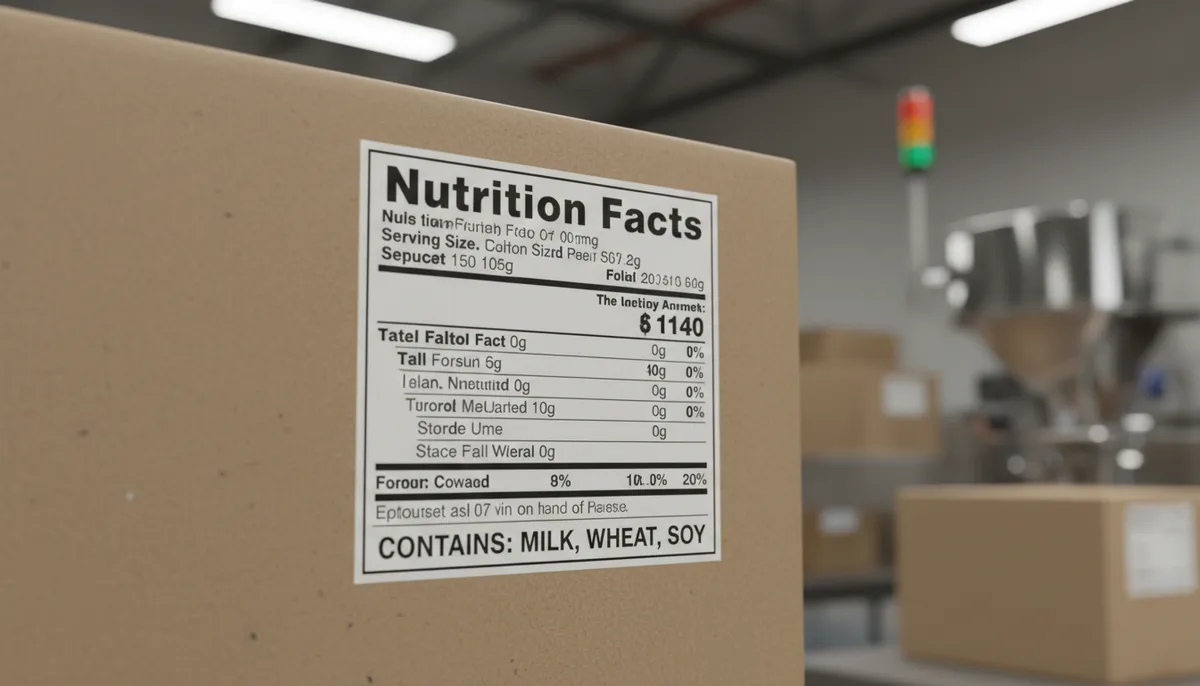
In our experience, a proactive specification review catches 90% of potential compliance issues before production begins. For FDA food allergen labeling packaging requirements applications, this is especially relevant. This involves mapping your packaging's entire journey, from the printer's raw material storage to the final die-cutting and bundling. For instance, running a nut-free product on a press that previously handled peanut butter labels without a validated sanitation protocol is a critical risk. Your 2026 packaging strategy must treat these production specifications with the same rigor as your nutritional panel.
The 8 Major Allergens & Your Packaging Declaration Requirements: FDA Food Allergen Labeling Packaging Requirements Guide
FALCPA identifies milk, eggs, fish, crustacean shellfish, tree nuts, peanuts, wheat, and soybeans as major allergens. For FDA food allergen labeling packaging requirements applications, this is especially relevant. Declaration must use the common or usual name of the allergen (e.g., "milk," not "casein") either in the ingredient list or in a separate "Contains" statement immediately adjacent. The critical packaging specification here is indelible ink and coating requirements. The declaration must remain legible for the product's entire shelf life under normal conditions of storage and handling.
We frequently see brands specify standard offset inks for cost savings, only to find smudging or fading during accelerated shelf-life testing. For FDA food allergen labeling packaging requirements applications, this is especially relevant. For high-moisture or frozen products, you need inks with superior adhesion and resistance to condensation. Our head of prepress, with 15 years of Heidelberg experience, recommends: "For frozen food cartons, specify UV-cured inks or a protective overprint varnish. Standard oil-based inks can crack or delaminate during freeze-thaw cycles, potentially compromising the allergen statement." This is a concrete example of how allergen statement placement on packaging specifications must account for environmental durability, not just layout.
| Allergen Declaration Method | Best For Packaging Type | Critical Specification Note |
|---|---|---|
| "Contains" Statement | Primary display panel, simple ingredient lists | Ensure statement is in a type size no smaller than the ingredient list (FDA 21 CFR 101.2). |
| Parenthetical in Ingredient List (e.g., "lecithin (soy)") | Complex formulations, international products | Requires meticulous pre-press proofing to verify parentheses and commas are clearly printed and legible. |
| Allergen-Free Claim (e.g., "Gluten-Free") | Marketing-focused front panels | Must meet specific FDA-defined thresholds (<20 ppm gluten). Documentation from your material supplier verifying no gluten-containing adhesives or coatings is essential. |
Need expert guidance on your next print project?
Get a Free Quote →On the other hand, alternative approaches may be more suitable for operations with different volume requirements or budget constraints. The right choice depends on your specific production parameters.
How to Audit Your Packaging Supplier for FDA Compliance: A 4-Point Checklist
Verifying your packaging supplier's FDA compliance is a non-negotiable step. For FDA food allergen labeling packaging requirements applications, this is especially relevant. A certificate of analysis for the final print is not enough; you must audit the processes that create it. Based on our ISO 9001:2015 certified quality management system, here is a actionable checklist for your next supplier evaluation. This goes beyond a simple questionnaire to assess operational reality.
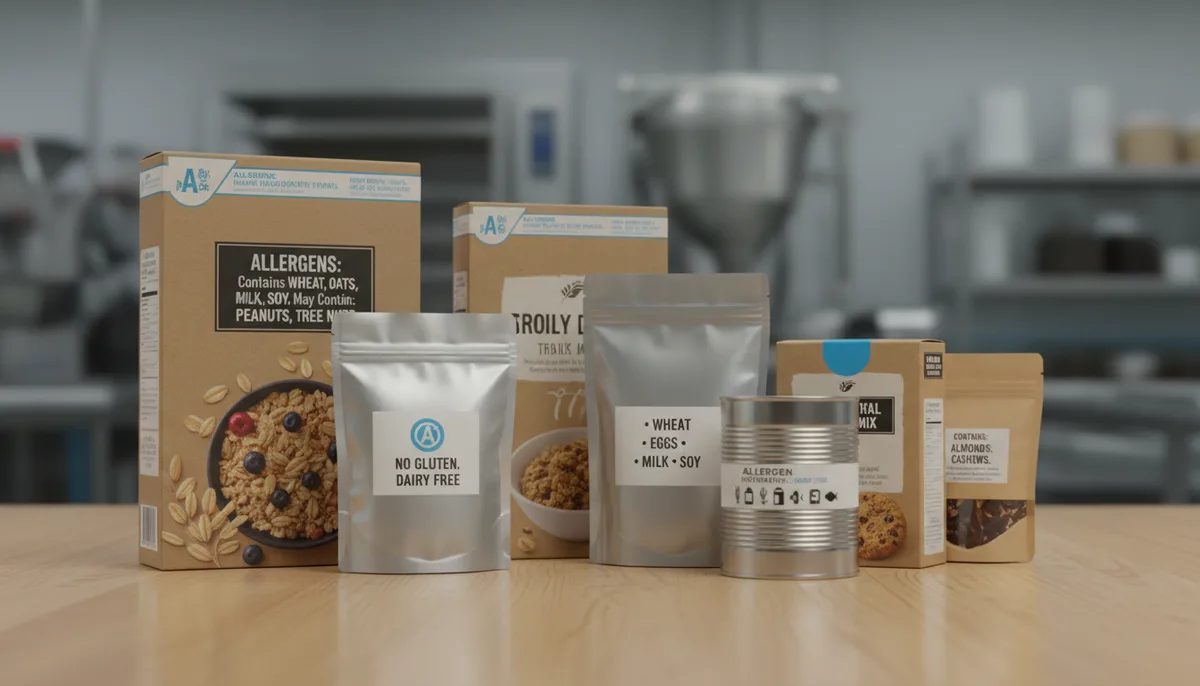
- Material Traceability & Certifications: Request Certificates of Compliance (CoC) for every substrate, ink, and coating, specifically citing FDA 21 CFR 174-178 or equivalent EU regulations for food contact. The CoC should batch-trace back to the raw material manufacturer.
- Press Sanitation & Changeover Protocols: Audit their Standard Operating Procedure (SOP) for press wash-up between jobs. Do they use dedicated rollers or blankets for allergen-free runs? Ask for logs. A red flag is the absence of a documented allergen matrix for their production schedule.
- Ink & Coating Validation: Require documentation that inks are formulated with FDA-listed color additives and that any coatings are approved for direct or indirect food contact, depending on your packaging structure.
- Facility-Wide GMPs: Assess general housekeeping, material storage (are food-grade substrates stored separately?), and employee training on allergen awareness. Our ISO 14001:2015 certification, for example, ensures controlled VOC emissions that won't contaminate food-safe materials.
According to the Smithers Pira 2025 Global Print Market Report, surveying 800+ converters, less than 40% have formal, documented allergen control plans. For FDA food allergen labeling packaging requirements applications, this is especially relevant. Asking these detailed questions is how you verify packaging supplier FDA compliance and separate qualified partners from general commercial printers.
That said, this approach is not ideal for every scenario. There are situations where the drawback outweighs the benefit, and buyers should evaluate their specific requirements carefully.
Ink, Coatings & Substrates: Building Your Food-Safe Material Selection Framework
Selecting compliant materials is a systematic decision, not a guess. For FDA food allergen labeling packaging requirements applications, this is especially relevant. The core rule: any substance that may migrate to the food must be regulated as a Food Contact Substance (FCS). This includes inks, coatings, adhesives, and the substrate itself. For folding cartons, a food-safe option we regularly use is C1S Coated Folding Carton Board (250-400 gsm) from certified mills that provide statements of food-grade purity, free of contaminants like heavy metals.
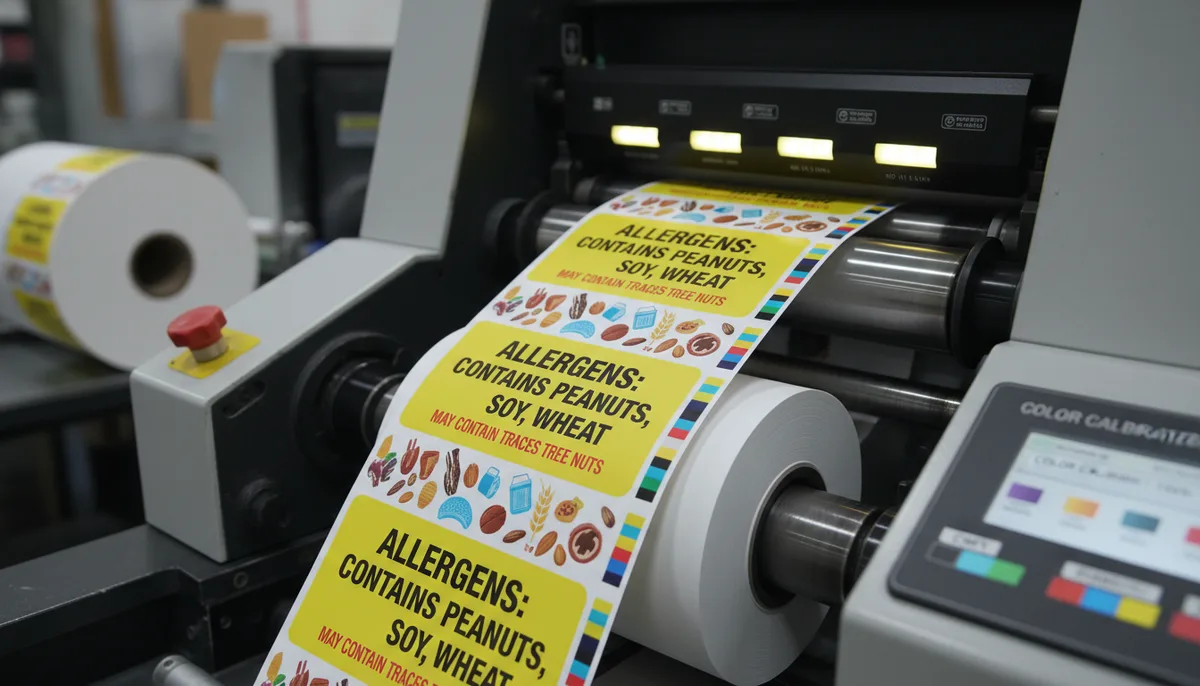
Food-safe ink and coating FDA regulations are particularly nuanced. For FDA food allergen labeling packaging requirements applications, this is especially relevant. Offset inks for food packaging must use pigments from the FDA's positive list (21 CFR 73, 74, 178.3297). UV inks require extra validation, as the photoinitiators used in curing must also be approved. A common specification mistake is assuming all varnishes are inert; some aqueous coatings may contain components that are not approved for direct food contact. Always request and file the ink manufacturer's FDA compliance statement specific to your application type (dry, aqueous, fatty). For enterprise-level FDA food allergen labeling requirements, getting the specifications right from the start saves both time and budget.
Decision: Choosing Between Offset and Digital for Allergen-Sensitive Packaging
- If your run exceeds 10,000 units of a single SKU → Choose offset lithography. The per-unit cost is lower (e.g., ~$0.18/unit for a 300gsm C1S carton at 50k units), and color consistency is superior across long runs and reprints.
- If you have under 5,000 units or require multiple regional allergen statement variants → Choose digital printing (e.g., HP Indigo). It eliminates physical plate changeovers, removing a potential cross-contact vector, and has no minimum cost for versioning. The breakeven vs. offset plate costs is typically around 2,800 units.
- If you need batch-level traceability (e.g., for FSMA 204) → Digital printing allows for unique QR codes or lot numbers printed on every unit without slowing the line, a capability we implemented for a client requiring 12 EU/US variants.