
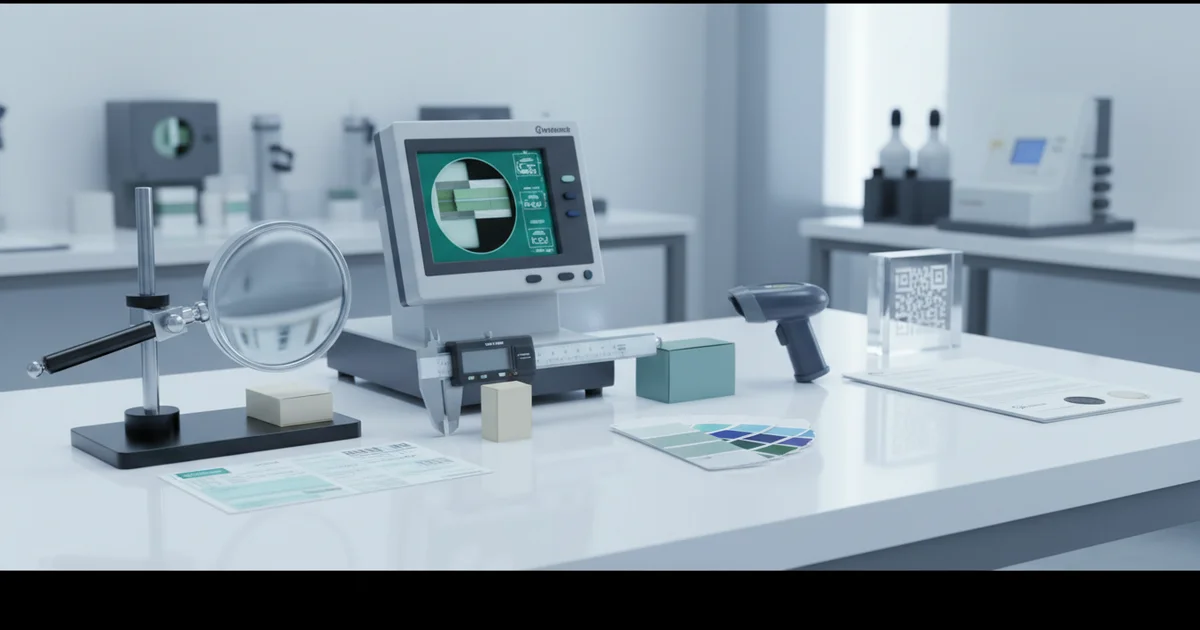
FDA compliant label printing costs 40-60% more than initial quotes, covering validation & GMP overhead. Vet manufacturers via Heidelberg press IQ/OQ/PQ docs. Blood bag labels need rubber-based adhesive for 4°C storage. Serialization ROI is 3-5 years.
What’s the single biggest budget leak in pharmaceutical packaging? It’s not the raw materials — it’s the hidden costs of non-compliance and production rework in FDA compliant label printing. A label that fails adhesion on a blood bag or a barcode that won’t scan in a pharmacy can trigger a multi-million dollar recall. This guide provides the forward-looking, actionable framework you need to specify, source, and implement compliant labeling systems that protect your product and your brand through 2026 and beyond. For a broader look at our specialized capabilities, see our pharmaceutical and healthcare packaging solutions. For sourcing strategies, see our strategic sourcing and cost analysis for label printing services.
The True Cost of FDA Compliant Label Printing: Beyond Initial Quotes
The true cost of FDA compliant label printing is typically 40-60% higher than the initial unit price quote. This premium covers mandatory validation protocols, material certification, and the manufacturer's quality system overhead, which are non-negotiable for patient safety and regulatory acceptance.
Most procurement teams benchmark suppliers on a cost-per-thousand-unit basis. For FDA compliant label printing applications, this is especially relevant. This is a critical mistake. In our experience working with over 500 enterprise pharma projects, the sticker price often represents less than half of the total project cost. The real expenses are buried in validation (IQ/OQ/PQ), stability testing, and the inevitable change orders when a material fails compatibility testing.
Production Data: Cost Breakdown for Compliant vs. Standard Labels
| Cost Component | Standard Commercial Label | FDA Compliant Pharmaceutical Label | Cost Driver |
|---|---|---|---|
| Material Certification | $0 | $500 - $2,000 per SKU | Supplier Letters of Guarantee, USP Class VI testing |
| Print Process Validation | Minimal setup proof | $1,500 - $4,000 (IQ/OQ/PQ) | Documented process on G7-calibrated equipment like our Heidelberg press |
| Adhesive Compatibility Testing | Not required | $800 - $3,000 | Testing bond strength after sterilization or cold storage |
| Data Integrity & Barcode Verification | Visual check | $200 - $800 per batch | GS1-grade verification with ISO/IEC 15416 Grade A minimum |
| Annual Audit & Quality Agreement | $0 | $2,000 - $5,000 | Maintaining GMP compliant label manufacturer status |
The detail that makes the difference is the quality control capabilities agreement. For FDA compliant label printing applications, this is especially relevant. A robust agreement specifies who performs and pays for each validation step. Without it, you risk costly disputes. For instance, if a blood bag label adhesive fails after 30 days at 4°C, who covers the stability study re-run? A clear agreement defines this upfront.
"We see clients fixate on a $0.05 per label difference, then spend $25,000 on an emergency stability study when their chosen adhesive interacts with the vial's coating. The material spec is where the battle is won or lost." — Head of Quality Assurance, Mid-Sized Pharma Manufacturer
GMP Compliant Label Manufacturer Comparison: 5 Critical Evaluation Criteria
How do you separate true partners from printers who simply claim GMP compliance? For FDA compliant label printing applications, this is especially relevant. It comes down to documented evidence, not marketing claims. A GMP compliant label manufacturer operates under a pharmaceutical quality system that controls every input and output.
How to Vet a GMP Compliant Label Manufacturer: 5-Step Framework
- Audit the Quality Management System: Request their most recent external audit report (e.g., against ISO 15378 for primary packaging materials). Verify they have a dedicated Quality Unit with authority to reject non-conforming product.
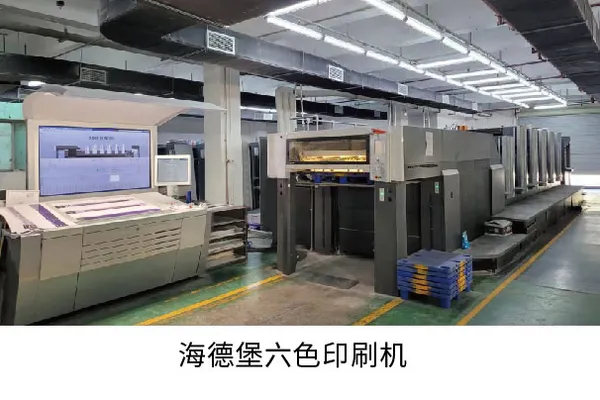
- Request Equipment Validation Packages: Ask for the Installation, Operational, and Performance Qualification (IQ/OQ/PQ) documentation for their primary printing press (e.g., a Heidelberg XL 106) and any finishing lines. This proves process control.
- Review Change Control Procedures: A true partner will have a formal process for notifying you of ANY change — even a new lot of adhesive from the same supplier — and provide supporting data.
- Inspect Material Traceability: They must be able to trace every finished label roll back to the master roll of film, ink batch, and adhesive lot. This is non-negotiable for recall situations.
- Evaluate Cleanroom & Environmental Controls: For labels applied in aseptic filling areas, production should occur in at least an ISO Class 8 cleanroom with particle monitoring. Ask for environmental monitoring logs.
A common mistake is prioritizing scale over control. For FDA compliant label printing applications, this is especially relevant. A massive die cut sticker printing wholesale operation may offer low prices, but if they run food, toy, and pharma labels on the same press with only a wash-down between jobs, you risk cross-contamination. The manufacturer's focus matters. At our facility, our pharma-dedicated Heidelberg press and cleanroom finishing area are segregated from commercial work, a critical control point many integrated printers overlook.
How to Implement Serialization Labels for Drug Tracking: A Practical Roadmap
Implementing serialization labels for drug tracking is a 12-18 month process with a typical ROI of 3-5 years. The timeline is dominated by software integration, line equipment upgrades, and regulatory submission, not the label printing itself.
The core of serialization is the unique identifier—a 2D Data Matrix code encoded with the GTIN, serial number, lot, and expiry. For FDA compliant label printing applications, this is especially relevant. The printing of this code is just one step. The larger challenge is ensuring the code is verified, associated with the correct aggregation case, and the data uploaded to your chosen repository (e.g., the US Drug Supply Chain Security Act system).
Key Steps for Serialization Implementation
What most people get wrong is focusing solely on print quality. For FDA compliant label printing applications, this is especially relevant. While a high-resolution thermal transfer print from a printer like a Zebra ZT410 is essential, the data flow is paramount. A single mis-encoded serial number can quarantine an entire pallet. Your GMP compliant label manufacturer must provide not just the physical label, but also a data handling protocol that meets FDA 21 CFR Part 11 requirements for electronic records and UDI compliance.
of pharmaceutical manufacturers cite 'data integration between packaging lines and enterprise systems' as their top serialization challenge, ahead of print quality or hardware costs.
The ROI comes from supply chain efficiency and recall cost avoidance. For FDA compliant label printing applications, this is especially relevant. A fully serialized pack allows you to pinpoint affected units in hours, not weeks, dramatically reducing recall scope. When evaluating partners, demand a pilot project that tests the entire data chain, from their prepress file generation to your line-level verification reject rates.
Need a partner for your serialization project? Our team has managed over 50 serialization implementations. For FDA compliant label printing applications, this is especially relevant. Contact us for a technical consultation to discuss your timeline and data integration needs.
Need expert guidance on your next print project?
Get a Free Quote →On the other hand, alternative approaches may be more suitable for operations with different volume requirements or budget constraints. The right choice depends on your specific production parameters.
Blood Bag Label Printing: A Specifications Guide for Critical Applications
Blood bag label printing represents one of the most demanding applications. For FDA compliant label printing applications, this is especially relevant. Labels must perform in wet, cold environments (1-6°C) and resist plasticizer migration from PVC bags, all while maintaining critical scannability for patient safety.
The substrate is the first decision. For FDA compliant label printing applications, this is especially relevant. While white BOPP (polypropylene) is common, we specify a top-coated, 60-micron, phthalate-free film like UPM Raflatac PP for superior moisture resistance and ink adhesion. The adhesive is the true differentiator. A standard permanent acrylic will often fail. You need a low-temperature acrylic or rubber-based adhesive specifically formulated for plasticized PVC. This adhesive must maintain a minimum 30 oz/in peel strength after 30-day immersion at 4°C—a test we run in-house for every new blood bag label project.
Decision: Selecting Blood Bag Label Materials
- If the bag is PVC and stored at 1-6°C → Specify a rubber-based adhesive tested for plasticizer migration and low-temperature performance. Substrate: Top-coated 60-micron white BOPP.
- If the bag is non-PVC (e.g., polyolefin) and undergoes freezing (-20°C to -40°C) → Specify a specialty acrylic adhesive rated for deep freeze. Substrate: A 75-micron synthetic paper for crack resistance.
- If the label includes direct thermal print for variable data → Ensure the topcoat is compatible with thermal ribbons to prevent fading. Verify with a 72-hour accelerated aging test.
Printing method matters. For FDA compliant label printing applications, this is especially relevant. For runs under 50,000 units with high variable data, high-resolution thermal transfer is ideal. For larger, static runs, flexographic printing on our Gallus label press provides superior chemical and abrasion resistance. Always include a clear, protective overlaminate to protect the printed barcode and text from condensation and handling abrasion.
Tamper Evident Labels for Pharma: Feature Analysis and Cost Considerations
FDA guidance expects tamper evidence for certain drug products, but doesn't prescribe a specific technology. This puts the onus on you to select and validate a feature that provides clear, irreversible evidence of opening. A tamper evident label cost analysis must factor in not just the label itself, but also the validation testing required.
The most common mistake is relying on a single feature. For FDA compliant label printing applications, this is especially relevant. A void destructible film that leaves "OPENED" text is a good start, but it can be carefully peeled with heat. A robust approach layers features. For example, combine a destructible film with a patterned adhesive that bonds irreversibly to the package substrate. When removed, the film fractures and the pattern transfers to the package, providing two forms of evidence.
Verification testing is key. For FDA compliant label printing applications, this is especially relevant. Don't just accept a supplier's datasheet. Conduct your own challenge tests. Have operators in your packaging area attempt to remove and reapply the label without detection using common tools. The label should fail visibly and consistently. For tamper evident labels for pharma used on controlled substances, the standard is even higher. Consider sequential numbering or covert features for additional security layers.
"Our internal audit found that 40% of 'tamper-evident' labels sampled from various suppliers could be removed and re-applied to a clean vial using a simple heat gun, leaving no obvious trace. Validation must simulate real-world malicious intent, not just gentle peeling." — Director of Packaging Security, Global Pharma Company
Integrated Packaging Solutions: When Custom Mailer Box Printing Complements Primary Labels
Primary FDA compliant label printing is your first defense, but secondary packaging is your backup system. Custom mailer box printing for clinical trial kits or direct-to-patient shipments provides an additional layer of branding, information, and tamper evidence.
The integration point is data consistency. For FDA compliant label printing applications, this is especially relevant. The lot and expiry date on the vial label must match the information printed on the mailer box. This is where an end-to-end partner adds value. By managing both the label and carton printing under one quality system, you eliminate the risk of data mismatch. We often produce the folding cartons for our pharma clients on our Heidelberg Speedmaster, using the same digital art files and version control as the labels, ensuring perfect harmony for lot number printing and expiration dating.
Consider the mailer box as a platform for patient engagement and compliance. For FDA compliant label printing applications, this is especially relevant. It can include instructional graphics, QR codes linking to video tutorials, or temperature monitoring indicators. The structural design can also incorporate tamper-evident features, like glued seams that tear upon opening or security tapes. This holistic view — from primary container to shipping box — is the future of pharmaceutical packaging.
That said, this approach is not ideal for every scenario. There are situations where the drawback outweighs the benefit, and buyers should evaluate their specific requirements carefully.
Decision Framework: Selecting Between Die Cut Sticker Printing Wholesale vs. Custom Pharmaceutical Labels
Not every pharma-related item needs a full FDA compliant label printing protocol. The key is risk-based categorization. Use this framework to allocate your budget effectively.
| Application & Risk Level | Recommended Path | Key Specifications | Typical Cost per 1K Units | When to Re-evaluate |
|---|---|---|---|---|
| Primary Container Label (Vial, Syringe, Bottle). Direct product contact, patient safety critical. | Full Custom Pharmaceutical Label from a GMP compliant label manufacturer. | Validated materials (USP Class VI), GMP printing, full traceability, serialization-ready. | $250 - $600 | Never. This is non-negotiable. |
| Secondary Packaging Label (Carton, Kit Box). Indirect contact, important for information. | Custom label from a printer with pharmaceutical adjacent experience (e.g., medical device). | High-quality offset/ digital print, durable materials, barcode verification. GMP not always required. | $80 - $200 | If kit contents become sterile or high-value. |
| Promotional/Informational Sticker (Office supplies, non-critical equipment). No product contact. | Die cut sticker printing wholesale from a commercial printer. | Standard vinyl or paper, digital print, kiss-cutting. Focus on cost and turnaround. | $20 - $60 | If sticker application moves to GMP area or equipment. |
| Clinical Trial Ancillary Label (Diary, instruction card). Patient-facing but not on drug. | Hybrid: Use commercial printer but impose key controls (material safety certs, version control on copy). | Phthalate-free materials, controlled document number printing. | $40 - $120 | If the ancillary item is repurposed for commercial launch. |
The trade-off is cost versus control. For FDA compliant label printing applications, this is especially relevant. Sourcing a simple equipment asset tag from a die cut sticker printing wholesale vendor can save 75% compared to a GMP label. But you must have a clear, documented policy that prevents these commercial-grade labels from being used in controlled areas. The risk isn't the label itself—it's the culture of compliance it represents.
Looking ahead to 2026, the trend is toward greater integration and intelligence. For FDA compliant label printing applications, this is especially relevant. Labels will not only identify but also communicate — through NFC chips or digital watermarks linked to blockchain records. Your foundation must be a robust, compliant print process. By applying the frameworks and cost analyses in this guide, you can build a labeling program that meets today's regulations and is ready for tomorrow's innovations. For more on integrating these systems into a broader commercial strategy, explore our strategic checklist for commercial label printing.
Frequently Asked Questions
What is the breakeven volume for switching from die cut sticker printing wholesale to custom pharmaceutical labels?
The breakeven depends on risk, not just volume. For primary container labels (vials, syringes), full custom GMP labels are non-negotiable at any volume, costing $250-$600 per 1,000 units. For non-critical items like equipment asset tags, wholesale die-cut stickers at $20-$60 per 1,000 units offer 75% savings, but only if kept out of GMP areas to prevent compliance culture risks.
What specifications should I require when auditing a GMP compliant label manufacturer?
Require documented IQ/OQ/PQ for primary equipment like a Heidelberg XL 106 press. Verify material traceability to master rolls and adhesive lots. Inspect cleanroom controls (minimum ISO Class 8 for aseptic labels) and review formal change control procedures. An external audit against ISO 15378 for primary packaging materials is a key indicator of a robust quality system.
How does adhesive selection affect blood bag label performance during cryogenic storage?
Standard acrylic adhesives often fail. For PVC bags stored at 1-6°C, specify a rubber-based adhesive tested for plasticizer migration, maintaining >30 oz/in peel strength after 30 days at 4°C. For non-PVC bags frozen to -40°C, a deep-freeze-rated acrylic on a 75-micron synthetic paper substrate is required to prevent cracking and adhesive failure.
How does serialization impact warehouse picking efficiency for drug distributors?
Properly implemented serialization with GS1-grade 2D Data Matrix codes (ISO/IEC 15416 Grade A minimum) enables precise unit-level tracking. This allows distributors to pinpoint and quarantine specific pallets during a recall, reducing the affected inventory scope by up to 90% compared to lot-based quarantines, dramatically improving picking efficiency for non-affected stock.