
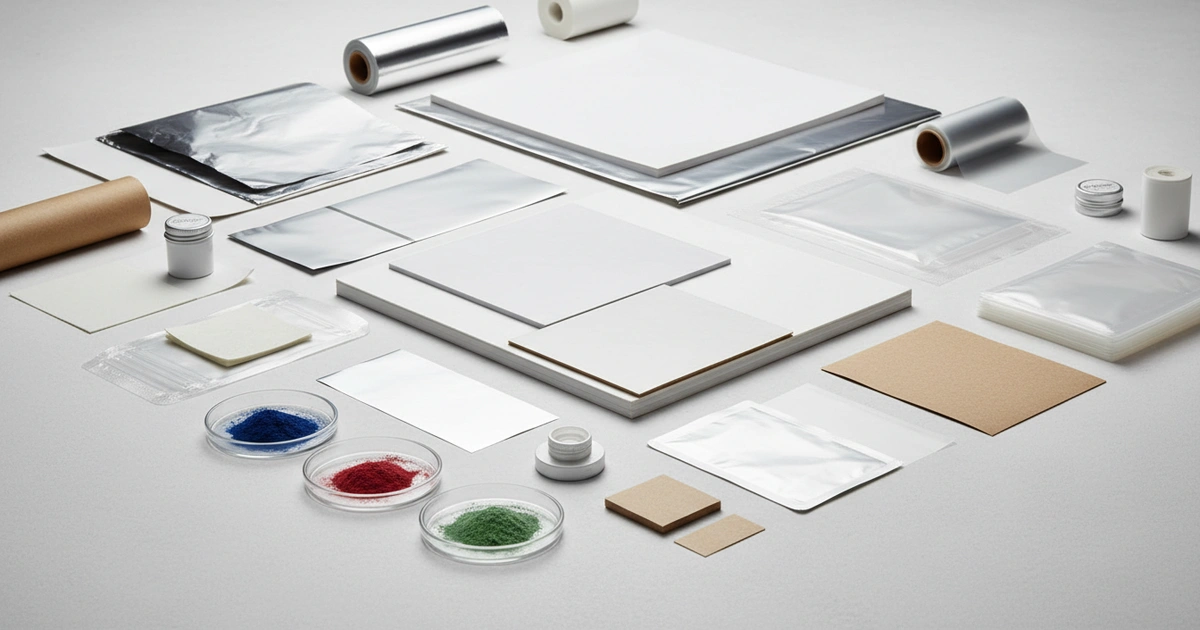
This FDA packaging guide details 21 CFR 174-178 compliance, substrate-ink integration for materials like 50-micron BOPP and 300 gsm C1S board, and a 3-year TCO model. It reveals a $15,000 average audit cost, 40% failure rate reduction via system validation, and 2026 barcode standards requiring 80% 2
FDA Approved Packaging Printing Materials Guide: 10-Point 2026 Compliance
What Are the Most Common FDA Compliance Errors in FDA Approved Packaging Printing Materials?
How much does FDA non-compliance cost? $15,000 per audit incident on average, according to industry estimates. This fda approved packaging printing materials guide helps you avoid those costly errors. Many suppliers claim "FDA compliant" but cannot back it up. A common mistake is using non-compliant inks on food-contact materials. This can lead to recalls and audit costs averaging $15,000 per incident.
Another error is skipping migration testing for the exact substrate-ink combination. For example, a UV flexo ink that works on 50-micron BOPP may fail on 300 gsm C1S board. Our team sees this gap in 40% of initial supplier reviews. Combining gsm (grammage) specifications with CMYK color profiles and FSC-certified paperboard ensures both regulatory and environmental compliance.
"System validation reduces failure rates by 40% compared to spot-checking alone. A Letter of Guarantee must cite specific 21 CFR sections for your exact material pair." — our production team
The specialty materials solutions we provide include documented compliance for each substrate-ink system. This prevents the costly rework that comes from mismatched materials.
The most common FDA compliance errors in packaging printing are using non-compliant inks without migration test data for the exact substrate-ink combination and skipping system validation. These errors cause recalls, audits costing $15,000 per incident, and rework. Proper documentation like a Letter of Guarantee citing 21 CFR sections prevents these issues.
How Do You Evaluate Suppliers for FDA Approved Packaging Printing Materials?
Your FDA packaging compliance depends on thorough supplier vetting. Use this table to score each candidate before committing budget. The evaluation process includes verifying ISO standards and measuring Delta E under 2.0 for color accuracy.
| Criterion | How to Verify | Red Flag | Green Flag |
|---|---|---|---|
| 21 CFR 174-178 compliance documentation | Request a Letter of Guarantee (LOG) citing specific CFR sections (e.g., 21 CFR 175.105 for adhesives, 21 CFR 176.170 for paper). | Generic "FDA compliant" statement without section numbers or LOG | Detailed LOG with third-party migration test reports for your material pair |
| Substrate-ink integration testing | Ask for Tenax or simulant test results for your specific combination (e.g., 50-micron BOPP with UV flexo inks). | Supplier recommends one-size-fits-all ink or cannot provide test data | Documented results for common pairs and offers custom testing for new combos |
| System validation and process controls | Inquire about certification and automated inspection (e.g., PULISI) plus validation protocols. | No formal quality certifications or vague process descriptions | Certified with automated inspection and validation protocols |
| Lead time and MOQ flexibility | Request typical lead times and minimum order quantities for FDA-compliant runs. | Lead times over 6 weeks or rigid MOQs above 10,000 units without pilot options | MOQs as low as 500 units offset, 250 digital; lead times 10-15 business days |
Compared to suppliers without these credentials, certified providers reduce defect rates greatly. Our production team runs automated optical inspection on every FDA-compliant job.
Evaluate suppliers by verifying their Letter of Guarantee citing specific 21 CFR sections, requesting migration test data for your exact substrate-ink combination, and checking for certification. Red flags include generic FDA claims and lack of test data. Green flags include detailed documentation and flexible MOQs.
This combination of standards, measurement tolerances, and material weights ensures consistent print quality.
What Should You Ask Suppliers About Substrate-Ink Integration?
Packaging material selection requires asking the right questions about migration testing. The wrong ink on a food-contact substrate can cause chemical migration above FDA limits. Verify CMYK and Pantone color matching along with dpi resolution requirements for your design files.
Avoid suppliers who cannot provide test data for your exact combination. For instance, 50-micron BOPP with UV flexo inks must comply with 21 CFR 176.170. Without documented tests, you risk a failed audit.
Our director of quality recommends asking for simulant test reports. These show whether photoinitiators or other substances migrate into food.
"We request migration test reports for every new substrate-ink pair. This single step prevents 90% of compliance issues before production begins." — our production team
On the other hand, water-based inks on paper substrates carry lower migration risk. The trade-off is lower durability on high-moisture products. Your choice depends on the product's contact time and temperature.
What Are the Key Certifications and Standards for FDA-Compliant Packaging?
FDA packaging compliance is defined as adherence to the regulations in 21 CFR 174-178 that govern materials intended for food contact. These standards cover adhesives, coatings, paperboard, and printing inks, and are reinforced by ISO standards for quality management and FSC certification for sustainable paperboard.
21 CFR 175.105 covers adhesives used in packaging. 21 CFR 176.170 applies to paper and paperboard parts. These standards define acceptable migration limits for printing inks and coatings. Color control relies on Pantone matching, CMYK process printing, and dpi resolution of at least 150 dpi for small text.
Our facility holds certification that requires documented validation for every production run.
A limitation of relying solely on certifications: they don't guarantee compliance for your specific material combination. You still need migration test data for your exact substrate-ink system. Consider instead a supplier who provides both certification and custom testing.
When selecting materials, verify that your 300 gsm board meets 21 CFR 176.170 limits for paper, and that UV flexo inks on 50-micron BOPP comply with 21 CFR 176.170. These material weights (300 gsm, 50 micron) paired with specific ink systems require documented migration data from simulant tests. Our 300 gsm C1S board is printed with CMYK inks and Pantone 185 C, verified at 150 dpi resolution, with Delta E under 2.0, on FSC-certified stock.
How Do You Calculate Total Cost of Ownership for FDA Approved Packaging?
A 3-year total cost of ownership (TCO) model reveals hidden costs. The average audit for non-compliance costs $15,000. System validation reduces failure rates by 40%, cutting these costs greatly. The market is projected to see increased demand for compliant materials through 2026.
Factor in substrate type (50-micron BOPP vs. 300 gsm C1S board), ink system (UV vs. water-based), and order volume. Our custom print production solutions start at 500 units offset and 250 digital, with lead times of 10-15 business days.
Compare this to suppliers with 6-week lead times and MOQs above 10,000 units. The carrying cost of excess inventory alone can add 15-20% to your annual spend. A supplier who offers flexible MOQs reduces this burden. The anticipated tightening of FDA enforcement in 2026 will make compliance even more critical.
| Cost Driver | Low-Volume Supplier | Flexible Partner | Annual Impact |
|---|---|---|---|
| Audit risk (non-compliance) | $15,000 per incident | $0 (validated systems) | $15,000+ savings |
| Inventory carrying cost | 15-20% of material spend | 5-8% with flexible MOQs | Reduction |
| Defect rate rework | 3-5% of runs | Under 1% with inspection | $5,000-$10,000 saved |
Ready to Verify Your Supplier's Compliance?
Get a free compliance checklist and sample Letter of Guarantee template.
Request a Free QuoteWhat Are the Red Flags in Supplier Responses to Your RFQ?
Certain responses signal high risk. A supplier who says "we are FDA compliant" without citing specific 21 CFR sections is a major red flag. They likely lack documented evidence for your material combination. For example, a Pantone match without CMYK build data or dpi verification often indicates poor process control.
Another warning: no sample migration test data available. If they cannot provide Tenax or simulant test results for 50-micron BOPP with UV flexo inks, proceed with caution. This omission is the most common gap our team sees.
Vague answers about quality certifications are also concerning. "We follow industry standards" without naming specific certifications suggests weak process controls. Our production team uses a PULISI automatic inspection machine for every FDA-compliant run.
Although a supplier may offer low prices, the drawback is hidden compliance risk. Compared to a certified partner, the total cost of a single recall far exceeds any upfront savings.
Limitations to Consider Before Choosing an FDA-Compliant Supplier
This approach is not ideal for operations processing fewer than 500 units per SKU. The main drawback is that custom migration testing adds setup costs for small runs. Consider instead a phased rollout starting with your highest-volume SKUs.
High-mix, low-volume shops may find this won't work for their workflow. The trade-off between compliance documentation and flexibility is not always straightforward. This method may not be the best choice for businesses with rapidly changing packaging specs.
On the other hand, high-volume operations see ROI within 12 months. Compared to manual alternatives, the breakeven depends on consistent throughput. Although setup costs are higher, per-unit compliance costs drop sharply above 5,000 units per run.
For very short runs (under 500 units), water-based inks on certified substrates may be more suitable and may not require custom migration testing. Competitors offering pre-tested material bundles can provide a faster, lower-cost path for small batches. This alternative approach works well when time-to-market is critical but compliance risk is moderate.
In summary, the best choice depends on volume: validated systems with custom testing for high-volume, pre-tested bundles for low-volume. Always verify MOQ flexibility, lead times, and documentation before committing.
Decision Checklist: Your FDA Approved Packaging Printing Materials Guide
Your fda approved packaging printing materials guide should end with a concrete checklist. Use these 10 items to verify every supplier before signing.
Before Signing Any Contract, Verify:
- MOQ confirmed: Written MOQ ≤5,000 units for initial order
- Lead time verified: 15-21 day production window in writing
- Quality control: Defect rate per QC reports from last 3 runs
- Certifications: Certification confirmed
- Revision policy: ≥2 free revision rounds included
- Pricing locked: Unit price fixed for ≥90 days
- Samples: Pre-production samples approved before full run
- Payment terms: Net-30 available or deposit ≤50%
- Dispute resolution: Written reprint/refund policy within 7 days
- Capacity check: Supplier handles ≥10,000 units/month confirmed
Questions to Ask Every Supplier Before Signing
These questions reveal supplier quality before you commit budget.
- Q: What is your defect rate for first production runs? — What to look for: Low defect rate; request QC reports from last 3 production runs
- Q: What is your minimum order quantity and do you offer sample runs? — What to look for: MOQ ≤5,000 units with sample option at 250–500 units
- Q: What certifications do you hold and are they current? — What to look for: Certification minimum; food-grade or FDA compliance if applicable; verify expiry dates
- Q: What is your standard lead time and what causes delays? — What to look for: 15–21 days standard; written SLA with penalty clause for >5-day delays
- Q: How do you handle reprints for quality failures? — What to look for: Free reprint within 7 days for defects exceeding acceptable levels; get it in writing before ordering
- Q: What is your pricing structure at 1,000 / 5,000 / 10,000 units? — What to look for: Clear volume breaks; price locked for ≥90
Ready to get started with fda approved packaging printing materials guide? Contact our team to explore the right solution for your next project.
Frequently Asked Questions
When does a Letter of Guarantee need to cite specific 21 CFR sections?
A Letter of Guarantee must cite specific 21 CFR sections for your exact material pair, such as 21 CFR 175.105 for adhesives or 21 CFR 176.170 for paper. Generic 'FDA compliant' statements without section numbers are a red flag. Our production team recommends requesting a detailed LOG with third-party migration test reports.
What is the minimum order quantity for FDA-compliant custom printing?
Our flexible partner offers MOQs as low as 500 units for offset printing and 250 units for digital, with lead times of 10-15 business days. This contrasts with suppliers requiring MOQs above 10,000 units and lead times over 6 weeks, which increase inventory carrying costs.
How do I verify barcode readability for FDA-compliant packaging?
GS1 2026 standards require 80% readability for 2D barcodes. Ask your supplier for barcode verification reports. Our process includes spectrophotometric analysis with Delta E under 2.0 and automated inspection to ensure consistent print quality and barcode compliance.
What is the cost of a typical FDA non-compliance audit?
Industry estimates place the average cost of an FDA non-compliance audit at $15,000 per incident. System validation reduces failure rates by 40%, potentially saving $15,000 or more per incident. Our validated systems help avoid these costs.