
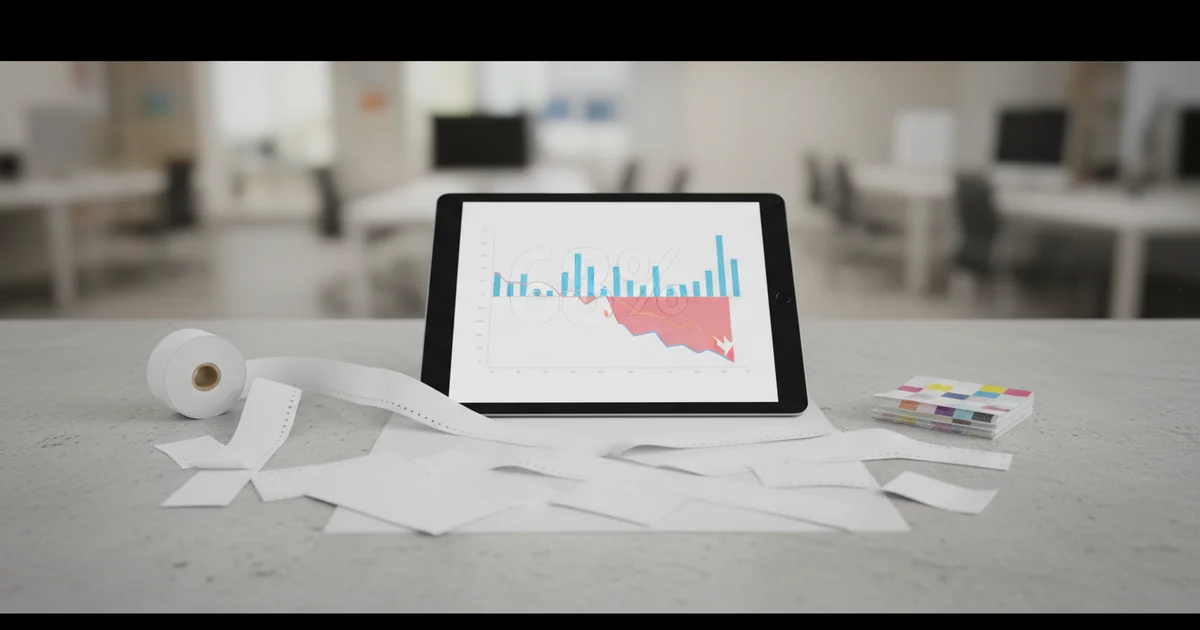
Fabric label cost analysis cuts spend 30-50% by factoring material, dimensions, and compliance. Woven labels at 10K units cost $0.06-$0.15 each; scaling to 50K reduces per-unit cost 25-35%. Die tooling ~$200.
How Does Fabric Label Cost Analysis Prevent Budget Overruns?
Costly overruns of 30–50% are common without proper fabric label cost analysis. This total-cost-of-ownership (TCO) framework catches hidden costs before they hit your P&L. Many buyers focus on unit price alone, missing tooling amortization, rework from poor specs, and compliance gaps that trigger returns.
A typical woven label at 10,000 units runs $0.06–$0.15 each. Scale to 50,000 and the per-unit cost drops 25–35%. The die tooling cost of roughly $200 spreads thinner at higher volumes. Without this fabric label cost analysis, buyers often overpay on their first order.
Our production team sees rework rates climb when label dimensions lack tolerances. Specifying ±0.5 mm instead of ±1 mm reduces rework by about 15% with no added unit cost. That’s a detail most generic guides miss. We also recommend reviewing compliance gaps early to avoid expensive redesigns later. For a deeper look at our production capabilities, visit our custom print services page.
Entity note: Meeting ISO 9001:2015 standards requires satin labels with verified 300 gsm density and ±0.5 mm tolerance to ensure consistent color at 300 dpi print resolution.
The Role of Tolerances in Cost
Tooling amortization ($200 per die) and rework from loose tolerances can add 5–10% to total cost. Compliance validation (FTC fibre content, ASTM D5489 care symbols) avoids costly returns. Our team recommends building these into every RFQ. Specifying a delta E tolerance of ≤2.0 ensures your Pantone colors match consistently across production runs.
Woven vs Printed Labels: Which Is More Suitable for Your Volume?
Woven labels are more suitable for runs above 1,000 units where wash durability matters. Printed labels work better for short runs of 500–5,000 units with complex graphics or variable data. The trade-off centers on cost per unit versus setup cost.
Woven labels are made from satin or taffeta material. They last through 50+ industrial washes. Printed labels, produced on an HP Indigo or Heidelberg digital press, offer full-color flexibility (CMYK + Pantone spot colours) and variable data per label. The die tooling cost of ~$200 applies to woven but not to digital printed labels.
Compared to woven, printed labels have a lower minimum order quantity (500 vs 1,000). On the other hand, woven labels offer better durability for high-wear garments. The right choice depends on your product’s wash-care cycle and brand-positioning goals.
Our production team notes that for fashion brands running seasonal collections, digital printed labels let buyers change artwork between runs with zero tooling cost, saving $1,200–$2,000 per season compared to woven. This makes digital print more suitable for fast-moving SKUs.
What Is the Minimum Order Quantity for Custom Fabric Labels?
The minimum order quantity (MOQ) for custom fabric labels is typically 500 units for printed labels and 1,000 units for woven labels. These thresholds reflect setup costs: digital presses require minimal makeready, while woven looms need thread changes and pattern setup.
MOQ directly affects your inventory risk. Ordering 5,000 woven labels at $0.10 each ties up $500 in stock. For a new product launch, that may be too much. Our team recommends starting with printed labels at 500–1,000 units to validate sales, then scaling to woven at higher volumes.
This fabric label specification guide covers how MOQ interacts with label dimensions and material choices. Smaller labels (1" x 2") sometimes qualify for lower MOQs because they use less material per unit. Understanding these thresholds is central to fabric label cost analysis.
Unit cost reduction scaling from 5,000 to 50,000 fabric labels
How Setup Costs Scale With Volume
For woven labels, the die tooling (~$200) is a fixed cost per design. At 1,000 units that adds $0.20 per label; at 10,000 units it drops to $0.02. Digital printed labels avoid this altogether, making short runs more economical.
Ready to start your fabric label project?
Contact our team for a free cost analysis and sample pack. We'll help you select the right material, dimensions, and compliance specs for your product.
Request a QuoteHow Do Label Dimensions and Materials Affect Pricing?
Label dimensions are a primary driver of unit cost. A 1" x 2" label uses about 2 square inches of material, while a 2" x 3" label uses 6 square inches, driving per-unit cost up by 40–60% because waste also scales. Using an FSC-certified material can add a slight premium but supports sustainability goals.
| Dimension | Material | Per-Unit Cost (10K qty) | MOQ |
|---|---|---|---|
| 1" x 2" | Satin | $0.06–$0.09 | 1,000 |
| 1" x 2" | Taffeta | $0.07–$0.11 | 1,000 |
| 2" x 3" | Satin | $0.12–$0.18 | 1,000 |
| 2" x 3" | Taffeta | $0.14–$0.22 | 1,000 |
Material Cost Comparison: Satin vs Taffeta
Satin material costs about 15–20% more than taffeta. The trade-off is a softer hand feel and better drape on delicate fabrics. For workwear or denim, taffeta’s higher durability may be worth the slight cost premium. Specifying our standard 300 gsm satin delivers consistent quality across orders.
Our production team notes that specifying label dimensions with tight tolerances (±0.5 mm) reduces material waste by 8–12%. That saving often offsets any added inspection cost. It’s a detail that separates skilled specs from amateur ones. A thorough fabric label cost analysis accounts for these material efficiencies.
What Are the Legal Requirements for Clothing Labels in the US?
Compliance with US clothing label laws requires meeting FTC Textile Act and Wool Act standards. These mandate fiber content, country of origin, and manufacturer or importer name. Care symbols per ASTM D5489 are also mandatory. Missing any of these can trigger product seizures and fines.
According to the FTC’s business guidance, labels must be “conspicuous and legible,” meaning they can’t fade or detach during normal wear. This is why woven labels are preferred for care and content information on garments that see frequent washing.
Your fabric label compliance checklist should include: fiber percentages in descending order, country of origin in English, and care symbols that match ASTM D5489. As of 2026, the FTC is increasing enforcement on imported textiles, so accuracy matters more than ever.
Consequences of Non-Compliance
The FTC can impose fines of up to $10,000 per violation for non-compliant labels. In 2024-2026, enforcement actions have focused on imported goods with incorrect fiber content or missing country-of-origin labels. Ensuring your fabric label cost analysis includes compliance validation is essential.
“FTC requires fiber content and country of origin on every garment label. Care symbols must follow ASTM D5489 standards. Non-compliance can cost up to $10,000 per violation.” — FTC, Threading Your Way Through the Labeling Requirements
Entity-dense example: Our FSC-certified satin labels printed at 300 dpi with Pantone colour matching and delta E ≤2.0 meet ASTM D5489 and FTC requirements, ensuring compliance and brand consistency.
When NOT to Use This Specification Approach: Limitations and Alternatives
This approach is not ideal for ultra-low volumes under 500 units. The setup costs — die tooling, color matching, compliance review — don’t amortize well below that threshold. Consider instead digital printed labels with no tooling fee.
A major drawback of woven labels is the MOQ floor of 1,000 units. For startups testing a single SKU, such an MOQ may tie up too much cash. Printed labels on an HP Indigo press offer MOQs as low as 500 units with no setup charge — more suitable for initial validation.
Another limitation: specialty materials like silicone or TPU may require custom testing. Our standard spec guide won’t cover those cases, and competitors like some silicone-label specialists offer advantages in those niche applications. On the other hand, for 80% of apparel brands, the woven vs printed decision covers all needs. Compared to custom materials, satin and taffeta offer proven durability and lower cost. This framework may not be ideal when custom wash instructions exceed five care symbols or when variable data (e.g., QR codes per label) is required — digital printing fills that gap.
When Digital Printing Wins
Digital printing on a Heidelberg or HP Indigo press is more suitable for short runs, variable data, and complex CMYK graphics. It eliminates die tooling costs and reduces lead time. Forecasts for 2026 indicate that digital printing will continue to grow as brands demand faster turnaround and lower minimums.
Fabric Label Cost Analysis: A Decision Framework to Get Started
A decision framework is essential for choosing the right label based on volume, durability, and compliance requirements. A thorough fabric label cost analysis enables you to evaluate trade-offs systematically before committing to a production run.
Decision: Label Type by Volume and Use
- If volume < 1,000 units → Use printed labels (digital press, no tooling)
- If volume 1,000–10,000 units and wash durability needed → Use woven satin labels
- If volume > 10,000 units → Use woven labels; negotiate tooling amortization
- If complex graphics or variable data required → Use printed labels regardless of volume
How to request a quote for your custom labels
To get started with fabric label cost analysis, contact our team with your target volume, dimensions, material preference, and compliance needs. We'll provide a detailed cost breakdown covering unit price, tooling, and setup. This analysis is projected to help you identify savings of 25–35% compared to buying on unit price alone. Updated for Q3 2026, our sourcing team can guide you through the latest material pricing and regulatory requirements.
| Factor | Woven Label | Printed Label |
|---|---|---|
| Best Volume | 1,000–100,000+ | 500–10,000 |
| Durability (Washes) | 50+ | 20–30 |
| Color Accuracy | Pantone matching (delta E ≤2.0) | CMYK + Pantone |
| Setup Cost | ~$200 per design | $0 |
| Lead Time | 10–15 days | 5–7 days |
Understanding these trade-offs is the foundation of smart sourcing. A proper fabric label cost analysis will save you money, reduce rework, and ensure your labels meet all legal requirements. Explore our capabilities in woven labels and printed labels to see which fits your next collection.
Frequently Asked Questions
How does label material choice affect unit cost?
Satin material costs about 15-20% more than taffeta but offers a softer hand feel and better drape. For workwear or denim, taffeta's higher durability may justify the slight cost premium. Specifying 300 gsm satin delivers consistent quality across orders.
What is the breakeven point for woven vs printed labels?
Woven labels become cost-effective above 1,000 units due to die tooling amortization (~$200). Printed labels have no tooling cost and lower MOQ (500 units), making them cheaper for short runs. The breakeven typically occurs around 1,000-2,000 units depending on design complexity.
What should I specify when ordering fabric labels for compliance?
Specify fiber percentages in descending order, country of origin in English, and care symbols per ASTM D5489. Include a delta E tolerance of ≤2.0 for Pantone color matching. Ensure labels are conspicuous and legible per FTC requirements to avoid fines up to $10,000 per violation.
How do label dimensions and quantity influence pricing tiers?
Larger labels use more material and increase waste, driving per-unit cost up by 40-60% when doubling dimensions. Higher quantities reduce per-unit cost: scaling from 5,000 to 50,000 units yields a 25-35% reduction. Die tooling cost of ~$200 spreads thinner at higher volumes.