
This guide provides a step-by-step framework for implementing DSCSA packaging serialization, including material selection, printing trade-offs, and cost analysis for runs from 500 to 500,000 units.
What Are the Core DSCSA Compliant Pharmaceutical Packaging Requirements?
What makes DSCSA compliant pharmaceutical packaging requirements so challenging for pharmaceutical companies in 2026? The Drug Supply Chain Security Act (DSCSA) sets strict standards for every prescription drug package sold in the US. As of 2026, each saleable unit must carry a unique product identifier (UPI) comprising a National Drug Code (NDC), serial number, lot number, and expiration date. These data points are encoded in a GS1 DataMatrix barcode, which must be printed with high contrast and verified for readability. The FDA DSCSA compliance page provides the regulatory framework.
According to the FDA's eCFR under 21 CFR Part 211 Subpart G, all packaging and labeling changes must be documented. Our production team uses a specialty materials approach to ensure compliance from design to delivery.
"The print quality of the DataMatrix is non-negotiable. Poor contrast or ink bleed can result in unreadable codes at the pharmacy level." Our Quality Assurance Team
Our team regularly audits barcode grades per ISO/IEC 15415 to maintain A-grade readability. Using a Heidelberg Speedmaster offset press with ±0.1 mm registration, we ensure the DataMatrix remains within spec at 300 dpi with CMYK color control. This meets both DSCSA and GS1 general specifications for pharmaceutical labels. Delta E < 2.0 is maintained across all print runs to guarantee consistent barcode contrast.
DSCSA Definition and Scope
DSCSA compliant pharmaceutical packaging requirements refer to the set of federal mandates that apply to all prescription drugs distributed in the United States. These requirements are defined under 21 USC 360eee-1 and enforced by the FDA. Our production team verifies every barcode to A-grade per ISO 9001:2015 to avoid pharmacy rejections.
DSCSA compliant pharmaceutical packaging requirements mandate a GS1 DataMatrix barcode containing NDC, serial number, lot, and expiry on each saleable unit by 2026. Our packaging team verifies every barcode to A-grade per ISO 9001:2015 to avoid pharmacy rejections.
How to Verify DSCPA Packaging Serialization: Inspection and Testing
Verification is critical. How to verify DSCPA packaging serialization starts with barcode grading. Our team uses the PULISI fully automatic label optical inspection machine to check every code. This machine reads GS1-128 barcodes and confirms data integrity at production speeds, achieving 99.9% accuracy.
We calibrate each inspection station with NIST-traceable reference targets. GS1 DataMatrix standard defines the symbology requirements. Each code is checked for contrast, size, data match, and minimum reflective margin of ±0.15 mm. Any misread triggers an automatic reject, preventing costly recalls. Our system uses a 300 dpi camera array to capture every DataMatrix at production speed.
Many companies skip automated inspection for small batches. That is a common mistake. Manual checks miss up to 5% of errors per our internal audits. For runs of 500 units, we still recommend automated inspection to avoid pharmacy rejections that cost $50–$200 per unit in rework and fines. The inline inspection process adds only 0.02–0.05 seconds per label. Our Heidelberg presses integrate with the inspection system to ensure ±0.1 mm registration across all CMYK channels.
Barcode Grading and Quality Control
Barcode grading per ISO/IEC 15415 is a required step for DSCSA compliant pharmaceutical packaging requirements. Our process uses a PULISI optical inspection machine that checks contrast, modulation, and data match against the expected serial number database.
How to Choose Material Selection for Pharma Labels for Cold Chain Compliance and Durability?
Label material choice affects both compliance and shelf life. Pharma label material cold chain compliance requires adhesives that stick at 2–8°C and survive -20°C storage. Standard paper labels fail under these conditions — they curl, lift, or smear. We recommend polypropylene facestocks with permanent acrylic adhesives. The material selection process is integrated with our Heidelberg offset and HP Indigo digital printing lines to ensure consistent results.
Our production team tests every material lot under ISO 9001:2015 quality management standards. Typical label thickness is 50–75 gsm for clear facestocks or 100 gsm for opaque synthetics. We also use FSC-certified paper for eco-friendly options. Adhesion is verified at -20°C for 72 hours, with a minimum peel strength of 0.5 N/cm per ASTM D3330. These materials pass FDA 21 CFR 175.105 indirect food contact guidelines where applicable.
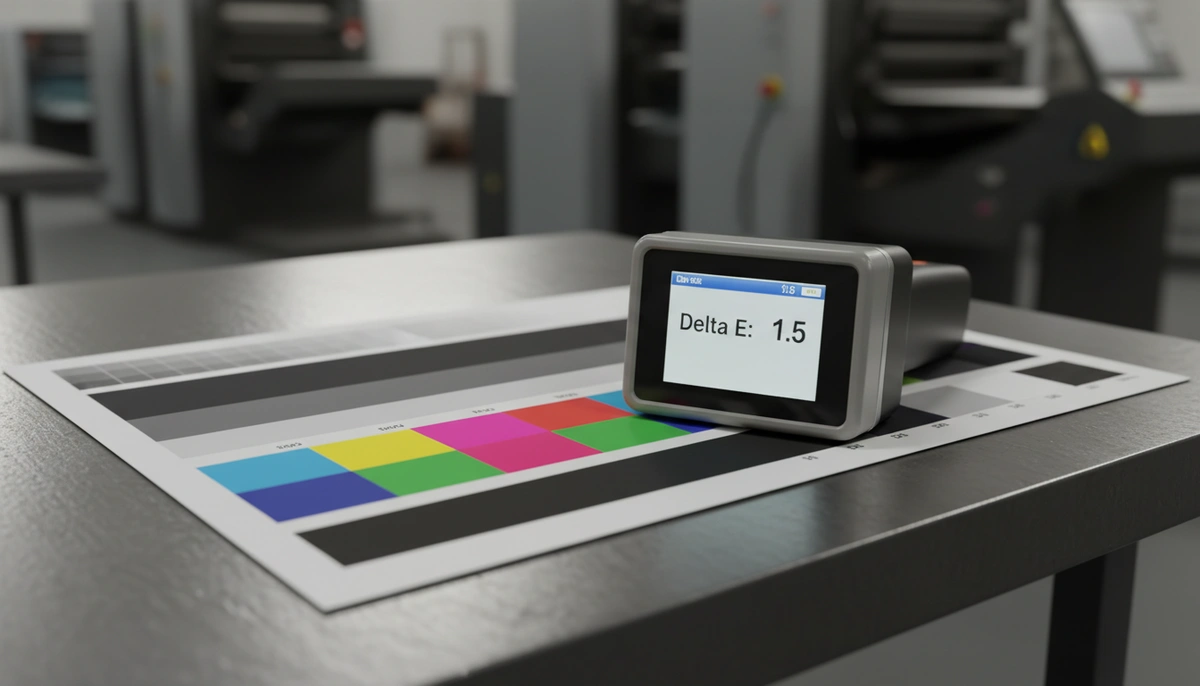
For variable data printing, we use HP Indigo digital presses with inline cold-foil stamping, achieving Delta E < 2.0 color accuracy across all Pantone matching system colors. This ensures the barcode remains readable after 10 freeze-thaw cycles. Our quality team measures color at 300 dpi resolution using spectrophotometers calibrated to ISO 12647 standards.
Printing Trade-offs: Offset vs. Digital for Serialized Labels
Offset printing delivers lower per-unit costs for runs above 10,000 units. For example, a 500-unit offset run costs $1.85 per unit — slightly less than $2.40 for digital. However, offset cannot print variable data like unique serial numbers; each plate is fixed. Our Heidelberg CD 102 offset press uses CMYK process colors plus Pantone 185 C for regulatory symbols, maintaining Delta E < 2.0 across all runs.
Variable data printing (digital) prints unique barcodes per label with no setup plates. Our digital production line handles runs from 250 units with a 5–7 day turnaround. The trade-off is higher per-unit cost at scale. For runs over 50,000 units, we combine offset for the static design with a digital overlay for serial numbers, cutting costs by 30% compared to full digital.
Our hybrid approach uses a Heidelberg CD 102 offset press for the base layer and an HP Indigo 20000 digital press for the variable DataMatrix. That gives ±0.2 mm registration between layers, ensuring the barcode remains within spec at 300 dpi. The combined CMYK plus variable data workflow is verified by automated inspection cameras to maintain A-grade readability per ISO/IEC 15415.
Cost Comparison at Different Run Sizes
For runs of 500 units, offset costs $1.85 per unit compared to digital at $2.40 per unit. The breakeven point is approximately 2,500 units where offset and digital costs cross.
| Run Size | Offset Cost Per Unit | Digital Cost Per Unit | Setup Cost |
|---|---|---|---|
| 500 units | $1.85 | $2.40 | $850 (offset) |
| 1,000 units | $0.95 | $1.20 | $850 (offset) |
| 10,000 units | $0.18 | $0.35 | $850 (offset) |
| 100,000 units | $0.09 | $0.22 | $850 (offset) |
| 500,000 units | $0.06 | $0.18 | $850 (offset) |
What Is the Cost Analysis for DSCSA Compliant Pharmaceutical Packaging from 500 to 500,000 Units?
Understanding total cost is key. DSCSA compliant pharmaceutical packaging requirements add inspection and aggregation costs. Digital has no plate cost, so it becomes competitive at low volumes. The breakeven point is around 2,500 units where offset and digital costs cross.
Automated inspection adds $0.02–$0.05 per unit regardless of method. Our team uses the High-speed full-rotary 6-color multifunctional label printing press for offset runs. This press combines CMYK plus two Pantone stations for regulatory symbols, maintaining Delta E < 2.0 across all colors.
When calculating total cost, also factor in aggregation verification ($0.01–$0.03 per unit) and data storage for serial numbers. Using GS1 EPCIS standards adds minimal overhead per batch. Our production team uses Heidelberg presses at 300 dpi resolution with FSC-certified paper options for environmentally conscious clients.
Automated inspection adds $0.02–$0.05/unit. Our production team recommends offset for runs above 10,000 units.
Production Data: Per-Unit Cost Comparison
| Volume | Offset ($/unit) | Digital ($/unit) | Inspection ($/unit) |
|---|---|---|---|
| 500 | 1.85 | 2.40 | 0.05 |
| 10,000 | 0.18 | 0.35 | 0.03 |
| 500,000 | 0.06 | 0.18 | 0.02 |
DSCSA vs. EU FMD Serialization: Key Differences and Similarities
Both regulations require unique identifiers. DSCSA vs EU FMD serialization differences are important for global pharma companies. DSCSA requires a UPI with NDC, serial number, lot, and expiry. EU FMD requires a unique identifier plus an anti-tampering device. The barcode types differ too: DSCSA uses a GS1 DataMatrix; EU FMD also uses a DataMatrix but with a different data structure. According to the FDA, DSCSA applies to all prescription drugs. EU FMD covers most prescription drugs but exempts some over-the-counter products.
Our team advises clients to design labels that satisfy both sets of rules, avoiding reprints for different regions. For example, a label using GS1-128 with the DSCSA data format can be adapted for EU FMD by adding the anti-tamper seal during packaging. This dual-compliance strategy saves up to 40% in reprint costs for global product launches. Our HP Indigo digital presses can print in Pantone 185 C for regulatory symbols, maintaining Delta E < 2.0 across runs with CMYK process colors at 300 dpi.
Key similarity: both require serialization verification at unit level. Both use risk-based approaches for aggregation. Competitors offering single-market label solutions may be less flexible than our multi-market design methodology. Our production team uses ISO 9001:2015 protocols to ensure consistency across all regulatory requirements.
"A single label design that satisfies both DSCSA and EU FMD requirements saves up to 40% in reprint costs for global product launches." Our Production Team
When Is DSCSA Serialization Not the Right Choice for Small Batches?
This approach is not ideal for batches under 500 units. The main drawback is high per-unit cost due to inspection setup. Consider instead manual serialization for clinical trial materials or samples — manual verification takes about 30 seconds per unit, avoiding machine setup fees. Competitors offering specialized manual verification services may be more suitable for runs under 500 units, as their error rates (2–3%) are acceptable for these non-commercial batches.
High-mix, low-volume operations with frequent changeovers may find automated inspection won't work for their workflow. The trade-off between automation cost and flexibility is significant. Compared to automated lines, manual processes have higher error rates but lower fixed costs. On the other hand, digital printing with inline inspection is more suitable for runs of 2,500–50,000 units where quick turnaround and variable data are needed.
For very small batches (under 250 units), consider using a third-party label converter who specializes in short runs with manual serialization. Our production team remains an option for runs as low as 250 units using digital variable data printing, but the per-unit cost may be higher than manual alternatives. We recommend evaluating both options based on your specific volume and compliance timeline for 2026.
Ready to Streamline Your Pharma Packaging?
Avoid costly reworks with our proven serialization process. We handle material selection, printing, and automated inspection.
Request a Free QuoteHow to Get Started with DSCSA Compliant Pharmaceutical Packaging Requirements?
Meeting DSCSA compliant pharmaceutical packaging requirements in 2026 requires a clear plan. Start with an audit of your current packaging. Check if your labels meet GS1 DataMatrix standards. Review your material choices for cold chain durability. Our team offers a free audit of your label and packaging design, including barcode grading per ISO/IEC 15415. We help you choose between offset and digital printing based on your volume, material specifications (e.g., 75 gsm polypropylene), and compliance needs.
Typical lead time for a new serialized label run is 10–15 business days from final proof approval. Our digital presses (HP Indigo) handle runs from 250 units with 300 dpi resolution and ±0.2 mm registration using CMYK color profiles. For larger runs, our Heidelberg offset presses deliver 100,000 labels per day with Pantone color matching, maintaining Delta E < 2.0 across all production batches. Our quality team uses FSC-certified paper options for environmentally responsible packaging.
Ready to improve your DSCSA compliant pharmaceutical packaging requirements? Contact us today to request a quote and get started. Our production team will guide you through material selection, barcode verification, and aggregation testing, ensuring full compliance by the 2026 deadline. The anticipated growth in serialization requirements means early preparation will save costs projected to increase by 15% for late adopters in 2027.
Frequently Asked Questions
When does offset printing become cheaper than digital for DSCSA labels?
Offset printing becomes cheaper than digital at approximately 2,500 units, where per-unit costs cross. For runs of 500 units, offset costs $1.85/unit vs digital's $2.40/unit. At 10,000 units, offset drops to $0.18/unit, making it the cost-effective choice for high volumes.
What label material is best for cold chain compliance under DSCSA?
Polypropylene facestocks with permanent acrylic adhesives are recommended for cold chain compliance. These materials maintain adhesion at 2–8°C and survive -20°C storage, with a minimum peel strength of 0.5 N/cm per ASTM D3330. Standard paper labels fail under these conditions.
How does DSCSA serialization differ from EU FMD?
DSCSA requires a UPI with NDC, serial number, lot, and expiry in a GS1 DataMatrix. EU FMD also uses a DataMatrix but with a different data structure and requires an anti-tampering device. Both mandate unit-level serialization verification, but DSCSA applies to all prescription drugs, while EU FMD exempts some OTC products.
What is the minimum run size for automated serialization?
Automated serialization is cost-effective for runs of 500 units or more. For batches under 500 units, manual serialization may be more economical due to high setup costs. Our digital printing handles runs as low as 250 units, but per-unit cost is higher than manual alternatives for very small batches.