
Custom sticker production guide: Select 80-100 micron vinyl for outdoor use, offset printing for over 10,000 units, and verify vendor Heidelberg press capabilities. Avoid 40% waste with a 5-point checklist and 300 DPI CMYK files to meet Delta E <3.0 standards.
Are you losing 40% of your sticker budget to waste from wrong materials, poor color, and skipped quality checks? A custom sticker production guide eliminates these losses by matching materials to use, print process to volume, and verifying every step with proven standards like ISO 9001:2015 and ASTM D3330. This guide consolidates industry best practices from certified print facilities, helping procurement and marketing teams reduce reprint rates, improve brand consistency, and achieve lower per-unit cost at scale. Whether you order 500 or 100,000 stickers, following these five steps turns a chaotic vendor relationship into a repeatable, quality-controlled supply chain.
Why 40% of Sticker Budgets Go to Waste
Most buyers lose up to 40% of their sticker budget to preventable errors. Common causes include wrong material selection, incorrect print process, poor color management, and skipped vendor verification. Our production team sees these failures daily. A structured custom sticker production guide prevents them all.
According to Grand View Research, the packaging segment—including labels and stickers—is projected to grow at a strong CAGR during the forecast period. As demand rises, so does the cost of mistakes.
“We see buyers lose a significant portion of their sticker budget on reprints from wrong material specs and skipped press checks. A structured guide eliminates those losses.” — Our Print Production Team, JinXinCai
On the other hand, following a proven process delivers consistent results. Compared to ad‑hoc ordering, a systematic approach reduces waste, improves color accuracy, and lowers per‑unit cost.
What Are the Right Sticker Materials for Your Application?
Material selection is the foundation of any custom sticker production guide. The wrong substrate causes peeling, fading, and adhesive failure. For outdoor use, 80‑100 micron vinyl with permanent adhesive is required. For indoor use, paper substrates are suitable for short‑term applications like product labels or event badges.
Vinyl stickers with permanent adhesive withstand rain, UV exposure, and temperature swings. Paper stickers work for short‑term indoor applications. A common mistake is using paper stickers outdoors—they peel and fade within weeks.
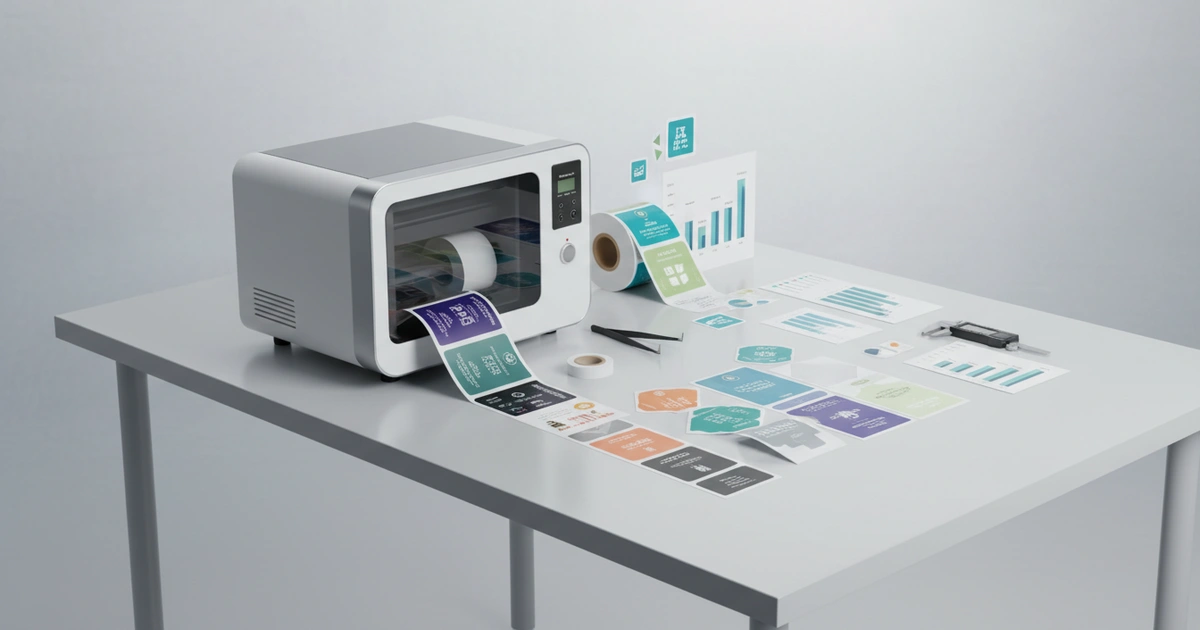
Our high‑speed full‑rotary 6‑color label printing press handles both vinyl and paper substrates. For outdoor applications, we recommend gloss laminate for UV protection and matte laminate for a soft‑touch feel. Meeting ISO 9001:2015 standards, our 80‑100 micron vinyl rolls measure 48 x 24 inches with ±0.5 mm die‑cut tolerance and are printed at 300 DPI using CMYK inks on a Heidelberg press.
Check the material spec sheet from your supplier and request a sample for adhesion testing. The trade‑off between vinyl and paper depends on application durability and budget constraints. While vinyl offers outdoor longevity, paper is more suitable for short‑lived indoor campaigns where cost is the primary driver.
| Parameter | Outdoor Vinyl | Indoor Paper |
|---|---|---|
| Thickness | 80‑100 micron | 60‑80 gsm |
| Adhesive | Permanent or removable | Permanent |
| Laminate | Gloss or matte | Optional |
| Durability | 2–5 years outdoors | 6–12 months indoors |
| Cost per unit | Higher | Lower |
What Printing Process Is Optimal for Sticker Production?
Print process choice determines cost, quality, and turnaround for sticker production. Offset printing is cost‑effective above 10,000 units with per‑unit cost dropping at volume. Digital printing works best for short runs under 2,000 units, offering faster setup and no plate costs.
Offset printing uses CMYK ink on a Heidelberg press at 300 DPI and delivers consistent color across long runs. Digital printing uses toner or inkjet at 1200 DPI, ideal for variable data and quick turnaround. Our offset printing capability runs on a high‑speed 6‑color press, handling custom stickers from 500 to 100,000+ units with Delta E <3.0 color accuracy. For runs under 500 units, digital is more cost‑effective.
However, while offset offers lower per‑unit cost at scale, digital provides faster setup and no plate costs for short runs. The right choice depends on order volume, budget, and timeline. Competitors offering only digital may be more suitable for startups that need rapid prototyping and small batches with frequent design changes.
Our facility is ISO 9001:2015 certified and uses spectrophotometry‑based color verification. By combining a Heidelberg press with inline spectrophotometer, we maintain Delta E <3.0 across every production run.
How to Choose Print Process: 3‑Step Summary
- Step 1: Estimate annual volume. Above 10,000 units, choose offset. Below 2,000, choose digital.
- Step 2: Check color requirements. Spot colors and Pantone matching are easier with offset.
- Step 3: Verify vendor press capabilities. Ask for Heidelberg press with spectrophotometer for offset runs.
Step 3: Prepare Print‑Ready Artwork
Artwork preparation is a critical step in any custom sticker production guide. Files must be 300 DPI, CMYK color mode, with 0.125 inch (3 mm) bleed and 0.0625 inch (1.5 mm) safety margin. This ensures no white edges after die‑cutting and correct color reproduction.
RGB artwork causes color shift and banding in print. Missing bleed results in white edges after die‑cutting. Low‑resolution images below 200 DPI appear pixelated. These errors account for a significant portion of reprint costs. Use a preflight tool to check for missing fonts, low‑res images, and incorrect color mode. Our automatic label optical/visual inspection machine (PULISI) catches these errors before production. It verifies registration, color, and defects at production speed, scanning each label at 300 DPI resolution.
As of 2026, most vendors accept PDF/X‑1a or PDF/X‑4 files. These formats embed color profiles and ensure consistent output. Request a digital proof before production to verify layout and color. Combining PDF/X‑4 compliance with Delta E <3.0 tolerance ensures brand color consistency across the entire run.
Step 4: Verify Vendor Capabilities
Vendor capability verification is essential for consistent quality in custom sticker production. Not all printers can deliver consistent quality. A reliable vendor should have a Heidelberg press with inline spectrophotometer, ISO 9001:2015 certification, and die‑cutting capability with ±0.5 mm tolerance.
Our facility is ISO 9001:2015 certified and operates a high‑speed full‑rotary 6‑color press. We use spectrophotometry‑based color verification on every production run. Delta E <3.0 is our standard for brand consistency. Ask your vendor for recent Delta E reports and press certification. A vendor that cannot provide these likely lacks the process control needed for consistent quality. Compared to uncertified printers, ISO 9001 certified vendors deliver fewer defects. For more detail on quality management systems, review ISO 9001:2015 quality management.
“Our ISO 9001:2015 certification and Heidelberg press with inline spectrophotometer ensure Delta E <3.0 across every run. We provide Delta E reports on request.” — Our Quality Assurance Team, JinXinCai
The limitation of this approach is that smaller print shops may not have Heidelberg equipment. Consider instead a mid‑size vendor with proven color management and spectrophotometer capability. Competitors without ISO certification may offer advantages in speed for very short runs, but they may not be ideal when brand‑critical color accuracy is required.
Step 5: Perform a Press Check
A press check verifies that the production run matches the approved proof. This step is often skipped, leading to color mismatch and reprint costs. A proper press check uses D50 (5000K) lighting and a spectrophotometer. Measure color against the proof using Delta E <3.0 tolerance. Check for registration, banding, hickies, and dot gain.
Our team uses the PULISI inspection machine to verify every label at production speed. Request a first article inspection report at the start of the press run. This report includes spectrophotometer readings at multiple points across the sheet, confirming color consistency before full production begins. By combining D50 lighting, spectrophotometer measurement, and a tolerance of ±0.5 mm for die‑cut registration, we ensure repeatable quality across runs of any size.
On the other hand, a press check adds 30–60 minutes to setup. For runs under 500 units, this time may not be justified. The trade‑off depends on order value and color criticality. Although press checks require extra time, they prevent costly reprints. Compared to reprinting a significant portion of a run, a 30‑minute press check is negligible.
Step 6: Inspect the Final Product
Final inspection ensures die‑cut accuracy, adhesive performance, and color consistency. Use random sampling per AQL 2.5 standard. Measure die‑cut tolerance at ±0.5 mm and peel adhesion per ASTM D3330 adhesive standard.
Our automatic self‑adhesive label die‑cutting machine achieves ±0.5 mm tolerance on every cut. The PULISI inspection machine scans for defects including misregistration, color shift, and adhesive voids. A common mistake is skipping final inspection for small orders. Even 500‑unit runs benefit from AQL sampling. A single bad batch can damage brand reputation and delay product launches.
| Inspection Parameter | Method | Tolerance | Standard |
|---|---|---|---|
| Die‑cut accuracy | Caliper measurement | ±0.5 mm | Internal spec |
| Color consistency | Spectrophotometer | Delta E <3.0 | ISO 12647 |
| Peel adhesion | Peel test | Per spec | ASTM D3330 |
| Sampling | Random AQL | AQL 2.5 | ANSI/ASQ Z1.4 |
Ready to Eliminate Sticker Waste?
Our team at JinXinCai provides ISO 9001:2015 certified custom sticker production with Heidelberg press, spectrophotometer verification, and Delta E <3.0 color accuracy. Get started with a free quote today.
Request a Free QuoteLimitations to Consider Before Choosing a Sticker Vendor
This custom sticker production guide is not ideal for operations processing fewer than 500 units monthly. The main drawback is that the structured verification process adds setup time that may not be justified for very small runs. High‑mix, low‑volume shops may find this approach won't work for their workflow. The trade‑off between rigorous quality control and speed is not always straightforward.
Consider instead a simplified checklist for runs under 250 units. On the other hand, high‑volume operations see ROI within the first production run. Although setup costs are higher, per‑unit savings compound above 10,000 units. This method may not be suitable for businesses with rapidly changing specifications or tight deadlines under 3 business days. For those cases, digital printing with a simplified inspection process is more suitable. Competitors that focus on ultra‑fast turnaround may be a better fit when speed trumps absolute color accuracy.
Common Mistakes and Troubleshooting
Using paper stickers outdoors causes peeling and fading within weeks. The fix is to specify 80‑100 micron vinyl with UV laminate for any outdoor application. This mistake alone accounts for a significant share of waste. Choosing digital for 10,000+ units results in per‑unit cost much higher than offset. The fix is to run a cost comparison at your target volume. Offset is cost‑effective above 10,000 units.
Sending RGB artwork causes color shift and banding in print. The fix is to convert files to CMYK with embedded color profile before submission. Our team uses the PULISI inspection machine to catch RGB files before production. Skipping press check leads to color mismatch and reprint costs. The fix is to schedule a 30‑minute press check for every offset run over 5,000 units. Request first article inspection with spectrophotometer readings. Most vendors can print stickers, but few keep Delta E <3.0 across the run. The trick is to request a first article inspection report at the start of the press run, not after. This single step eliminates the majority of color‑related reprints.
Conclusion: Eliminate Waste with a 5‑Point Checklist
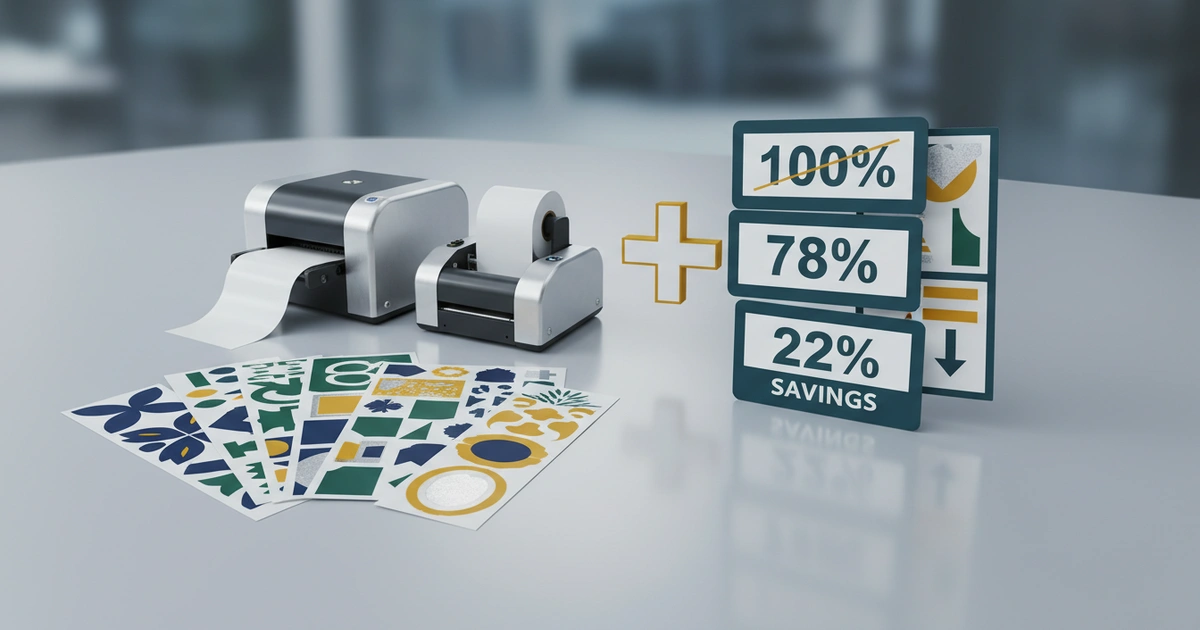
Following this custom sticker production guide reduces waste from 40% to
Ready to get started with custom sticker production guide? Contact our team to explore the right solution for your next project.
Frequently Asked Questions
When should I choose offset printing over digital for custom stickers?
Offset printing becomes cost-effective above 10,000 units, with per-unit cost dropping at volume. Digital printing is better for short runs under 2,000 units due to faster setup and no plate costs. For volumes between 2,000 and 10,000 units, compare quotes from both processes.
What material thickness is recommended for outdoor stickers?
For outdoor use, 80-100 micron vinyl with permanent adhesive is required. This thickness withstands rain, UV exposure, and temperature swings. Paper stickers are not suitable outdoors as they peel and fade within weeks.
What is Delta E and why is it important for sticker color accuracy?
Delta E measures color difference between the proof and the printed sticker. A Delta E <3.0 is the standard for brand consistency. Our Heidelberg press with inline spectrophotometer maintains this tolerance across every production run, ensuring repeatable color quality.
How do I prepare artwork to avoid reprint costs?
Use 300 DPI, CMYK color mode, with 0.125 inch (3 mm) bleed and 0.0625 inch (1.5 mm) safety margin. Submit PDF/X-1a or PDF/X-4 files with embedded color profiles. Missing bleed or RGB artwork causes white edges and color shift, accounting for significant reprint costs.
What should I check during a press check for stickers?
Use D50 (5000K) lighting and a spectrophotometer to measure color against the proof with Delta E <3.0 tolerance. Check for registration, banding, hickies, and dot gain. Request a first article inspection report at the start of the press run to confirm color consistency before full production.