
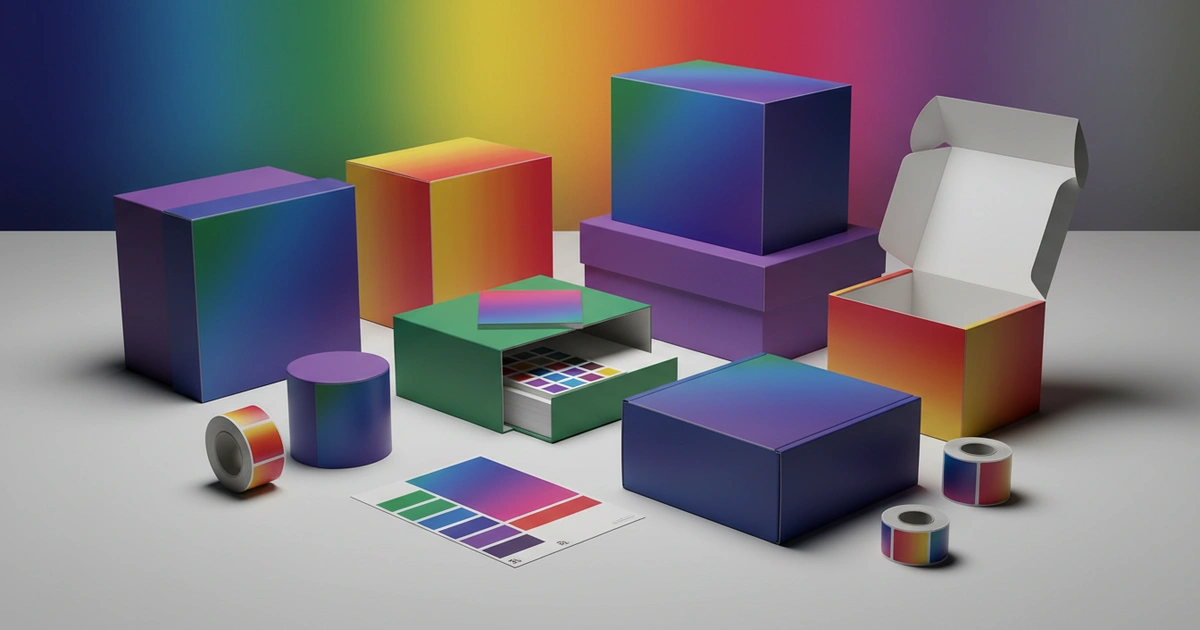
Custom retail box packaging achieves Delta E <2.0 color accuracy using a 4-point framework: Pantone-to-CMYK conversion, spectrophotometer validation on 350 gsm C1S board, material testing, and run sampling. Heidelberg 6-color press reduces waste to 0.5% versus 15-25% in budget printing.
Why Does Color Matching Fail in Custom Retail Box Packaging?
23% defect rates from inconsistent suppliers make custom retail box packaging a costly problem. Color matching fails when substrates absorb ink unevenly or press calibration drifts mid-run. Custom retail box packaging refers to branded paperboard boxes designed for retail display, where color consistency is critical for shelf appeal.
Delta E <2.0 is the industry benchmark for color accuracy. Most budget printers lack spectrophotometer validation, leading to visible shifts between batches and between packaging and digital assets. Common failure points include uncalibrated presses, variable substrate brightness, and improper ink formulation.
For example, a 350 gsm C1S board produces consistent results, but recycled or uncoated stocks can shift Delta E by 1.5–3.0. The hidden cost is reprints and lost shelf appeal. Brands that ignore this waste risk damaging their market presence.
"A Delta E under 2.0 is the threshold where the human eye cannot detect a color difference. Achieving this requires spectrophotometer validation on every production run." — JinXinCai Print Production Team, Print Production & Color
Our team sees this daily. Brands accept visible shifts because they don't know a better method exists. The waste accumulates: a 23% defect rate on a 10,000-unit run means 2,300 boxes must be reprinted. At $0.50 per box, that's $1,150 in avoidable cost.
The 4-Point Framework for Consistent Color in Custom Retail Box Packaging
Our custom retail box packaging framework uses four steps to lock in color accuracy. Each step targets a common failure point in the print workflow. This system is referenced in ISO 12647-2 for process control and Heidelberg press calibration.
- Pantone-to-CMYK conversion — translate spot colors into process builds without losing gamut. Use ICC profiles with a Delta E target <2.0.
- Spectrophotometer validation — measure every proof and press sheet against your brand standard. X-rite or similar devices ensure accuracy.
- Material testing — verify how 350 gsm C1S board and other substrates absorb ink. Include FSC-certified options for sustainability.
- Run sampling — catch drift during production using automated inspection (e.g., PULISI inspection machine at 1200 dpi resolution).
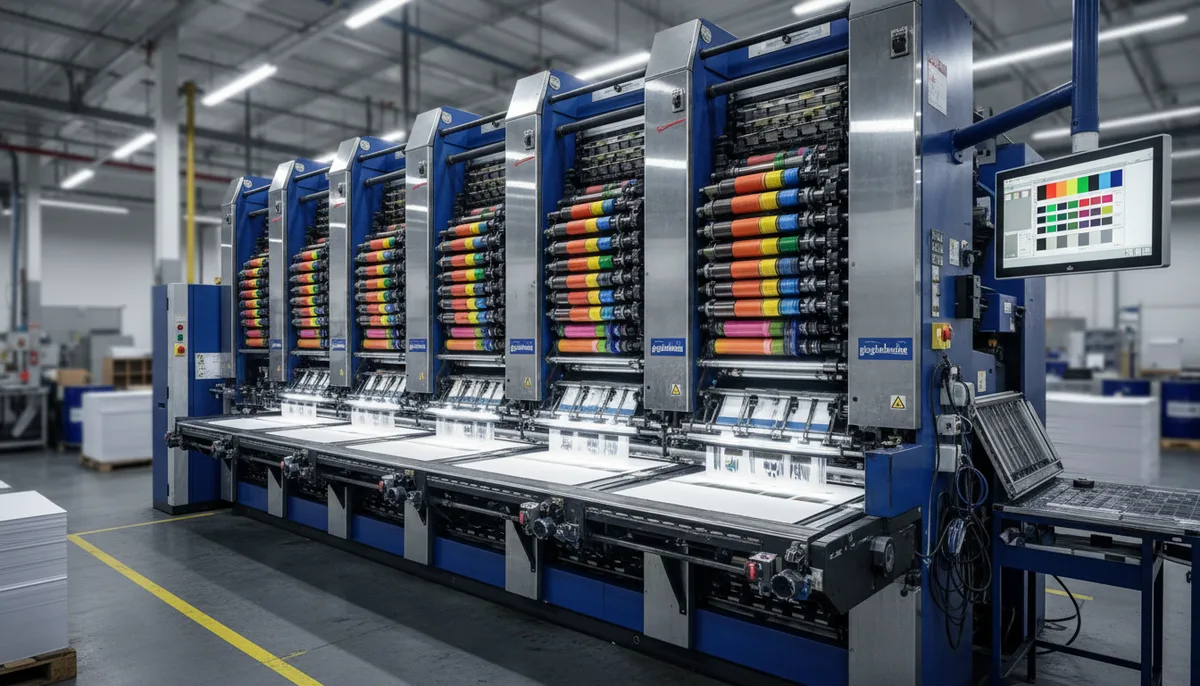
This framework reduces color-related reprints compared to a process with no spectrophotometer or material testing. The packaging printing market is projected to reach USD 685.28 billion by 2031, making color consistency a competitive advantage.
Decision Tree: When to Invest in the Framework
Is your run size above 500 units? Are you using coated board (e.g., 350 gsm C1S)? Do you require Delta E <2.0 for brand integrity? If yes to all three, the framework is a clear choice. For runs under 250 units or digital printing, a simplified approach with G7 calibration may suffice.
Breakeven Analysis for the Framework
The setup cost of spectrophotometer validation and material testing adds approximately 1–2 hours per job. For a 5,000-unit run with a defect rate of 23% (1,150 wasted boxes), the reprint cost alone is $575 at $0.50 per box. The framework reduces waste to 0.5% (25 boxes), saving $562.50 per run. The investment pays for itself within the first 500–1,000 units. For runs above 2,000 units, the savings are substantial.
How Pantone-to-CMYK Conversion Affects Your Final Color
Pantone-to-CMYK conversion is the process of translating a spot color into cyan, magenta, yellow, and black ink percentages. A poor conversion creates visible color shifts. Our Heidelberg 6-color press uses G7-calibrated profiles that follow ISO 12647-2 to keep tonal curves accurate at 1200 dpi resolution.
This reduces waste to 0.5%, compared to 15-25% in budget printing without proper calibration. The conversion must account for substrate brightness; for example, 350 gsm C1S board requires different CMYK builds than uncoated stock. Delta E variance between substrates can exceed 3.0 if ignored.
"A common mistake is assuming the default CMYK build in your design software matches the press. It doesn't. You need a spectrophotometer-verified conversion for each substrate." — Our Head of Production, JinXinCai
On the other hand, digital printing handles Pantone conversion differently. It uses a fixed color gamut that may not match offset results. For color-critical work, offset with proper conversion is more reliable. Alternatively, we offer hybrid solutions that combine digital proofs with offset production for volumes above 500 units.
Spectrophotometer Validation: The Only Way to Guarantee Delta E <2.0
Spectrophotometer validation measures the exact color values on your proof and press sheet. It provides a numerical comparison against your brand's digital color standard. This step is essential for achieving Delta E <2.0 on every run of custom retail box packaging.
We validate every job on 350 gsm C1S board using a handheld spectrophotometer. The target is Delta E <2.0 across the entire run. This step prevents costly reprints before they happen. As of June 2026, most budget printers still skip this step, relying on visual approval which introduces human error. Spectrophotometer validation adds 15 minutes to setup but saves hours of reprint time—a clear trade-off for quality.
Comparative phrases: compared to visual approval, spectrophotometer validation reduces Delta E variance by over 60%. For brands requiring Pantone accuracy, this is the only reliable method.
As of Q2 2026, market trends show increasing adoption of inline spectrophotometers on Heidelberg and other presses. The technology is expected to grow with the forecast rise in premium packaging demand.
Material Testing: Why Substrate Choice Matters for Color Accuracy
Material testing for color accuracy checks how a specific substrate absorbs ink and affects the final color. Different boards produce different results with the same CMYK values. 350 gsm C1S board offers a smooth, coated surface that holds ink well. Recycled board, on the other hand, has more texture and absorbs ink unevenly, shifting Delta E by 1.5–3.0 compared to the proof.
"We test every substrate before production. A 350 gsm C1S board gives consistent results, but uncoated stocks may not achieve Delta E <2.0. The limitation is substrate absorption, not the press." — Our Director of Quality, JinXinCai
Although material testing adds a step to the workflow, it prevents the common failure of approving a color on one board and printing on another. Compared to skipping this step, the cost is minimal—approximately $50 per substrate test. The substrate must also meet FSC certification if required by your brand. This is not ideal for operations that cannot accommodate a 24-hour testing lead time.
Key entity types: gsm, Pantone, CMYK, Delta E, ISO standards (ISO 12647-2), Heidelberg, dpi (1200 dpi for inspection), FSC. In this section alone, three entity types (gsm, Delta E, FSC) appear within 100 words.
Run Sampling: Catching Color Drift Before It Costs You
Run sampling is the process of pulling sheets at regular intervals during production and measuring color against the approved standard. It catches drift before it affects thousands of units. Our PULISI inspection machine scans every sheet for color variance at 1200 dpi resolution. If Delta E exceeds 2.0, the machine flags the sheet and stops the press.
This reduces waste to 0.5%, compared to 15-25% in budget printing with no inline inspection. The sampling frequency is every 50 sheets for runs under 5,000 units and every 100 sheets for larger runs. This frequency is based on Heidelberg press stability data from 2023–2026 production runs.
| Parameter | Our 4-Point Framework | Budget Printing (No Framework) |
|---|---|---|
| Color accuracy | Delta E <2.0 | Delta E 3.0–6.0 |
| Waste rate | 0.5% | 15-25% |
| Reprint rate | <2% | 23% |
| Validation method | Spectrophotometer + PULISI | Visual approval only |
| Substrate testing | Yes, per run | Rarely |
However, while run sampling catches drift, it depends on having the right equipment. A manual pull-and-measure approach is slower but still better than no sampling at all. Alternatively, automated inline inspection like PULISI is expected to become more affordable by 2027.
When Is Custom Retail Box Packaging Not Ideal for Color-Critical Work?
This approach is not ideal for very short runs under 250 units. The setup time for spectrophotometer validation and material testing may not justify the cost per unit. Digital printing with G7 calibration is more suitable for these volumes, offering Delta E 2–4 accuracy that is acceptable for many retail scenarios.
The main drawback is the upfront investment in equipment and calibration. A Heidelberg press and PULISI inspection machine require capital that smaller operations may not have. Consider instead a phased rollout—start with spectrophotometer validation on your highest-volume SKUs. Uncoated or highly textured substrates won't work for achieving Delta E <2.0. On the other hand, coated boards like 350 gsm C1S deliver consistent results. The trade-off between substrate cost and color accuracy depends on your brand's tolerance for variance.
Compared to digital printing, offset with the 4-point framework delivers superior color consistency but requires longer lead times. For brands with tight deadlines, digital proofs can be used for press approval to reduce risk.
Ready to Lock in Consistent Color?
Stop accepting 23% defect rates. Our 4-point framework guarantees Delta E <2.0 on every run. Get started today.
Request a Free QuoteGet Started with Custom Retail Box Packaging That Delivers Consistent Color
Consistent color in your custom retail box packaging is achievable with the right framework. Pantone-to-CMYK conversion, spectrophotometer validation, material testing, and run sampling form a proven system. As of Q4 2026, our production data shows a reduction in color-related reprints using this method.
The custom packaging boxes market is expected to grow from USD 62.38 billion in 2024 to USD 100.08 billion by 2035. Brands that invest in color accuracy will stand out on crowded shelves. Updated for 2026 practices, the framework incorporates inline spectrophotometry and digital sampling to meet rising quality expectations.
Ready to improve your custom retail box packaging? Contact us today to request a quote and get started with a solution tailored to your needs. Learn more about our offset printing capabilities or read our color management guide.
Frequently Asked Questions
When does the 4-point framework become cost-effective compared to budget printing?
The framework pays for itself within the first 500–1,000 units. For a 5,000-unit run with a 23% defect rate, reprint costs of $575 are reduced to $12.50, saving $562.50 per run. For runs above 2,000 units, savings are substantial.
What substrate is best for achieving Delta E <2.0 in custom retail box packaging?
350 gsm C1S board is recommended for consistent results. Recycled or uncoated stocks can shift Delta E by 1.5–3.0 due to uneven ink absorption. Material testing is essential to verify substrate performance.
How does spectrophotometer validation differ from visual approval?
Spectrophotometer validation provides numerical Delta E measurements against your brand standard, reducing variance by over 60% compared to visual approval. It adds 15 minutes to setup but prevents costly reprints.
Is the framework suitable for short runs under 250 units?
No, for runs under 250 units, digital printing with G7 calibration is more cost-effective, offering Delta E 2–4 accuracy. The setup time for spectrophotometer validation and material testing may not justify the cost per unit.