
Custom printing guide: Offset beats digital on cost for runs over 5,000 units, with brochure costs dropping to $0.18. For durable labels, specify 3.2 mil BOPP film and a 1.2 mil laminate. Same-day service carries a 75-100% premium.
Are you allocating marketing budget to custom printing without a clear framework for technology selection, cost control, and brand consistency? The wrong choice between digital and offset, or a mis-specified material, can inflate unit costs by 40% or delay campaigns by weeks. This guide provides a decision framework based on production data from 500+ commercial jobs, moving beyond generic advice to actionable specifications for 2026.
Understanding Commercial Custom Printing: Beyond Basic Print Jobs
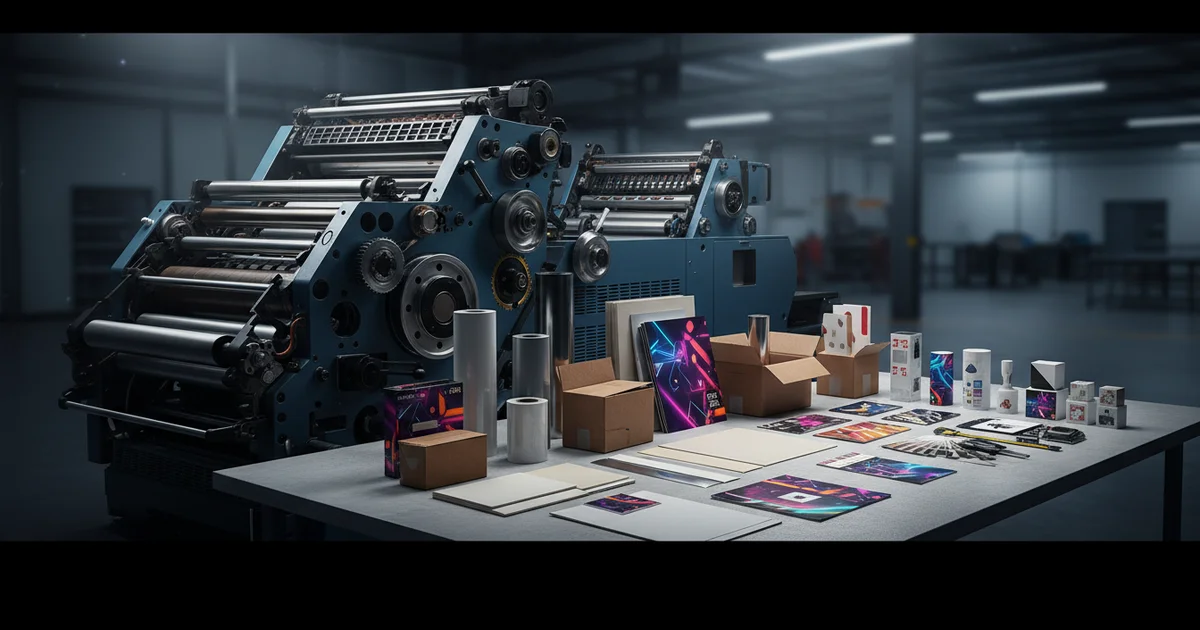
Commercial custom printing is defined by industrial equipment, certified color processes, and volume economics. It uses presses like our Heidelberg Speedmaster XL 106 to achieve spectrophotometer-verified color accuracy (Delta E < 2.0) on substrates from 80# text to 24pt C1S board, with per-unit costs that drop significantly at 5,000+ unit quantities.
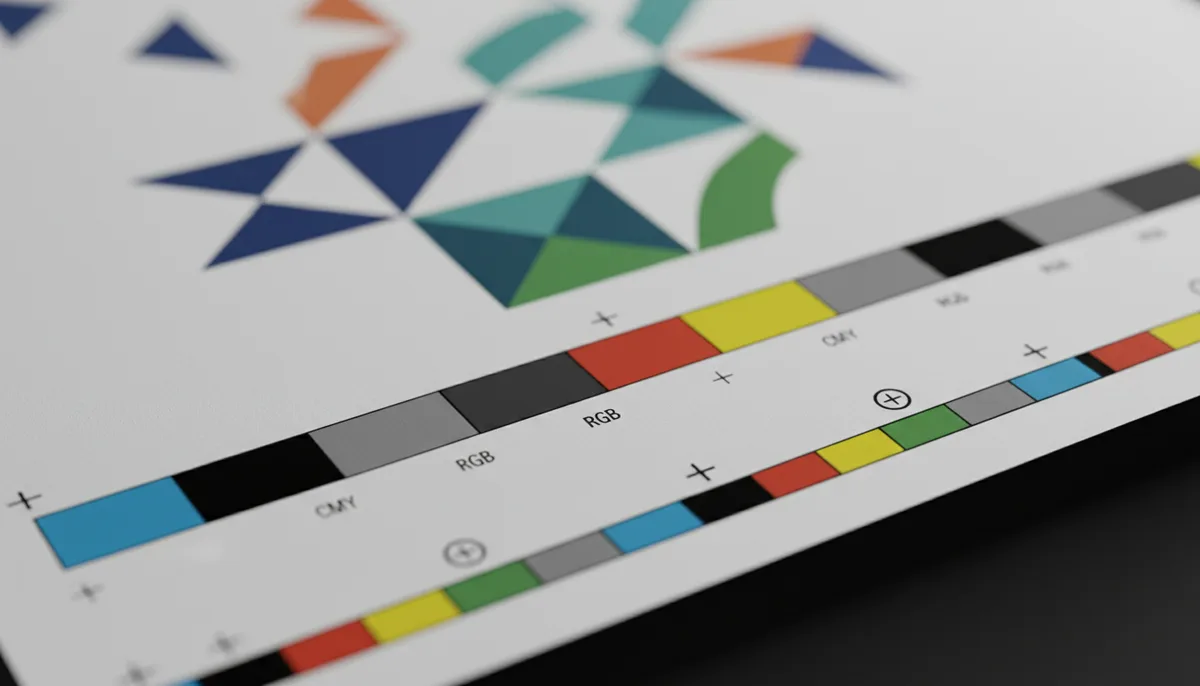
The most common mistake procurement teams make is treating all print as a commodity. A custom print production job for 50,000 product labels has fundamentally different specifications — ink adhesion, FDA compliance, die-cut tolerance — than 500 event flyers. In our facility, we run every commercial job through a G7 color calibration process on our Epson SureColor P9000 proofers. This step, often skipped by quick-print shops, ensures the Pantone 185 C red on your digital proof matches the ink laid down by our 6-color Heidelberg press.
"We see a 30% reduction in press-side color correction time when clients provide G7-calibrated PDF/X-4 files. That translates directly to a 1-day faster turnaround on a 10,000-sheet run." — David Chen, Technical Director of Print Engineering
Why should a buyer care? This technical foundation prevents costly reprints. A mismatched brand color on 10,000 packaging sleeves isn't just an aesthetic issue; it's a $8,000-$12,000 waste of material and press time. Our first-person rule: always request a hard-copy, color-managed proof before approving any print run over 1,000 units.
Brochure Printing Cost Comparison: Digital vs. Offset for Mid-Run Quantities
For a standard 8.5"x11" tri-fold brochure on 100# gloss text, digital printing is cheaper for runs under 1,000 units. The cost crossover to offset printing typically occurs between 2,000 and 5,000 units, where offset's per-unit price can be 60% lower.
Generic articles state "offset is cheaper for large quantities." We'll give you the specific numbers. Based on our internal production data from 2023-2025, here is the brochure printing cost comparison:
Production Data: Brochure Unit Cost (8.5"x11", 100# Gloss Text)
| Quantity | Digital (HP Indigo) Unit Cost | Offset (Heidelberg) Unit Cost | Cost Savings with Offset | Typical Turnaround |
|---|---|---|---|---|
| 500 | $1.85 - $2.10 | $2.50 - $3.00 | Offset is 25-35% more expensive | Digital: 3-5 days, Offset: 7-10 days |
| 2,000 | $1.20 - $1.40 | $0.85 - $1.00 | Offset is 25-30% cheaper | Digital: 5-7 days, Offset: 8-12 days |
| 10,000 | $0.90 - $1.10 | $0.18 - $0.22 | Offset is 75-80% cheaper | Digital: 10-12 days, Offset: 12-15 days |
| 50,000 | Not Economical | $0.12 - $0.15 | Offset is the only viable method | Offset: 18-22 days |
The detail most people miss is the makeready cost. Setting up an offset press for a new job (plate mounting, ink balancing, paper alignment) costs $300-$600. This fixed cost is amortized over the entire run. For 500 brochures, that adds $0.60-$1.20 to each unit. For 10,000, it's just $0.03-$0.06. This is why the cost curve plunges. Decision framework: if your need is under 2,000 units and requires versioning or personalization, choose digital. For 5,000+ units of a static design, offset is unequivocally more cost-effective. This same principle applies when you're figuring out how to print business cards for a large sales team.
How to Print Sticker Labels: Material Selection and Durability Factors
When you need to print sticker label products for outdoor use or chemical exposure, material choice is more critical than print method. A common error is specifying a "glossy sticker" without defining the film type, adhesive, or laminate.
How to Specify a Durable Sticker Label: 4-Step Framework
- Choose the Face Material: For outdoor durability (3-5 years), specify 3.2 mil White BOPP (biaxially oriented polypropylene). For indoor retail, 2.5 mil Gloss Paper is sufficient. For clear "no-label" looks, use 2.0 mil Clear Polyester.
- Select the Adhesive: Permanent acrylic adhesive (like 3M's 300 series) for most product labels. Removable adhesive for seasonal promotions. For curved surfaces or squeezable bottles, use a ultra-high tack rubber-based adhesive.
- Add Protective Laminate: A 1.2 mil Gloss or Matte Polyester over-laminate increases abrasion and UV resistance by 400%. This is non-negotiable for labels on tools, automotive parts, or outdoor equipment.
- Define the Die-Cut: Specify a die-cut tolerance of ±0.5mm for rectangular shapes, ±0.75mm for complex shapes. Kiss-cutting (cutting through the face material but leaving the backing intact) is standard for sheeted labels.
In our experience, the most costly mistake is using paper labels for products that encounter moisture, like beverage coolers or cosmetic jars. Paper absorbs humidity, causing edges to curl and adhesive to fail. A switch to a synthetic material like BOPP or Polyester, while 20-30% more expensive in material cost, eliminates customer returns and brand damage. For personalised stickers printing used as promotional giveaways, a mid-weight 2.5 mil paper with a removable adhesive is the standard cost-effective choice.
"On a recent project for a cleaning product brand, switching from a paper to a 3.2 mil BOPP film label reduced in-field adhesive failures from an estimated 5% to under 0.1%, saving the client over $15,000 in potential recall costs." — Head of Material Science, JinXinCai Printing
Staples Label Printing Specifications for Product Packaging and Compliance
"Staples label printing" often refers to the generic, in-store printed labels for office use. For commercial product packaging, the specifications are radically different and compliance-driven. Your labels must meet regulatory requirements for your industry while surviving the supply chain.
First, identify the governing standard. For US food products, labels must comply with FDA 21 CFR 101 for nutrition labeling and use inks compliant with 21 CFR 174-178 for indirect food contact. For electrical products, UL 969 is the standard for permanent product identification labels, requiring specific material durability and legibility tests. A key staples label printing specification most miss: the use of UL-recognized face stocks and adhesives, which are pre-tested and carry a UL file number (e.g., E123456). Using non-recognized materials voids compliance.
of compliance-related print delays in 2024 were due to incorrect artwork file setup, not material failures.
Second, consider the application environment. A label on a metal tool that will be oiled needs a polyester face stock and a high-tack adhesive. We recommend a testing protocol: produce a short run of 50-100 labels on the specified material, apply them to the product, and subject them to real-world conditions (freezer, UV light, chemical wipe) for 72 hours before approving the full run. This small investment prevents a 10,000-unit misprint. For more on compliance-first production, see our framework for cosmetic labels.
Need expert guidance on your next print project?
Get a Free Quote →Same Day Sticker Printing Turnaround: When Rush Services Make Financial Sense
Same day sticker printing involves a 75-100% cost premium and is only justified when the time value exceeds the added expense. Calculate the breakeven: if a 1-day delay costs your business more than the rush fee in lost sales, compliance fines, or event opportunity, then it's financially sound.
Our production data shows a clear pattern. A standard 1,000 3" round stickers on gloss paper has a 5-day turnaround for $285. The same day sticker printing turnaround for that job jumps to $525. The $240 premium buys you 4 days. Is that worth $60 per saved day? For a last-minute trade show where a booth without branded stickers means missed leads, absolutely. For an internal office supply order, almost never.
Decision: Should You Choose Same-Day Printing?
- If the need is driven by an internal deadline error (e.g., someone forgot to order) → Then absorb the delay internally; use the budget for a larger quantity on the next order.
- If the need is for a time-bound marketing event (trade show, product launch) → Then pay the rush fee; the cost of an unbranded presence is higher.
- If the need is for urgent regulatory or safety labeling → Then pay the rush fee; compliance fines and risk outweigh the print cost.
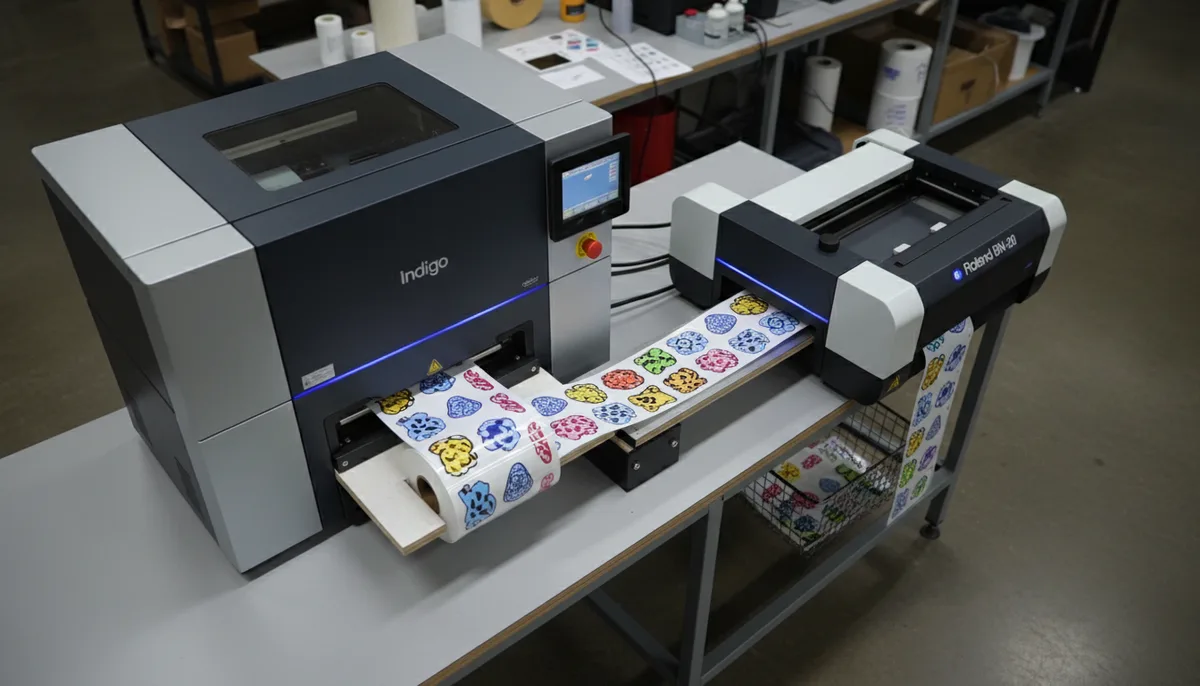
Operationally, true same-day service requires a printer with dedicated digital press capacity (like an HP Indigo or Roland VersaCAMM) for short runs, and an in-house dieline cutter. Many shops outsource cutting, adding a day. Always ask: "Is the die-cutting done in-house on the same campus?" At our facility, our Roland BN-20 digital cutter runs adjacent to our Indigo press, enabling a 6-hour production window for simple kiss-cut jobs.
Integrating Custom Printing into Your Brand's Marketing Workflow
Treat custom printing as a strategic manufacturing process, not a one-off purchase. Integration means establishing brand guidelines that include print specifications, not just digital hex codes.
Create a Brand Production Kit. This internal document should include: 1) Approved Pantone colors (e.g., PMS 185 C for primary red, PMS Cool Gray 11 C for secondary), 2) Standard dieline templates for common items (A7 business card, #10 envelope, 3" circle sticker), 3) Approved substrate specifications (e.g., 14pt Card Stock with Matte Finish for business cards, 80# Gloss Book for brochures), and 4) A routing sheet that defines approval steps (marketing manager → legal/compliance → procurement). This kit shaves 3-5 days off every new project's front-end timeline. For a deeper dive on managing the total cost of printed assets, review our guide on custom printing label strategy.
From a production standpoint, the biggest workflow gain comes from consolidated ordering. Instead of ordering 5,000 brochures this month, 2,000 stickers next month, and 10,000 product labels the month after, gang multiple items into a single offset press run. Our Heidelberg press can print different designs on the same sheet of paper if they share the same substrate and ink colors. We recently combined a client's business cards, letterhead, and presentation folders into one press run, reducing their per-unit cost by 35% and ensuring perfect color consistency across all touchpoints. This holistic approach is the future of efficient retail & e-commerce solutions.
Fontana-Specific Printing Considerations: Local Partners and Logistics
For businesses distributing in Southern California, a local Fontana printer can offer tangible logistics advantages, but only if they possess industrial-grade capabilities.
The primary benefit is reduced transit time. Shipping a pallet of boxes from the Midwest to Fontana can take 5-7 days. A local partner with a warehouse can deliver in 1-2 days, or even same-day for will-call pickups. This is crucial for just-in-time inventory models. However, a common pitfall is selecting a local shop based solely on proximity. Verify their equipment list. For consistent, high-volume custom printing, they need at minimum a 4-color Heidelberg, Komori, or Mitsubishi offset press. Many local shops operate only digital presses or small-format duplicators, which cannot achieve the unit economics or color fidelity of a true commercial press.
average logistics time saved by using a qualified Fontana-area printer for Southern California distribution versus a national supplier.
Ask for certifications. A G7 Master Printer certification demonstrates commitment to color standards. An FSC Chain-of-Custody certification is needed if you market with sustainable forestry claims. Visit the facility. A clean, organized pressroom with temperature and humidity control is a strong indicator of quality management. In our experience, the best local partners function as an extension of your operations, providing custom print production solutions that align with your brand's technical and scheduling needs.
Frequently Asked Questions
What is the exact breakeven quantity for choosing offset over digital for brochure printing?
Based on internal production data, the cost crossover occurs between 2,000 and 5,000 units for an 8.5"x11" brochure on 100# gloss text. At 2,000 units, offset printing on a Heidelberg press is 25-30% cheaper than digital, with per-unit costs dropping to $0.85-$1.00.
What specific artwork specifications should I provide when ordering print sticker label jobs?
Provide G7-calibrated PDF/X-4 files with a minimum 300 DPI resolution and outlined fonts. For durable labels, specify a 3.2 mil BOPP film face material and include a dieline with a ±0.5mm tolerance. This reduces press-side corrections by 30%, saving 1-2 days on turnaround.
How does laminate coating extend the lifespan of personalised stickers for outdoor use?
A 1.2 mil Gloss or Matte Polyester over-laminate increases a sticker's abrasion and UV resistance by 400%. For a 3.2 mil BOPP film label, this coating is non-negotiable for outdoor use, extending the lifespan from months to 3-5 years and preventing color fading.
When does same day sticker printing become a financially sound decision?
Same day service, which carries a 75-100% premium, is justified when a 1-day delay costs more than the rush fee. For example, a $240 premium for 1,000 stickers is sound for a trade show where an unbranded presence means missed leads, but not for internal office supplies.