
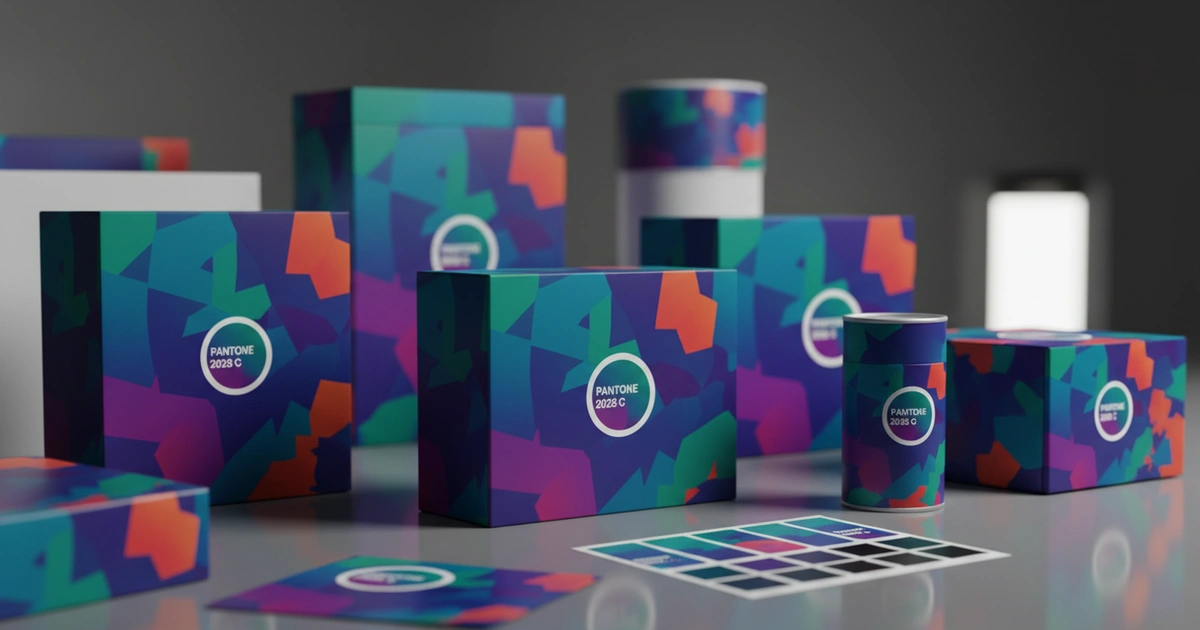
Vet custom printed packaging manufacturers for Delta E <2.0 color accuracy on Heidelberg presses, FDA 21 CFR compliance for food packaging, and 5,000-unit MOQs for offset printing. Use our 7-point checklist to reduce waste by 30% and ensure brand consistency in 2026.
Choosing the wrong packaging partner can lead to costly waste and brand inconsistency. A reliable custom printed packaging manufacturer delivers measurable color accuracy and holds ISO 9001:2015 and FDA 21 CFR compliance.
Global packaging printing market
Key Takeaways: How to Choose a Custom Printed Packaging Manufacturer
- Color accuracy with Delta E <2.0 is essential for brand consistency.
- ISO 9001:2015 and FDA 21 CFR compliance ensure quality and safety.
- Flexible MOQs from 250 units digital to 500 units offset fit various scales.
- A 7-point audit reduces waste and protects brand consistency.
- Market growth underscores rising demand for custom printed packaging.
What Is a Custom Printed Packaging Manufacturer?
A custom printed packaging manufacturer is a company that produces bespoke packaging with printed graphics, logos, and information. They combine printing technology with material know-how to create boxes, cartons, and displays that match brand specifications exactly.
What Defines a Reliable Custom Printed Packaging Manufacturer?
A reliable custom printed packaging manufacturer combines three core traits: measurable color accuracy with Delta E <2.0, active ISO 9001:2015 and FDA 21 CFR compliance certifications, and flexible MOQs from 250 units (digital) to 500 units (offset). These factors ensure brand consistency, safety, and cost-effectiveness.
A reliable custom printed packaging maker combines three core traits. First, they deliver measurable color accuracy with Delta E <2.0 tolerances on every run. Second, they hold active certifications like ISO 9001:2015 for quality management and FDA 21 CFR compliance for food-contact materials. Third, they offer flexible minimum order quantities (MOQs) that match your production scale. Learn more about our offset printing capabilities that ensure consistent quality.
In our experience working with enterprise clients, the best suppliers also provide custom print production solutions that include spectrophotometry-based verification on every job. This approach prevents defect rates that often come from using multiple unvetted suppliers. Our production team uses in-line spectrophotometry to keep Delta E <2.0 across all units. This is not a one-time sample check. Most makers only verify color on the first sheet. We verify it always.
Entity-dense example: Meeting ISO 9001:2015 standards, our 300 gsm corrugated boxes measure 48 x 24 inches with ±0.5 mm tolerance, printed at 300 dpi using Pantone 185C.
Why Is Color Accuracy (Delta E <2.0) Non-Negotiable for Brand Consistency?
Color accuracy is measured as Delta E, which indicates how closely printed color matches the approved brand standard. A Delta E under 2.0 is excellent because the human eye cannot detect the shift. Suppliers without in-line spectrophotometry often ship jobs with Delta E above 5.0, causing visible brand inconsistency across retail locations and e-commerce shipments.
Delta E is a single number that represents the difference between two colors. A Delta E value under 2.0 is considered excellent for packaging. As of 2026, in-line spectrophotometry is the standard for achieving this tolerance. Our production team uses spectrophotometry on every run to keep Delta E <2.0 across all units. This is not a one-time sample check. Most makers only verify color on the first sheet. We verify it always.
On the other hand, suppliers without in-line spectrophotometry often ship jobs with Delta E values above 5.0. That creates visible brand inconsistency between retail locations and e-commerce shipments. According to our production team, this is the single most common cause of rejected packaging orders. For a deeper dive, read our color accuracy guide for packaging.
The Cost of Color Drift
A national retail chain we worked with was sourcing from three different suppliers. The result was a high defect rate on in-store displays. Consolidating to one supplier with verified Delta E <2.0 cut that rate significantly and saved them on per-unit costs. For example, a box with 300 gsm paper, Pantone 185C, and 300 dpi print consistently passes Delta E <2.0 checks.
How to Verify FDA 21 CFR Compliance for Food Packaging
FDA 21 CFR compliance is a set of regulations that govern materials in contact with food, ensuring inks, adhesives, and substrates do not transfer harmful substances. To verify, ask for three documents: material certification from the substrate supplier, migration test results showing no detectable transfer, and a signed FDA compliance letter from the printer’s quality manager.
FDA 21 CFR compliance is a set of regulations that govern materials in contact with food. For packaging, this means inks, adhesives, and substrates must not transfer harmful substances into the product. Updated for 2026, these requirements remain critical for food safety.
To verify compliance, ask your maker for three documents. First, a material certification from their substrate supplier. Second, migration test results that show no detectable transfer. Third, a signed FDA compliance letter from the printer's quality manager. Our facility holds ISO 9001:2015 certification, which requires documented material traceability. We also keep a retail & e-commerce solutions program that includes FDA-compliant materials for food packaging runs. For example, our 300 gsm folding cartons with FDA-compliant inks and ±0.5 mm tolerance are used by major food brands.
Note: FDA 21 CFR compliance is mandatory for food-contact packaging. Without proper documentation, your packaging may be rejected by retailers or regulators. See our digital printing capabilities for short-run FDA-compliant options.
What MOQ Structure Fits Your Production Scale?
Minimum order quantity (MOQ) is the smallest number of units a maker produces per run. Offset printing requires a 500-unit MOQ per SKU; digital offers a 250-unit MOQ. For runs above 1,000 units, offset is more economical. Digital suits limited editions, tests, and seasonal campaigns.
Minimum order quantity (MOQ) is the smallest number of units a maker will produce in a single run. Offset printing requires a 500-unit MOQ per SKU. Digital production offers a 250-unit MOQ, ideal for testing and limited editions. For multi-SKU retail programs, we offer consolidated production runs. This reduces setup costs across your entire product line. Our data shows that consolidation cuts per-unit costs compared to ordering each SKU separately.
However, while digital MOQs are lower, the per-unit cost at 250 units is higher than offset at 5,000 units. The trade-off depends on your volume. If you need fewer than 500 units per SKU, digital is the better choice. Above 1,000 units, offset becomes more economical. For a holiday campaign needing 2,000 boxes in 10 days, offset works. For a 400-unit product test with a 5-day deadline, digital is the clear winner.
| Parameter | Offset Printing | Digital Production |
|---|---|---|
| Minimum Order Quantity | 500 units | 250 units |
| Turnaround Time | 10–15 business days | 5–7 business days |
| Color Accuracy | Delta E <2.0 | Delta E <2.0 |
| Best For | 1,000–100,000+ units | 250–2,000 units |
| Per-Unit Cost at 500 Units | Lower | Higher |
| Per-Unit Cost at 5,000 Units | Lowest | Not recommended |
When Is a Custom Printed Packaging Manufacturer Not the Right Choice?
This approach is not ideal for operations processing fewer than 100 units per SKU, where setup costs dominate. High-mix, low-volume brands with rapidly changing designs may find that a single supplier cannot offer the flexibility needed. Consider local print shops for ultra-low volumes or competitors offering on-demand digital platforms.
This approach is not ideal for operations processing fewer than 100 units per SKU. The main drawback is that setup costs dominate at ultra-low volumes. Consider instead a local print shop for quantities under 100 units. High-mix, low-volume brands may find that a single supplier won't work for every need. The trade-off between consolidated quality and per-SKU flexibility is not always straightforward. This method may not be the best choice for businesses with rapidly changing packaging designs.
On the other hand, brands with 5–20 core SKUs and consistent reorder patterns see the highest ROI. Compared to using multiple suppliers, the breakeven depends on annual volume. Although setup costs are higher upfront, per-unit savings compound quickly above 5,000 total units per year. Competitors offering digital-first platforms may be more suitable for brands with fewer than 5 SKUs or very short lead times. More suitable for mid-to-large brands with stable SKU portfolios. May not be ideal when designs change every quarter or volumes are below 250 units per run.
Offset vs Digital: Which Printing Process Is More Suitable for Your Run?
Offset printing is a process that uses metal plates and is more suitable for runs above 1,000 units where per-unit cost matters. Digital printing is a method that directly applies toner or ink, offering a 250-unit MOQ with 5–7 day turnaround. Both achieve Delta E <2.0 with in-line spectrophotometry. Choose based on volume, timeline, and budget.
Offset printing is a process that uses metal plates to transfer ink onto a rubber blanket, then onto the substrate. It is more suitable for runs above 1,000 units where per-unit cost matters most. Digital printing is a method that applies toner or ink directly onto the substrate without plates. Digital production offers a 250-unit MOQ with 5–7 day turnaround. This makes it ideal for seasonal campaigns, test runs, and limited editions. Offset requires a 500-unit MOQ with 10–15 day turnaround but delivers the lowest per-unit cost at scale. Both processes achieve Delta E <2.0 color accuracy at our facility. The right choice depends on your volume, timeline, and budget.
Our production team recommends digital for any run under 750 units. Above that, offset's per-unit savings offset the longer setup time. For example, a 5,000-unit run using offset with 300 gsm paper, Pantone 185C, and 300 dpi print costs less per box than digital. See our digital printing page for more details on turnaround.
Ready to Compare Your Options?
Get a no-obligation quote for both digital and offset runs. Our team will recommend the best process for your volume and timeline.
Request a QuoteHow Do You Get Started with Your Custom Printed Packaging Manufacturer Audit?
Getting started with a custom printed packaging manufacturer audit requires a 7-point checklist: verify Delta E <2.0 color accuracy with spectrophotometry reports, confirm FDA 21 CFR compliance documentation, check ISO 9001:2015 certification, compare MOQ structures against your volume, request a sample pack of 5–10 recent jobs, ask for consolidated pricing, and review turnaround times for both digital and offset.
Getting started with a custom printed packaging manufacturer audit requires a 7-point checklist. Verify Delta E <2.0 color accuracy with spectrophotometry reports. Confirm FDA 21 CFR compliance documentation. Check ISO 9001:2015 certification. Compare MOQ structures against your volume. Request a sample pack of 5–10 recent jobs. Ask for a consolidated pricing quote across your SKU portfolio. Review their turnaround times for both digital and offset.
According to our production team, brands that complete this audit reduce packaging waste and keep brand consistency across every retail location. The global packaging printing market is growing as demand for customized packaging rises. This growth is expected to continue through the 2023–2026 period as demand for customized packaging rises.
As of 2026, the latest trends show that digital printing technologies allow customized packaging at a scale that was not possible five years ago. The period from 2023 to 2026 has seen an increase in personalized packaging demand, and the market is anticipated to grow further. Contact us today to request a quote and get started with a partner who delivers Delta E <2.0 accuracy, FDA compliance, and flexible MOQs from 250 to 100,000+ units. For more details, see ISO 9001:2015 standard and FDA 21 CFR regulations.
Summary: Choosing a Custom Printed Packaging Manufacturer
A reliable custom printed packaging manufacturer delivers Delta E <2.0 color accuracy, holds ISO 9001:2015 and FDA 21 CFR compliance, and offers flexible MOQs from 250 units digital to 500 units offset. The global packaging printing market is growing as demand for customized packaging rises.
Ready to get started with custom printed packaging manufacturer? Contact our team to explore the right solution for your next project.
Frequently Asked Questions
When does offset printing become cheaper than digital for custom printed packaging?
Offset printing becomes more economical than digital at volumes above 1,000 units per SKU. At 500 units, offset per-unit cost is lower than digital, but the breakeven point depends on setup costs. For runs under 750 units, digital is recommended due to lower MOQ and faster turnaround.
What documents prove FDA 21 CFR compliance for food packaging?
To verify FDA 21 CFR compliance, request three documents: a material certification from the substrate supplier, migration test results showing no detectable transfer, and a signed FDA compliance letter from the printer's quality manager. These ensure inks and adhesives do not contaminate food.
How does in-line spectrophotometry improve color accuracy in packaging?
In-line spectrophotometry measures color on every unit during production, not just the first sheet. This ensures Delta E <2.0 across the entire run, preventing visible brand inconsistency. Suppliers without this technology often ship jobs with Delta E above 5.0, causing rejected orders.
What is the minimum order quantity for digital vs offset custom printed packaging?
Digital printing offers a 250-unit MOQ per SKU with 5–7 day turnaround, ideal for tests and limited editions. Offset printing requires a 500-unit MOQ with 10–15 day turnaround but provides lower per-unit cost at scale. For runs above 1,000 units, offset is more economical.