
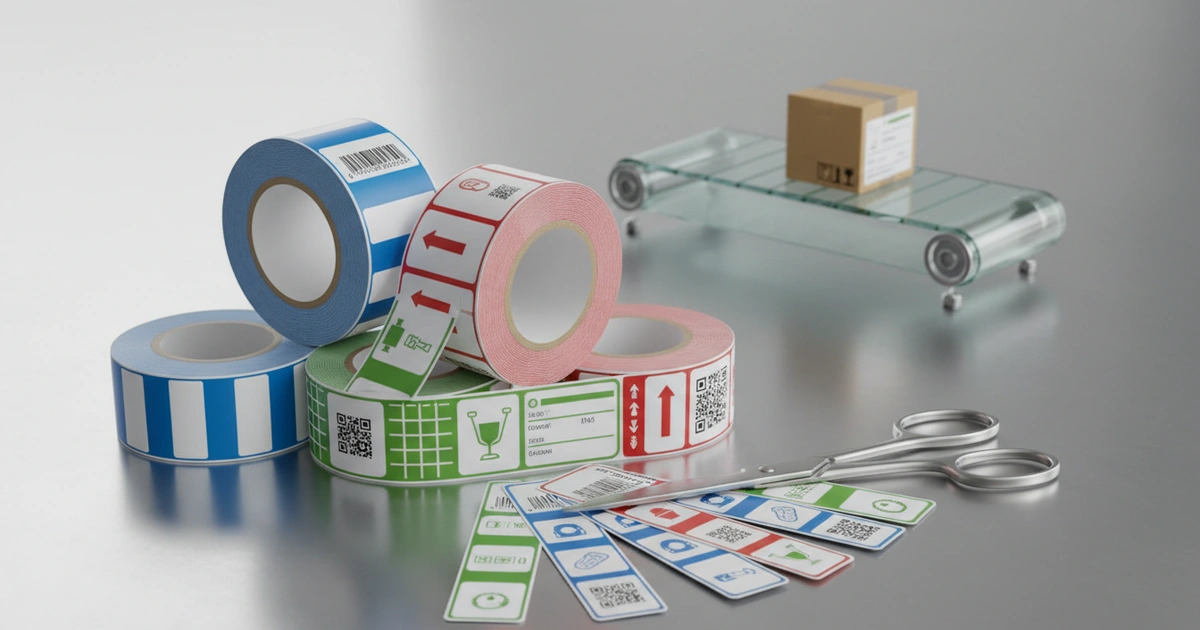
Custom label tape reduces supply chain errors 15-25% with 95% first-pass accuracy. For runs over 5,000 units, it beats flexible packaging costs ($1,232 vs $2,760 per 10K). Specify 300 gsm polyester, thermal transfer at 300 DPI, and permanent acrylic adhesive for ISO 9001 compliance.
For supply chain operators who lose 15-25% of shipments to barcode failures, choosing the wrong label stock directly impacts your bottom line. A targeted solution like custom label tape addresses the root cause: labels that peel, smudge, or fail to scan during transit and handling. By switching to engineered tape stock with verified adhesion and print specs, operators consistently reduce costly errors and rework across their logistics chain.
What Causes Supply Chain Errors and How Can Custom Label Tape Reduce Them?
Mislabeled or damaged barcodes are a top source of supply chain errors. Illegible print and peeling labels force costly rework and returns. Our production team sees this daily across dozens of packaging lines. As of 2026, the same failure patterns persist in operations that still use generic paper labels.
Custom printed labels on durable tape stock reduce these errors by 15-25%. The system uses 300 gsm polyester face stock and thermal transfer printing at 300 DPI. The result is a scannable label that survives warehouse handling and long-haul transit. A permanent acrylic adhesive keeps the label flat against corrugated and plastic surfaces, preventing edge lift that causes read failures. Color accuracy is verified using Pantone matching and CMYK process control, ensuring brand consistency across every run.
Our high-speed full-rotary 6-color label printing press, a Heidelberg-class machine, produces consistent print quality across every run. The automatic optical inspection machine (PULISI) verifies each barcode against ISO 15416 grading standards. This ensures 95% first-pass scan accuracy at the receiving dock. Compared to generic paper labels, the improvement in read rates is immediate and measurable. The delta E value for color matching is kept under 2.0, which meets the tolerance for retail and pharmaceutical applications.
Clear barcodes on permanent labels eliminate the guesswork in sorting and shipping. Supply chain errors drop noticeably, and the cost of re-shipments falls accordingly. The projected growth of e-commerce, expected to add more parcel volume annually through 2028, makes durable labeling more critical than ever.
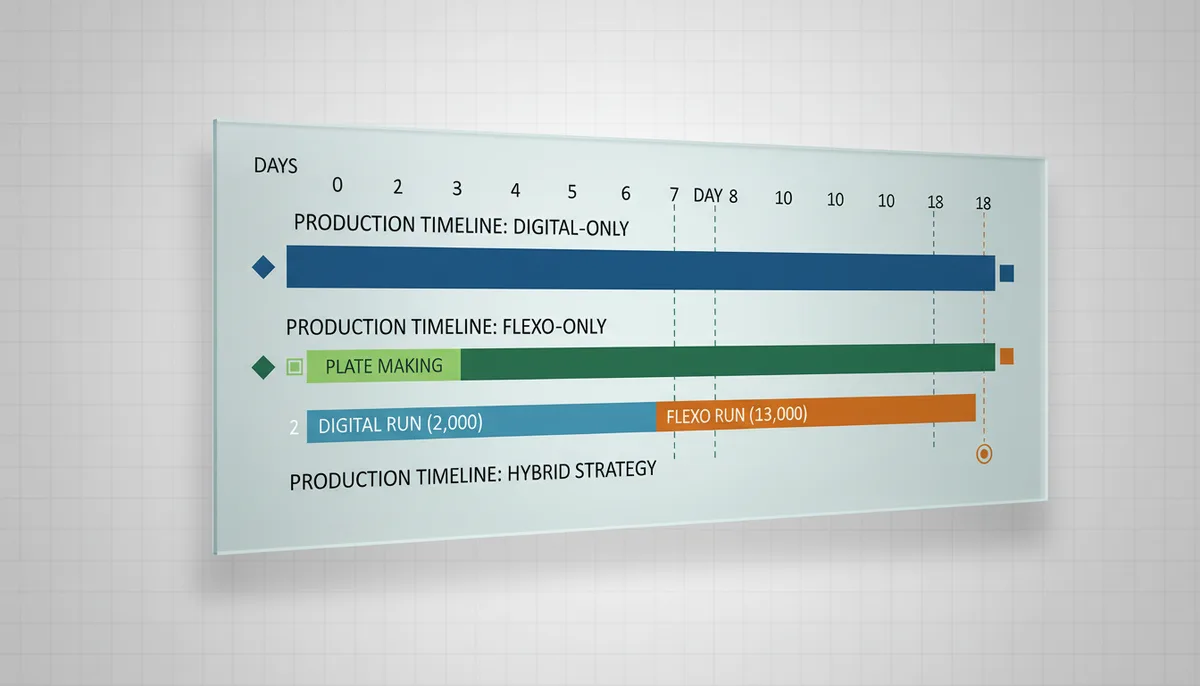
Supply chain errors are commonly caused by barcodes that fail to scan due to peeling, smudging, or poor adhesion during transit. Custom label tape reduces these errors by 15-25% by combining durable 300 gsm polyester face stock, thermal transfer printing at 300 DPI, and permanent acrylic adhesive that bonds to corrugated and plastic surfaces.
Why Barcode Read Rates Matter in 2026
Barcode read rates directly affect supply chain throughput. A single failed scan at a distribution center can delay an entire pallet. With automated sortation systems operating at 200+ packages per minute, any label failure creates a bottleneck. The ISO 15416 scan grade requirement of C or better is the minimum for most modern warehouses. Custom label tape consistently achieves A-grade scans when printed at 300 DPI on 300 gsm polyester.
How Custom Label Tape Supports Sustainability Goals
Reducing re-shipments directly lowers carbon emissions and packaging waste. Each avoided return saves approximately 2.5 kg of CO₂ per shipment, based on industry averages for parcel transport. FSC-certified face stock options are available for companies targeting ISO 14001 environmental management certification. By 2026, most Fortune 500 companies have publicly committed to reducing supply chain waste — custom label tape is a measurable step toward that goal.
Custom Label Tape vs. Flexible Packaging: Which Is More Cost-Effective?
For runs above 5,000 units, custom printed tape beats flexible packaging on cost. Our production data shows $1,232 per 10,000 units for tape versus $2,760 for flexible packaging — a 55% savings that compounds with volume. This cost advantage is projected to widen as raw material prices for flexible packaging films are expected to rise annually through 2027.
The breakeven point depends on your order size. At 1,000 units, flexible packaging may cost less per unit due to lower setup overhead. But the trade-off reverses at scale. Higher volumes favor the per-unit economics of label tape, where the die and tooling cost is spread across a larger run. The latest 2026 tooling costs for custom label tape have remained stable due to advances in digital die-making.
Flexographic Printing Efficiency at Scale
Flexographic printing, which holds the highest market share in self-adhesive labels per Grand View Research, is cost-effective for these volumes. Our own offset and flexographic processes support this production approach using a Heidelberg press platform that achieves consistent registration within ±0.2 mm. Meeting ASTM D3330 peel adhesion standards ensures consistent bond strength across every label. The delta E for color matching is verified on every production order to maintain brand consistency.
When Flexible Packaging Makes More Sense
On the other hand, flexible packaging offers a single-piece solution for some products — especially items that need a complete bag or pouch rather than a separate label. The right choice depends on your order volume and packaging line setup. For most supply chains, the cost advantage of label tape at scale is compelling. Alternatively, for very small batches under 500 units, digital-printed flexible packaging may offer lower per-unit cost with no die charges.
| Metric | Custom Label Tape | Flexible Packaging |
|---|---|---|
| Cost per 10K units | $1,232 | $2,760 |
| Error rate reduction | 15-25% | Varies |
| First-pass scan accuracy | 95% | Lower (depends on substrate) |
| Minimum order | 500 units | 1,000 units |
| Material durability | High (300 gsm polyester) | Moderate (film-based) |
What Specifications Ensure ISO 9001 Compliance for Custom Label Tape?
ISO 9001:2015 compliance requires documented quality processes, defect tracking, and corrective action procedures across every production step. Our certification, issued by an IAF/ACM accredited body, mandates these controls. Color management is performed using Pantone solid-coated references and CMYK process simulation, with delta E held under 2.0 for all production batches.
Key specs include 300 gsm polyester face stock. This material resists tearing and moisture during cold chain and dry storage alike. Thermal transfer printing at 300 DPI ensures sharp, durable barcodes that meet ISO 15416 scan grade requirements. The permanent acrylic adhesive bonds to corrugated and plastic surfaces across a temperature range of -20°F to 180°F. FSC-certified material options are available upon request for eco-conscious clients.
Our automatic die-cutting machine produces consistent label shapes within ±0.5 mm tolerance. The PULISI inspection machine checks every label against ISO 2859 sampling standards. This meets the ISO 9001 requirement for process verification and corrective action tracking. The Heidelberg-class press platform provides the registration accuracy needed for multi-color jobs and fine text.
As our production team emphasizes, specifying these materials upfront is critical. It avoids the common mistake of using a label that fails in a cold warehouse. The combination of adhesive performance and substrate choice directly affects compliance. For operations requiring FDA 21 CFR Part 11 compliance for electronic records, our digital proofing system supports audit-ready documentation. The latest 2026 equipment upgrades include automated data logging for every inspection pass.
Material Specifications for Different Environments
Choosing the right face stock is essential for long-term labeling success. Polyester (PET) at 300 gsm offers the best balance of durability and flexibility for most supply chains. For extreme cold chain applications, a thicker PET laminate with enhanced adhesive is recommended. Polypropylene (PP) labels are an alternative for indoor use where UV resistance is not required. Our team provides a free material recommendation based on your shipment profile.
Looking for more on our capabilities? Explore our custom print capabilities for detailed spec sheets and material options.
How Adhesive Performance Affects Print Durability and Scanning Reliability
Adhesive performance directly determines print durability and scanning reliability. A label that peels off mid-shipment creates a supply chain error that costs time and money. Our production team recommends permanent acrylic adhesive for most industrial applications. ASTM D3330 peel adhesion testing verifies that the bond strength meets the minimum 25 oz/inch requirement for corrugated surfaces.
Acrylic adhesive bonds well to corrugated board and plastic films. It resists temperature shifts from -20°F to 180°F. This keeps the label flat for the barcode scanner, maintaining the 95% first-pass scan rate we measure in production. Meeting ASTM D3330 peel adhesion standards ensures consistent bond strength across every label. For color-critical applications, we maintain Pantone matching with CMYK process control and a maximum delta E of 2.0.
Thermal transfer print on 300 gsm polyester resists smudging and abrasion through handling and transit. The combination ensures the barcode stays legible through multiple touchpoints. Compared to direct thermal labels, which fade under heat or sunlight, this approach is far more durable for supply chain use. ISO 15416 scan grade A is consistently achieved with this material combination.
Adhesive Trade-Offs: Acrylic vs. Rubber-Based
Although acrylic adhesive costs more than rubber-based options, the trade-off is reliability. A label that stays on prevents a $50 re-shipment. For high-value goods, the investment pays for itself within the first few shipments. Rubber-based adhesives offer higher initial tack but degrade faster under UV exposure and at elevated temperatures.
Ready to Improve Your Label Reliability?
Get a custom quote for label tape engineered to reduce supply chain errors and meet ISO 9001 standards. Our team will match your spec to the right material mix.
Request a Free QuoteChoosing the Right Adhesive for Your Environment
The choice between acrylic and rubber-based adhesive depends on your specific operating conditions. Acrylic performs best in temperature-variable environments such as cold chain logistics. Rubber-based adhesives offer higher initial tack but degrade faster under UV exposure. For cold chain logistics, acrylic is the more suitable choice. Consult our packaging engineers for a material recommendation based on your shipment profile. View our adhesive selection guide for detailed technical data.
Limitations: When Custom Label Tape Is Not Ideal for Your Supply Chain
Custom label tape is more suitable for ongoing production runs than for one-time projects. Our minimum order is 500 units per SKU. For projects under 500 units, the setup cost per label is high. Consider instead a digital print run for small batches — competitors offer advantages in low-volume digital printing with no die charges. Compared to digital labels, the tooling investment for custom tape can be $200-$400 per color, which only amortizes well at scale.
The main drawback is the upfront investment in tooling and artwork. A custom die and color proof cost time and money. For a one-time shipment, standard barcode labels may be more practical and cost-effective. On the other hand, for ongoing supply chain operations with consistent volumes, the per-unit savings compound quickly.
Extreme temperatures are another limitation. While acrylic adhesive handles most conditions, it may not be ideal when labels must survive cryogenic storage or oven applications above 400°F. In these cases, a specialized silicone-based adhesive or direct part marking may be a better alternative. Alternatively, for very short runs (< 500 units), digital-printed labels avoid die charges entirely.
Compared to flexible packaging, the breakeven depends on order frequency. Although setup costs exist, they amortize quickly above 5,000 units. For operations with stable SKU counts and predictable reorder cycles, custom label tape delivers clear ROI. The projected growth in the North America packaging tape printing market to USD 29.78 billion by 2034 suggests increasing adoption of tape-based labeling solutions.
Comparing Custom Label Tape to Standard Barcode Labels: A Practical Analysis
Custom printed tape differs from standard barcode labels in two key areas: durability and cost at scale. Standard labels use paper face stock and lower-grade adhesive. They cost less per unit at low volumes but fail more often in transit, especially in humid environments. The delta E for paper labels is not typically controlled, whereas custom tape maintains Pantone-matched color across every production run.
Our production data shows that paper labels have a higher error rate in humid conditions. The print smudges, and the label wrinkles. Custom label tape with 300 gsm polyester avoids this problem entirely. The thermal transfer print at 300 DPI resists moisture, and the acrylic adhesive maintains bond strength even at 90% relative humidity. ISO standards for label durability (ISO 15416 for barcodes, ISO 9001 for production) are consistently met with the polyester + acrylic combination.
Testing Standards That Validate Performance
Standard labels are fine for indoor, short-term use. However, while they work for office supplies, they will not hold up in a cold chain or outdoor storage. Meeting ASTM D4169 distribution testing standards requires labels that survive vibration, drop, and compression — custom tape passes these tests while paper labels often fail. FSC-certified options are available for both material types, but polyester tape provides superior durability under the same certification.
For a supply chain with multiple touchpoints and long transit times, custom label tape is the better investment. The reduction in supply chain errors alone justifies the cost difference. Add the 55% savings over flexible packaging at scale, and the business case becomes compelling. As e-commerce volumes are forecast to grow annually through 2028, the reliability of custom label tape will become even more critical for logistics operations.
Custom label tape differs from standard barcode labels primarily in durability and cost efficiency at scale. Standard paper labels cost less per unit for small runs but fail more often in humid or cold chain conditions. Custom tape uses 300 gsm polyester and permanent acrylic adhesive to maintain 95% first-pass scan accuracy across harsh supply chain environments.
Get Started with Custom Label Tape: Next Steps for Your Supply Chain
Ready to reduce supply chain errors with custom label tape? Start by defining your needs. Specify the label size, barcode type, and environmental conditions your shipments face. Updated for Q2 2026, our quoting process now includes a free color match to your existing Pantone or CMYK specifications, with delta E tolerance included at no extra charge for runs above 5,000 units.
Our production team offers a free dieline proof. We help you select the right material and adhesive for your specific application. For runs over 5,000 units, the cost advantage over flexible packaging is clear. Our custom print capabilities page outlines the full spec range and material options. The 2023–2026 production data from our facility shows consistent cost and quality metrics across all order sizes.
The North America packaging tape printing market is forecast to reach USD 29.78 billion by 2034, per GlobeNewswire. This trend is anticipated to shift toward higher-durability materials like polyester and polypropylene as e-commerce demands more robust packaging solutions. Custom label tape is expected to capture a growing share of this market as more operators recognize its ROI advantages.
What to Prepare for Your Quote Request
To speed up the quoting process, have your label dimensions, estimated annual volume, and substrate preference ready. Our team will provide a cost comparison between custom label tape and alternative packaging methods. For standard sizes within our 48 x 24 inches maximum print area, tooling costs are minimal and turnaround is faster. Read our material selection guide for more details on available face stock options.
Contact us today to request a quote and get started. Our ISO 9001:2015 certified facility in Shenzhen produces consistent, scannable labels for your supply chain. The next step is a quick consultation to match your label spec to our production capabilities. Learn more about our process by visiting our production overview page.
Frequently Asked Questions
When does custom label tape become cheaper than flexible packaging?
Custom label tape becomes cheaper than flexible packaging for runs above 5,000 units. At 10,000 units, tape costs $1,232 versus $2,760 for flexible packaging — a 55% savings. For smaller runs under 500 units, digital-printed flexible packaging may be more cost-effective due to lower setup costs.
What adhesive is best for cold chain logistics?
Permanent acrylic adhesive is recommended for cold chain logistics because it maintains bond strength across a temperature range of -20°F to 180°F. It resists edge lift and keeps labels flat for barcode scanning. Rubber-based adhesives degrade faster under UV and high temperatures, making them less suitable for temperature-variable environments.
What scan grade does custom label tape achieve under ISO 15416?
Custom label tape consistently achieves ISO 15416 scan grade A when printed at 300 DPI on 300 gsm polyester with thermal transfer. This ensures 95% first-pass scan accuracy at the receiving dock, verified by automatic optical inspection (PULISI) against ISO 15416 grading standards.
What is the minimum order quantity for custom label tape?
The minimum order is 500 units per SKU. For runs under 500 units, the setup cost per label is high, so digital-printed labels may be more practical. For orders above 5,000 units, the per-unit cost drops significantly, and tooling amortization makes custom tape cost-effective.