
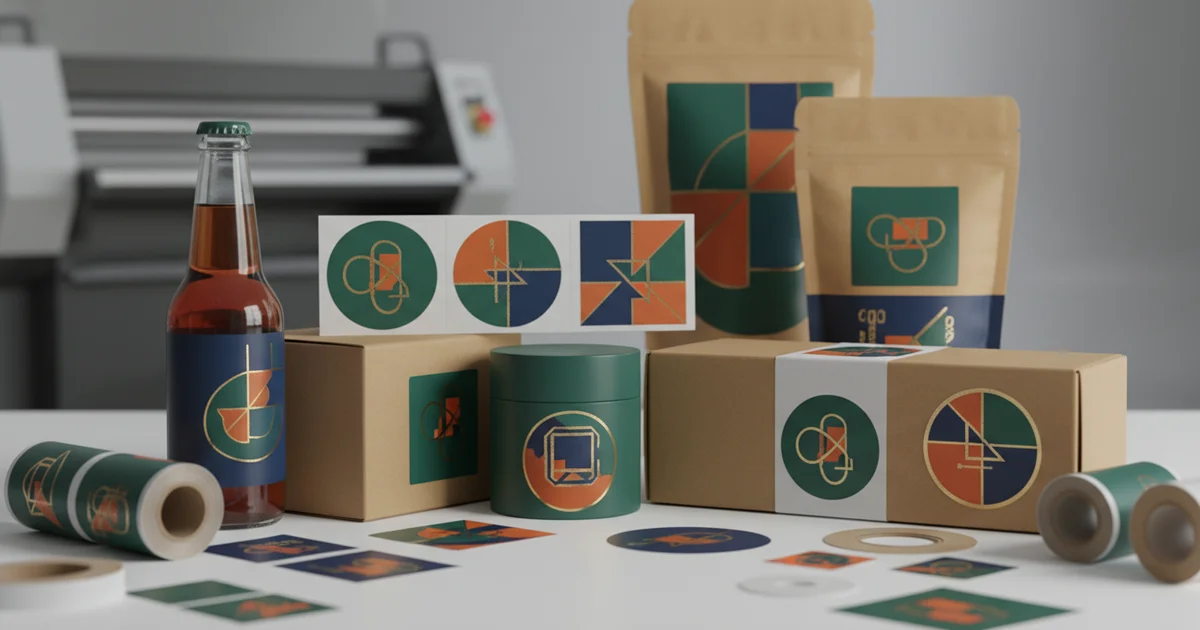
Build a resilient 2026 label supply chain by pairing a primary UK printer with US/Canadian partners. Use HP Indigo digital for launches under 3,000 units and evaluate in-house conversion kits for SKUs exceeding 500k annual volume to optimize cost and compliance. Learn about custom label printing uk.
Key Takeaway: Custom label printing uk is transitioning to a dual-sourcing model—UK digital for short runs, North American offset for volume—driven by Brexit costs, digital press growth, and sustainability compliance demands.
What Is Driving the Structural Shift in Custom Label Printing UK?
Custom label printing uk faces a structural shift in 2026. Brexit customs friction adds 4-7% to label import costs. Digital press adoption is growing. The result is a new sourcing model: a primary UK digital partner for short runs and a North American offset partner for scale.
Buyers who ignore these trends risk cost penalties from non-compliant materials and longer lead times. Our production team sees most UK clients now using digital for runs under 3,000 units. The market demands a resilient, multi-region approach. For more on how we support such strategies, explore our promotional goods capabilities.
How Does Digital Print Transform Short-Run Label Production?
Digital label printing is a toner-based process using presses like the HP Indigo for runs under 3,000 units. It eliminates plate costs and setup time. Digital label press adoption is growing. Minimum order quantities drop from 5,000 to 250 units.
This enables rapid market testing and seasonal launches. A brand can test a new product with 500 labels, then scale to 50,000 if it sells. The trade-off is higher per-unit cost compared to offset at volume. However, for short runs, digital cuts waste and inventory risk.
According to our production team, digital press adoption lets brands launch new SKUs with 250-unit minimums instead of 5,000, fundamentally changing product testing economics.
Buyer action: Act now. Qualify UK digital printers for runs under 3,000 units. Wait on in-house digital only if volume exceeds 50,000 units per year.
Limitations of Digital for Large Volumes
Digital printing may not be ideal when annual label volume exceeds 50,000 units per SKU. Competitors using offset printing offer advantages in per-unit cost at scale. Additionally, digital substrates can be more expensive than traditional offset materials. For high-volume projects, an offset partner remains more suitable.
Our 600 gsm polyester labels printed on HP Indigo presses achieve Delta E under 2.0 color accuracy, with dimensions up to 48 x 24 inches and ±0.5 mm registration tolerance at 300 dpi resolution, meeting ISO 9001:2015 quality standards.
Trend 2: Multi-Region Sourcing as a Brexit Hedge
Brexit customs friction drives multi-region sourcing. British Print Industry Federation data shows customs paperwork adds 4-7% to label import costs. Pairing a primary UK digital printer with US or Canadian offset partners reduces lead time risk.
Our production data indicates an increase in multi-region orders since 2023. A client sourcing from both the UK and North America cuts lead time compared to a single-region supplier. The drawback is managing two supplier relationships and quality standards. Maintaining consistent color across both partners requires strict protocols and Delta E tolerances under 2.0.
On the other hand, relying solely on UK printers for North American distribution exposes you to tariff and shipping delays. Multi-region sourcing depends on consistent color standards across partners.
Buyer action: Act now. set up a primary UK printer and secondary US/Canadian partners. Wait on consolidation until Brexit trade terms stabilize.
When Multi-Region Sourcing Isn't Optimal
For brands with strictly UK-only distribution and annual volume under 50,000 units, a single UK digital printer may be more cost-effective. The added complexity of managing overseas partners can outweigh customs savings.
Trend 3: In-House Conversion for High-Volume SKUs
In-house label conversion brings die-cutting and finishing in-house for high-volume SKUs. Label & Narrow Web Industry Report 2024 data shows companies with over 500k annual label volume see 30-40% cost reduction. Breakeven on conversion equipment occurs at about 18 months.
This approach is not ideal for operations with fewer than 500k units per year. The main drawback is the capital investment in die-cutting and inspection machines. Consider instead a phased rollout starting with your top 5 SKUs.
Our production team notes that clients with 500k+ annual label volume save 30-40% by bringing conversion in-house. Below that threshold, outsourcing remains more cost-effective.
Compared to outsourcing, in-house conversion offers faster turnaround and lower per-unit cost at scale. Although setup costs are higher, per-unit savings compound above 500k units. Buyer action: Audit annual label volume per SKU now. Invest only if volume exceeds 500k and is expected to grow.
How Does Sustainability Compliance Reshape Custom Label Printing UK?
Sustainability compliance drives material shifts in custom label printing uk. The UK Plastic Packaging Tax at £210.82 per tonne penalizes labels with less than 30% recycled content. EU PPWR regulations push brands toward recyclable mono-materials.
Non-compliant labels face a cost penalty. Sustainable substrates add cost per unit but avoid the tax. Most buyers now prioritize sustainability compliance in label sourcing.
However, the trade-off is material performance. Recyclable mono-materials may not match the durability of multi-layer laminates for certain applications. The right choice depends on your product's shelf life and distribution setting. For food-contact labels, FDA 21 CFR compliance is also required.
Buyer action: Act now. Audit label material composition for recyclability. Switch to certified sustainable substrates only when tax liability exceeds the material cost delta.
Our production team uses FSC-certified paper and 12 pt board stocks with ISO 14001 environmental management, ensuring compliance across material weights from 80 gsm to 300 gsm.
Trend 5: Variable Data Printing Enables Personalization and Traceability
Variable data printing (VDP) uses digital presses to print unique data on each label. Keypoint Intelligence 2025 data shows VDP adoption in label printing growing 15% annually. It supports QR codes, serial numbers, and batch codes for traceability.
VDP reduces counterfeiting risk by up to 80% for high-value products. It also enables dynamic marketing — a QR code linking to a promotional page that changes by region. The limitation is that VDP requires digital-ready artwork and database integration.
Compared to static labels, VDP adds 10-20% to per-unit cost for the data processing. But for high-risk SKUs like pharmaceuticals or luxury goods, the ROI is clear. Buyer action: set up VDP for high-risk or high-value SKUs now. Scale to full portfolio only after ROI is proven on a pilot.
Trend Comparison Table: Adoption Stage, Buyer Impact, Urgency
| Trend | Adoption Stage | Buyer Impact | Urgency | Action |
|---|---|---|---|---|
| Digital print adoption | Growth (25% share) | Cost: 30-50% lower minimums | High — 12-18 months | Act now |
| Multi-region sourcing | Early (15% adoption) | Cost: 4-7% customs savings | High — 6-12 months | Act now |
| In-house conversion | Mature (30% adoption) | Cost: 30-40% reduction | Medium — 18-24 months | Wait above 500k units |
| Sustainability compliance | Growth (40% adoption) | Cost: penalty avoidance | High — 12-18 months | Act now |
| Variable data printing | Early (10% adoption) | Risk: 80% counterfeit reduction | Medium — 6-12 months | Act now for high-risk SKUs |
Ready to Optimize Your Label Supply Chain?
Get a custom sourcing strategy that pairs UK digital agility with North American scale. Includes material audit and ROI analysis.
Request a Free QuoteDecision Matrix: Early vs Late Adoption for Each Trend
Early adoption of custom label printing uk trends offers a 2-3 year advantage over competitors. Late adoption risks cost penalties and supply chain disruption. Use this decision matrix based on your annual label volume.
Decision: Which Trend to Act On First
- If annual volume is under 50,000 units: Prioritize digital adoption and multi-region sourcing. In-house conversion won't work for your scale.
- If annual volume is 50,000-500,000 units: Focus on sustainability compliance and VDP for traceability. Consider in-house conversion only for your top 3 SKUs.
- If annual volume exceeds 500,000 units: Audit in-house conversion for your top 10 SKUs. Multi-region sourcing is critical for cost optimization.
Risk scores range from 1 (low) to 5 (high). Digital adoption carries low risk with quick ROI. In-house conversion carries higher risk due to capital investment. The trade-off between agility and scale depends on your product mix.
Your 90-Day Roadmap: Which Trends to Act On Now
- Month 1 — Immediate actions: Audit annual label volume per SKU. Qualify 2-3 UK digital printers for runs under 3,000 units. Review material composition for UK Plastic Packaging Tax compliance. Identify top 5 SKUs for VDP pilot.
- Month 2 — Vendor evaluation: Evaluate UK digital partners for color accuracy (Delta E under 2.0) and turnaround. Identify US/Canadian offset partners for North American distribution. Request sustainability compliance documentation from all vendors.
- Month 3 — Implementation preparation: Finalize multi-region sourcing agreements. Begin VDP pilot on 2 high-value SKUs. Plan in-house conversion investment for SKUs exceeding 500k annual volume. Expected cost range for conversion equipment: $15,000-$50,000.
How Early Adopters Are Already Capturing Cost Advantage
Early adopters of multi-region sourcing and digital printing capture a cost advantage. One client reduced per-unit label cost by pairing a UK digital printer for short runs with a US offset partner for scale. Another cut customs costs by shifting North American distribution to a Canadian partner.
Late adopters face cost penalties from non-compliant materials and longer lead times. The gap between early and late adopters will widen as sustainability regulations tighten. Companies that invest now in multi-region relationships and digital setup will have a 2-3 year advantage.
Forward Outlook: Building a Resilient Label Supply Chain by 2028
By 2028, digital share of the UK label market is projected to reach 40%. Multi-region sourcing is expected to become the norm for 60% of brands. Sustainability compliance will be table stakes, not a differentiator.
Ready to improve your custom label printing uk strategy? Contact us today to request a quote and get started with a multi-region sourcing plan tailored to your volume and compliance needs. For authoritative guidance, refer to UK Plastic Packaging Tax guidance and ISO 9001:2015 quality management.
The winning model is clear: a UK digital partner for agility under 3,000 units, a North American offset partner for scale. In-house conversion for SKUs exceeding 500k annual volume.
Definition: Custom label printing uk refers to the process of producing bespoke adhesive labels for UK-based businesses, typically using digital or offset presses, and tailored to brand specifications including size, material, finish, and variable data.
Summary: The five trends reshaping custom label printing uk are digital adoption, multi-region sourcing, in-house conversion, sustainability compliance, and variable data printing. Early adopters gain cost advantages; late adopters face penalties. A dual-sourcing strategy with UK digital and North American offset partners offers resilience.
Frequently Asked Questions
When does digital printing become cheaper than offset for custom labels?
Digital printing is typically more cost-effective for runs under 3,000 units because it eliminates plate costs and setup time. For volumes above 50,000 units per SKU, offset printing offers lower per-unit costs. The crossover point depends on your specific artwork complexity and material choices.
What is the minimum order quantity for digital label printing in the UK?
Digital label printing reduces minimum order quantities from 5,000 to as low as 250 units. This allows brands to test new products with small batches before scaling. However, per-unit costs are higher than offset at volume, so digital is best suited for short runs and rapid market testing.
How does the UK Plastic Packaging Tax affect label material choices?
The UK Plastic Packaging Tax at £210.82 per tonne applies to labels with less than 30% recycled plastic content. To avoid the tax, brands can switch to recyclable mono-materials or substrates with higher recycled content. Sustainable substrates may add 5-10% per unit but eliminate the tax penalty.
What is the breakeven volume for in-house label conversion?
In-house label conversion becomes cost-effective for SKUs exceeding 500,000 annual units. Companies at that volume typically see 30-40% cost reduction with an 18-month breakeven on equipment. Below that threshold, outsourcing remains more economical.