
Custom label printing Sydney guide: Breakeven between digital & 6-color flexo is 3k-5k units. Specify 30ml bottle labels with >2.5 N/25mm adhesive. Vet suppliers for beer label printing Norfolk & wine label printing Canada using a technical checklist for compliance.
Are you overpaying for labels by choosing the wrong print process for your Sydney operation? The breakeven between digital and 6-color flexo for custom label printing sydney sits between 3,000 and 5,000 units — a threshold that determines whether you save 30% or lose 40% on your label spend. Understanding these dynamics matters because label costs directly impact unit profitability for Australian beverage, cosmetic, and nutraceutical brands.
How Do You Choose Between Digital and 6-Color Flexo for Custom Label Printing in Sydney?
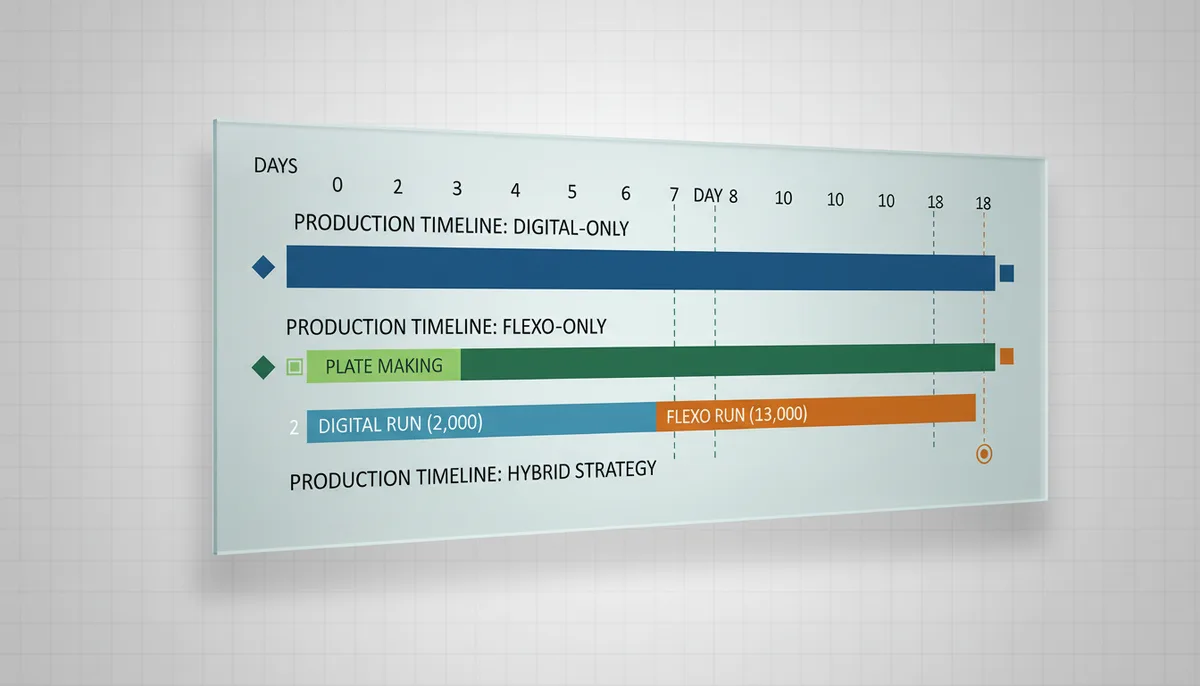
Choosing between digital and 6-color flexo for custom label printing in Sydney depends on your order volume. Digital requires no plates and offers flat per-unit pricing for runs under 3,000. Flexo uses engraved plates but delivers sharply lower per-unit costs above 5,000. Our production team runs both processes and recommends digital below the breakeven threshold.
Digital label printing requires no plates, so setup costs are near zero. Per-unit cost stays flat — typically $0.08–$0.15 per label for runs under 3,000. On the other hand, 6-color flexo uses engraved plates costing $200–$400 per color. Per-unit cost drops sharply above 5,000 units.
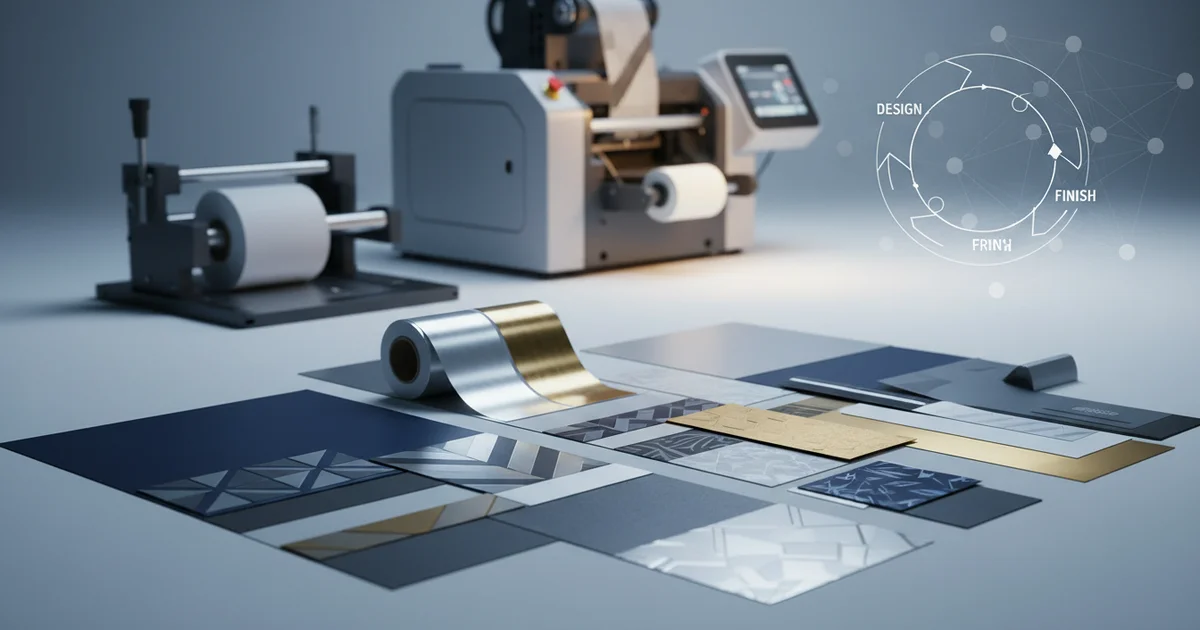
Our production team runs both a high-speed full-rotary 6-color multifunctional label printing press and digital lines. For 30ml bottle runs under 3,000 units, we recommend digital. For volumes above 5,000, flexo cuts per-unit cost by 30–50%. The trade-off depends on your order volume and label complexity.
Step-by-Step Selection Process
- Calculate your annual volume per SKU. Count total label usage for each product variation. This number drives the process decision.
- Request quotes for both digital and flexo. Give suppliers your exact volume, substrate, and color count. Compare total project cost, not just per-unit price.
- Evaluate lead time requirements. Digital runs can ship in 3–5 business days in Sydney. Flexo requires 7–10 days due to plate making and setup.
- Test adhesion on your actual bottle. Run a peel test per ASTM D3330. Confirm the adhesive delivers >2.5 N/25mm before committing to a full run.
What Adhesive Strength Do 30ml Bottle Labels Require?
Thirty millilitre bottle labels require permanent acrylic adhesive with peel adhesion above 2.5 N/25mm, tested per ASTM D3330 on stainless steel. Small-diameter bottles create high peel stress at label edges. Standard adhesives fail within days on squeezable bottles, making high-shear permanent adhesive the correct specification.
For 30ml bottle label printing, adhesive performance is critical. Small-diameter bottles (typically 25–35 mm) create high peel stress at the label edges. We specify permanent acrylic adhesive with peel adhesion above 2.5 N/25mm on stainless steel, tested per ASTM D3330.
Standard adhesive won't work for squeezable 30ml bottles. The label lifts or curls within days. Consider instead a high-shear permanent adhesive. It handles the flex and return of squeezed bottles without edge lift. Our quality team runs peel tests on actual bottle material before production.
How to Specify Substrates for Wine Label Printing in Canada and Beer Label Printing in Norfolk
Wine label printing canada demands moisture-resistant substrates. Canadian cellars often have high humidity, and standard paper labels wrinkle or peel. We recommend 80–100 gsm paper with matte polypropylene laminate or textured synthetic stock. Moisture resistance is essential.
Beer label printing norfolk requires condensation-resistant adhesives. Bottles coming from cold storage into warm bars create moisture that destroys standard labels. Use BOPP film with permanent acrylic adhesive rated for wet environments. This combination resists curling and lifting even after hours in ice water.
Our packaging engineers note that choosing the right substrate also affects how well colors reproduce. For wine labels, a textured paper at 300 dpi print resolution delivers a premium feel, while beer labels on 50-micron BOPP achieve consistent gloss across production runs. Compared to standard paper, BOPP film costs more per label but reduces defect rates in high-condensation environments. The trade-off is worth it for beer and wine applications.
| Application | Recommended Substrate | Adhesive Type | Key Requirement |
|---|---|---|---|
| Wine labels (Canada) | 80–100 gsm paper + matte laminate | Permanent acrylic, cold-temperature rated | Moisture resistance, wrinkle prevention |
| Beer labels (Norfolk) | BOPP film (50 micron) | Permanent acrylic, wet-environment rated | Condensation resistance, no edge lift |
| 30ml bottles (general) | Clear BOPP or white film | High-shear permanent (>2.5 N/25mm) | Small-diameter adhesion, squeezable |
| Cosmetic bottles | White BOPP or paper with gloss varnish | Removable (for reuse) or permanent | Oil resistance, no yellowing |
Supplier Vetting Checklist for Custom Label Printing Sydney — Updated for 2026
Finding a reliable 6 color flexo label printing supplier in Sydney requires more than comparing prices. As of 2026, the market has shifted toward shorter runs and faster turnaround. Use this technical checklist to vet suppliers.
- Certifications: ISO 9001:2015 (quality) and ISO 14001:2015 (environmental). These ensure consistent processes and compliance. Suppliers certified under these standards follow documented procedures for every job.
- In-house platemaking: Suppliers with in-house plate production reduce lead times and control quality. We run our own platemaking for flexo plates on a Heidelberg equipment line, which keeps turnaround at 2–3 days rather than the industry average of 5–7.
- Color management: Ask for Delta E tolerance — our team maintains <2.0 on every run. Verify with a spectrophotometer report. Consistent color across multiple print runs matters for brand identity on shelves.
- Inspection equipment: A fully automatic label optical/visual inspection machine (PULISI) detects registration errors, color shifts, and die-cut defects at production speed. Not all suppliers have this. Without optical inspection, defect rates can reach 3–5% on complex shapes — PULISI cuts that to under 0.5%.
- Die-cutting accuracy: Our automatic self-adhesive label die-cutting machine holds ±0.2 mm tolerance. Request a sample and measure with a caliper. Misaligned labels on bottles look unprofessional and waste material during application.
A common mistake clients make when specifying needs is skipping the inspection step. Without optical inspection, defect rates can reach 3–5% on complex shapes. PULISI inspection cuts that to under 0.5%.
Ready to Source Custom Labels That Meet Your Specs?
Our team provides custom label printing sydney with ISO-certified quality, PULISI inspection, and 6-color flexo capability on HP Indigo digital presses. Get a quote for your next run — digital or flexo — with a free sample run.
Request a Free QuoteLimitations to Consider Before Choosing Your Label Print Process
When Digital Printing Falls Short
Digital printing is not ideal for runs above 5,000 units. The per-unit cost stays flat, so you pay a premium compared to flexo. The main drawback is color consistency across long runs — digital toner can shift slightly between batches. Consider instead flexo for high-volume, single-SKU orders where color must match across 50,000+ labels.
When Flexo Printing Is Not the Answer
Flexo printing won't work for ultra-short runs (under 500 units). Plate costs make each label expensive. The downside is longer setup time — typically 2–3 days for plate mounting and color calibration. On the other hand, flexo delivers faster press speeds (up to 150 meters per minute) once running.
Although flexo offers lower per-unit cost at scale, the breakeven depends on label complexity. Multi-color jobs with spot colors may shift the breakeven higher because plate costs increase. Compared to digital, flexo is more suitable for simple designs with 2–4 colors on long runs. Competitors offering hybrid print solutions may provide advantages for mid-volume runs between 3,000 and 8,000 units, where neither digital nor flexo dominates on cost alone.
Common Mistakes in Label Specification and How to Fix Them
Mistake 1: Choosing digital for runs over 5,000 units. The per-unit cost stays flat. You overpay by 30–50%. Fix: request quotes for both digital and flexo at your exact volume. Our team provides both options on HP Indigo and Heidelberg flexo presses.
Mistake 2: Specifying standard adhesive for 30ml bottles. Standard adhesives fail on small diameters. Fix: request adhesive datasheets showing peel adhesion >2.5 N/25mm and perform a peel test on your actual bottle.
Mistake 3: Ignoring substrate moisture resistance for wine labels. Paper labels wrinkle in humid Canadian cellars. Fix: specify paper with matte polypropylene laminate or switch to synthetic stock. Our production team uses FSC-certified substrates where applicable for wine clients.
Mistake 4: Not verifying die-cutting accuracy. Misaligned labels on bottles look unprofessional. Fix: request a sample run and measure label-to-label registration with a caliper. Our die-cutting machine holds ±0.2 mm tolerance — tighter than the industry standard of ±0.5 mm for self-adhesive labels.
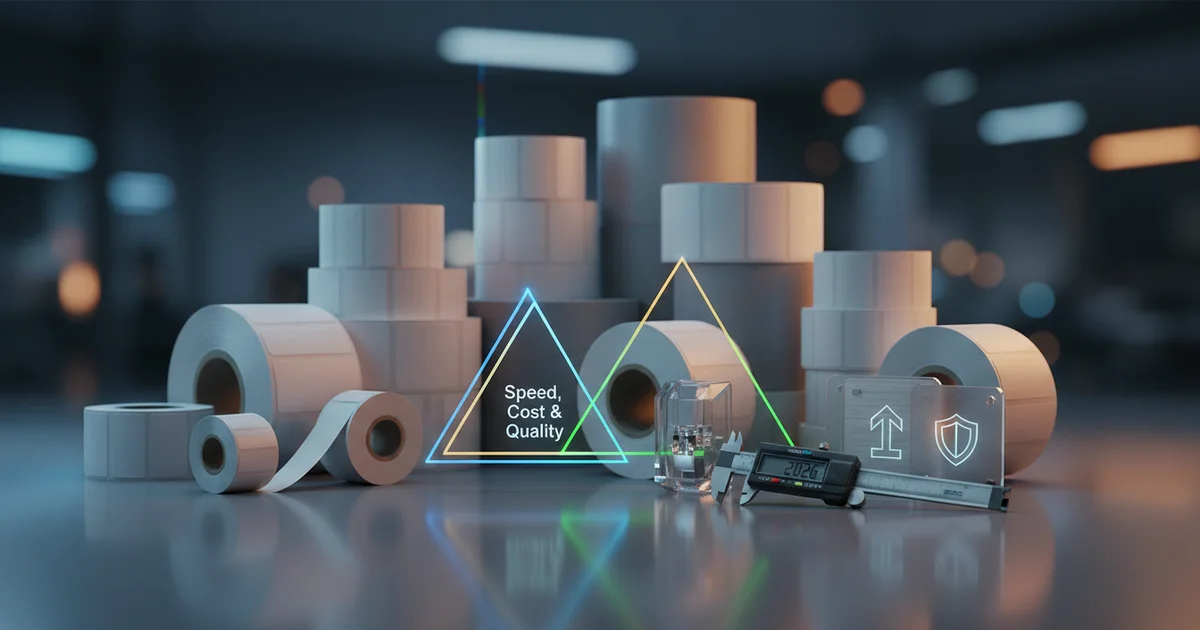
Quick Reference: Label Spec Sheet for 30ml Bottles
| Parameter | Specification | Tolerance |
|---|---|---|
| Adhesive peel strength (ASTM D3330) | >2.5 N/25mm | ±0.3 N/25mm |
| Substrate | Clear BOPP (50 micron) or white film | ±5 micron |
| Die-cut accuracy | ±0.2 mm | ±0.1 mm per meter |
| Color tolerance (Delta E) | <2.0 | ±0.3 |
| Minimum order (digital) | 250 units | N/A |
| Minimum order (flexo) | 3,000 units | N/A |
| Breakeven point | 3,000–5,000 units | Depends on label complexity |
Making the Strategic Sourcing Decision for Custom Label Printing in Sydney
The right choice for custom label printing sydney starts with your order volume. Below 3,000 units, digital wins on cost and speed. Above 5,000 units, 6-color flexo delivers lower per-unit pricing. For 30ml bottles, adhesive strength above 2.5 N/25mm is non-negotiable. Our packaging engineers recommend specifying 300 dpi minimum print resolution and Pantone color matching for brand consistency across all runs.
This shift toward digital is projected to accelerate, but flexo remains the cost leader for high-volume runs. Our team provides both options under one roof — from digital runs on HP Indigo presses to 6-color flexo on Heidelberg equipment with full PULISI optical inspection.
Ready to improve your custom label printing sydney? Contact us today to request a quote and get started with a free sample run. We'll help you choose the right process, substrate, and adhesive for your product — whether it's 30ml bottles, wine labels for Canada, or beer labels for Norfolk. For more on how custom labels support broader merchandising strategies, explore our promotional goods capabilities.
Frequently Asked Questions
When does digital label printing become cheaper than flexo in Sydney?
Digital is cheaper for runs under 3,000 units because there are no plate costs. Flexo becomes more cost-effective above 5,000 units due to lower per-unit pricing. The breakeven range is 3,000–5,000 units, depending on label complexity and color count.
What adhesive strength is required for 30ml bottle labels?
Thirty millilitre bottle labels require permanent acrylic adhesive with peel adhesion above 2.5 N/25mm, tested per ASTM D3330 on stainless steel. Small-diameter bottles create high peel stress, so standard adhesives fail quickly. High-shear permanent adhesive is recommended for squeezable bottles.
What certifications should a custom label printing supplier in Sydney have?
Look for ISO 9001:2015 for quality management and ISO 14001:2015 for environmental standards. These certifications ensure consistent processes and compliance. Additionally, suppliers with in-house platemaking and optical inspection equipment like PULISI can reduce defect rates to under 0.5%.
How do I choose the right substrate for wine labels in Canada?
For wine labels in Canada, specify 80–100 gsm paper with matte polypropylene laminate or textured synthetic stock to resist moisture in humid cellars. Standard paper labels wrinkle or peel. Ensure the adhesive is cold-temperature rated for cellar conditions.