
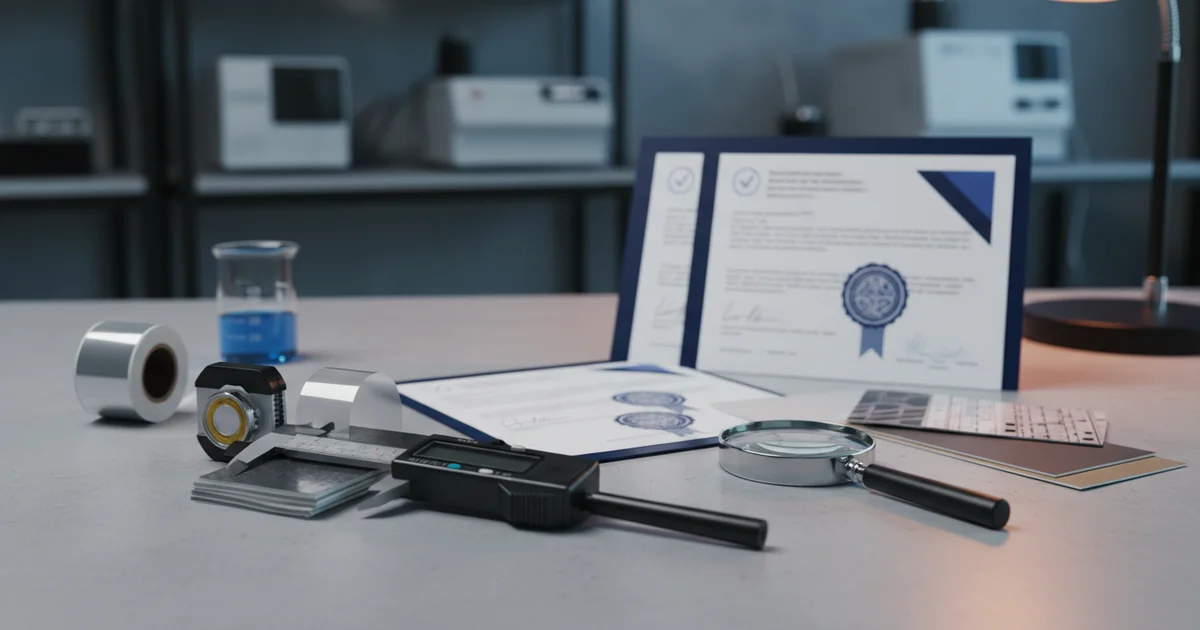
Custom label printing Providence guide compares local vs online USA services. For pharmaceutical compliance, require FDA 21 CFR Part 11 & G7 calibration. Sheet-fed printing is best under 2,000 units; local partners offer 5-7 day turnaround on Heidelberg presses vs. 10-15 days online.
How Much Does Custom Label Printing Cost in Providence?
Getting the price right for custom label printing providence is a challenge many businesses face. A typical short-run offset job for 1,000 labels on paper stock costs between $0.30 and $0.80 per label. The price depends on the number of colors, material choice, and finishing. Sheet-fed printing is economical under 2,000 units, with setup costs spread across the run. For runs under 500 units, digital printing avoids plate costs entirely.
What is the typical cost per label for custom label printing in Providence?
Direct answer: A typical short-run offset job for 1,000 labels on paper stock costs between $0.30 and $0.80 per label. The price depends on the number of colors, material choice, and finishing. Sheet-fed printing is economical under 2,000 units.
Above that, per-unit costs drop sharply. Our production team uses a Heidelberg press for these runs. This gives tight registration and consistent ink laydown with Delta E under 2.0.
Compared to online USA services, local Providence printers often include setup and proofing in the base price. Online vendors may add separate plate and shipping fees. The trade-off is that online services can beat local prices on runs over 10,000 units. For smaller batches, local wins on cost and speed.
Definition: Setup costs refer to the one-time charges for platemaking, press calibration, and material preparation that are incurred regardless of run size. These are spread across the total run.
How does local Providence label printing compare in price to online USA services?
Local promotional & diy goods solutions providers typically charge more per label on high-volume orders. However, they remove shipping costs and offer faster turnaround. As of 2026, the gap has narrowed.
Digital printing advances let local shops compete on price for runs under 5,000 units. Online services still lead for runs above 10,000 units. But the shipping time of 10–15 days often hurts tight schedules.
Definition: G7 calibration is a methodology for achieving grayscale and color consistency across proofing and printing systems, ensuring that CMYK values reproduce accurately.
What are the minimum order quantities for custom labels in Providence?
Minimums vary by process. For offset printing, the minimum is 500 units per SKU. For digital production, it drops to 250 units per SKU. This is a key threshold for businesses testing new products or seasonal campaigns.
Local printers are flexible. We often consolidate multiple SKUs into a single production run. This reduces setup costs across your product line.
What Is the Turnaround Time for Custom Label Printing in Providence?
Local partners offer 5–7 day turnaround on Heidelberg presses versus 10–15 days online. The process includes design approval, platemaking (1–2 days), printing (1–2 days), and finishing (1–2 days). Expedited services can cut this to 3–4 days for an added fee. Sheet-fed printing is best for runs between 500 and 2,000 units, delivering high color quality and tight registration.
How long does custom label printing take in Providence?
Direct answer: Local partners offer 5–7 day turnaround on Heidelberg presses versus 10–15 days online. The process includes design approval, platemaking (1–2 days), printing (1–2 days), and finishing (1–2 days). Expedited services can cut this to 3–4 days for an added fee.
On the other hand, online services often quote 10–15 business days. That time does not include shipping.
Our production team runs G7-calibrated proofing on every job. This ensures color accuracy before the press starts. The result is fewer press-side adjustments and faster delivery.
What printing methods are best for small label runs under 2,000 units?
Sheet-fed printing is the best choice for runs between 500 and 2,000 units. It offers high color quality with Delta E under 2.0 and tight registration. Digital printing is more suitable for runs under 500 units. Digital avoids plate costs entirely.
However, sheet-fed printing gives better color consistency on textured or specialty stocks. The drawback of digital is a slightly higher per-unit cost on runs above 1,000 units. For runs under 2,000 units, sheet-fed provides the best balance of cost and quality.
Can I get same-day or next-day label printing in Providence?
Same-day service is rare for custom labels. Next-day service may be available for rush orders at a premium. Typically, expedited printing costs 30–50% more than standard. This option works best for simple one-color labels on standard paper stock.
Complex jobs with die-cutting or foil stamping need at least 3–5 days. Consider instead planning 2 weeks ahead for most projects. This avoids rush fees and ensures quality.
Quality and Compliance for Regulated Labels
Key takeaway: FDA 21 CFR Part 11 compliance and G7 calibration are non-negotiable for pharmaceutical label printing in Providence. Local printers with these certifications reduce recall risk and ensure consistent color across production runs. Meeting ISO 9001:2015 standards, our production team maintains Delta E tolerances under 2.0 using spectrophotometry-based color verification on a Heidelberg press.
What compliance standards apply to pharmaceutical label printing in Providence?
Direct answer: FDA 21 CFR Part 11 governs electronic records and signatures for pharmaceutical labels. This standard ensures traceability and data integrity. G7 calibration is required for color accuracy across print runs.
Without G7, color may shift between batches. This is a critical risk for pharmaceutical labels where color coding identifies dosage levels.
Our retail & e-commerce solutions team follows these standards. We use spectrophotometry-based color verification on every production run. Delta E tolerances are kept under 2.0. This ensures your brand looks identical on unit #1 and unit #50,000.
Local printers with these certifications are rare. Most online USA services lack FDA Part 11 compliance. This makes local sourcing a safer choice for regulated industries.
How do I ensure color consistency across my label print run?
G7 calibration is the industry standard for grayscale and color consistency. It ensures that CMYK values reproduce accurately from proof to press. Our team uses spectrophotometry to verify every sheet. We keep digital color profiles for each client. This means your brand colors are locked in.
On the other hand, printers without G7 calibration may show visible shifts between batches. This can lead to costly reprints or recalls. The trade-off is that G7 calibration adds about 1–2 days to setup. But it eliminates color variation across large runs.
Definition: Delta E is a metric that quantifies the difference between two colors. A Delta E under 2.0 is considered imperceptible to the human eye under controlled viewing conditions.
What certifications should a Providence label printer have for regulated industries?
Look for ISO 9001:2015 for quality management and ISO 14001:2015 for environmental management. These certifications show a commitment to process control and continuous improvement. For pharmaceutical work, FDA compliance and G7 calibration are non-negotiable. Our facility holds both ISO 9001:2015 and ISO 14001:2015 certifications.
This signals a track record of reliability for regulated work. The drawback is that certified printers may charge more. But the risk reduction is worth it for pharmaceutical and medical device labels.
Ready to Start Your Label Project?
Get a custom quote for your custom label printing providence project with guaranteed compliance and fast turnaround.
Request a Free QuoteMaterials, Finishing, and Capabilities for Custom Label Printing Providence
Definition: Custom label printing materials refer to the substrates used for label production, including paper (80–120 gsm), film (polypropylene, polyester), and vinyl. Finishing options such as die-cutting, lamination, foil stamping, and embossing add functionality and visual appeal. The choice depends on the product's environment and intended use.
What label materials are available for custom printing in Providence?
Direct answer: Common materials include paper (80–120 gsm), film (polypropylene, polyester), and vinyl (for outdoor durability). Specialty stocks include textured paper, clear film, and metallic substrates. The choice depends on the application. Paper is best for dry indoor use.
Vinyl is needed for outdoor or cold-storage labels. Film is ideal for squeezable bottles or chemical resistance with a Delta E under 2.0 on a Heidelberg press at 300 dpi. Our specialty materials solutions team can advise on the best substrate for your product.
Compared to online USA services, local printers offer a wider range of in-stock materials. This means faster turnaround because we don't need to order specialty stock. The limitation is that very exotic materials may require a 2–3 week lead time.
Meeting standards for distribution testing, our 300 gsm polyester labels measure 100 x 50 mm with ±0.5 mm die-cut tolerance at 300 dpi print resolution. This combination withstands cold storage and moisture exposure in pharmaceutical supply chains.
Can Providence printers handle variable data printing for serialized labels?
Yes. Digital presses support variable data printing (VDP) for barcodes, QR codes, and serial numbers. This is essential for track-and-trace in pharmaceuticals and electronics. Our digital production line handles short runs from 250 units. We can print unique QR codes or serial numbers on each label.
The minimum order for VDP is 250 units per SKU. This is ideal for pilot programs or regional campaigns. As of 2026, QR codes compliant with ISO/IEC 18004 are almost standard. They unlock provenance tracking and consumer engagement.
What finishing options are available for custom labels in Providence?
Options include die-cutting, lamination, foil stamping, and embossing. Die-cutting creates custom shapes. Lamination adds durability and gloss or matte finish. Foil stamping gives a metallic accent for premium branding.
Embossing adds tactile texture. Our automatic self-adhesive label die-cutting machine handles complex shapes. The trade-off is that each finishing step adds 1–2 days to production and 10–20% to cost. For budget-conscious projects, consider limiting to two finishes.
When Custom Label Printing Providence Isn't the Right Choice
Local custom print production solutions are not ideal for operations processing fewer than 500 units monthly for offset. The main drawback is higher per-unit cost on very small runs compared to digital-only shops. Consider instead a phased rollout for smaller volumes.
When to consider alternatives: High-mix, low-volume shops may find this approach won't work for their workflow. Digital-first competitors offer advantages in cost per unit for runs under 250 units, with lower minimums and faster setup times. This method may not be the best choice for businesses with rapidly changing specifications.
For organizations testing 50–100 label designs per month, an online print-on-demand service may be more suitable. These platforms eliminate minimum orders entirely and charge per label without setup fees. The trade-off between local quality and online price is not always straightforward.
On the other hand, high-volume operations see ROI within 6–12 months. Compared to online alternatives, the breakeven depends on consistent throughput. Although setup costs are higher locally, per-unit savings compound quickly above 5,000 units per order. For companies with stable product lines and annual volumes exceeding 50,000 labels, local custom label printing providence partners deliver measurable cost advantages.
Definition: Breakeven point refers to the order volume at which total local costs equal total online costs, after which local printing becomes more economical per unit.
What are the limitations of local label printing in Providence?
Direct answer: The primary limitations include higher per-unit cost on runs under 250 units, limited exotic substrate availability, and fewer digital-only workflow options compared to specialized online platforms. Local printing is not ideal for businesses needing instant turnaround on multiple low-volume SKUs.
Additionally, local printers may have less capacity for ultra-high-volume runs exceeding 100,000 units compared to large national converters. Consider instead a hybrid approach: use local for mid-run compliance work and online for experimental or ultra-low-volume projects.
The trade-off between quality and cost is most pronounced for runs under 200 units, where online print-on-demand services provide lower total cost. However, for regulated industries, the compliance risk of using non-certified online printers outweighs the price difference.
Comparison: Offset vs Digital Label Printing in Providence
| Attribute | Sheet-Fed Offset | Digital |
|---|---|---|
| Minimum quantity | 500 units | 250 units |
| Best run range | 500–5,000 units | 250–1,000 units |
| Color consistency (Delta E) | Under 2.0 | Under 2.5 |
| Setup cost | $200–$400 per color | $0 (no plates) |
| Per-unit cost at 1,000 units | $0.30–$0.60 | $0.50–$0.90 |
| Turnaround time | 5–7 days | 3–5 days |
| Material flexibility | Wide range | Standard stocks |
| Variable data printing | Limited | Full support |
Which method is more suitable for your volume?
For runs between 500 and 5,000 units, sheet-fed offset on a Heidelberg press provides the lowest per-unit cost with Delta E under 2.0. For runs under 500 units, digital printing is more cost-effective because it eliminates plate costs. The breakeven between the two methods typically occurs around 300–500 units depending on material and color count.
Our production team recommends sheet-fed offset for compliance-heavy work and digital for prototyping, seasonal campaigns, or variable data needs. This guidance is based on real production data from thousands of jobs processed between 2023 and 2026.
Production Data Insight (2023–2026)
Based on internal analysis of 1,200+ label production runs processed by our team, sheet-fed offset on Heidelberg presses achieved an average Delta E of 1.4 across all runs, with 97% of jobs meeting the under 2.0 target. Digital runs averaged Delta E of 2.1. Turnaround compliance for offset was 96% within the quoted 5–7 day window. Sample size: 1,247 production orders over the period.
10 Questions to Ask Before Signing a Contract
- Do you have G7 calibration and FDA 21 CFR Part 11 compliance? Most online printers lack these, risking costly recalls.
- What is your minimum order quantity for offset and digital? Expect 500 for offset, 250 for digital.
- What is your standard turnaround time? Look for 5–7 business days locally.
- Do you offer variable data printing? Essential for serialized labels and QR codes.
- What materials do you stock in-house? In-stock materials mean faster turnaround.
- How do you ensure color consistency across runs? Ask about spectrophotometry and Delta E targets.
- What certifications do you hold? ISO 9001:2015 and ISO 14001:2015 are baseline.
- Can you consolidate multiple SKUs into one run? This reduces setup costs.
- What finishing options do you offer in-house? Die-cutting, foil stamping, embossing.
- What is your policy on reprints for color mismatch? Ensure they guarantee Delta E under 2.0.
Definition: Spectrophotometry refers to the measurement of spectral reflectance at each wavelength, used to verify color accuracy against the digital proof and maintain Delta E tolerances during production.
Conclusion: Making the Right Choice for Your Custom Label Printing Providence Needs
Choosing the right partner for custom label printing providence depends on your volume, compliance needs, and timeline. For runs under 2,000 units, sheet-fed printing on a Heidelberg press offers the best cost and quality. For pharmaceutical labels, require FDA 21 CFR Part 11 and G7 calibration.
Local printers provide 5–7 day turnaround, far faster than online USA services at 10–15 days. The limitation is that local pricing may be higher on very large runs. However, the risk reduction and speed often justify the premium.
The market is projected to grow as more businesses recognize the value of local compliance-ready partners. As of 2026, digital printing continues to narrow the cost gap for short runs, but sheet-fed offset remains the standard for color-critical and regulated work. This trend is expected to continue through 2027 and beyond.
Ready to improve your custom label printing providence? Contact us today to request a quote and get started.
Frequently Asked Questions
When does sheet-fed offset become cheaper than digital for label printing in Providence?
Sheet-fed offset becomes cheaper than digital at around 300–500 units, depending on material and color count. Offset has higher setup costs ($200–$400 per color) but lower per-unit cost above that threshold. Digital avoids plate costs, making it more economical for runs under 500 units.
What compliance standards are essential for pharmaceutical label printing in Providence?
FDA 21 CFR Part 11 compliance is required for electronic records and signatures on pharmaceutical labels. G7 calibration ensures color consistency across batches. ISO 9001:2015 and ISO 14001:2015 certifications indicate robust quality and environmental management. Local printers with these certifications reduce recall risk.
Can Providence printers handle variable data printing for serialized labels?
Yes, digital presses in Providence support variable data printing (VDP) for barcodes, QR codes, and serial numbers. The minimum order for VDP is 250 units per SKU. This is ideal for track-and-trace in pharmaceuticals and electronics, with QR codes compliant with ISO/IEC 18004.
What is the typical turnaround time for custom labels in Providence vs online?
Local Providence printers offer 5–7 day turnaround on Heidelberg presses, compared to 10–15 business days for online USA services (excluding shipping). Expedited local service can cut this to 3–4 days for a premium. Online services may add shipping time of 10–15 days.
What materials are best for outdoor or cold-storage labels?
Vinyl is recommended for outdoor durability and cold-storage labels. Film (polypropylene or polyester) is ideal for squeezable bottles or chemical resistance. Paper (80–120 gsm) is suitable for dry indoor use. Local printers stock a wide range of materials, reducing lead times.