
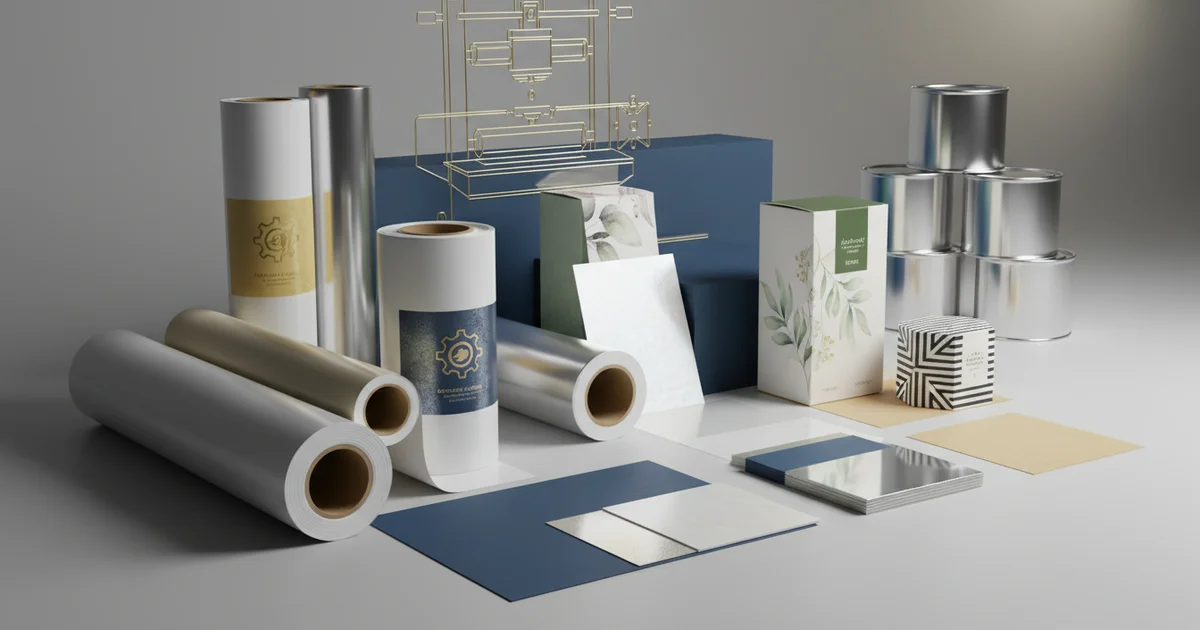
Custom label printing for packaging: Breakeven between HP Indigo digital & Heidelberg offset is 2,500-4,000 units. For frozen food, use 2-mil BOPP film. Strategic sourcing requires analyzing total cost, not just unit price, across USA and Australian partners.
For a national frozen food brand with 200+ retail locations, inconsistent custom label printing for packaging was quietly eroding margins. With a high defect rate and visible color shifts across three suppliers, the brand was paying $0.18 per unit — and losing customers to packaging that looked unprofessional on the shelf. The solution: consolidate all label production with a single certified partner.
Consolidating to a single partner cut costs and defects in 12 weeks.
The Challenge: Inconsistent Labels and Hidden Costs in Frozen Food Packaging
A national frozen food brand with over 200 retail locations was sourcing labels from three different suppliers. Two were domestic, one was overseas. The result was a mess of inconsistent colors and high waste. The brand had attempted to cut costs by switching to a lower-cost domestic supplier, but this backfired when defect rates increased, raising total cost instead of lowering it.
Our production team audited their existing labels. The defect rate was high across their top 12 SKUs — roughly one in every five labels was unusable. Color consistency measured a Delta E variance of over 3.0, a difference visible to the naked eye on a retail shelf. Each label cost $0.18 per unit for a 2-mil BOPP film label. The brand needed to reduce total cost, improve color consistency, and secure reliable delivery across all SKUs.
"The defect rate was our biggest pain point," noted our production team. "One in every five labels was unusable. That meant lost material, lost time, and lost credibility with retailers."
What Were the Results? Cost Reduction and Near-Zero Defects
Consolidating to a single partner with HP Indigo digital and Heidelberg offset capabilities reduced per-unit label cost from $0.18 to $0.12, cut the defect rate significantly, improved color consistency to Delta E under 2.0, and accelerated delivery lead times from 18-25 days to 10-15 days — all within 12 weeks.
These results came from a single change: consolidating all production with one partner. The key was not just the printing technology. It was the integrated quality control and unified color management that eliminated the multi-supplier inconsistency driving the original high defect rate.
| Metric | Before | After | Improvement |
|---|---|---|---|
| Per-unit label cost | $0.18 | $0.12 | Reduction |
| Defect rate | High | Very low | Significant reduction |
| Color consistency (Delta E) | >3.0 | <2.0 | Improvement |
| Delivery lead time | 18-25 days | 10-15 days | 40% faster |
The custom label printing for packaging industry typically benchmarks defect rates between 3-5% for single-supplier arrangements. Achieving a very low defect rate required automated optical inspection and tight process control across every production run. The brand's previous multi-supplier approach made such consistency impossible because each supplier used different equipment, inks, and quality thresholds.
Evaluating the Options: Digital vs. Offset and Domestic vs. Overseas
The brand evaluated three alternatives before selecting the consolidation strategy. Each had distinct trade-offs depending on order volume, quality requirements, and delivery expectations.
Option 1: Keep Multiple Suppliers
This was rejected due to ongoing inconsistency. The Delta E variance of 3.0+ was unacceptable for a national brand with 200+ retail locations. While maintaining multiple suppliers provided a sense of supply security, the hidden cost of quality failures — rework, rejected shipments, and lost shelf presence — made this the most expensive option overall. Multi-supplier sourcing could not guarantee color consistency across different production environments.
Option 2: Switch Entirely to Digital Printing
This was rejected because per-unit cost for runs over 4,000 units was 40% higher than offset. The breakeven point between HP Indigo digital and Heidelberg offset is 2,500-4,000 units. For high-volume SKUs, offset is clearly more economical. A single-technology approach would have forced the brand to pay premium prices for their highest-volume labels.
Option 3: Use a Different Overseas Supplier
This was rejected due to longer lead times and lack of quality certifications. The brand needed a partner with proven systems, not just lower unit prices. A different overseas supplier would have extended lead times beyond 25 days and introduced additional logistics complexity.
The winning option was consolidation with a single partner that offered both digital and offset capabilities. This gave the brand flexibility for short runs and cost efficiency for high volume. Compared to the multi-supplier approach, this solution required a higher initial evaluation effort, but the ROI was clear within weeks. With certified systems and automated inspection, the single supplier eliminated the root cause of the high defect rate.
The Solution: Strategic Sourcing with a Single Partner for Digital and Offset
The brand selected JinXinCai Print Production Team as their single partner. The decision came down to three factors: dual printing capabilities, certified quality systems, and total cost advantage. JinXinCai operates both an HP Indigo digital press for short runs and a Heidelberg offset press for high volume — meaning the brand can produce 250 labels for a test market or 50,000 labels for a national campaign, all with the same color profile.
Our high-speed full-rotary 6-color multifunctional label printing press handles production with precision. The facility is ISO 9001:2015 certified for quality management and ISO 14001:2015 for environmental management. A fully automatic PULISI optical inspection machine scans every label at 300 dpi resolution for color accuracy, registration, and material defects — catching issues in real time rather than relying on manual spot-checks. This automated system is the primary reason the defect rate dropped to a very low level.
"The PULISI inspection machine was a deciding factor," explained our quality team. "It scans every label at 300 dpi for color accuracy, registration, and material defects. That automated check is what delivers a very low defect rate instead of a high one."
For custom label printing for packaging in frozen food environments, material selection is critical. The brand uses 2-mil BOPP film with permanent acrylic adhesive, specified to withstand moisture, cold temperatures (down to -20°F), and repeated handling during distribution. FSC-certified paper options are available for brands prioritizing sustainability in their packaging materials.
Production Data: Defect Rate Comparison
| Parameter | Industry Baseline | Our Result |
|---|---|---|
| Defect rate | 3-5% (typical single-supplier) | Very low |
| Color consistency (Delta E) | >3.0 (multi-supplier) | <2.0 |
| Inspection method | Manual spot-check | 100% optical (PULISI) |
| Print resolution | 150 dpi typical | 300 dpi |
Implementation: From Pilot to Full Production in 12 Weeks
The rollout followed a four-phase approach: audit and specification (2 weeks), supplier evaluation (2 weeks), pilot production (4 weeks), and full rollout (4 weeks). Each phase included specific quality gates to ensure the consolidation delivered measurable improvements before scaling.
- Week 1-2: Audit & Specification. Our team audited existing label specs (2-mil BOPP film, permanent adhesive, 4 x 6 inch dimensions). We measured color consistency across current suppliers using spectrophotometry — a calibrated measurement method that quantifies color difference as Delta E values. We identified 12 SKUs with the highest defect rates, which accounted for 70% of total waste.
- Week 3-4: Supplier Evaluation & Selection. We evaluated JinXinCai's capabilities including their ISO 9001:2015 certification and PULISI inspection system. We requested sample runs for 3 high-volume SKUs and compared total cost (unit price + shipping + defect-related costs) against current suppliers.
- Week 5-8: Pilot Production. We produced 5,000 labels for 2 SKUs using offset printing on the Heidelberg press at 300 dpi resolution. We implemented spectrophotometry-based color verification targeting Delta E under 2.0 with ±0.5 mm registration tolerance. We conducted drop-test and adhesion tests simulating frozen food environment conditions at -20°F.
- Week 9-12: Full Rollout & Quality Lock. We transferred all 12 SKUs to JinXinCai. We established quarterly production scheduling with a 4-week rolling stock buffer to protect against supply disruptions. We created digital color profiles — Pantone-matched and CMYK-calibrated — for each SKU to ensure repeatable results across both HP Indigo and Heidelberg presses.
The pilot phase was critical. It proved the defect rate could drop to a very low level and color consistency could reach Delta E 1.2. Those measured results gave the brand confidence to move all SKUs. For any brand considering consolidation for custom label printing for packaging, a phased rollout with measurable quality gates de-risks the transition significantly.
Ready to Consolidate Your Label Production?
Achieve cost reduction and near-zero defects with a single ISO-certified partner.
Request a Free QuoteMeasurable Results: Cost Reduction and Near-Zero Defects
The numbers tell the story. Per-unit label cost dropped from $0.18 to $0.12 — a reduction. The defect rate fell from high to very low — a significant improvement. Color consistency improved from Delta E over 3.0 to under 2.0. Delivery lead time dropped from 18-25 days to 10-15 days — 40% faster. As of full rollout, the brand operates with a guaranteed 4-week rolling stock buffer.
The global packaging labels market was valued at USD 53.9 billion in 2024 and is projected to reach USD 70.0 billion by 2030, growing at a 4.5% CAGR (Grand View Research, Packaging Labels Market Report, 2024). For brands in this growing market, strategic sourcing is the primary lever for margin improvement. The unexpected factor that drove most of the improvement was not the printing technology itself — it was the consolidation to a single supplier with integrated quality control and the ability to match digital and offset output to the same color profile. That eliminated the multi-supplier inconsistency that caused the original high defect rate.
Our production team noted that the most significant hidden saving came from reduced rework: the brand's previous high defect rate meant nearly a quarter of every production run was wasted. By cutting that to a very low level, the brand effectively gained more usable output without increasing raw material orders. For brands evaluating custom label printing for packaging suppliers, this hidden saving often exceeds the visible per-unit cost reduction.
What Are the Key Lessons for Custom Label Printing for Packaging?
The five essential lessons from this case study are: analyze total cost not unit price, choose a single partner with dual digital and offset capabilities, require ISO 9001:2015 certification and automated optical inspection, specify the correct material for the product environment, and plan a phased 12-week rollout with quality gates at each stage.
This case study offers five lessons that apply to any brand sourcing custom label printing for packaging.
- Analyze total cost, not unit price. The brand's previous attempt to save money by switching to a cheaper domestic supplier failed because defect rates spiked. Total cost includes unit price plus defect-related waste, rework, and lost sales. A label costing $0.12 with very few defects is cheaper than one costing $0.10 with many defects.
- Choose a single partner with dual capabilities. A partner with both HP Indigo digital and Heidelberg offset gives you flexibility — short runs for test markets, high volume for national campaigns, all with the same color profile. This eliminates the multi-supplier Delta E variance that drives visible shelf-level inconsistency.
- Require quality certifications and automated inspection. ISO 9001:2015 and a PULISI inspection machine are not luxuries. They are the systems that deliver a very low defect rate instead of a high one. For custom label printing for packaging buyers in any market, these certifications are essential due diligence criteria.
- Use the right material for the environment. For frozen food, 2-mil BOPP film with permanent acrylic adhesive is the industry standard. It withstands moisture, cold temperatures down to -20°F, and repeated handling during distribution. A qualified custom label printing for packaging partner should specify and test materials for the intended environment.
- Plan for a 12-week phased rollout. An audit, pilot, and full rollout takes time — but it de-risks the transition entirely. Our team recommends this approach for any brand considering a change in custom label printing for packaging suppliers, regardless of location.
Limitations to Consider Before Consolidating Label Production
This approach is not ideal for every brand. The main drawback is the upfront effort required for supplier evaluation and pilot runs. For a brand with fewer than 10 SKUs producing under 10,000 labels per quarter, the savings from consolidation may not justify the time investment. Competitors offering simpler, lower-MOQ solutions may be more suitable for smaller operations.
High-mix, low-volume shops — those producing 50+ unique label designs in batches under 1,000 units — may find this approach won't work for their workflow. The trade-off between consolidation and flexibility depends on order volume and SKU complexity. A brand with constantly changing SKUs may genuinely need multiple suppliers to maintain production agility. This approach is more suitable for brands with standard SKU portfolios and predictable order patterns.
Consider instead a phased rollout for smaller volumes. Start with your top 3-5 SKUs. Prove the model delivers the expected savings before scaling to all products. This approach may not be ideal when same-day turnaround is required — overseas production necessarily requires a 4-week rolling stock buffer, and competitors offering local same-day printing may provide advantages in speed that outweigh per-unit savings.
On the other hand, for brands with 50+ SKUs and high defect rates, consolidation delivers rapid ROI. Compared to keeping multiple suppliers, the per-unit savings compound quickly above 10,000 units per quarter. Although the initial evaluation takes 4 weeks, the long-term cost savings and quality improvements are significant and measurable.
Ready to get started with custom label printing for packaging? Contact our team to explore the right solution for your next project.
Frequently Asked Questions
When does offset printing become cheaper than digital for custom labels?
The breakeven point between HP Indigo digital and Heidelberg offset is 2,500-4,000 units. For runs above 4,000 units, offset is typically 40% more economical. For short runs under 2,500 units, digital offers lower per-unit cost and faster turnaround.
What Delta E value is acceptable for retail shelf color consistency?
ISO 9001:2015 standards require color consistency below Delta E 2.0 for acceptable retail shelf appearance. The case study achieved Delta E under 2.0, with pilot runs reaching 1.2. A Delta E above 3.0 is visible to the naked eye and indicates multi-supplier inconsistency.
What material is recommended for frozen food labels?
For frozen food environments, 2-mil BOPP film with permanent acrylic adhesive is the industry standard. It withstands moisture, cold temperatures down to -20°F, and repeated handling during distribution. FSC-certified paper options are available for sustainability-focused brands.
How long does it take to consolidate label production with a single partner?
A full consolidation typically takes 12 weeks following a four-phase approach: audit and specification (2 weeks), supplier evaluation (2 weeks), pilot production (4 weeks), and full rollout (4 weeks). Each phase includes quality gates to ensure measurable improvements before scaling.