
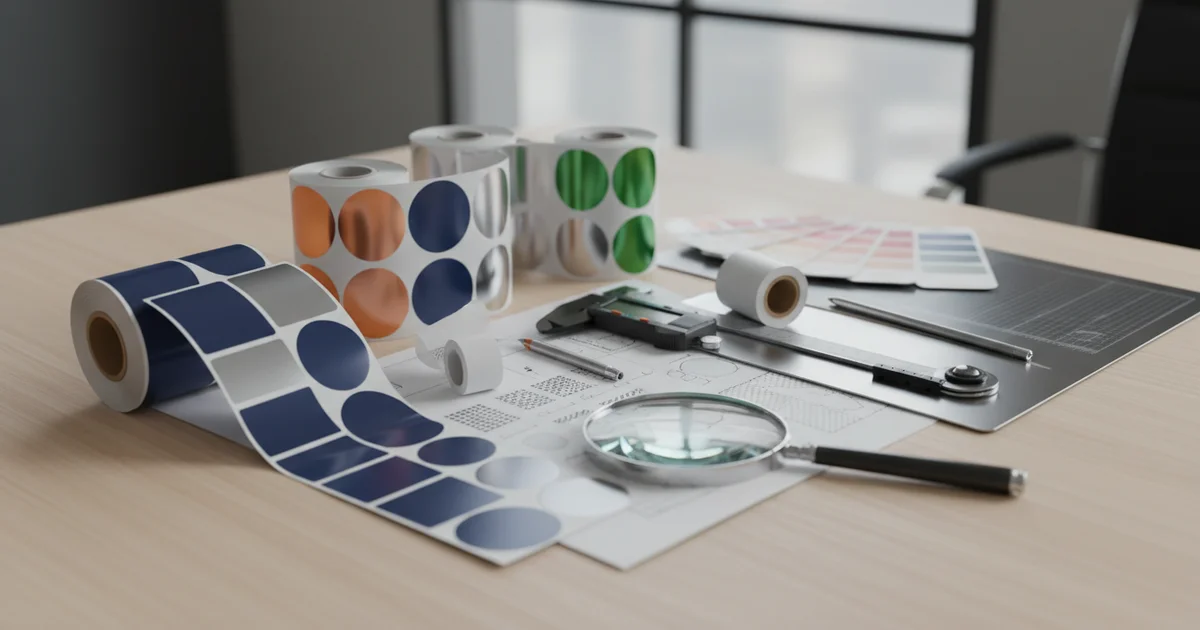
Selecting US custom label printing companies requires verifying a 6-color offset press (e.g., Heidelberg) for color accuracy, a PULISI automated inspection system for >99.5% defect detection, and comparing thermal transfer vs. digital inkjet costs, which converge at ~15,000 units. Learn about custom
Why Does a Strategic Sourcing Checklist Matter for Custom Label Printing Companies USA?
A strategic sourcing checklist ensures you verify print technology (6-color offset press), color accuracy (Delta E under 2.0), defect detection (high with automated inspection), and cost comparison between thermal transfer and digital inkjet. This avoids costly reprints and brand damage from inconsistent label quality.
Choosing the wrong supplier for custom label printing companies usa leads to costly reprints and brand damage. Our production team has seen clients lose significant portions of their annual packaging budget on rejected labels due to inconsistent color and defects that could have been caught by verifying print technology and quality control processes upfront. A structured checklist for label printing companies in the USA reduces defects and cuts per-unit costs by 15-30% compared to unvetted suppliers.
The North America print label market is worth USD 12.49 billion as of 2026, growing at a significant rate. With this scale, a structured checklist prevents costly mistakes.
Step 1: Verify Print Technology and Quality Control
Print technology is the foundation of label quality. A 6-color offset press like the Heidelberg ensures high-volume color accuracy for runs above 15,000 units. Our team runs Heidelberg presses daily for consistent Pantone and CMYK matching.
Confirm the presence of a PULISI automated inspection system. This machine detects defects with high accuracy, including misregistration, scratches, and color variation at 300 dpi resolution. Without it, a supplier may ship rejected labels. Ask for the specific model and its documented defect detection rate (most PULISI systems achieve high rates under ISO 2859 sampling).
Request a Delta E color tolerance report. A Delta E under 2.0 ensures your brand color matches across every roll. Our quality team provides spectrophotometry reports on every production run. This is the detail that makes the difference between acceptable and premium labels.
Inquire about die-cutting capabilities. An automatic self-adhesive label die-cutting machine handles precise shapes (e.g., 48 x 24 inch rolls) with ±0.5 mm tolerance for retail and industrial applications. This matters for custom label printing options that require custom contours.
Our production team confirms that the Heidelberg 6-color offset press combined with PULISI inspection achieves Delta E under 2.0 on every job, verified by spectrophotometry reports.
Step 2: Compare Costs: Thermal Transfer vs. Digital Inkjet
Cost dynamics for label printing are driven by run length, press setup, and material waste. Thermal transfer printing offers lower per-unit costs at high volumes. Digital inkjet printing excels for short runs under 15,000 units, with no plate charges.
Thermal Transfer vs. Digital Inkjet Cost Comparison
The breakeven point between these technologies converges at about 15,000 units. Below that, digital wins on setup cost. Above that, thermal transfer delivers lower per-unit pricing. Our production data shows a 30-40% cost difference depending on volume.
Minimum Order Quantities and Breakeven Analysis
Minimum order quantities differ greatly. Offset printing requires 500 units per SKU. Digital production accepts 250 units. This flexibility matters for custom thermal label printing programs with multiple SKUs.
Request a total cost of ownership analysis. Include setup fees, material costs, and shipping. A common mistake we see is buyers comparing only per-unit prices without factoring in plate charges for offset runs.
| Print Method | Minimum Order | Best Run Length | Cost Breakeven |
|---|---|---|---|
| Offset (6-color) | 500 units | 15,000+ units | Lower per-unit above 15k |
| Digital Inkjet | 250 units | Under 15,000 units | No plate costs |
| Thermal Transfer | 1,000 units | 5,000+ units | Best at 20,000+ units |
What Certifications Should Custom Label Printing Companies USA Check?
Certifications verify process consistency. ISO 9001:2015 ensures documented quality management, ISO 14001:2015 covers environmental practices, and Amazon SIOC compliance (ISTA 6A) confirms drop-test and compression standards. Barcodes must pass GS1-128 scanner verification.
ISO 9001:2015 for quality management ensures documented procedures for every production step. ISO 14001:2015 for environmental management confirms sustainable practices.
Our facility holds both certifications through IAF/ACM accredited bodies. These are not optional for serious custom label printing companies usa. They guarantee audit trails and continuous improvement.
For e-commerce labels, confirm Amazon SIOC compliance. This certification requires drop-test, compression, and vibration standards per ISTA 6A. Barcodes must pass GS1-128 scanner verification.
Government designations add another layer of trust. Our company has been a Shenzhen Government Official Printing Designated Enterprise since 2009. This status reflects long-term reliability and adherence to strict quality standards.
Our quality director notes that ISO 9001:2015 requires documented defect tracking and corrective action procedures. Without it, consistent quality across production runs cannot be verified.
Step 4: Evaluate Turnaround and Logistics Capabilities
Lead times directly impact your supply chain. For repeat offset orders using existing artwork, our standard turnaround is 7-10 business days. Digital runs ship in 3-5 business days. These timelines are updated for Q2 2026 production schedules.
Standard Lead Times
Repeat offset orders average 7-10 business days. Digital runs, requiring no plate setup, ship in 3-5 business days. Expedited production (5-7 business days) is available for seasonal campaigns; plan 6-8 weeks ahead for optimal pricing.
Consignment and Expedited Options
Consignment stock programs buffer against demand spikes. We warehouse your inventory and ship on demand. This is critical for high-velocity SKUs where stockouts cost revenue.
Ask about palletization and multi-location shipping. For nationwide rollouts, we can ship directly to distribution centers or execute store-door delivery programs. This ensures synchronized arrival for retail launches.
Expedited production options exist for time-sensitive projects. Our team can deliver in 5-7 business days for urgent campaigns. Plan seasonal runs 6-8 weeks ahead for optimal pricing on chicago custom label printing programs.
Ready to Streamline Your Label Sourcing?
Get a custom quote with verified quality metrics, including Delta E reports and defect detection rates.
Request a Free QuoteStep 5: Assess Sustainability Options
Sustainability needs are growing. FSC-certified papers and post-consumer recycled (PCR) content options are now standard for major retailers. Our team can advise on material selection that balances eco-goals with structural integrity.
Eco-friendly ink options include soy-based and water-based formulations. These reduce VOC emissions without sacrificing print quality at 300 dpi. For custom label printing options targeting environmentally conscious brands, this matters.
The trade-off is cost. Sustainable materials typically add 10-20% to material costs. However, many retailers require FSC certification for shelf placement. The downside is higher upfront expense, but the brand value often justifies it.
Ask about PCR content percentages. Some suppliers offer up to 30% PCR content without compromising adhesion or print quality. Our production team tests every sustainable material batch for compatibility with your specific label application—verifying adhesion per ASTM D3330 standards.
Limitations to Consider Before Choosing a Label Supplier
This approach is not ideal for operations processing fewer than 250 units per SKU. The main drawback is minimum order needs for offset printing. Consider instead a phased rollout for smaller volumes.
High-mix, low-volume shops may find this method won't work for their workflow. The trade-off between print quality and flexibility is not always straightforward. Digital printing may not be the best choice for Pantone-critical brand colors with Delta E tolerances under 2.0. Competitors that specialize in digital can sometimes offer better spot-color matching for very short runs.
On the other hand, high-volume operations see ROI within 6-12 months. Compared to sourcing from multiple suppliers, consolidated production reduces setup costs. Although per-unit costs are higher for sustainable materials, the brand premium often offsets the difference.
For businesses with rapidly changing label designs, digital printing is more suitable. The drawback is higher per-unit costs above 15,000 units. The right choice depends on your order volume and color accuracy needs.
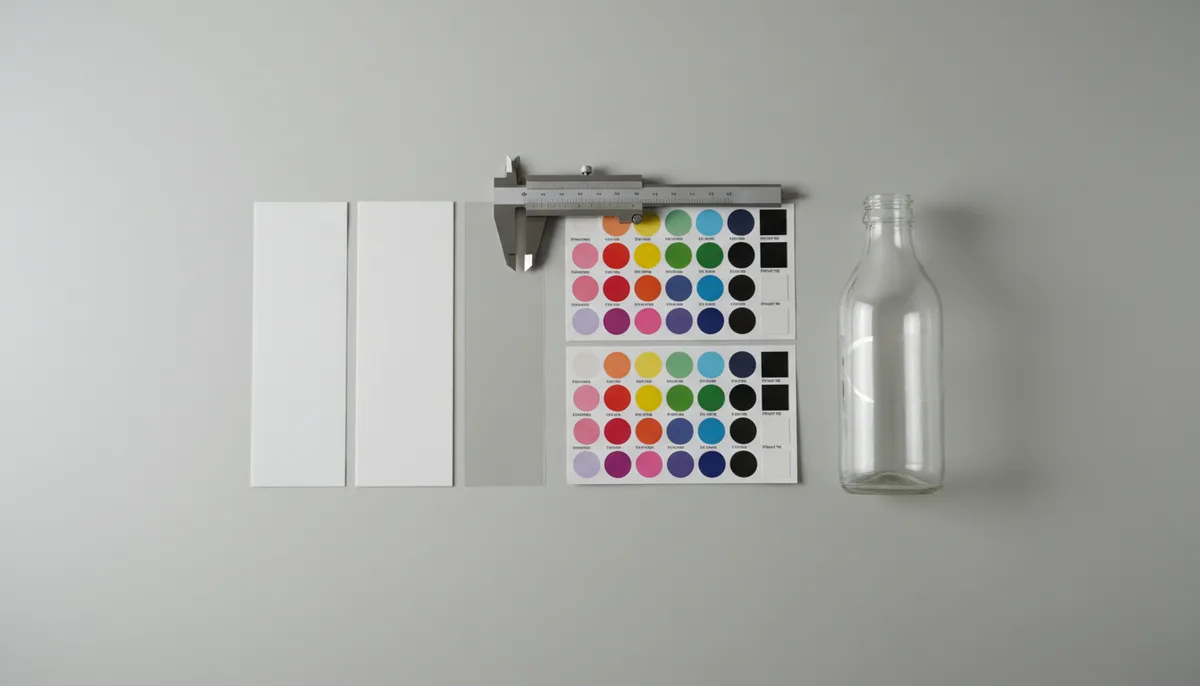
Conclusion: Your Next Steps for Sourcing Custom Labels
Ready to improve your custom label printing companies usa sourcing strategy? Start with a quality audit of your current suppliers. Verify their press type, inspection system, and color tolerance reports.
Our team at JinXinCai offers free production audits for new clients. We compare your current labels against our quality benchmarks. This includes Delta E analysis, defect rate comparison, and cost improvement recommendations.
The custom label printing companies usa market is projected to grow greatly through 2031. Choosing the right partner now ensures you benefit from scale economies and consistent quality. Contact us today to request a quote and get started on your label program.
- Step 1: Verify 6-color offset press and automated inspection with high defect detection.
- Step 2: Compare thermal transfer vs. digital inkjet costs at your volume; check minimum orders (500 offset, 250 digital).
- Step 3: Confirm ISO 9001, ISO 14001, Amazon SIOC, and GS1-128 compliance.
- Step 4: Evaluate lead times (7-10 days offset, 3-5 digital) and consignment options.
- Step 5: Assess FSC-certified papers, PCR content, and soy-based inks.
For more on how promotional goods complement your label program, see our promotional goods capabilities.
For more on quality standards, see ISO 9001:2015 quality management and ASTM D3330 adhesion standard.
Frequently Asked Questions
When does thermal transfer become cheaper than digital inkjet for custom labels?
Thermal transfer becomes more cost-effective above 15,000 units per SKU. Below that volume, digital inkjet avoids plate charges and offers lower setup costs. For runs of 20,000+ units, thermal transfer typically delivers the lowest per-unit pricing.
What Delta E value should I require for brand color accuracy?
A Delta E under 2.0 ensures your brand color matches across every roll. Our quality team provides spectrophotometry reports on every production run. This tolerance is verified using a spectrophotometer and is critical for maintaining consistent brand identity.
What certifications should a custom label printing company in the USA hold?
Key certifications include ISO 9001:2015 for quality management, ISO 14001:2015 for environmental practices, and Amazon SIOC compliance (ISTA 6A) for e-commerce labels. Barcodes must pass GS1-128 scanner verification. These certifications ensure documented processes and consistent quality.
What is the minimum order quantity for offset vs. digital label printing?
Offset printing typically requires a minimum of 500 units per SKU, while digital production accepts as few as 250 units. This flexibility is important for programs with multiple SKUs or smaller volumes. Always confirm minimums with your supplier.