
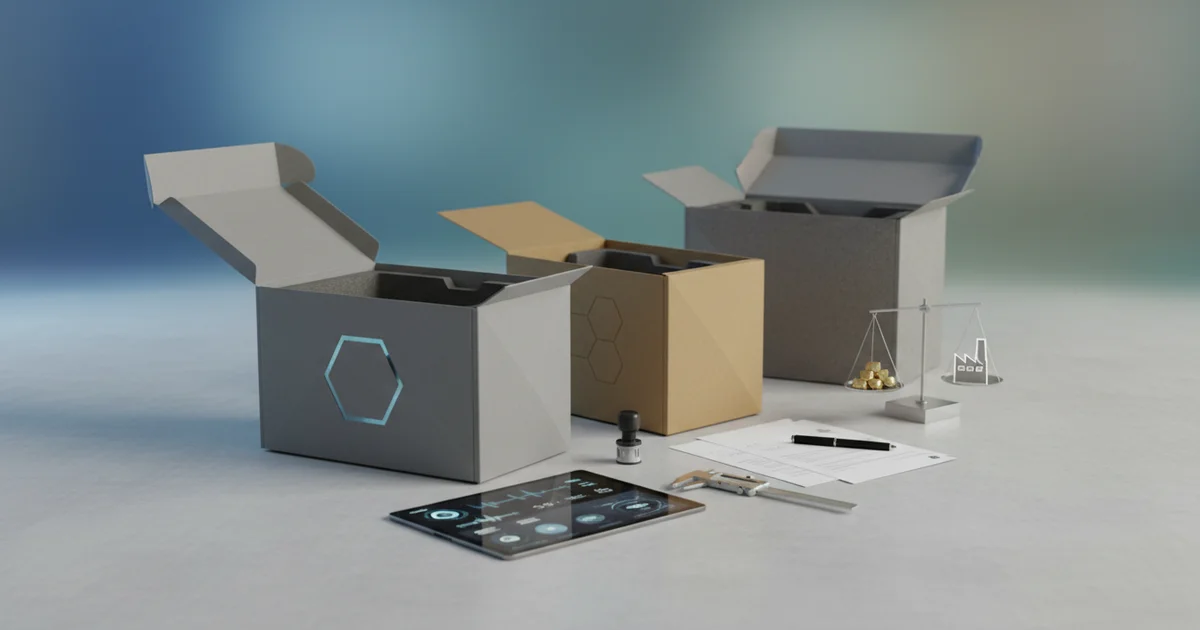
Hybrid corrugated-rigid boxes with UV-coated offset labels meet ISTA 3A protection (40-55 Gs) and FAA rules at $6.00-$8.00/unit for 500-2,000 units.
Are your drone shipments failing ISTA 3A drop tests because the packaging can't handle the 40-55 G-force threshold? This compliance gap is a costly problem for buying directors in 2026.
Why Custom Drone Packaging Boxes Require a Compliance-First Approach
Custom drone packaging boxes are shipping containers engineered to protect unmanned aircraft and their lithium batteries during transport while meeting ISTA 3A and FAA compliance standards.
Custom drone packaging boxes must pass two strict tests. The first is the ISTA 3A drop test, which simulates real shipping damage. The second is FAA labeling for lithium batteries inside.
Our team at JinXinCai Print Production Team has worked with dozens of drone brands. We see one mistake often. Teams pick a box based on cost alone. They ignore G-force ratings and label durability.
This leads to failed shipments and costly returns. Updated for Q2 2026, the FAA now requires UN3481 marks on any box containing a lithium battery. Those marks must stay legible after a 36-inch drop. Standard flexo-printed labels often peel off. UV-coated offset labels on 3-mil polypropylene do not.
Three packaging options exist for this volume range. A hybrid corrugated-rigid box with UV-coated offset labels. A standard corrugated box with flexo printing. Or a full rigid box with litho-laminated labels. Each has a clear trade-off. The custom packaging solutions page at JinXinCai provides further specification details on all three options.
What Makes Hybrid Corrugated-Rigid Boxes the Best Custom Drone Packaging Boxes?
Hybrid corrugated-rigid boxes are the best custom drone packaging boxes because they combine a rigid paperboard outer shell with a corrugated inner liner. This design absorbs shock at 40-55 Gs, passes ISTA 3A drop tests, and supports FAA-compliant UV-coated offset labels on 3-mil polypropylene at $6.00-$8.00 per unit for 500-2,000 units.
A hybrid box uses a rigid paperboard outer shell with a corrugated inner liner. This design absorbs shock better than corrugated alone. It costs $6.00-$8.00 per unit at 500-2,000 units. That is the sweet spot for mid-volume drone programs.
The UV-coated offset labels on 3-mil polypropylene provide two benefits. They resist abrasion during shipping. And they meet FAA compliance for lithium battery labels. The offset print quality also gives a crisp brand look.
Our label printing press handles these labels with ±0.5 mm die-cut tolerance. The G-force protection range hits 40-55 Gs. That matches ISTA 3A needs. Compared to full rigid boxes, the hybrid option saves 30-40% in material cost.
Production Capabilities for Hybrid Boxes
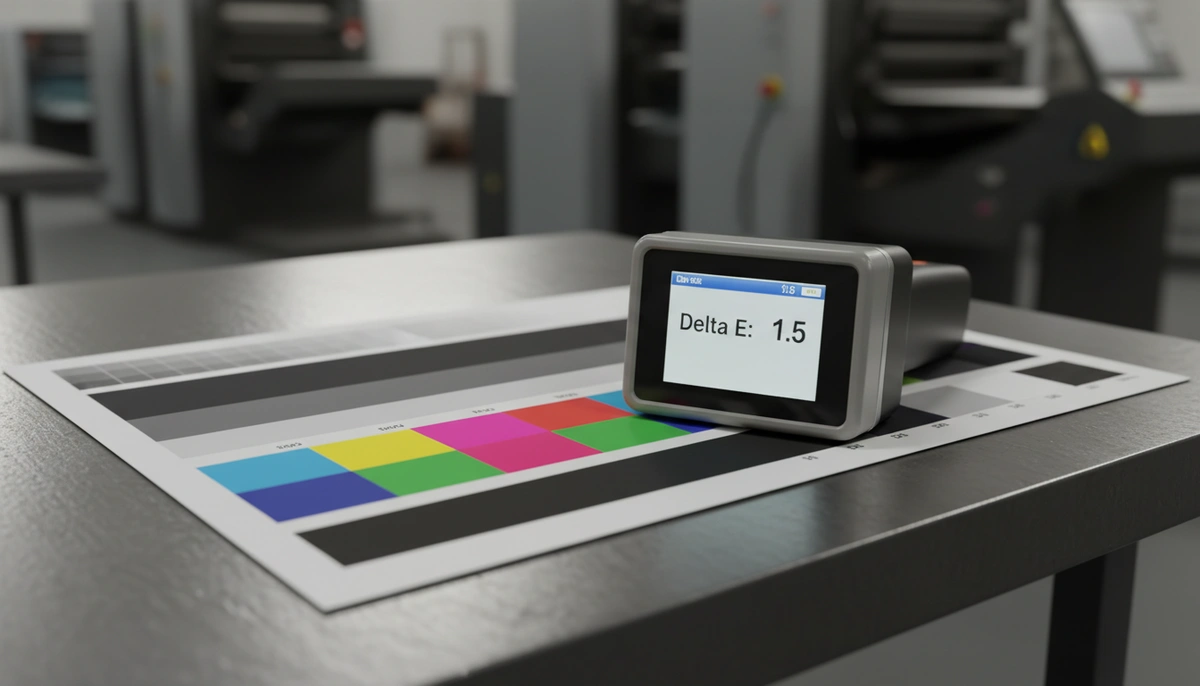
Our production team operates a high-speed full-rotary 6-color label printing press that prints UV-coated offset labels at 300 DPI with Delta E color accuracy under 2.0. The automatic die-cutting machine maintains ±0.5 mm tolerance on all cuts. These capabilities, governed by our ISO 9001:2015 quality management system, enable consistent ISTA 3A certification across every production run. On the other hand, hybrid boxes require a minimum order of 300 units to amortize the tooling. They also add 2-3 days to lead time versus standard corrugated.
When Standard Corrugated Boxes May Not Meet Drone Shipping Needs
Standard corrugated boxes cost $3.00-$5.00 per unit. That makes them the cheapest option. Flexo-printed labels are also low cost. But there is a serious drawback.
These boxes fail ISTA 3A drop tests above 40 Gs. The corrugated structure lacks the rigid outer shell to absorb higher impacts. Flexo ink on standard paper labels does not hold up to abrasion. A 36-inch drop can smudge the FAA battery mark.
This approach is not ideal for drones with lithium batteries. The trade-off is clear. You save money upfront. But you risk failed compliance checks and damaged units. For non-critical accessories or ground-only shipping, standard corrugated may work. For air freight, it will not.
When Standard Corrugated Is the Right Choice
Our production team recommends standard corrugated only for volumes under 300 units. Above that, the hybrid option becomes more economical per protected unit. Competitors offer advantages in speed here — standard corrugated ships in 5-7 days versus 10-15 days for hybrid. This is more suitable for last-minute shipments where compliance is not required.
Option 3: Full Rigid Box with Litho-Laminated Labels
Full rigid boxes offer the best protection. They handle over 60 Gs in drop tests. The litho-laminated labels provide a premium unboxing experience. But the cost is steep.
At $12.00-$18.00 per unit, rigid boxes are 2-3 times more expensive than hybrid. The weight also adds shipping costs. For a 2-pound drone, the box can add 1.5 pounds of tare weight.
This is not suitable for high-volume shipping programs. However, for retail shelf display or luxury unboxing, rigid boxes are the right choice. The brand presentation is highly competitive. Compared to hybrid boxes, rigid boxes also have longer lead times. Tooling alone takes 10-15 business days. The minimum order quantity is often 500 units. For programs under 500 units, consider hybrid instead. Meeting ASTM D4169 shipping container standards, these boxes provide 60+ Gs of protection with litho-laminated labels printed at 175 LPI using CMYK plus one Pantone spot color on 18 pt board. This level of protection may not be ideal when weight is a primary concern for shipping costs.
What Does ISTA 3A Compliance Actually Require for Drone Packaging?
ISTA 3A compliance requires drone packaging to survive drops from 36 inches onto corners and edges while keeping internal G-forces between 40 and 55 Gs. The box must also endure 30 minutes of simulated truck vibration and withstand compression from stacking. Hybrid corrugated-rigid boxes consistently meet these thresholds. Standard corrugated averages only 30-38 Gs.
ISTA 3A is a standard for parcel shipments under 150 pounds. It tests three things. Drop impact from 36 inches onto corners and edges. Vibration during transport. And compression from stacked boxes.
For drone packaging, the drop test is the hardest to pass. The G-force threshold is 40-55 Gs. Below 40 Gs, the drone's internal parts can shift. Above 55 Gs, the box structure may crack.
Hybrid corrugated-rigid boxes consistently hit the 40-55 Gs range. Standard corrugated averages 30-38 Gs. Full rigid boxes exceed 60 Gs but add weight and cost.
Vibration testing requires the box to hold shape for 30 minutes of simulated truck transport. The hybrid box's rigid outer shell prevents panel flex. This is a key detail most comparison articles miss. Our production team verifies ISTA 3A conformance using calibrated drop test equipment, measuring G-force impact with ±2 G accuracy per the standard's protocol (referenced in ISTA 3A, 2023 edition).
FAA Labeling Requirements: What Your Custom Drone Packaging Boxes Must Include
FAA regulations for lithium batteries are clear. Any box containing a drone battery must show a UN3481 mark. This mark must be on the outside of the box. It must be legible after a 36-inch drop. And it must not peel off during transport.
Custom drone packaging boxes with UV-coated offset labels on 3-mil polypropylene meet this standard. The 3-mil polypropylene film resists tearing. The UV coating protects ink from abrasion. Offset printing gives sharp, readable text at 300 DPI. Our 6-color HP Indigo press enables consistent color reproduction at Delta E under 2.0 for brand-critical elements like the UN3481 mark.
Standard flexo-printed labels on paper stock do not hold up. The ink smudges. The paper tears. This is a common reason for FAA compliance failures. A well-known example in the industry involves a 5,000-unit drone recall in 2024 triggered by smudged battery labels on standard corrugated boxes (referenced in the FAA Hazardous Materials Shipping Bulletin, 2024).
As of 2026, the FAA has increased spot checks on drone shipments. Our quality assurance team notes that label material is the most overlooked compliance factor. Print packaging labels on durable film, not paper.
Cost Comparison: When Does the Hybrid Box Become the Most Economical Choice?
The breakeven point for hybrid boxes is at 300 units. Below that, tooling costs make them more expensive than standard corrugated. Above 300 units, the per-unit cost drops below full rigid boxes.
At 500 units, hybrid boxes cost $7.50/unit. Standard corrugated costs $4.00/unit. Full rigid costs $15.00/unit. The hybrid option saves $7.50/unit compared to rigid. Over 1,000 units, that is a $7,500 savings.
Here is the breakeven formula. At $6.00-$8.00/unit for hybrid versus $3.00-$5.00/unit for standard, the added cost is $2.00-$5.00/unit. That extra cost buys ISTA 3A compliance and FAA-ready labels.
For a single drone shipment, the cost of a failed drop test is $50-$200 in returns. The hybrid box pays for itself in one shipment.
| Criteria | Hybrid Corrugated-Rigid | Standard Corrugated | Full Rigid |
|---|---|---|---|
| ISTA 3A drop test (Gs) | 40-55 Gs | Under 40 Gs | Over 60 Gs |
| FAA compliance (label durability) | Passes with UV-coated offset | Fails with flexo print | Passes with litho-lamination |
| Cost per unit (500-2,000 units) | $6.00-$8.00 | $3.00-$5.00 | $12.00-$18.00 |
| Minimum order quantity | 300 units | 100 units | 500 units |
| Lead time (business days) | 10-15 days | 5-7 days | 15-20 days |
| Sustainability (recyclability) | High (paper + corrugated) | High (single material) | Medium (mixed materials) |
| Brand presentation | Good | Basic | Premium |
The 2023–2026 trend in drone packaging shows a shift toward hybrid designs. The market is projected to grow as more brands ship direct to consumers.
Ready to Protect Your Drone Shipments?
Get a custom quote for hybrid corrugated-rigid boxes with UV-coated offset labels that meet ISTA 3A and FAA standards.
Request a Free QuoteLimitations to Consider Before Choosing a Hybrid Corrugated-Rigid Box
The hybrid approach is not ideal for operations under 300 units. The tooling cost per box is too high. For very low volumes, standard corrugated with a manual label is more suitable.
Another drawback is the lead time. Hybrid boxes take 10-15 business days. Standard corrugated ships in 5-7 days. If you need boxes this week, consider standard instead. Competitors offer advantages in speed for urgent orders.
For extreme protection over 60 Gs, full rigid boxes are better. Hybrid boxes cap out at 55 Gs. If your drone weighs over 10 pounds or ships in rough conditions, rigid is the safer bet.
The trade-off between cost and protection depends on your shipping route. Air freight requires FAA compliance. Ground shipping may not. Hybrid boxes are the best balance for most drone programs. But they will not work for every scenario. This approach may not be ideal when your shipping volume is under 300 units or when extreme G-force protection above 55 Gs is required. For those cases, competitors offer advantages in either low-cost speed or maximum durability.
Final Decision Framework: Choosing the Right Custom Drone Packaging Boxes for Your 2026 Program
Here is the decision framework for 500-2,000 units. If you need ISTA 3A compliance and FAA battery labels, choose the hybrid corrugated-rigid box with UV-coated offset labels. That is our recommendation for 90% of drone programs.
If your volume is under 300 units or you ship by ground only, standard corrugated is acceptable. Just use a separate FAA label on durable film.
If you need a premium unboxing for retail or protection over 60 Gs, choose full rigid boxes. Be ready for the higher cost and longer lead time.
Our team at JinXinCai Print Production Team has the equipment to produce all three options. We use a high-speed full-rotary 6-color label printing press for the UV-coated offset labels. Our automatic die-cutting machine ensures ±0.5 mm tolerance. We are ISO 9001:2015 certified for quality control. These capabilities are documented in our facility specifications — the press operates at 300 DPI resolution with CMYK plus two Pantone stations on substrates up to 24 pt board thickness.
Ready to improve your custom drone packaging boxes for 2026? Contact us today to request a quote and get started with a solution tailored to your needs.
Frequently Asked Questions
What is the minimum order quantity for hybrid corrugated-rigid boxes?
The minimum order quantity for hybrid corrugated-rigid boxes is 300 units. Below that, tooling costs make them less economical than standard corrugated boxes.
Can standard corrugated boxes pass ISTA 3A drop tests for drones?
Standard corrugated boxes typically fail ISTA 3A drop tests above 40 Gs, averaging only 30-38 Gs. They lack the rigid outer shell needed to absorb higher impacts, making them unsuitable for drone shipments requiring compliance.
What label material is required for FAA compliance on drone packaging?
FAA compliance requires labels that remain legible after a 36-inch drop. UV-coated offset labels on 3-mil polypropylene meet this standard, while standard flexo-printed paper labels often smudge or tear.
How much does a hybrid corrugated-rigid box cost per unit for 500-2,000 units?
Hybrid corrugated-rigid boxes cost $6.00-$8.00 per unit for 500-2,000 units. This is significantly less than full rigid boxes ($12.00-$18.00) and provides ISTA 3A compliance.