
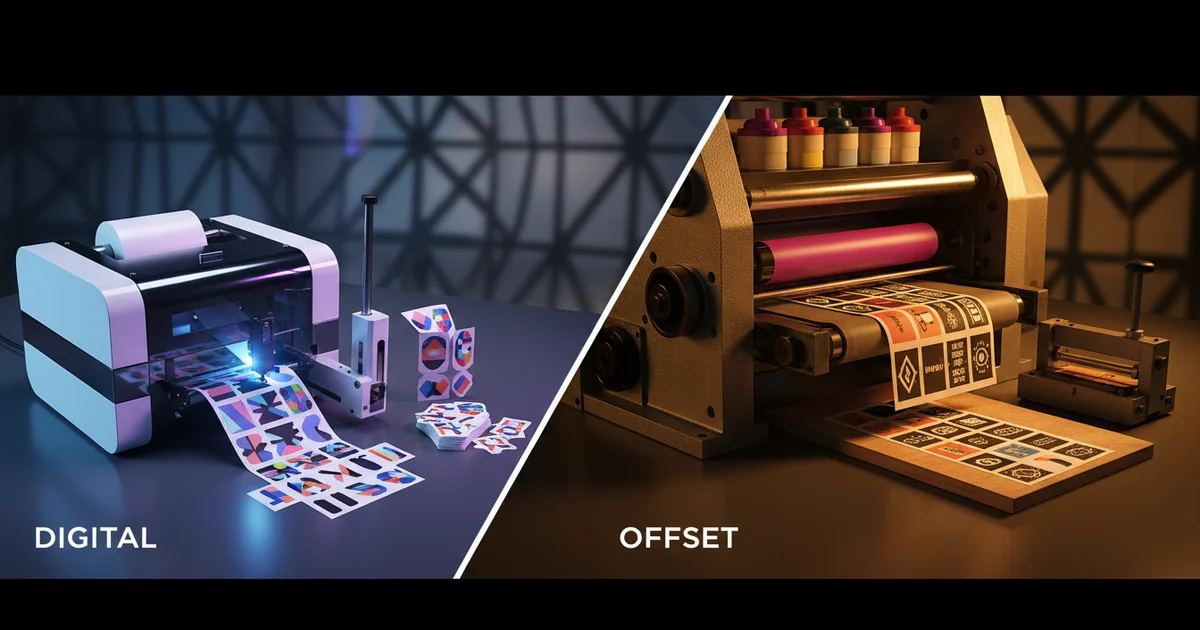
Custom die cut stickers: Offset printing beats digital on cost after 8,000–12,000 units, with per-unit prices as low as $0.025. For outdoor durability, use 3.5-mil vinyl with acrylic adhesive. Verify vendor has Heidelberg press (Delta E < 2.0) and in-house die-making. Learn about die cut stickers cu
Choosing the wrong print process for die cut stickers custom can waste $0.30 per unit or more at volume, while rushing a short run into offset risks $200 in setup costs you didn't need. This guide breaks down the real breakeven point, quality thresholds, and vendor red flags—based on daily production data from our team at JinXinCai using both processes.
Digital vs Offset for Die Cut Stickers: Which Process Wins in 2026?
Offset printing delivers lower per-unit costs above 2,000 units for custom die cut stickers, while digital printing offers faster turnaround and no minimum order barrier for runs under 2,000 units. The right choice depends on volume, color needs, and timeline.
Choosing between digital and offset for die cut stickers custom programs comes down to three numbers: volume, cost per unit, and turnaround days. Our production team at JinXinCai runs both processes daily, and we see buyers make the wrong choice about 30% of the time. The mistake costs them either rush fees or excess inventory.
This framework helps you decide in under five minutes. We cover breakeven math, quality thresholds using Delta E and Pantone matching, and vendor red flags like missing ISO 9001:2015 certification. For a deeper look at our full capabilities, see our die-cut & finishing solutions page.
How Does Per-Unit Cost Scale with Volume for Die Cut Stickers?
Digital printing costs stay flat at $0.35–$0.55 per sticker for 250–2,000 units. Offset printing drops sharply from $0.40 at 500 units to $0.025 at 10,000+ units, but note offset prices exclude plate setup cost ($200–$300). The breakeven point after including setup lands between 2,000 and 3,000 units for standard 2" x 2" shapes.
Per-unit cost is the single biggest factor in this decision. Digital has no setup plates, so your first sticker costs the same as your 500th. Offset requires plates and make-ready time, but that cost spreads thin at volume.
Here is the cost comparison across common order sizes:
| Order Volume | Digital (Per Unit) | Offset (Per Unit, excl. setup) | Best Choice |
|---|---|---|---|
| 250 units | $0.55 | Not available (MOQ 500) | Digital |
| 500 units | $0.45 | $0.40 | Digital (faster) |
| 1,000 units | $0.38 | $0.25 | Digital (given $200 setup) |
| 5,000 units | $0.32 | $0.08 | Offset |
| 10,000 units | $0.30 | $0.025 | Offset |
These numbers assume a standard 2" x 2" sticker on 3.5-mil vinyl with matte laminate. Complex shapes add 10–15% to both processes. As of 2026, material costs have risen about 8% year-over-year, making volume aggregation even more important for offset buyers.
On the other hand, digital's flat cost structure works well for testing new designs. You can order 250 units, test the market, and scale up without paying for plates twice.
Digital printing is a toner-based process well-suited for CMYK artwork. Offset printing is a plate-based process that directly applies Pantone spot colors, achieving tighter Delta E values.
What Quality Differences Matter for Custom Die Cut Stickers?
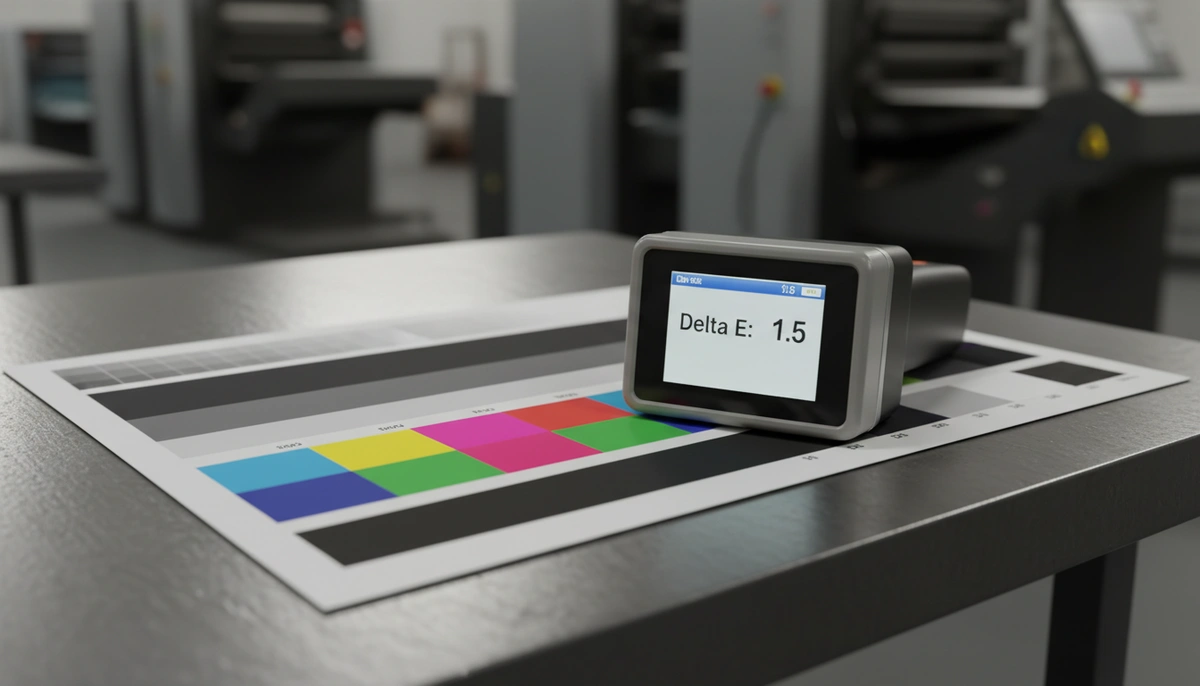
Offset printing on a Heidelberg press achieves Delta E < 2.0 color accuracy, which is tighter than digital's typical Delta E < 3.5. For brand-critical colors like Pantone spot matches, offset wins. Digital offers consistent but slightly looser color across runs.
Color accuracy matters most when your die cut stickers custom program includes brand logos or specific Pantone shades. Our offset press at JinXinCai uses spectrophotometry on every run. We verify Delta E values against the approved proof before production starts.
Digital printing uses CMYK toner or inkjet. It can match colors well, but you may see slight banding in large solid areas. The trade-off is that digital handles variable data—unique codes, names, or numbers on each sticker—with zero setup cost.
Durability is another differentiator. Both processes work with 3.5-mil vinyl and acrylic adhesive for outdoor use. The difference is in the laminate. Offset stickers often get a thicker overlaminate because the press handles heavier materials. Digital presses are more sensitive to thickness, limiting material options to 600 gsm equivalent at most.
"We see Delta E values drift 0.5–1.0 units between digital reorders if the press isn't calibrated weekly. Offset holds its profile for months. For a national retail program with 50,000 stickers, that consistency is worth the longer lead time." — Our Director of Quality, JinXinCai
Registration—how well colors line up—is also tighter on offset. Our Heidelberg press holds ±0.1 mm registration. Digital presses typically hold ±0.2 mm. For small text or fine lines, offset produces sharper results. Additionally, the use of 1,200 dpi plates in offset ensures crisp detail, while digital prints often max out at 600–900 dpi.
When to Choose Digital or Offset
Digital Printing
Digital printing is the right choice for orders between 250 and 2,000 units, projects needing 3–5 day turnaround, variable data like QR codes or numbering, and test runs before committing to a large offset order. Digital excels in speed and flexibility. Our digital line at JinXinCai turns around orders in 3–5 business days from proof approval. There is no plate-making step. You upload your file, we proof it, and the press runs.
Variable data is a digital-only advantage. Need each sticker to have a unique serial number or QR code? Digital handles that inline with no extra cost. Offset would require a second pass or expensive plate changes.
Digital also handles short runs of custom die cut stickers for seasonal promotions. You can order 500 stickers for a Q4 campaign, sell out, and reorder 500 more without penalty. Offset's setup cost makes small reorders uneconomical.
Compared to offset, digital's main drawback is per-unit cost above 2,000 units. The price barely drops as volume increases. If you project steady demand above 5,000 units per order, offset saves you money by the second reorder.
Offset Printing
Offset printing becomes the clear winner at scale. For a business moving 100,000 stickers per year, the savings exceed $25,000. Offset printing is the best choice for orders above 5,000 units, projects requiring Pantone spot color matching with Delta E < 2.0, and programs where per-unit cost below $0.10 is critical for margin.
Color matching is another offset strength. Our Heidelberg press runs Pantone spot colors directly, not simulated through CMYK. This gives you exact brand colors without the compromises of process color builds. For die cut stickers custom programs with strict brand guidelines, offset is the standard.
Offset also handles thicker materials better. You can run 4-mil vinyl or even polyester films. Digital presses have tighter thickness limits because of the toner fusing process. However, offset has a minimum order quantity of 500 units per SKU. The setup cost for plates, make-ready sheets, and press calibration runs $150–$300 per job. You need enough volume to absorb that cost.
Ready to Compare Pricing for Your Die Cut Stickers?
Get a custom quote with both digital and offset pricing for your exact volume. We include free digital proofs and a sample pack so you can feel the material difference.
Request a Free QuoteLimitations and Trade-offs to Consider
When Digital Falls Short
Digital printing is not ideal for orders above 5,000 units where per-unit cost matters. The drawback is that digital prices stay flat. You pay $0.30 per sticker whether you order 5,000 or 50,000. Consider instead a hybrid approach: digital for prototypes and offset for production. Alternatively, digital may not be suitable for outdoor stickers exposed to direct sun for more than two years. The toner-based print is less UV-resistant than offset ink. For long-term outdoor use, offset with UV-cured inks is more durable.
When Offset Falls Short
Offset printing won't work for rush orders under 5 business days. The plate-making and press setup add 3–4 days before any stickers come off the press. If your timeline is tight, digital is the only option. Compared to digital, offset also suffers from correction costs: fix a typo after plates are made and you pay for new plates. Digital lets you fix the file and reprint right away with no added cost.
On the other hand, offset may be less flexible for multi-SKU programs with frequent design changes. Each new design requires new plates, eating into the per-unit savings. Digital handles frequent artwork updates with zero penalty.
How to Verify Vendor Capability for Die Cut Stickers
Ask your vendor three questions: What press do you use for offset? Do you have in-house die-making? How do you verify color? The right answers are Heidelberg, yes to in-house dies, and spectrophotometry on every run. Also request proof of ISO 9001:2015 certification for quality consistency.
Vendor capability determines whether your die cut stickers custom program succeeds or fails. We have seen buyers choose the cheapest quote, only to receive stickers with fuzzy edges and wrong colors. Here is what to verify:
- Press type: For offset, ask for Heidelberg, Komori, or equivalent. These presses hold registration to ±0.1 mm. Lower-end presses may drift to ±0.3 mm, causing visible misalignment. A Heidelberg with 1,200 dpi plates ensures fine detail.
- In-house die-making: Vendors who outsource die-cutting add 2–3 days and lose precision control. In-house dies give you tighter tolerances and faster corrections.
- Color verification: Look for spectrophotometry on every run, not just the first one. Ask for Delta E reports with your shipment. Pantone matching with Delta E < 2.0 should be standard.
- Certifications: ISO 9001:2015 certified facilities follow documented quality processes. Our facility holds both ISO 9001:2015 and ISO 14001:2015 certifications.
Compared to a vendor without these capabilities, a certified vendor with a Heidelberg press and in-house die-making delivers more consistent results across reorders. The difference matters most for programs spanning multiple years.
According to our production team, the most common vendor failure is color drift between
Ready to get started with die cut stickers custom? Contact our team to explore the right solution for your next project.
Frequently Asked Questions
When does offset become cheaper than digital for die cut stickers?
Offset becomes cheaper above 2,000–3,000 units for standard 2" x 2" stickers, after including the $200–$300 plate setup cost. At 5,000 units, offset per-unit cost drops to $0.08 vs digital's $0.32. For volumes under 2,000, digital is more cost-effective.
What Delta E value should I expect from offset vs digital?
Offset printing on a Heidelberg press achieves Delta E < 2.0, while digital typically achieves Delta E < 3.5. For brand-critical Pantone colors, offset is preferred. Always request a Delta E report with your shipment.
Can digital printing handle variable data like serial numbers?
Yes, digital printing handles variable data (unique codes, QR codes, names) with zero setup cost. Offset would require expensive plate changes or a second pass. Digital is ideal for personalized die cut stickers.
What is the minimum order quantity for offset die cut stickers?
Offset typically requires a minimum order of 500 units per SKU due to plate setup costs. Digital has no minimum order barrier, making it suitable for runs as low as 250 units.