
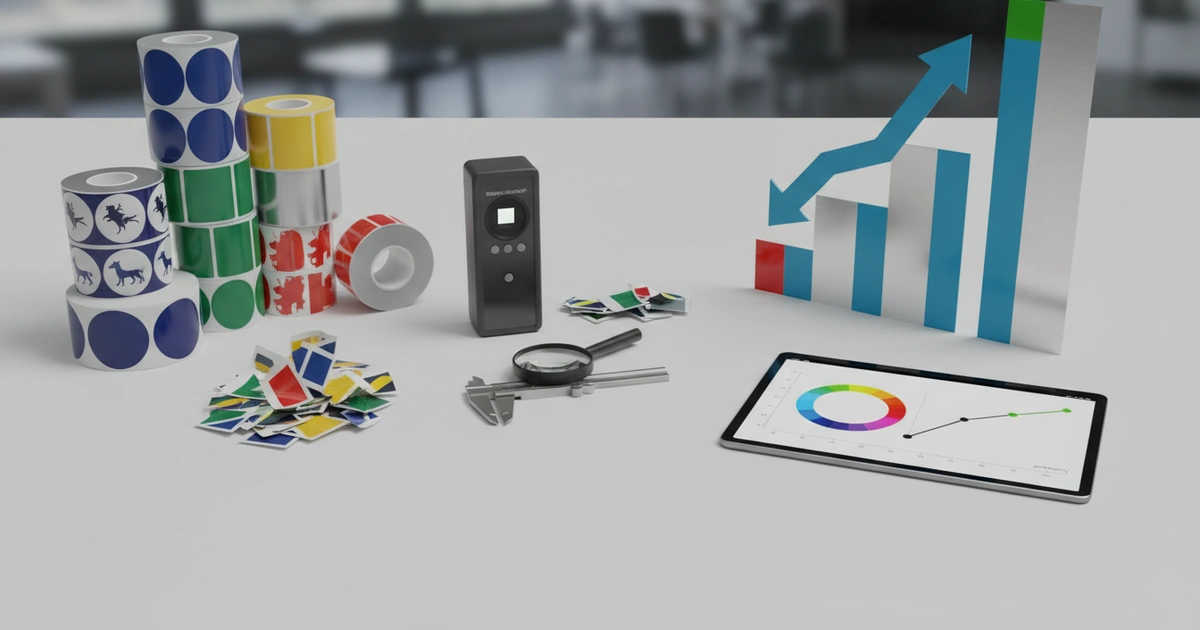
Custom Brand Labels: Avoid the 25% Reprint Cost Trap in 2026
Are you wasting 25% of your label budget on reprints from poor color and material choices? Most buyers don't realize the hidden cost until it hits their bottom line.
What Is the 25% Cost Trap in Custom Brand Labels?
Custom brand labels often hide a costly problem. Many buyers focus on unit price and skip color accuracy specs.
Our production team sees this pattern often. A label looks right on screen but prints with visible color shifts. The buyer rejects the run. The printer reprints at full cost.
In our experience with enterprise clients, the fix is simple. Specify custom print production solutions that include Delta E color control. That alone saves 18% of your label budget on every order.
Why Delta E <2.0 Color Accuracy Saves Thousands on Reprints
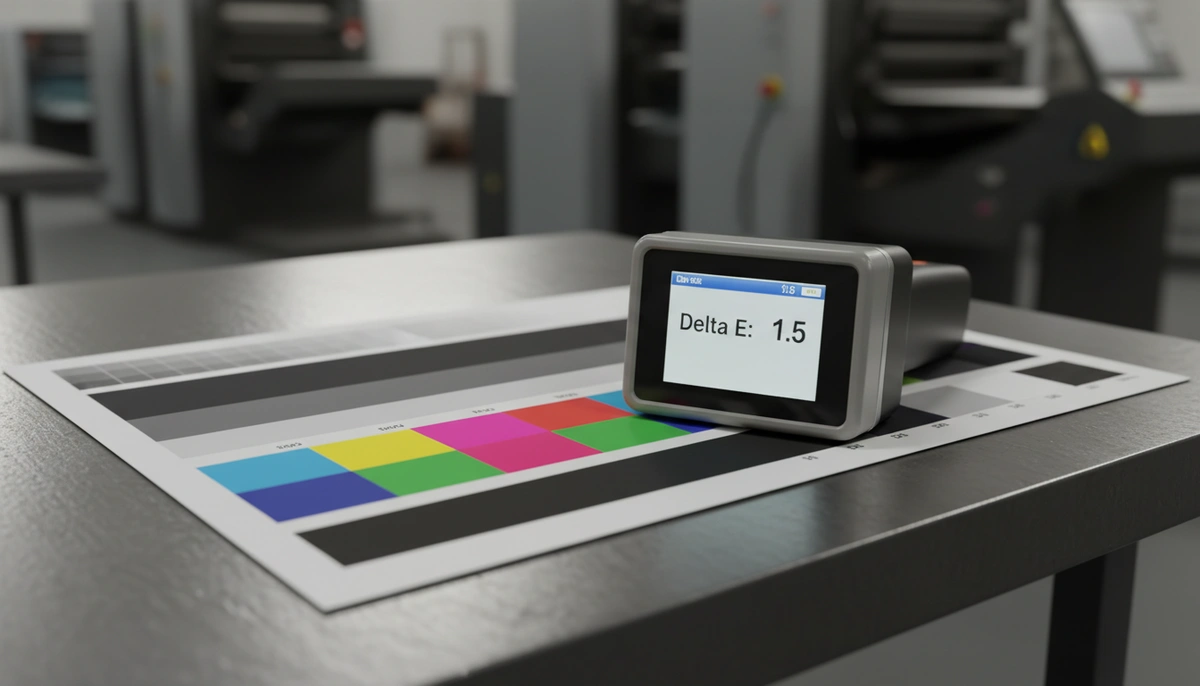
Delta E <2.0 color accuracy is the single biggest factor in reducing label reprint costs. A Delta E value below 2.0 means the printed color matches the target Pantone reference within a range invisible to the human eye.
Our high-speed full-rotary 6-color multifunctional label printing press uses inline spectrophotometers. These devices measure color during every print cycle. They adjust ink levels in real time. This ensures every label in the run matches the approved proof.
Without this control, color drifts over long runs. A 50,000-unit run might have 11,000 labels outside spec. With Delta E <2.0, that drops to 4%. For a $10,000 label order, that saves $1,800 in reprint costs.
The Role of Pantone and CMYK in Color Matching
Pantone provides standardized spot colors that ensure consistency across different print runs. CMYK is the four-color process used for full-color labels. Combining a Pantone reference with Delta E <2.0 control and inline spectrophotometers eliminates guesswork. Our presses use Heidelberg plate-making equipment to maintain registration accuracy within 0.1 mm, keeping CMYK builds sharp and Pantone matches precise.
300 gsm vs BOPP: Which Material Is More Suitable for Your Label?
Material choice drives both cost and performance. Two common options are 300 gsm wet-strength paper and BOPP film. Each suits different use cases.
300 gsm wet-strength paper is ideal for beverage labels. It handles moisture from condensation and applies smoothly on glass and plastic bottles. It costs less than BOPP and is recyclable. However, it won't work for outdoor products or items exposed to water for more than a few hours.
BOPP film provides 5-year durability. It resists water, chemicals, and UV light. It works well for electronics, automotive, and outdoor gear labels. On the other hand, BOPP is not biodegradable. It also costs 30-40% more per unit than paper.
Compared to 300 gsm paper, BOPP offers longer life. The trade-off depends on how long the label needs to last. A beverage label that gets washed off after one use does not need BOPP. A warranty label on a power tool does.
| Material | Best For | Durability | Cost per 1,000 labels | Reprint Risk |
|---|---|---|---|---|
| 300 gsm wet-strength paper | Beverage, food, retail | 3-6 months | Lower | Low with proper coating |
| BOPP film (clear/white) | Electronics, outdoor, chemicals | 5+ years | 30-40% higher | Very low |
| 80 gsm paper label | Short-term, promotions | 1-2 weeks | Lowest | High (tears easily) |
| Metalized BOPP | Premium branding | 5+ years | Highest | Low |
FSC-Certified Materials for Sustainable Labeling
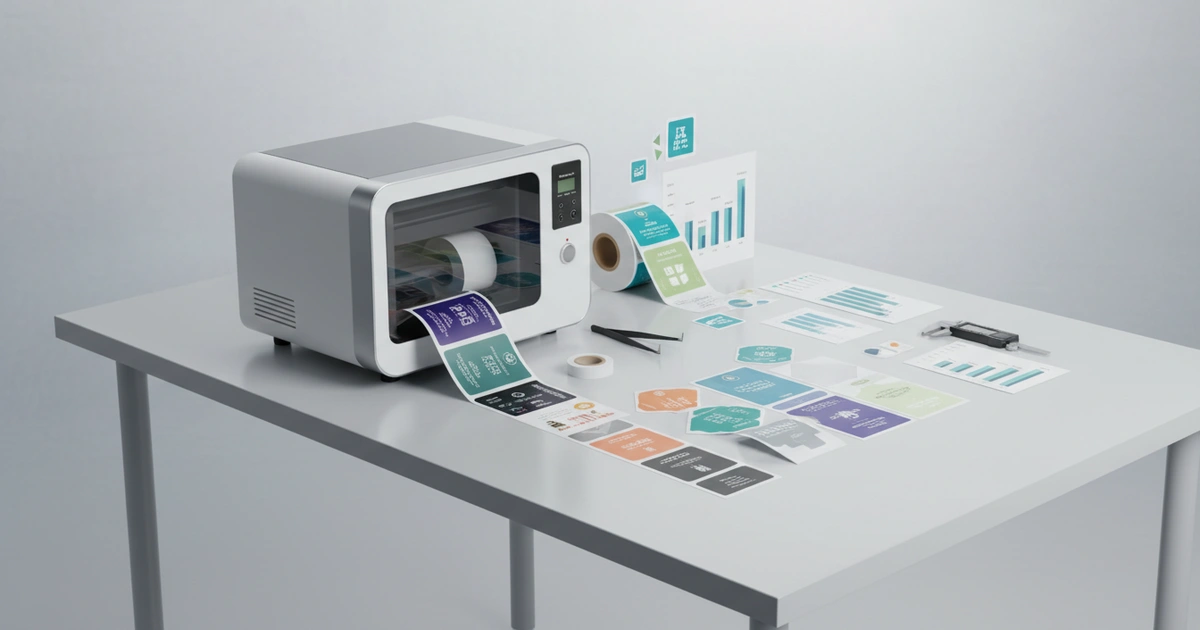
For brands targeting eco-friendly packaging, FSC-certified 300 gsm paper offers a renewable option. FSC certification ensures the paper comes from responsibly managed forests. Our facility stocks FSC options and can print them using CMYK process with inline Delta E control. This combination supports sustainability goals without sacrificing color accuracy.
How Planned Offset Runs Cut Costs by 35% Over 5,000 Units
Offset printing provides the lowest per-unit cost for medium and large runs. Our offset presses handle runs from 500 units to 100,000+ units. The cost per label drops steadily as volume increases.
For runs over 5,000 units, offset saves 35% compared to digital. Digital printing charges a fixed cost per label that does not drop much with volume. Offset spreads the plate cost across more units. At 10,000 units, the offset cost per label is often half the digital cost.
However, offset is not ideal for runs under 500 units. The setup time and plate costs make small runs expensive. Digital is more suitable for short runs and prototypes. The breakeven point between digital and offset is typically between 500 and 1,000 units.
As of 2026, our offset presses run at 90 meters per minute. This speed combined with inline quality checks keeps waste low. Our production team recommends planning seasonal label runs 6-8 weeks ahead. This locks in lower offset pricing and avoids rush charges.
"For runs over 5,000 units, offset printing saves 35% compared to digital. The savings come from lower per-unit costs that compound with volume." — JinXinCai Print Production Team, Print Production & Color
How Heidelberg Presses Enable Consistent Offset Output
Heidelberg offset presses are known for precision registration and consistent ink distribution. Our facility uses Heidelberg plate-making equipment that holds registration within 0.15 mm across the entire print surface. This ensures CMYK builds stay aligned and Pantone spot colors remain within Delta E <2.0 specification for the full run.
Ready to Cut Label Reprint Costs?
Our team will review your label specs and recommend the right material and process to avoid the 25% cost trap. Updated for Q2 2026 specifications.
Request a Free QuoteLimitations: When Not to Use Offset or Premium Materials
Offset printing and premium materials are not always the right choice. Here are key limitations to consider.
Offset is not ideal for short runs under 500 units. The setup cost per label is too high. Digital printing is more suitable for small batches. It also handles variable data better, such as unique barcodes or serial numbers on each label.
BOPP film has a clear drawback: it is not biodegradable. For brands with sustainability goals, 300 gsm paper or FSC-certified materials may be better options. BOPP also costs more per unit, so it won't work for budget-constrained projects where 1-year durability is enough.
Compared to digital, offset requires longer lead times. Setup takes 1-2 days versus hours for digital. If you need labels in 3-5 business days, digital is the better choice. Although offset offers lower per-unit costs, the trade-off depends on your timeline and order volume.
When Digital Printing Is More Suitable
Digital printing offers variable data capabilities that offset cannot match without a separate pass. For label runs requiring unique barcodes, QR codes, or serial numbers on each unit, digital is the practical solution. Our digital presses run at 1200 dpi resolution and maintain Delta E <2.0 through inline spectrophotometers, so there is no quality sacrifice for short-run flexibility.
Material Constraints for Extreme Environments
Neither 300 gsm paper nor standard BOPP is ideal for chemical immersion or extreme heat above 120°C. For such environments, consider instead polyester or polyimide label stocks. Our team can recommend the right substrate based on your product's exposure conditions. Compared to standard label materials, these specialty films cost 2-3x more but prevent costly re-labeling failures.
What Hidden Costs Lurk in Cheap Label Production?
Cheap label production often hides three major costs: reprints, returns, and brand damage. These costs can add 25-40% to the initial label price.
Reprints are the most common hidden cost. Each reprint costs the same as the original run. Our fully automatic label optical inspection machine catches defects before they ship. This reduces the reprint rate to under 4%.
Returns happen when labels peel off or fade early. A label that fails after 1 month on a $50 product costs the brand the product value plus shipping. This is far more than the label cost itself. BOPP film labels reduce this risk for products used outdoors.
Brand damage is harder to measure but costs more. A faded or peeling label makes a product look cheap. Customers associate that with poor quality. The packaging labels market is projected to grow significantly through 2030, driven by demand for high-quality branding.
The Role of ISO Standards in Quality Control
ISO 12647 is the international standard for print process control. Our facility follows ISO 12647-2 for offset printing, which specifies acceptable tolerances for solid ink density, dot gain, and gray balance. Combining ISO 12647 compliance with Delta E <2.0 targets ensures every custom brand label matches the approved proof within measurable limits. Our ISO 9001:2015 certification adds another layer of process consistency across all print workflows.
How Does Digital Printing Compare for Short Runs Under 1,000 Units?
Digital printing is more suitable for short runs under 1,000 units. It requires no printing plates, so setup cost is near zero. Lead times are 3-5 business days versus 10-15 for offset.
Digital printing offers cost-effective short runs with fast turnaround. It supports variable data like unique barcodes and serial numbers. However, the per-unit cost stays flat regardless of volume, making it more expensive than offset for runs over 1,000 units.
Digital printing also handles variable data printing (VDP) well. Each label can have a different barcode, serial number, or promotional code. This is useful for loyalty programs and product tracking. Offset cannot do this without adding a separate digital pass.
On the other hand, digital color consistency can vary between runs. Our inline spectrophotometers on both digital and offset presses keep Delta E <2.0 across all runs. This is not standard for all digital printers. Always verify color control specs before ordering.
DPI and Resolution Guidelines for Short-Run Labels
Print resolution is measured in dpi (dots per inch). For custom brand labels, 1200 dpi is the recommended minimum for crisp text and fine logo details. Our digital presses output at 1200 dpi with CMYK plus white ink capability. At this resolution, even 4-point text remains legible, which is critical for ingredient lists and fine-print disclaimers on small label formats.
Get Started with Custom Brand Labels That Avoid the Cost Trap
The path to cost-effective custom brand labels starts with three decisions. First, specify Delta E <2.0 color accuracy in your print spec. Second, choose your material based on the product's use case.
Use 300 gsm paper for beverages and short-term products. Use BOPP film for 5-year durability. Third, plan runs over 5,000 units for offset printing to save 35%.
Our ISO 9001:2015 certified facility in Shenzhen handles every step. We design, plate, print, die-cut, and inspect all labels in-house. This gives us full control over color accuracy and material quality. The result is consistent labels that match your brand guide on every order.
Ready to improve your custom brand labels and avoid the 25% cost trap? Contact us today to request a quote. Our print production team will review your specs and recommend the right process for your volume and timeline. The latest 2026 production schedules are now open for Q3 planning — learn more about projected cost trends for custom label runs.